
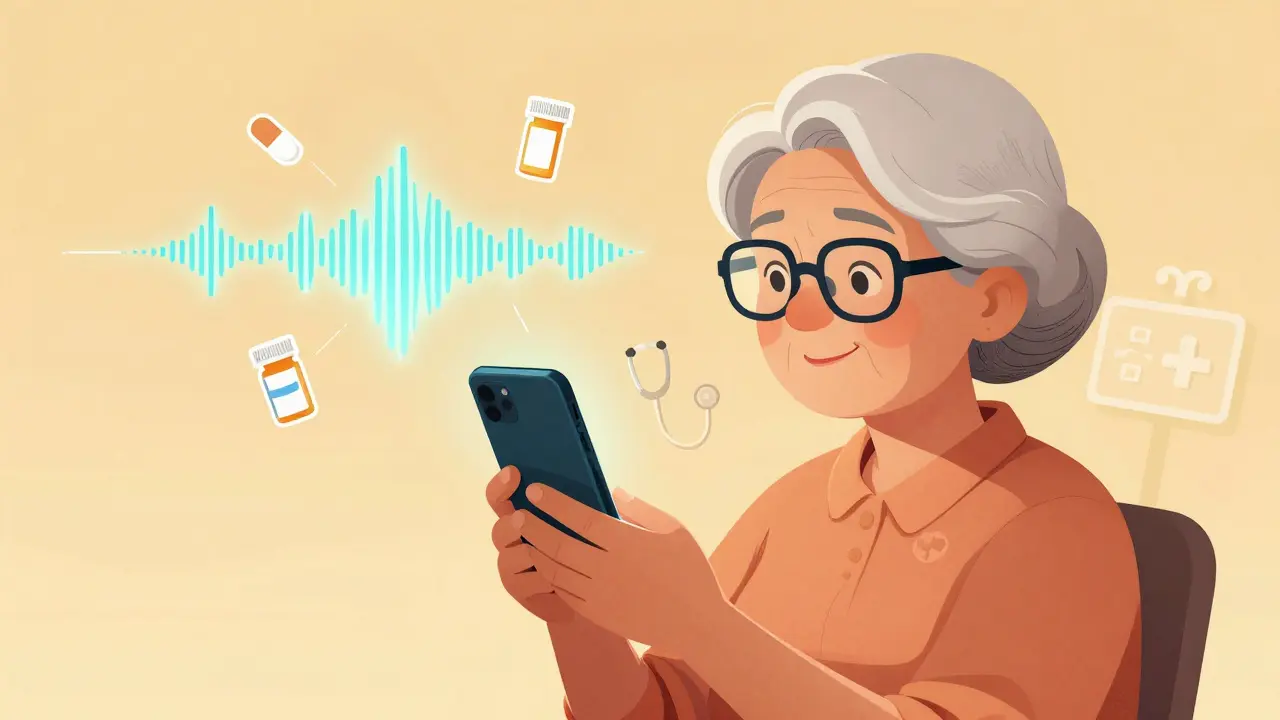
When you can't see a doctor's note, a prescription label, or a hospital sign, healthcare becomes a maze. For the 7.6 million Americans with vision loss that affects daily life, relying on sight to understand treatment plans, medication schedules, or appointment details isn't just hard-it's dangerous. That's why audio resources aren't a luxury. They're a lifeline. And they're required by law.
Federal rules like the Americans with Disabilities Act and Section 504 of the Rehabilitation Act don't just encourage accessibility-they demand it. Healthcare providers must offer information in formats patients can actually use. For many, that means audio. Audio isn't just about reading aloud. It's about giving people control. Independence. Safety.
What Audio Resources Actually Exist Today
Not all audio tools are the same. Some are free. Some cost money. Some work in hospitals. Others work anywhere. Here’s what’s actually out there-and who uses it.
BARD Mobile is a free app from the National Library Service for the Blind and Physically Handicapped that offers nearly 50,000 audiobooks, medical guides, and health magazines in audio and braille. It’s updated daily, works on iOS 12+ and Android 5+, and is used by thousands of patients who need reliable, medically accurate content. Unlike Audible, which focuses on fiction, BARD Mobile has pamphlets on diabetes management, cancer treatments, and mental health support-content you won’t find on commercial platforms.
Voice Dream Reader is a $29.99 app that reads text from websites, PDFs, emails, and scanned documents aloud with 100+ voice options across 30+ languages. It’s especially useful for patients who get printed materials from clinics. Just point your phone’s camera at a prescription bottle or discharge summary, and it reads it instantly. No internet needed. Works on iOS 14+ and Android 8+.
KNFBReader is a $99 tool designed to turn printed text into speech with 98.7% accuracy. It’s built for people who need to read labels, forms, or lab results quickly. On an iPhone, it processes a page in under three seconds. Doctors at Johns Hopkins say it’s cut down patient confusion about medication dosages by nearly half.
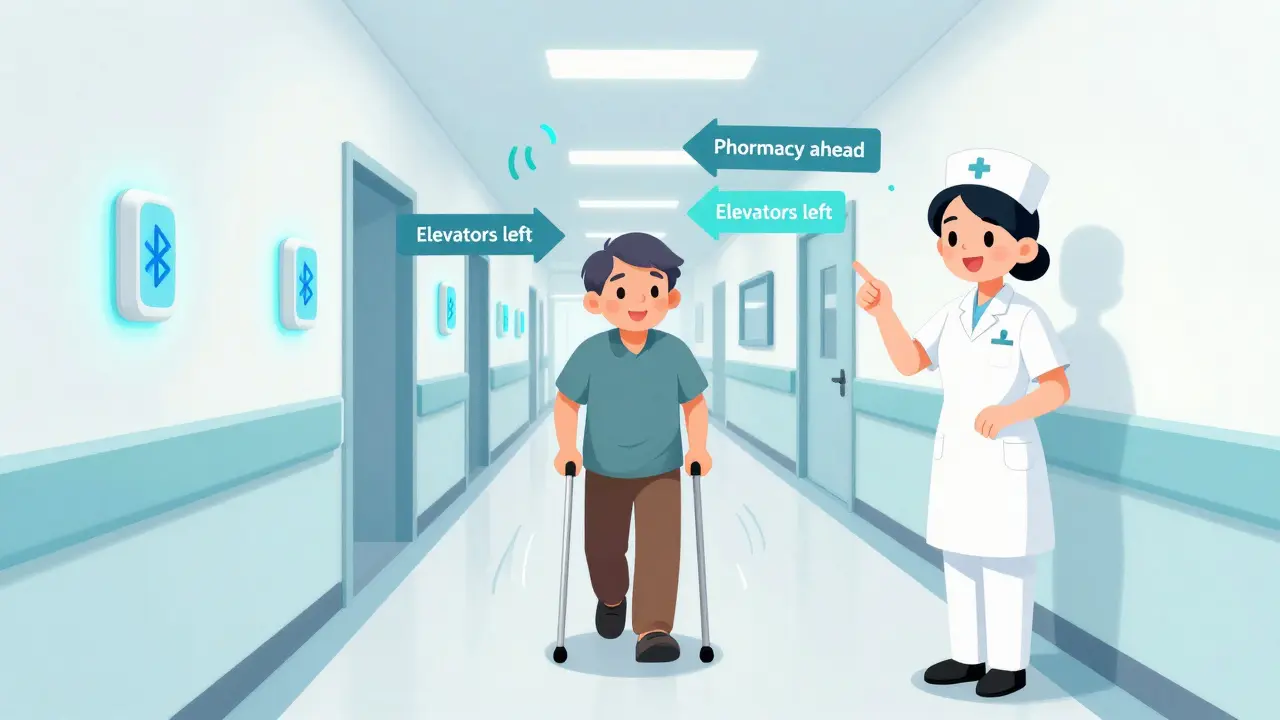
RightHear’s Talking Signage is a system that uses Bluetooth beacons to give location-specific audio directions inside hospitals. Walk into a clinic, and your phone tells you: "Elevators ahead. Left turn to Radiology. Pharmacy is 45 feet ahead." No app download needed. No Wi-Fi required. Hospitals using it report 47% fewer requests for staff help from visually impaired patients.
CRIS Radio is a free, nonprofit audio service that broadcasts health news, medication updates, and appointment reminders over FM radio signals. It’s used in senior centers and clinics in over 30 states. No smartphone? No problem. Just tune in.
Why These Tools Save Lives
It’s not just about convenience. It’s about survival.
A 2023 study in Health Affairs found that when audio resources were properly used, visually impaired patients had 31% fewer adverse events-like missed doses, wrong medications, or showing up at the wrong clinic. Why? Because they could understand their care plan without help.
Dr. Roxana Mehran at Mount Sinai put it plainly: "When a patient hears their own medication schedule in their own voice, they’re more likely to follow it. When they can navigate the hospital alone, they’re less likely to get lost-and more likely to show up for their appointment."
And the risks of not using these tools? Even worse. A January 2024 study in JAMA Internal Medicine found that visually impaired patients had 2.3 times more medication errors than sighted patients when audio alternatives weren’t provided. One patient, a 72-year-old woman with glaucoma, took double her insulin dose because she couldn’t read the label. She ended up in the ER. Audio could have prevented it.
Where the System Still Fails
Not every hospital has this figured out.
A 2024 survey by the National Federation of the Blind found that 63% of visually impaired patients couldn’t count on getting audio versions of test results or discharge instructions. In 41% of cases, they waited days-sometimes weeks-for someone to read their lab reports aloud.
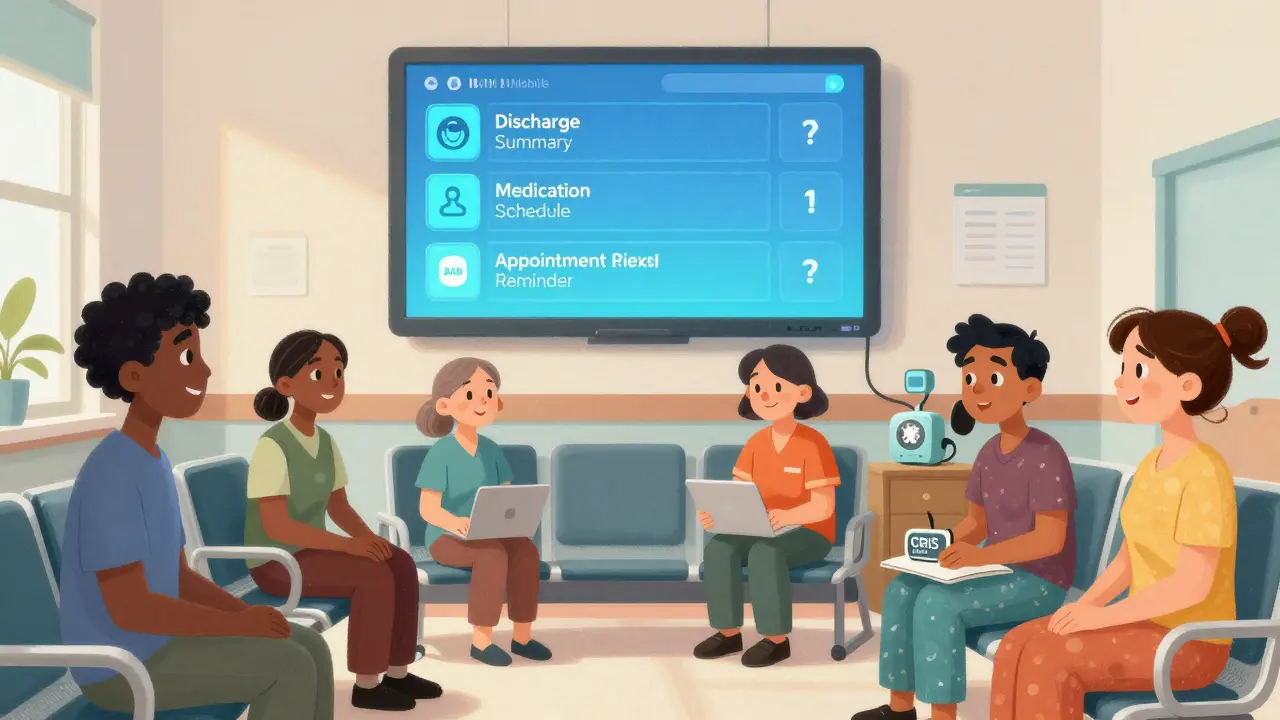
And even when audio is available, staff often don’t know how to use it. A 2023 survey by Lighthouse Guild showed 58% of patients said clinic workers were unfamiliar with BARD Mobile, KNFBReader, or RightHear. One woman told her nurse she needed her discharge summary in audio. The nurse replied, "We don’t have that. I’ll email it to you."
Audio quality is another issue. Some hospitals record instructions using cheap microphones. The result? A muffled, robotic voice that skips words or cuts off sentences. One patient described it as "like listening to a ghost whispering your medication schedule."
How to Get These Tools
If you or someone you care for is visually impaired, here’s how to access these resources-without waiting for a hospital to catch up.
- For free audiobooks and medical guides: Visit the National Library Service website. You’ll need to get certified as visually impaired by a doctor or librarian. The process takes 14-21 business days. Once approved, you get full access to BARD Mobile and over 120,000 audio titles.
- For reading printed materials: Download Voice Dream Reader or KNFBReader. Both work with your phone’s camera. Test them with a prescription bottle or a hospital form. If it reads it clearly, you’ve got a tool that works.
- For navigating hospitals: Ask your provider if they use RightHear. If they don’t, request it. Hospitals are legally required to make reasonable accommodations. You can also use Seeing Eye GPS (a $99/year app) for general directions, though it’s not hospital-specific.
- For ongoing health updates: Subscribe to CRIS Radio if it’s available in your area. Many clinics and senior centers broadcast health news daily.
Don’t wait for someone to offer this to you. Ask for it. Write it down. Bring it to your next appointment.
What’s Changing in 2024 and Beyond
Things are moving fast. In January 2024, the National Library Service added 37% more medical content to BARD Mobile, including new guides on managing heart failure and chronic pain.
RightHear launched a healthcare-specific module in early 2024 that integrates with electronic health records. Now, when a doctor updates a patient’s medication list, the audio signage system updates automatically.
By December 2024, all U.S. electronic health record systems must include audio output options. That means your medical summary, lab results, and discharge instructions will be available as audio files-right inside your patient portal.
And by 2025, the Centers for Medicare & Medicaid Services plans to require real-time audio translation for non-English-speaking visually impaired patients. Imagine a Spanish-speaking patient with low vision hearing their doctor’s instructions in clear, spoken Spanish-without needing a translator.
What You Can Do Right Now
Don’t assume your provider will handle this. Don’t wait for them to "figure it out."
- Ask for your next appointment reminder in audio format.
- Request that discharge instructions be emailed as an audio file or sent via BARD Mobile.
- Bring your own audio reader (like Voice Dream Reader) to appointments. Use it to scan any printed handouts.
- If a hospital refuses to provide audio materials, file a complaint with the Office for Civil Rights at HHS.gov.
Healthcare should not be a guessing game. You deserve to understand your body, your treatment, and your options-without needing someone else to read it to you.
Are audio resources legally required in hospitals?
Yes. Under the Americans with Disabilities Act (ADA), Section 504 of the Rehabilitation Act, and the Affordable Care Act, healthcare providers must offer auxiliary aids-including audio recordings, screen readers, and audio-based navigation systems-to ensure effective communication with patients who are blind or have low vision. Failure to provide these can result in legal action and loss of federal funding.
Can I get audio versions of my medical records for free?
Yes. Through the National Library Service for the Blind and Physically Handicapped (NLS), eligible patients can access over 120,000 audio titles-including medical guides, medication instructions, and health news-at no cost. You must complete a certification process with a doctor or librarian, which typically takes 14-21 business days. Once approved, you can download content via the free BARD Mobile app.
What’s the difference between BARD Mobile and Audible?
BARD Mobile is a government-run service that offers free, medically accurate audiobooks and health guides specifically for people with vision loss. Audible is a commercial platform focused on fiction, self-help, and general interest titles. While Audible has a larger library overall, it rarely includes clinical guidelines, drug safety pamphlets, or hospital discharge instructions. For healthcare needs, BARD Mobile is the only reliable free option.
Do I need a smartphone to use audio resources?
Most tools like BARD Mobile, Voice Dream Reader, and KNFBReader require a smartphone. But not all. CRIS Radio delivers health updates via FM radio-no phone needed. RightHear’s Talking Signage works through Bluetooth beacons and doesn’t require an app download. For patients without smartphones, clinics should still provide audio recordings on USB drives or CDs upon request.
What if my hospital doesn’t have any audio resources?
You have the right to request them. Start by asking for a copy of their Communication Access Plan, which federal law requires them to have. If they don’t have one-or refuse to provide audio-you can file a formal complaint with the U.S. Department of Health and Human Services Office for Civil Rights. Many hospitals only improve after being challenged. Don’t stay silent.
Are these tools covered by Medicare?
Medicare does not pay for apps like Voice Dream Reader or KNFBReader. But since January 2023, Medicare has covered audio description services for beneficiaries with certified visual disabilities under CMS Rule 42 CFR §410.152. This means if your doctor prescribes audio versions of your medical records as part of your care plan, Medicare may cover the cost of producing and delivering them.
Audio isn’t just a tool. It’s dignity. It’s autonomy. It’s the right to understand your own health-without having to beg someone else to read it to you.


Comments (10)