
Drug Absorption Calculator
Enter details to see how acid-reducing medications impact drug absorption using the Henderson-Hasselbalch equation.
Absorption Results
Enter values to see absorption comparison
When you take medication for heartburn, you might not realize it’s making your other drugs less effective. This is a real risk with common acid-reducing medications. For example, the HIV drug atazanavir can lose up to 95% of its effectiveness when taken with a proton pump inhibitor like omeprazole. That’s not a small issue-it can lead to treatment failure or dangerous health consequences. Let’s break down exactly how this happens and what you can do about it.
What Are Acid-Reducing Medications?
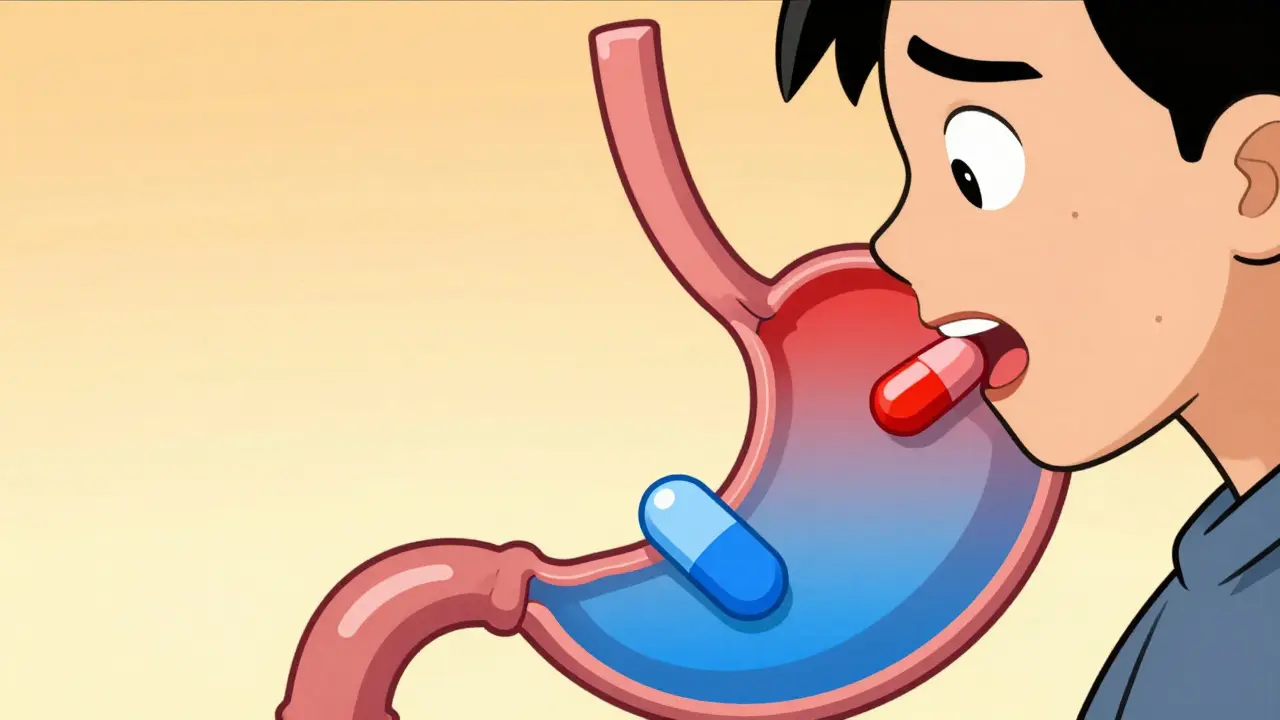
Acid-reducing medications are drugs like proton pump inhibitors (PPIs) and histamine H2-receptor antagonists (H2RAs) designed to reduce stomach acid. PPIs such as omeprazole were first approved in 1989, while H2RAs like cimetidine (Tagamet) became available in 1976. They work by either blocking the proton pump in stomach cells (PPIs) or histamine receptors (H2RAs), raising gastric pH from normal fasting levels of 1.0-3.5 to around 4.0-6.0.
These medications are commonly prescribed for GERD, ulcers, and other acid-related conditions. But their effect on stomach acidity doesn’t just help with digestion-it also changes how other drugs get absorbed into your bloodstream. This is where problems start.
How pH Changes Affect Drug Absorption
The key lies in the Henderson-Hasselbalch equation. This formula explains how a drug’s solubility depends on stomach pH. Most oral drugs are either weak bases (pKa >7) or weak acids (pKa <7). Weak bases, like atazanavir or dasatinib, need an acidic environment to dissolve properly. When ARAs raise stomach pH, these drugs stay in a non-ionized form and can’t dissolve well. This means less drug enters your bloodstream, making it less effective.
On the flip side, weak acids like aspirin might absorb better at higher pH, but this rarely causes real-world problems. The bigger concern is that 70% of oral medications are weak bases, according to drug databases analyzed in 2024. The FDA confirms that 25-50% of the top 200 prescribed drugs in the U.S. fall into this high-risk category.
Real-World Examples of Dangerous Interactions
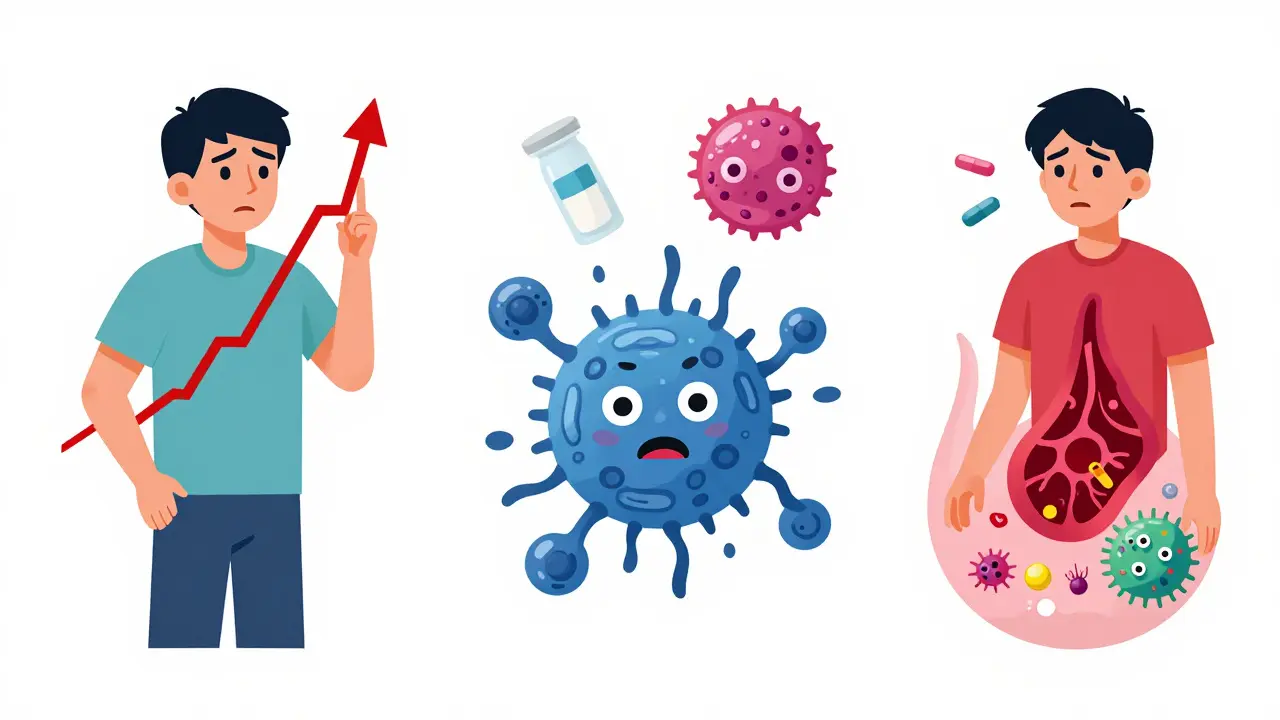
Some drugs are especially vulnerable. Take atazanavir, an HIV medication. When taken with a PPI, its absorption drops by 74-95%. A patient in a Reddit thread reported their viral load jumped from undetectable to 12,000 copies/mL after starting omeprazole for heartburn. Their infectious disease specialist confirmed this is a classic interaction.
Dasatinib, used for leukemia, sees 60% less absorption with PPIs. A 2023 study of 12,543 patients found those taking both had 37% higher treatment failure rates. Similarly, ketoconazole, an antifungal, becomes almost useless when combined with PPIs-75% less absorption. The FDA specifically warns against using these drugs together.
Even common drugs like blood pressure medications can be affected. One Drugs.com user shared that their readings stayed 20 points higher until they realized Nexium was interfering with their treatment. These aren’t rare cases-the FDA’s adverse event database shows over 1,200 reports of therapeutic failure linked to ARA-drug interactions between 2020-2023.
PPIs vs H2 Blockers: How They Compare
| Factor | Proton Pump Inhibitors (PPIs) | H2 Blockers (H2RAs) |
|---|---|---|
| pH elevation duration | 14-18 hours daily | 8-12 hours daily |
| Typical interaction risk | 40-80% absorption reduction | 20-40% absorption reduction |
| High-risk drugs | Atazanavir, dasatinib, ketoconazole | Similar drugs but less severe effects |
| Dosing recommendations | Avoid or stagger by 2 hours before PPI | Stagger by 2 hours before H2RA |
PPIs are generally more problematic than H2RAs. They cause deeper, longer-lasting pH changes. A 2024 JAMA Network Open study found PPIs reduce absorption of pH-dependent drugs by 40-80%, compared to 20-40% for H2RAs. This is why the FDA requires labeling changes for 28 drugs specifically mentioning PPI interactions-up from just 12 in the prior five years.
How to Manage These Interactions
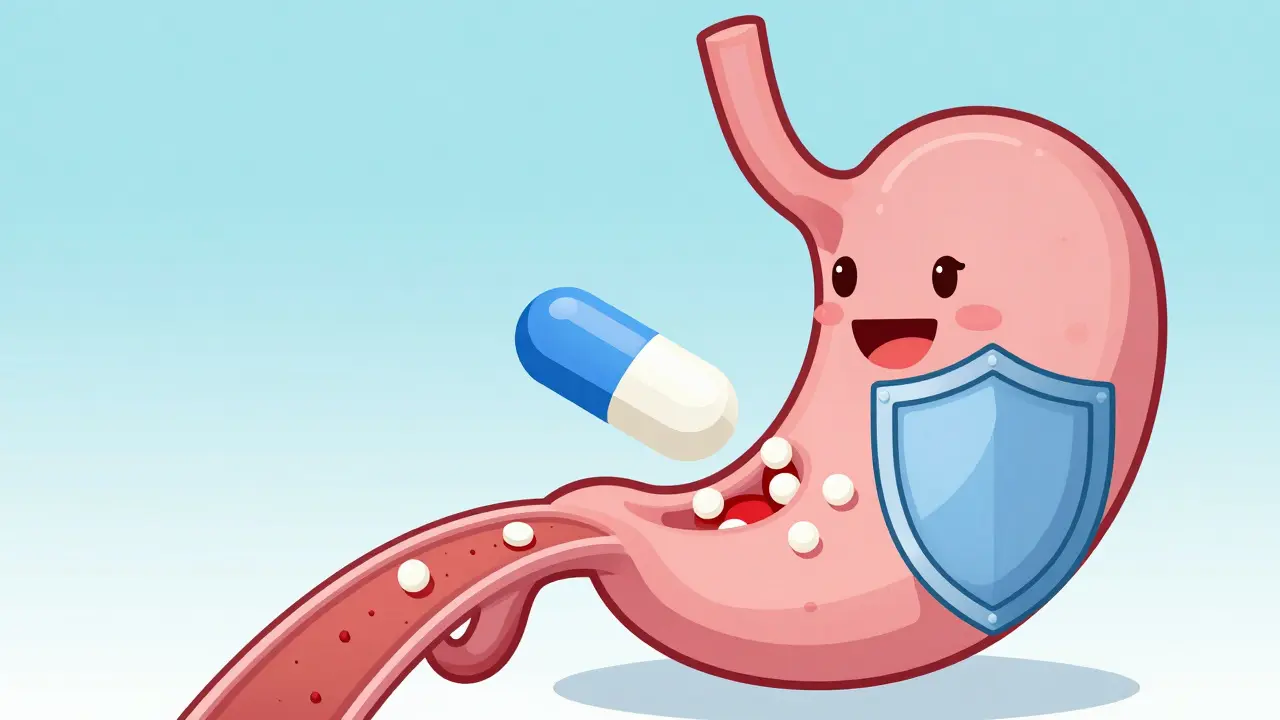
First, talk to your pharmacist or doctor. They can check for potential conflicts when you’re prescribed new medications. For unavoidable combinations, staggering doses helps. Take the affected drug 2 hours before the acid reducer-this gives it time to absorb before stomach pH rises. But remember, this only reduces the interaction by 30-40%, so it’s not foolproof.
For some drugs, switching to an alternative might be safer. For example, the antifungal itraconazole has a less severe interaction with PPIs than ketoconazole. In HIV treatment, switching from atazanavir to another protease inhibitor like darunavir avoids the issue entirely.
Pharmacists play a critical role here. A 2023 study found pharmacist-led medication reviews reduced inappropriate ARA co-prescribing by 62% in Medicare patients. Electronic health record systems now flag high-risk combinations, with 78% of clinicians following these alerts in 2023. Still, many patients don’t know to ask about these interactions-that’s why clear communication matters.
What’s Next for Acid-Reducing Medications?
Researchers are working on solutions. New molecular entities in development increasingly use pH-independent delivery systems. Nature Reviews Drug Discovery reports 37% of new drugs in clinical trials now have special coatings to bypass pH issues. AI tools like Google Health’s 2024 prototype predict interactions with 89% accuracy, helping doctors make safer choices.
Deprescribing efforts are also growing. The American Gastroenterological Association aims to reduce inappropriate PPI use by 25% by 2027. Right now, 30-50% of long-term PPI users don’t need them, contributing to thousands of preventable treatment failures yearly. Simple checks-like asking if you still need the medication after a few weeks-can make a big difference.
Can acid-reducing medications make my other drugs less effective?
Yes. Acid-reducing medications like PPIs and H2 blockers raise stomach pH, which can prevent certain drugs from dissolving properly. Weak base drugs like atazanavir (HIV treatment), dasatinib (leukemia drug), and ketoconazole (antifungal) are especially affected. For example, atazanavir absorption drops by up to 95% when taken with a PPI, risking treatment failure.
Which common medications are most at risk?
The FDA identifies 15 high-risk drugs. Top examples include atazanavir (HIV), dasatinib (leukemia), ketoconazole (antifungal), and certain blood pressure meds like nifedipine. Even common drugs like mycophenolate (used after organ transplants) and voriconazole (antifungal) show significant absorption issues. Check your medication labels-many now include specific warnings about acid-reducing drugs.
Can I take antacids instead of PPIs to avoid interactions?
Antacids like Tums or Maalox can be safer for short-term use because they work quickly and don’t last long. However, they’re not ideal for chronic issues. Take antacids at least 2-4 hours before or after other medications to avoid interference. For long-term acid reduction, H2 blockers like famotidine (Pepcid) generally have fewer interaction risks than PPIs, but always consult your doctor before switching.
How long should I wait between taking a drug and an acid reducer?
For weak base drugs, take them 2 hours before the acid reducer. This gives the drug time to absorb in a more acidic environment before pH rises. For example, take your HIV or leukemia medication first thing in the morning, then wait 2 hours before taking your PPI. But remember, this only reduces the interaction by about one-third-it’s not a perfect solution. Always check specific guidance for your medications, as some require longer separation times.
Are there any acid reducers that don’t interact with other drugs?
No acid reducer is completely free of interaction risks, but some are safer. H2 blockers like famotidine generally cause less severe interactions than PPIs. Newer formulations like dexlansoprazole (a PPI) have slightly lower interaction potential than older versions. However, all acid reducers affect stomach pH to some degree. The safest approach is to use the lowest effective dose for the shortest time needed-and always discuss alternatives with your healthcare provider.


Comments (15)