
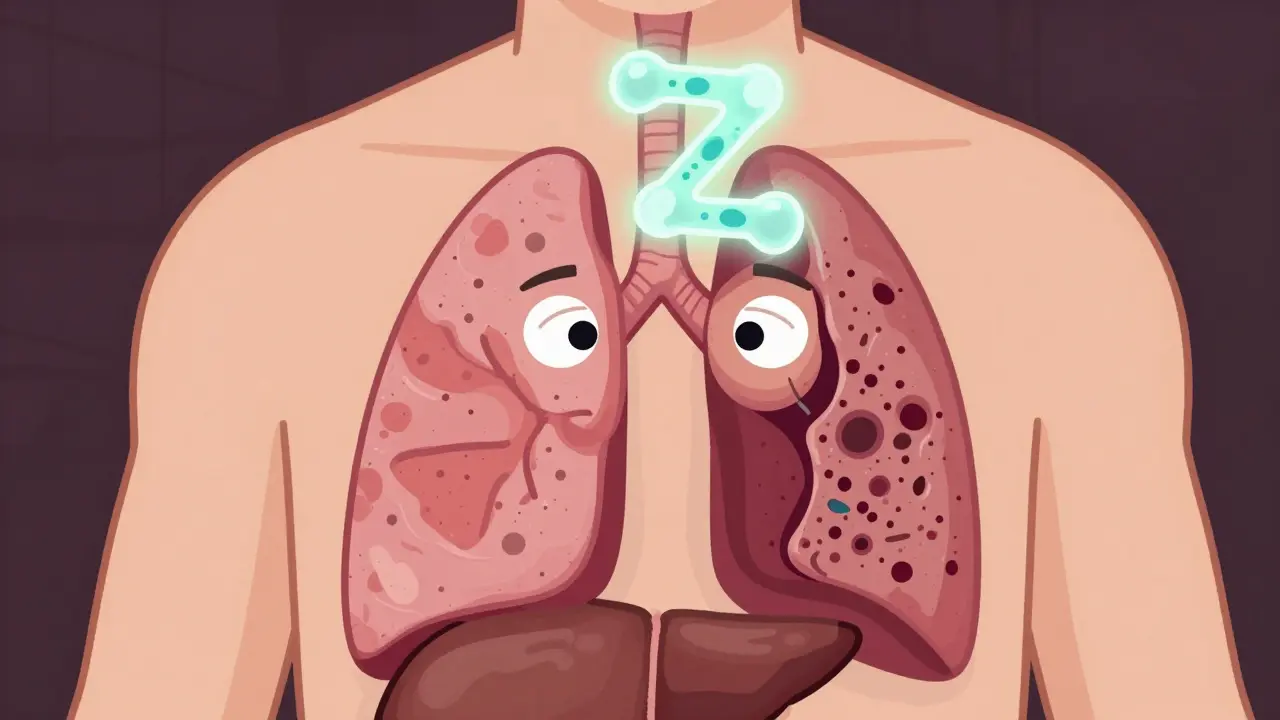
Alpha-1 antitrypsin deficiency isn’t just another form of COPD. It’s a genetic condition that silently damages your lungs and liver long before most people ever connect the dots. If you’ve been told you have emphysema or chronic bronchitis but never smoked-or if you quit smoking years ago and still got worse-this might be why. About 3% of people diagnosed with COPD actually have this hidden genetic cause. And most of them didn’t know it until years of misdiagnoses and frustration. This isn’t rare. It’s overlooked.
What Exactly Is Alpha-1 Antitrypsin Deficiency?
Alpha-1 antitrypsin (AAT) is a protein made in your liver. Its job? To protect your lungs from damage caused by white blood cells called neutrophils. These cells fight infection, but they also release an enzyme called neutrophil elastase that can break down lung tissue. Normally, AAT steps in and shuts that enzyme down. In people with AAT deficiency, the liver either doesn’t make enough of this protein, or what it makes is misshapen and gets stuck inside liver cells.
This leads to two problems at once: your lungs lose protection and slowly get destroyed (emphysema), and your liver gets clogged with faulty protein, which can lead to scarring (cirrhosis) or even liver cancer. The root cause? Mutations in the SERPINA1 gene on chromosome 14. The most dangerous version is called the Z allele. If you inherit two copies-one from each parent-you have the ZZ genotype. That’s the most severe form. About 1 in 2,000 to 1 in 5,000 people worldwide carry this genotype. In the U.S., roughly 100,000 people have it, but only 10% have been diagnosed.
Why It’s Different From Regular COPD
Most COPD happens after decades of smoking. It usually shows up after age 60, and the damage is mostly in the upper parts of the lungs. AATD is different. People often start having trouble breathing in their 30s or 40s-even if they’ve never smoked. The lung damage shows up in the lower lobes, not the top. That’s a key clue doctors miss.
Smoking makes AATD worse. Fast. Someone with ZZ genotype who smokes will likely need oxygen by age 45. But someone with the same genotype who never smokes? They might live into their 70s with only mild symptoms. Quitting smoking after diagnosis can cut your risk of severe lung damage by up to 60%. That’s not a small win. It’s life-changing.
How Is It Diagnosed?
If you have COPD, asthma with fixed airflow obstruction, unexplained liver disease, or a family history of early lung or liver problems, you should be tested. The first step is a simple blood test to measure your AAT level. If it’s below 11 μM (about 50 mg/dL), you need further testing. That means genotyping-looking at your DNA to see which gene variants you carry-or phenotyping, which checks the actual shape of the protein in your blood.
It takes weeks to get results. Many people wait years. On average, patients see three different doctors over eight years before getting the right diagnosis. Common misdiagnoses? Asthma, bronchitis, or just "old smoker’s lungs." But if you’re under 45, have low lung function, and no smoking history, it’s time to ask: Could this be AATD?
Treatment Options: What Works and What Doesn’t
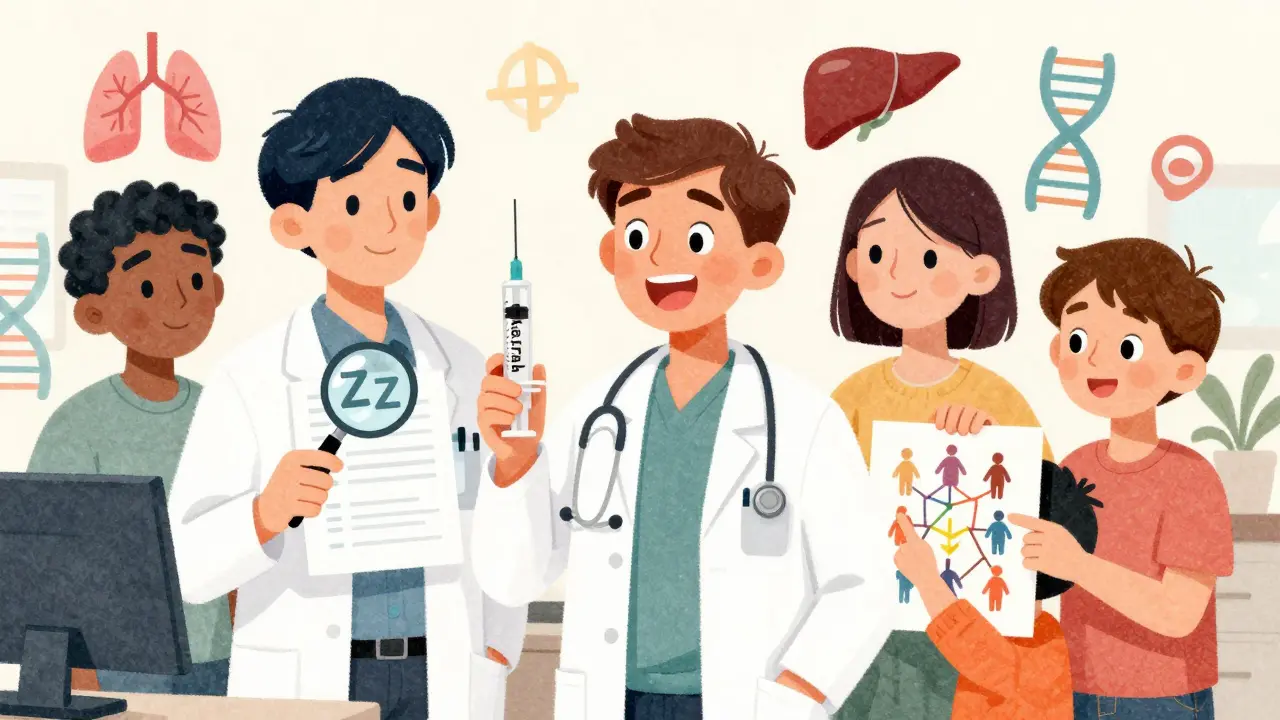
There’s no cure. But there is a treatment that slows lung damage: augmentation therapy. This means getting weekly IV infusions of purified human AAT protein. Brands like Prolastin-C, Zemaira, and Aralast NP are FDA-approved. The goal? Keep your blood levels above 11 μM-the minimum needed to protect your lungs. Most patients end up with levels between 14-20 μM after treatment.
But here’s the catch: this therapy only helps your lungs. It does nothing for liver damage. And it’s expensive-$70,000 to $100,000 per year. Insurance often denies coverage at first. Many patients need to appeal multiple times. Some clinics have dedicated staff just to handle these appeals.
There’s a new option: a subcutaneous (under-the-skin) version called Kedrab, approved in 2022. It’s easier than IV infusions. You can do it at home. No need for a nurse or clinic visit. That’s a big deal for people who work full-time or live far from hospitals.
What About Liver Disease?
While lung treatment exists, liver damage from AATD has no targeted drug yet. If your liver gets badly scarred, a transplant may be the only option. About 10-15% of people with ZZ genotype develop serious liver disease by age 50. Children with AATD can also get liver problems-some are diagnosed as newborns because of jaundice or enlarged livers. That’s why newborn screening is starting in 12 U.S. states. Early detection means monitoring and intervention before things get critical.
Who Should Get Tested?
Testing isn’t just for people with symptoms. If you have a family member with AATD, you should get checked-even if you feel fine. The condition is inherited in an autosomal codominant pattern. That means if you have one bad copy (like MZ), you might still have slightly lower AAT levels and a higher risk of lung damage, especially if you smoke or are exposed to dust or pollution.
The American Thoracic Society and European Respiratory Society both recommend testing everyone diagnosed with COPD, asthma with fixed obstruction, or unexplained liver disease. Yet most doctors don’t order it. Patients often have to ask. Bring up the possibility. Say: "Could this be Alpha-1? My brother has it. I never smoked. I’m 41 and already on oxygen."
Life With AATD: Real Challenges
Living with AATD means adjusting to lifelong treatment. Weekly infusions take two hours each. Some people develop vein problems from repeated needle sticks. Others struggle to fit appointments into work schedules. One patient on a support forum said, "I missed my kid’s soccer game for the third time this month because the clinic was booked."
But there’s hope. Many people report that once they got diagnosed, everything changed. They stopped blaming themselves. They quit smoking. They started exercising. They got genetic counseling. They tested their kids. One Reddit user wrote: "Knowing I had ZZ genotype didn’t scare me-it freed me. I stopped living like I was dying. I started living like I had a plan."
The Future: What’s Coming Next?
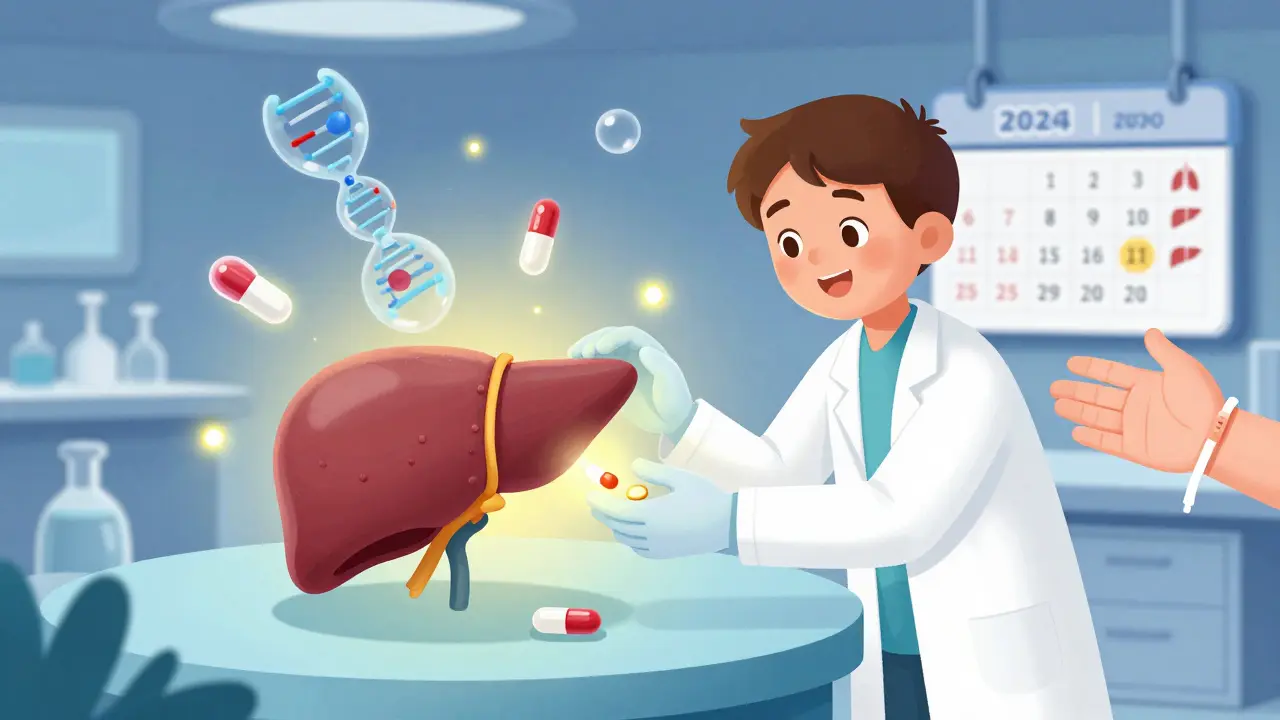
Researchers are working on drugs that fix the faulty protein inside liver cells. Small molecule correctors aim to stop the Z variant from clumping up. Gene therapy trials are underway to replace the broken SERPINA1 gene. RNA interference therapies are being tested to silence the mutant gene and reduce toxic buildup in the liver.
These aren’t just lab ideas. They’re in active clinical trials. If they work, they could change everything. Imagine a pill that fixes your liver and protects your lungs-no weekly IVs. That’s the goal.
Right now, the biggest barrier isn’t science. It’s awareness. Too many doctors still think COPD = smoker. Too many patients think their lungs are just "worn out." But AATD is different. It’s genetic. It’s treatable. And it’s hiding in plain sight.
Can you have Alpha-1 Antitrypsin Deficiency and not know it?
Yes. Many people live for decades without knowing they have it. Symptoms often start in the 30s or 40s, and because they mimic asthma or bronchitis, they’re misdiagnosed. About 90% of people with severe AATD (like ZZ genotype) haven’t been diagnosed. The only way to know is through a blood test and genetic testing.
Is AATD only a lung disease?
No. While it’s best known for causing early-onset emphysema, AATD also affects the liver. The faulty protein builds up in liver cells, leading to inflammation, scarring, and sometimes liver failure or cancer. Children with AATD can develop jaundice or enlarged livers at birth. Adults may develop cirrhosis without ever having lung symptoms.
Does augmentation therapy stop COPD progression?
It slows it down-especially if started early. Studies show people on weekly AAT infusions lose lung function at a slower rate than those who aren’t treated. It doesn’t reverse damage, but it can delay the need for oxygen or lung transplants. The key is starting before severe damage occurs. For people with FEV1 between 30-65% predicted, the benefit is clear.
Can you pass AATD to your children?
Yes. AATD is inherited. If you have two bad copies (like ZZ), all your children will get at least one bad copy. If you have one bad copy (MZ), each child has a 50% chance of inheriting it. Many people don’t realize they carry the gene until they have a child with symptoms or get tested after a diagnosis. Genetic counseling is strongly recommended for families.
Is AATD testing covered by insurance?
Testing is usually covered if you have COPD, unexplained liver disease, or a family history. But augmentation therapy is harder to get approved. Many insurers require proof of low AAT levels, confirmed genotype, and documented lung function decline. Initial claims are denied about 42% of the time. Appeals with supporting letters from pulmonologists often succeed.
What’s the best way to protect your lungs if you have AATD?
Stop smoking-immediately and permanently. Avoid secondhand smoke, dust, fumes, and air pollution. Get annual flu and pneumonia vaccines. Exercise regularly to keep your lungs strong. Follow up with a pulmonologist every 6-12 months for spirometry tests. If you qualify, start augmentation therapy. And get your family tested.
Are there new treatments on the horizon?
Yes. A subcutaneous AAT therapy (Kedrab) is now available, making treatment easier. Several drugs in clinical trials aim to fix the misfolded protein in the liver or silence the faulty gene. Gene therapy and RNA-based treatments could one day offer cures-not just symptom management. The Alpha-1 Foundation is pushing for newborn screening in all 50 states to catch cases early.
What to Do Next
If you or someone you know has unexplained lung or liver problems, ask your doctor for an AAT test. Don’t wait for symptoms to get worse. If you’re diagnosed, connect with the Alpha-1 Foundation. They offer free testing kits, support groups, and guidance on insurance appeals. Tell your family. Get your kids tested. This isn’t just about you-it’s about breaking the cycle.
Knowledge is power. And in the case of AATD, it might just save your lungs-or your child’s.


Comments (12)