

Biosimilar Cost Calculator
When your doctor prescribes a biologic drug for rheumatoid arthritis, Crohn’s disease, or cancer, you might hear about a cheaper alternative: a biosimilar. But if you’ve ever wondered whether these drugs are truly as safe and effective as the original - or if they’re just a cost-cutting trick - you’re not alone. Millions of patients worldwide are asking the same question. The answer isn’t complicated, but it’s buried under myths, marketing, and confusion.
What Exactly Is a Biosimilar?
A biosimilar isn’t a generic copy like the ones you get for pills. Biologics are made from living cells - think antibodies, proteins, or enzymes - and are incredibly complex. Even tiny changes in how they’re made can affect how they work. A biosimilar is a biological product that’s highly similar to an already-approved biologic, called the reference product. It’s not identical - no two biological products ever are - but the differences are so small, they don’t affect how safe or effective it is.
The European Medicines Agency (EMA) approved the first biosimilar in 2006. The U.S. FDA followed in 2015 with Zarxio, a version of filgrastim used to boost white blood cells after chemotherapy. Since then, over 26 biosimilars have been approved in the U.S., and more than 55 in Europe. These aren’t experimental. They’re being used daily in hospitals and clinics.
How Do We Know They’re Safe?
Regulators don’t just take a company’s word for it. Before a biosimilar gets approved, it must pass a mountain of tests:
- Analytical studies: Scientists compare the molecular structure, purity, and biological activity down to the last atom.
- Nonclinical studies: Animal tests check for toxicity and immune reactions.
- Clinical studies: Small trials compare how the biosimilar performs in humans - not against a placebo, but directly against the original drug.
Here’s the kicker: because the reference product already has decades of safety data, biosimilars don’t need massive, multi-year trials. That’s not a shortcut - it’s science. The FDA’s own biosimilars dashboard says it plainly: “Biosimilars have no clinically meaningful differences in safety, purity, and potency from the reference product.”
Real-world evidence backs this up. Sandoz, one of the biggest biosimilar manufacturers, tracked over 1.3 billion patient treatment days across eight different biosimilars. That’s more than 1.8 million doses of rituximab alone. No new safety signals popped up. The same patterns - good outcomes, expected side effects - matched the original drugs exactly.
Are They Just as Effective?
Effectiveness isn’t just about lab numbers. It’s about whether patients feel better, stay in remission, and avoid hospital visits.
Studies like NCT03729674 on ClinicalTrials.gov directly compare biosimilars and reference products. They look at things like:
- How often patients stop treatment
- Time to disease remission
- Rate of serious side effects
Across dozens of trials, the results are consistent: no meaningful difference. In fact, a 2023 review of real-world data from eight Sandoz biosimilars concluded their benefit-risk profile was identical to the originals - over 18 years of use.
Switching between the original and the biosimilar? Also safe. The FDA updated its guidance in February 2024 to reflect what doctors have seen: switching doesn’t increase risk. Patients who switch back and forth - whether due to insurance changes or cost - don’t have worse outcomes.
Why Do People Still Doubt Them?
It’s not about science. It’s about perception.
A 2019 AMA Journal of Ethics article found patients and even some doctors worry biosimilars are “less effective” or “riskier.” Why? Because of how they’re marketed. Originator companies often say biosimilars are “highly similar, but not identical” - which sounds scary, even though “not identical” is true for every biologic ever made.
On Reddit, a pharmacist with five years of hospital experience said: “I’ve seen zero adverse events from biosimilar switches. But patients refuse because they think it’s a cheap knockoff.”
And yes, there are anecdotal stories. One patient on a forum said their rash returned after switching to a biosimilar infliximab. But that’s one case. The FDA’s pharmacovigilance system - which tracks every reported side effect - shows no spike in problems when biosimilars are used. Isolated stories don’t prove a pattern.
Cost Savings Are Real - And Massive
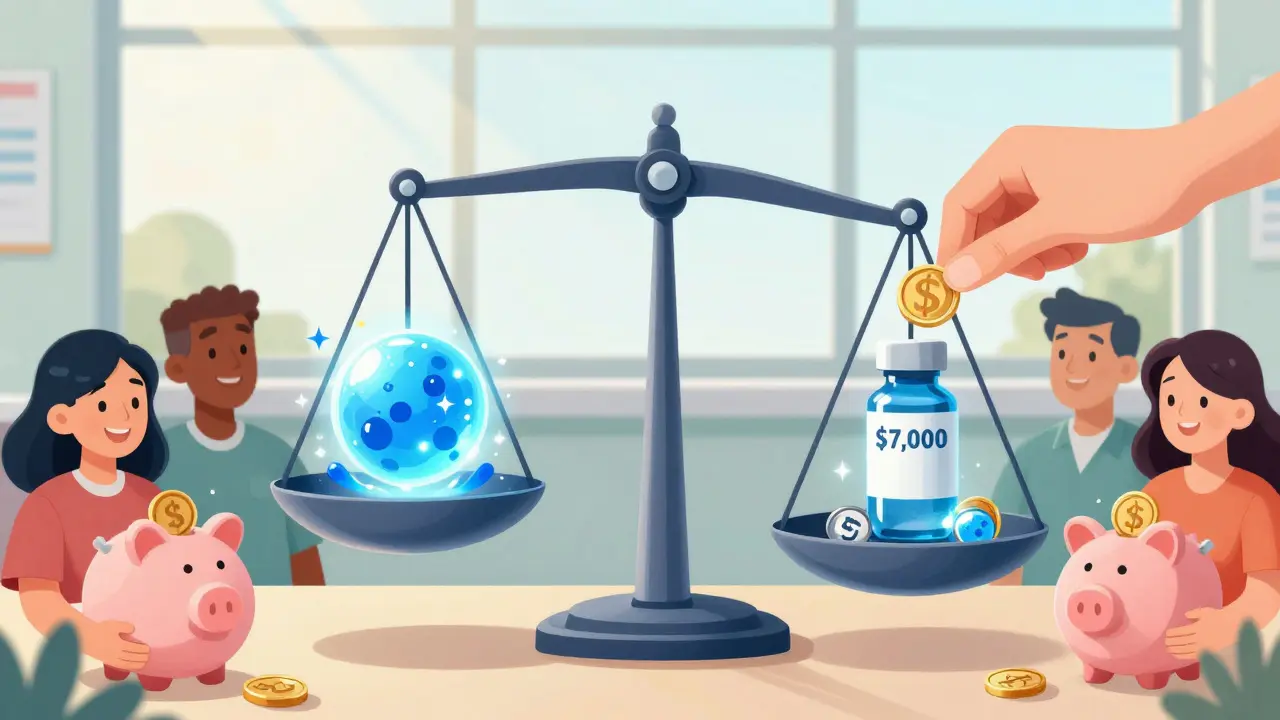
Biosimilars cost 15% to 30% less than the original biologics. That’s not a small discount. It’s life-changing for people on long-term treatments.
Take Humira (adalimumab), the world’s top-selling drug. For years, it cost over $7,000 a month. When biosimilars like Amjevita hit the market, prices dropped. One patient on MyBiosimilarsExperience.com reported saving $1,200 a month after switching. That’s over $14,000 a year.
From 2015 to 2022, biosimilars saved the U.S. healthcare system $31 billion. Projections say that could jump to $307 billion by 2030. That money isn’t just saved - it’s redirected. More patients get treated. Insurance premiums don’t spike as much. Hospitals can afford more care.
What About Switching Between Biosimilars?
A newer question: Can you switch from one biosimilar to another? Or from a biosimilar back to the original?
Yes. A 2024 study in Taylor & Francis Journal analyzed multiple switches and found no loss in effectiveness or increase in side effects. The body doesn’t “remember” which version it was on. As long as the product meets regulatory standards, switching is safe.
Some biosimilars are even labeled “interchangeable.” That means a pharmacist can swap them for the original without calling your doctor - just like generics. But this depends on state laws. In some places, you still need a new prescription. In others, the switch happens automatically.
Where Are We Now? The Big Picture
The global biosimilar market was worth $9.3 billion in 2022. By 2030, it’s expected to hit $58.1 billion. That’s not because they’re cheap - it’s because they’re trusted.
In Europe, biosimilars make up 65% of the filgrastim market and 55% of infliximab. In the U.S., adoption is slower - 35% and 28% respectively - mostly because of patent battles and rebates that keep original drugs expensive.
But the trend is clear: in 2023 alone, the FDA approved 12 new biosimilars - including four for Humira. That’s more than in the previous seven years combined. Oncology is next. As of early 2024, 17 biosimilars are approved for cancer treatments.
The World Health Organization, the EMA, and the FDA all agree: when approved through rigorous pathways, biosimilars are as safe and effective as the originals. No ifs, ands, or buts.
What Should You Do?
If you’re on a biologic and your insurer switches you to a biosimilar:
- Ask your doctor if it’s appropriate. For most conditions - rheumatoid arthritis, psoriasis, inflammatory bowel disease - the answer is yes.
- Don’t panic if you don’t feel an immediate change. Biologics work over weeks or months. You’re not supposed to feel a difference.
- Track your symptoms. If you notice new side effects, tell your doctor. But don’t assume it’s the biosimilar. Many side effects are tied to the disease, not the drug.
- Ask about cost. If you’re paying out-of-pocket, the savings could be thousands per year.
And if you’re hesitant? Talk to someone who’s been there. A patient who switched and saved money. A pharmacist who’s seen dozens of transitions. Real stories - not fear-based ads.
The science is settled. The data is overwhelming. Biosimilars aren’t a gamble. They’re a smarter, more accessible way to get the same life-saving treatment - without the same price tag.
Are biosimilars just generic drugs?
No. Generic drugs are exact copies of small-molecule pills, like aspirin or metformin. Biosimilars are copies of complex biological drugs made from living cells - like antibodies or proteins. They’re highly similar, but not identical. That’s why they need more testing than generics.
Can I switch from my biologic to a biosimilar safely?
Yes. Multiple studies, including those by the FDA and Sandoz, show switching from a reference biologic to a biosimilar doesn’t increase risk or reduce effectiveness. Over 1.3 billion patient treatment days have been logged with no new safety concerns. Your doctor will monitor you briefly after the switch, but most patients experience no change.
Why are biosimilars cheaper if they’re just as good?
Because they don’t need to repeat expensive clinical trials. The original biologic already proved safety and effectiveness over years of use. Biosimilar manufacturers only need to prove similarity - not start from scratch. This cuts development costs significantly, which translates to lower prices - typically 15% to 30% less.
Do biosimilars cause more side effects?
No. Regulatory agencies require biosimilars to match the reference product in safety profile. Studies tracking over a billion patient treatment days show no increase in side effects. Some patients report new reactions, but these are rare and often linked to other factors - not the biosimilar itself.
Are biosimilars approved for the same conditions as the original?
Yes - but not always automatically. A biosimilar must be tested in at least one condition to get approval. But regulators can approve it for all conditions the original drug treats, based on scientific evidence. This is called “extrapolation.” For example, a biosimilar approved for rheumatoid arthritis may also be approved for Crohn’s disease without separate trials.
Final Thought
Biosimilars aren’t the future. They’re the present. They’ve been used safely for nearly two decades. Millions of doses have been given. Billions of dollars have been saved. The evidence isn’t just strong - it’s overwhelming. If you’re being offered a biosimilar, it’s not a compromise. It’s a smarter choice - one that gives you the same treatment, with the same results, and a lot less cost.


Comments (13)