
Bupropion Drug Interaction Checker
Check Your Bupropion Interactions
This tool helps identify dangerous interactions between bupropion (Zyban) and other medications or alcohol. Important: Always consult your doctor before making any medication changes.
Important: This tool provides general information only. Never change your medication regimen without consulting your healthcare provider.
Always share your complete medication list with your doctor, pharmacist, and any healthcare provider before starting bupropion.
Bupropion is one of the most widely used non-nicotine medications to help people quit smoking. Sold under the brand name Zyban, it’s not a nicotine patch or gum-it works differently. Instead of replacing nicotine, it changes how your brain responds to cravings. That’s why it’s often chosen by people who want to avoid any nicotine exposure at all. But here’s the catch: bupropion doesn’t play nice with every other drug you might be taking. If you’re on other medications, especially for depression, seizures, or mental health, skipping a drug interaction check could put you at risk.
How Bupropion Actually Helps You Quit Smoking
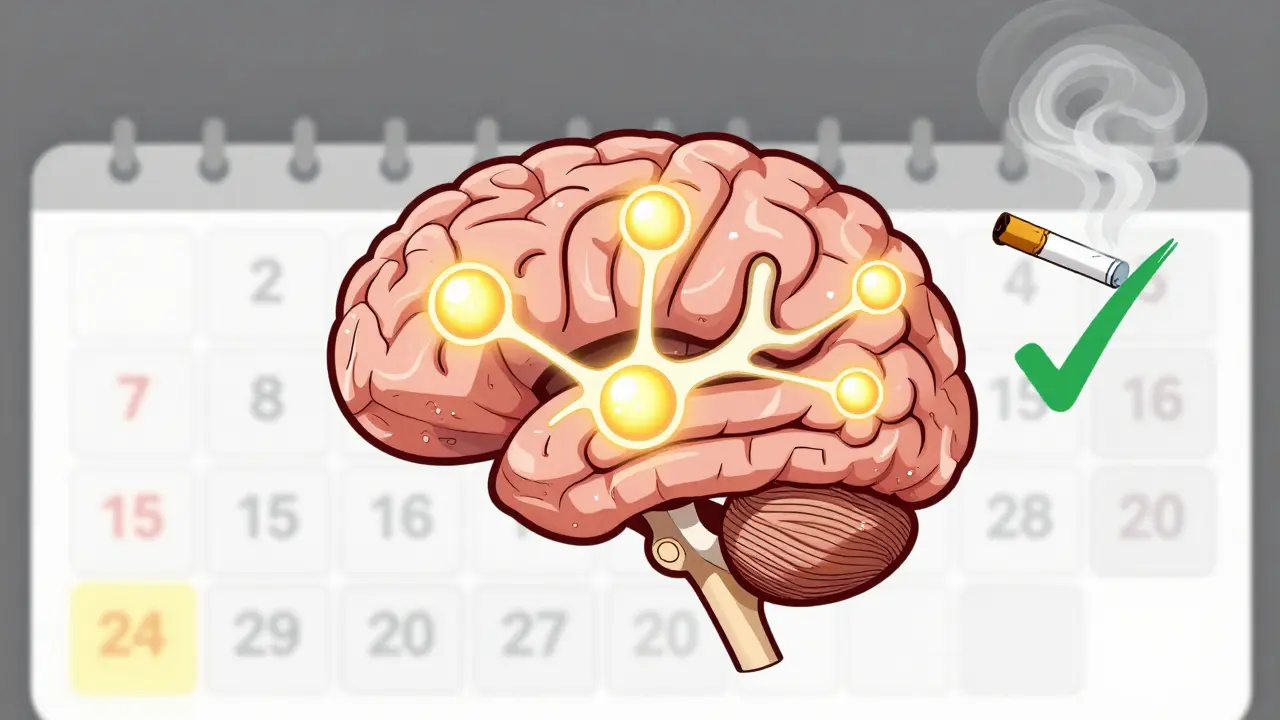
Bupropion doesn’t just dull cravings-it rewires them. It blocks the reuptake of dopamine and norepinephrine in the brain, which helps stabilize mood and reduces the reward you get from smoking. Studies show it cuts nicotine cravings by about 40% compared to a placebo. It also blocks nicotinic receptors in the brain, making smoking feel less satisfying if you slip up.
Unlike nicotine replacement therapy (NRT), which gives your body a steady drip of nicotine to ease withdrawal, bupropion takes time to build up. That’s why doctors tell you to start taking it 1 to 2 weeks before your quit date. You won’t feel the full effect right away. If you’re hoping for instant relief, you’ll be disappointed. But if you stick with it, the cravings fade-often by day 10.
Clinical trials show that about 19% to 23% of people who take bupropion are still smoke-free after six months. That’s two to three times better than placebo. For people with depression, it’s even more valuable-studies show it works just as well as varenicline (Chantix), but with less nausea and no heart-related concerns.
Who Shouldn’t Take Bupropion
Not everyone can use bupropion safely. There are absolute red flags:
- History of seizures-your risk goes up from 1 in 1,000 to much higher if you’ve had them before
- Current or past eating disorders like anorexia or bulimia
- Using or having used an MAOI (monoamine oxidase inhibitor) in the last 14 days
- Allergy to bupropion or any of its ingredients
- Already taking another bupropion product (like Wellbutrin)
These aren’t just warnings-they’re deal-breakers. Taking bupropion with an MAOI can cause a dangerous spike in blood pressure, serotonin syndrome, or even seizures. The 14-day waiting period after stopping an MAOI isn’t a suggestion-it’s a medical requirement.
Drug Interactions You Can’t Ignore
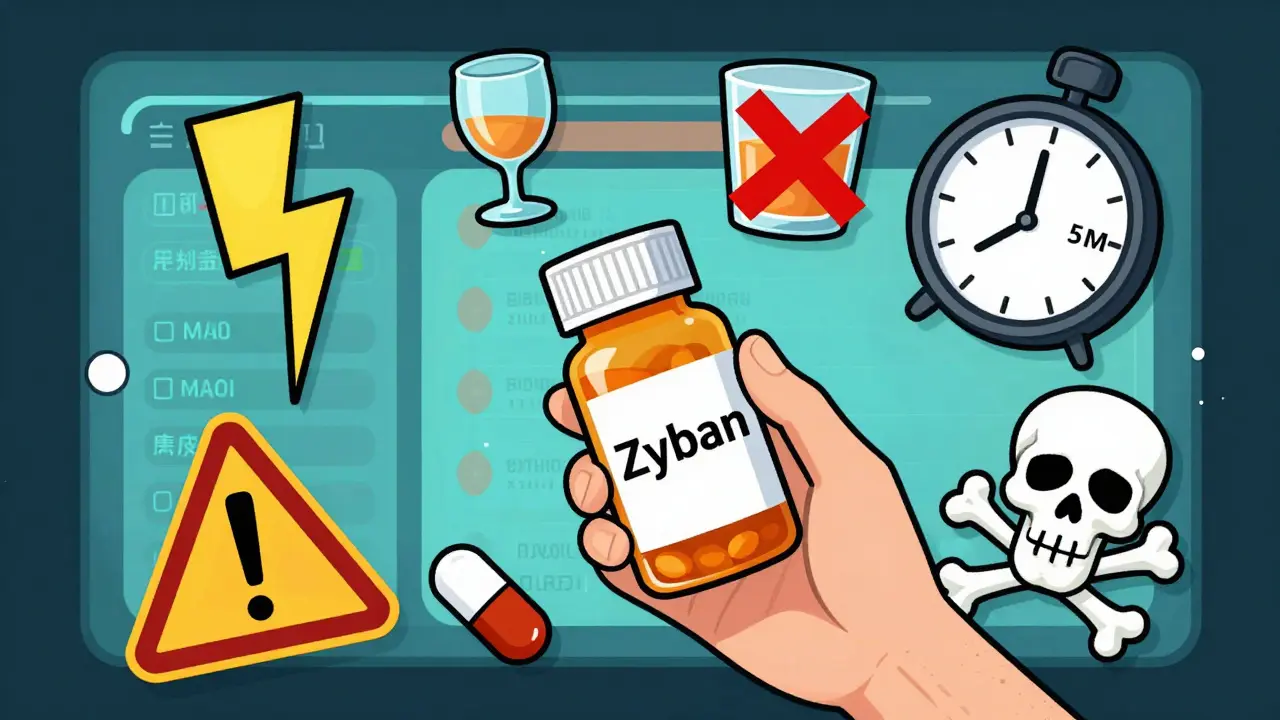
Bupropion interacts with more than 100 other medications. The most dangerous ones are:
- MAOIs (like phenelzine, tranylcypromine, selegiline)-never combine them. The risk of hypertensive crisis is real.
- Varenicline (Chantix)-the FDA says avoid this combo. While some studies say it’s safe, others show increased risk of agitation, hallucinations, and suicidal thoughts. Most doctors won’t prescribe both.
- Other antidepressants (SSRIs like sertraline, SNRIs like venlafaxine)-you might think stacking them helps, but it increases seizure risk without clear benefit.
- Alcohol-drinking while on bupropion raises seizure risk. Even moderate drinking can be dangerous.
- Stimulants (like Adderall, Ritalin)-they can amplify side effects like insomnia, anxiety, and high blood pressure.
- CYP2B6-metabolized drugs-bupropion is broken down by this liver enzyme. If you’re a slow metabolizer (about 25% of people), the drug builds up and increases side effects. If you’re a fast metabolizer, it might not work well at all.
Here’s a real-world example: A 42-year-old man was on sertraline for depression and started bupropion to quit smoking. Within a week, he had severe insomnia, racing thoughts, and tremors. His doctor didn’t know about the interaction. He ended up in the ER. That’s why you need to tell every provider-your psychiatrist, your dentist, your pharmacist-what you’re taking.
Common Side Effects and How to Manage Them
Side effects aren’t rare-they’re expected. About 60% of users experience at least one. The most common:
- Insomnia (24% of users)-take your second dose before 5 PM. Don’t take it after dinner.
- Dry mouth (12%)-chew sugar-free gum, sip water, avoid caffeine.
- Headache (9%)-usually fades after the first week.
- Nausea (13%)-take with food, not on an empty stomach.
- Increased anxiety or agitation-this happens in 1 in 10 people, especially in the first 2 weeks.
Most side effects are mild and go away. But if you feel new thoughts of self-harm, extreme restlessness, or hallucinations, stop the medication and call your doctor immediately. The FDA requires a black box warning for these neuropsychiatric risks.
Bupropion vs. Other Quitting Medications
Here’s how bupropion stacks up against the competition:
| Medication | Mechanism | 6-Month Quit Rate | Key Advantages | Key Risks |
|---|---|---|---|---|
| Bupropion (Zyban) | Dopamine/norepinephrine reuptake inhibition | 19-23% | No nicotine, good for depression, low cost | Seizure risk, insomnia, delayed effect |
| Varenicline (Chantix) | Nicotine receptor partial agonist | 19-22% | Strongest quit rates, reduces craving and satisfaction | Nausea (22%), neuropsychiatric side effects |
| NRT (Patch, Gum, Lozenge) | Delivers nicotine without smoke | 16-18% | Immediate relief, safe for heart patients | Still exposes you to nicotine, skin irritation |
| Combination (Bupropion + NRT) | Dual approach | 25-31% | Best success rate, FDA-approved combo now available | More side effects, higher cost |
Bupropion is cheaper than varenicline-generic versions cost around $35 for a 30-day supply. Chantix can run over $500. For people without insurance, that’s a huge factor. It’s also the only option that helps with weight gain after quitting. Many users report avoiding the 15-20 pound surge that often follows quitting smoking.
What Real Users Say
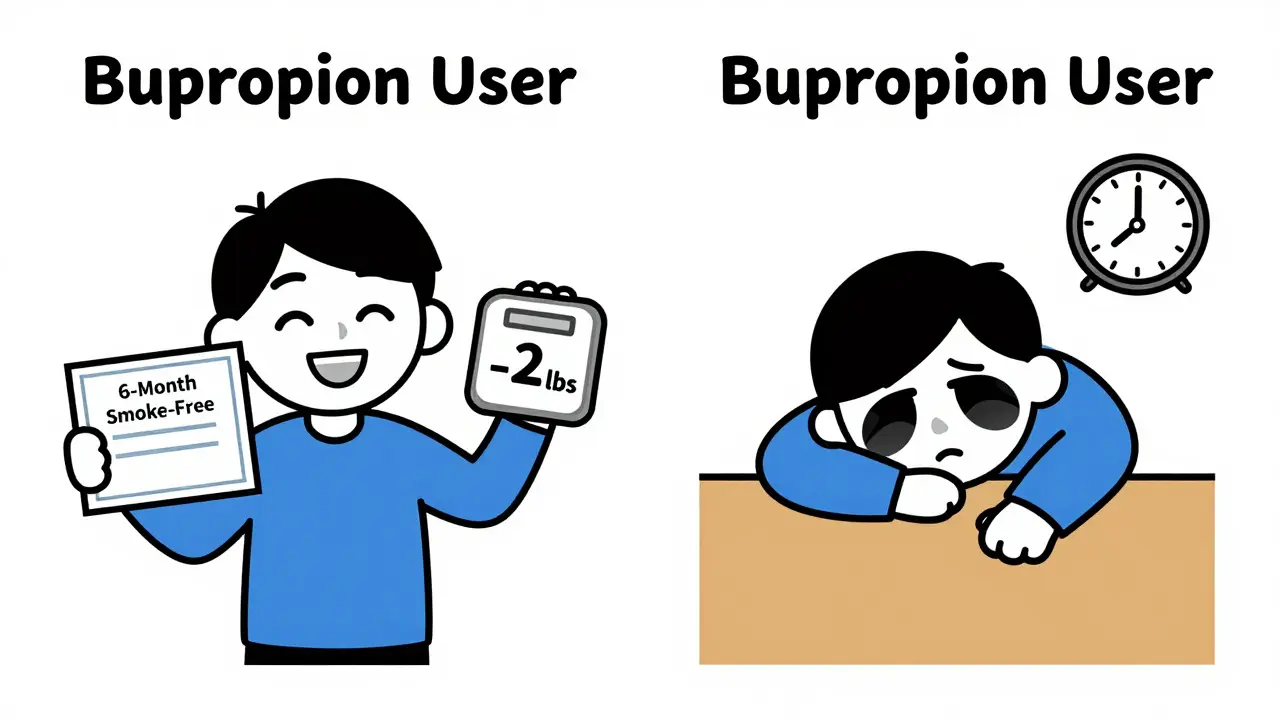
Online forums like Reddit and Drugs.com are full of stories. About half of users say bupropion changed their life:
- “Zyban eliminated my cravings completely after 10 days. I didn’t miss smoking at all.”
- “I lost 10 pounds after quitting-no binge eating like my sister.”
But the other half had a rough time:
- “I couldn’t sleep for two weeks. Quit after 10 days.”
- “It just didn’t work. I still wanted a cigarette every hour.”
One big complaint: it doesn’t work fast enough. People expect immediate relief like NRTs give. But bupropion is a slow burner. If you quit on day one and it doesn’t help right away, don’t give up. Stick with it for at least two weeks.
Those who finish the full 7-9 week course have a 63% success rate at 3 months. Those who quit early? Only 41% stayed smoke-free.
How to Use Bupropion Correctly
Follow the CDC’s dosing guide exactly:
- Start with 150 mg once daily for the first 3 days.
- On day 4, increase to 150 mg twice daily, at least 8 hours apart.
- Take the second dose before 5 PM to avoid insomnia.
- Begin treatment 1-2 weeks before your quit date.
- Continue for 7-9 weeks total-even after you’ve quit.
Don’t skip doses. Don’t double up if you miss one. If you miss a dose and it’s close to your next one, skip it. Don’t take it late at night. Don’t drink alcohol. Don’t mix it with other antidepressants without your doctor’s approval.
What’s New in 2026
The field is evolving. In 2023, the FDA approved a new bupropion-nicotine patch combo. Early data shows 31% of users stayed smoke-free at 6 months-better than either alone. That’s a game-changer for people who need both approaches.
Researchers are also testing a new version of bupropion designed to reduce seizure risk. It’s still in trials, but if it works, it could open the door for more people to use it safely.
Another big shift: personalized dosing. Your genes matter. About 25% of people are slow metabolizers of bupropion due to a CYP2B6 gene variation. If you’re one of them, standard doses can cause side effects. New tests can identify this before you start-ask your doctor if it’s available.
Long-term use beyond 12 weeks is still being studied. Right now, guidelines say 7-9 weeks. But some people benefit from longer use-especially if they’re vaping or have heavy cravings. More research is coming.
Final Thoughts
Bupropion is a powerful tool-but only if used correctly. It’s not magic. It’s not instant. It’s not risk-free. But for millions of people, it’s the difference between quitting and relapsing. If you’re considering it, talk to your doctor. Bring your full medication list. Ask about your seizure risk. Ask about your genes. Ask about combining it with NRT.
Most importantly: don’t try to do this alone. Use support tools like the CDC’s Tips From Former Smokers program. People who use counseling or apps alongside bupropion are 45% more likely to stick with it. Quitting smoking isn’t just about medication. It’s about building a new life.
Can I take bupropion if I’ve had seizures before?
No. If you’ve ever had a seizure, bupropion is strictly contraindicated. Even a single seizure in your past increases your risk significantly. The FDA warns that seizure risk rises to 1 in 1,000 at therapeutic doses-and it’s much higher in people with prior seizures. Never take it if you have a history of epilepsy, head trauma, or alcohol withdrawal seizures.
How long does it take for bupropion to start working for smoking cessation?
It takes about 7 to 10 days for bupropion to reach steady levels in your bloodstream. That’s why you need to start taking it 1 to 2 weeks before your quit date. You won’t feel immediate relief like you would with nicotine gum. Don’t give up if cravings are still strong after day 3. Most users report a major drop in cravings by day 10.
Can I drink alcohol while taking bupropion?
It’s not safe. Alcohol lowers your seizure threshold, and bupropion already increases that risk. Even moderate drinking-like one or two drinks-can trigger a seizure in susceptible people. If you’re trying to quit smoking, cutting out alcohol at the same time may also help reduce triggers. Most doctors recommend complete abstinence while on bupropion.
Is bupropion better than nicotine patches?
It depends. Nicotine patches work faster and are safer for people with heart disease. But they still deliver nicotine. Bupropion doesn’t-it targets brain chemistry instead. If you want to avoid nicotine entirely, bupropion is better. If you need quick relief from withdrawal, patches are more effective in the first week. Many people use both together for the best results.
Does bupropion cause weight gain after quitting?
Actually, the opposite. Many users report less weight gain than with other methods. Nicotine suppresses appetite, so quitting often leads to increased eating. Bupropion helps stabilize dopamine, which reduces cravings for sugary or high-carb foods. In clinical trials, users on bupropion gained an average of 2 pounds less than those on placebo after 6 months.
Can I take bupropion with antidepressants like sertraline?
It’s possible, but risky. Combining bupropion with SSRIs or SNRIs increases the chance of seizures and serotonin-related side effects. If you’re already on an antidepressant, your doctor may adjust your dose or switch you to something safer. Never combine them without medical supervision. Some psychiatrists do use them together for patients with depression and heavy smoking-but only with close monitoring.
What should I do if I miss a dose of bupropion?
If you miss a morning dose, take it as soon as you remember-but only if it’s more than 8 hours before your next dose. If it’s close to your next dose, skip it. Never double up. Missing one dose won’t ruin your progress, but missing several can lower your quit chances. If you’re struggling to remember, use a pill organizer or set phone reminders.
Is bupropion safe for people with anxiety?
It can be, but it’s not always the best choice. Bupropion can worsen anxiety in the first 1-2 weeks, especially in people with panic disorder or severe social anxiety. If you have anxiety, your doctor may start you on a lower dose or choose a different medication. Some people with anxiety do well on bupropion because it doesn’t cause drowsiness or emotional blunting like SSRIs. It’s individual.


Comments (10)