
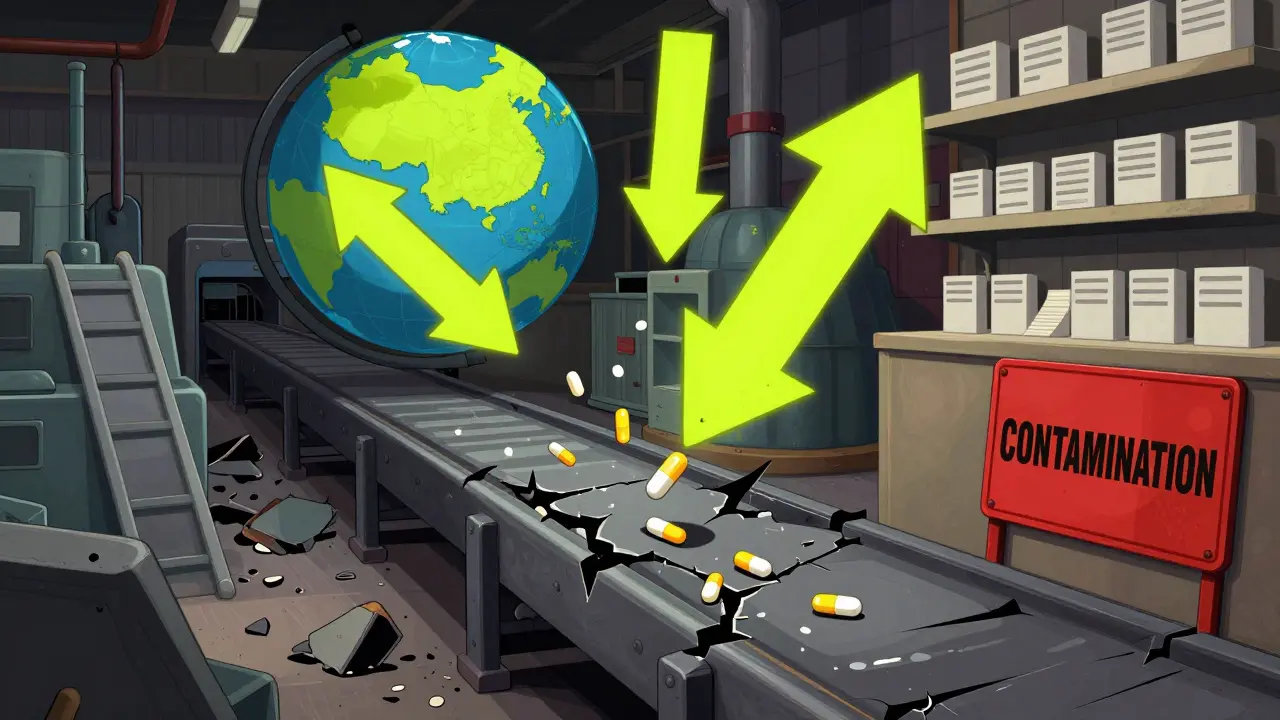
When a life-saving generic drug disappears from pharmacy shelves, it’s rarely because no one made it. It’s because the system that makes and moves those drugs has cracked under pressure. Generic drugs make up over 90% of prescriptions in the U.S., but they’re also behind 95% of all drug shortages. Why? It’s not one problem-it’s a chain of failures, starting at the factory and stretching all the way to the pharmacy.
Manufacturing Problems Are the Biggest Culprit
The single biggest reason generic drugs run out? Manufacturing failures. According to the FDA, 62% of all drug shortages between 2010 and 2023 were caused by issues at production facilities. These aren’t small glitches. They’re major shutdowns: contaminated production lines, broken equipment, or violations that force plants to stop making medicine until they fix everything. One contaminated tank can knock out supply for months.
These problems happen because manufacturers are running at full capacity-with no buffer. Unlike branded drugs, which have profit margins of 30-40%, generic drugs often make less than 15%. That means companies can’t afford to keep spare equipment, extra staff, or backup facilities. When a machine breaks or an inspection finds a flaw, there’s no Plan B. Production stops. And because so many drugs are made in just a few factories, that one shutdown affects thousands of patients.
Where the Medicine Is Made: A Global Bottleneck
Most of the raw ingredients for generic drugs-called active pharmaceutical ingredients, or APIs-come from just two countries: China and India. About 80% of global API production happens there. That’s not a coincidence. Labor is cheaper, regulations are looser, and companies can produce more for less. But this concentration creates a massive risk.
If a flood hits a factory in Hyderabad, or a new environmental rule shuts down a plant in Shanghai, the ripple effect is immediate. A single API shortage can cause dozens of final drug products to disappear. And because most U.S. drugmakers don’t make their own APIs, they’re completely dependent on foreign suppliers. When global shipping slows down-like during the pandemic-there’s no quick way to replace what’s stuck at sea.
One Factory, One Drug: The Danger of Sole Sourcing
One in five drug shortages happens because only one company makes that medicine. That’s called sole sourcing. It sounds efficient-until it isn’t. If that one company has a quality issue, shuts down for repairs, or just decides it’s not profitable anymore, there’s no one else to step in.
Why does this happen? Because making generic drugs is a race to the bottom. When multiple companies make the same drug, they compete on price. The lowest bidder wins. Over time, the smaller manufacturers get pushed out. The big ones buy up the competition, then stop making cheaper versions. Eventually, only one factory is left producing a drug that hundreds of thousands of people rely on.
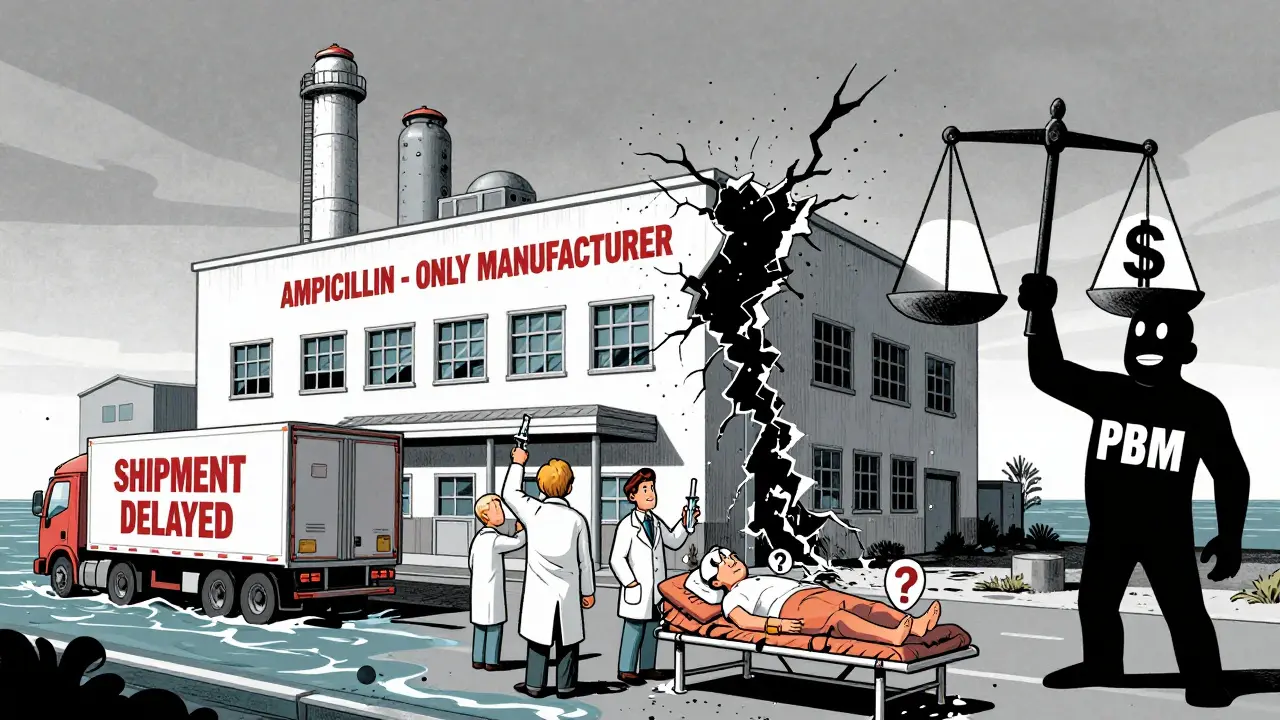
For example, the antibiotic ampicillin, used in hospitals for infections, was once made by six companies. Now it’s made by one. When that one plant had a contamination issue in 2021, hospitals across the U.S. scrambled. Patients got delayed treatments. Some had to use more expensive, less effective alternatives.
The Profit Problem: Why No One Wants to Make These Drugs
Generic drugs are cheap. That’s the point. But making them cheap means making them unprofitable. A typical generic drug might sell for $10 a bottle. After paying for ingredients, labor, compliance, and shipping, the profit might be $1.50. That’s not enough to upgrade equipment, hire more inspectors, or build a backup facility.
Manufacturers have to choose: make low-margin drugs and barely break even, or stop making them and focus on higher-margin products. Many choose to quit. Since 2010, over 3,000 generic drugs have been discontinued. Not because they’re outdated. Not because they’re unsafe. But because no one could make money making them.
Even worse, when a drug goes into shortage, the price doesn’t go up-it goes down. Why? Because pharmacy benefit managers (PBMs), who control 85% of U.S. prescription spending, demand even lower prices to keep their own profits high. That makes it even harder for manufacturers to stay in business. It’s a trap: the more a drug is needed, the less profitable it becomes to produce.
Who Controls the Supply? The Power of Pharmacy Benefit Managers
Most people don’t realize that three companies-CVS Caremark, Express Scripts, and OptumRx-control nearly all of U.S. prescription drug spending. These are pharmacy benefit managers, or PBMs. They decide which drugs get covered, which ones get pushed to the back of the line, and what price manufacturers can charge.
When a drug is in shortage, PBMs often don’t tell hospitals or pharmacists why. They might quietly switch formularies to push a different drug, even if it’s not the best option. The Federal Trade Commission found in 2023 that PBMs make these decisions without transparency or accountability. And because they negotiate bulk deals with manufacturers, they can pressure companies to cut prices so low that production becomes impossible.
This isn’t happening in Canada. There, drug pricing is more regulated. Public payers and manufacturers talk directly. When a shortage hits, they work together to find solutions. In the U.S., the system is built to maximize profit-not to ensure supply.
What Happens When the Medicine Isn’t There?
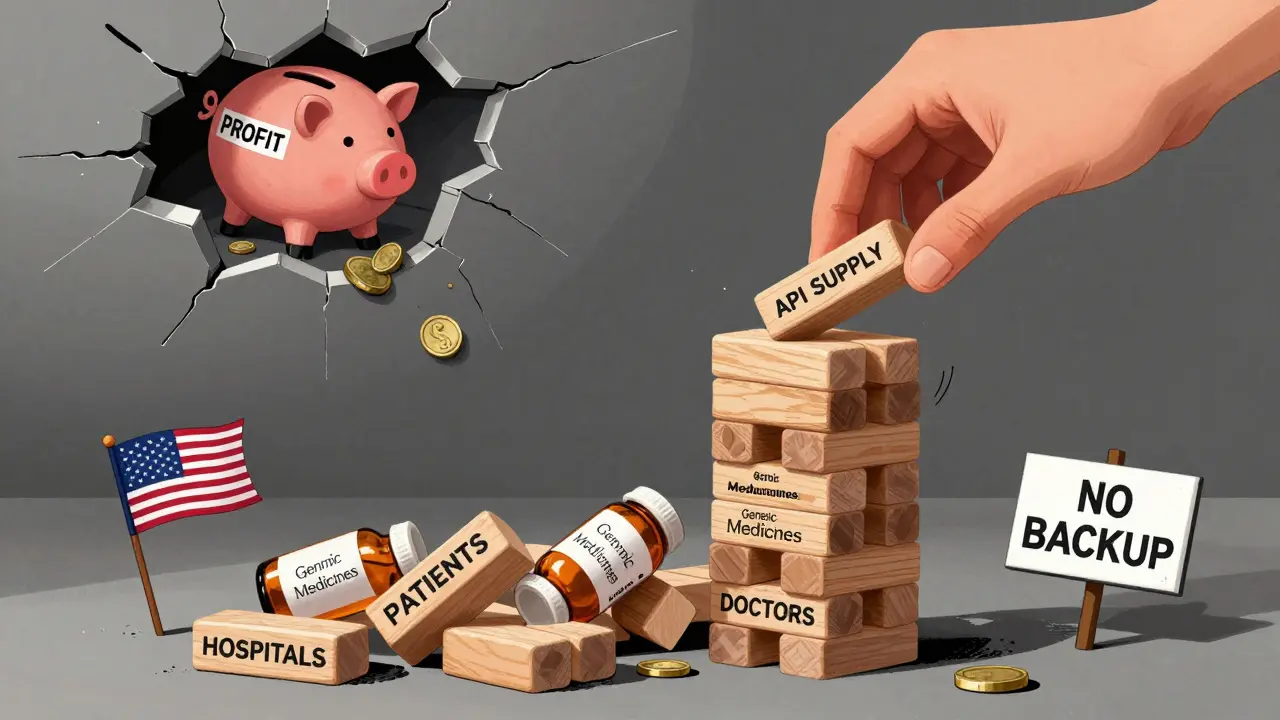
When a generic drug vanishes, it’s not just a logistics problem. It’s a medical emergency. Hospital pharmacists now spend 50-75% more time managing shortages than they did a decade ago. That’s time they’re not spending on patient care.
Doctors have to substitute drugs. Sometimes, a different antibiotic works. Sometimes, it doesn’t. Cancer patients get delayed chemo. Anesthesia drugs vanish right before surgery. Emergency rooms ration doses. One-quarter of shortage reports in the U.S. don’t even list a reason-no explanation, no timeline, no help.
Patients aren’t just inconvenienced. They’re put at risk. A 2022 study found that shortages led to higher rates of hospital readmissions and treatment failures. For people with chronic conditions-diabetes, epilepsy, heart disease-missing a dose can mean a trip to the ER.
Why the System Won’t Fix Itself
Everyone agrees: the system is broken. But no one wants to pay to fix it. Manufacturers say they can’t afford to build more plants. PBMs say they’re just trying to keep costs down. Regulators say they don’t have the power. And politicians? They wait until a crisis hits-then they promise change.
There are proposals. The RAPID Reserve Act, introduced in 2023, wants to create a strategic stockpile of critical generic drugs. It would fund domestic manufacturing to reduce reliance on foreign suppliers. But it’s still in committee. Meanwhile, the number of manufacturing sites in the U.S. keeps shrinking. The FDA registered 1,100 finished drug facilities in 2010. Today, it’s fewer than 900.
The truth is, this isn’t a temporary glitch. It’s a design flaw. The system was built for low cost, not resilience. And as long as profit comes before supply, shortages will keep happening.
What Needs to Change
Fixing this won’t be easy. But it’s not impossible. Here’s what needs to happen:
- Incentivize production: The government needs to pay manufacturers to keep making low-margin drugs-even if they don’t make a lot of money. A small subsidy per unit could keep factories open.
- Require redundancy: No critical drug should be made in just one place. Regulations should force manufacturers to have backup facilities or approved alternate suppliers.
- Bring API production home: Invest in domestic API manufacturing. Not just for national security, but for reliability.
- Force transparency: PBMs and manufacturers must report shortages with real reasons and timelines-not vague statements.
- Build a national stockpile: Canada has one. The U.S. only has a stockpile for bioterrorism. We need one for everyday medicine.
Generic drugs save lives and save money. But they can’t do that if they’re not available. The system was designed to cut costs. Now, it’s costing us more-in time, in risk, and in lives.
Why do generic drug shortages happen more often than branded drug shortages?
Generic drugs face far more intense price competition than branded drugs. Branded drugs have patent protection, which lets companies charge higher prices and invest in reliable manufacturing. Generic manufacturers, by contrast, compete on price alone. With profit margins often under 15%, they can’t afford backup equipment, quality buffers, or multiple production sites. This makes them far more vulnerable to any disruption-whether it’s a factory shutdown, a supply chain delay, or a regulatory inspection. As a result, over 95% of all drug shortages involve generic medications.
Are drug shortages getting worse?
Yes. The number of drug shortages peaked in 2018 and remained near record levels through 2023. The pandemic exposed how fragile the system was, and while some disruptions eased, the underlying causes didn’t change. Fewer manufacturers, lower margins, and more reliance on overseas suppliers mean shortages are now a permanent feature of the U.S. healthcare system. Experts predict they’ll continue unless major reforms are made to how generics are produced and paid for.
Can’t the FDA just approve more manufacturers to fix shortages?
The FDA can and does approve new manufacturers, but that doesn’t solve the problem fast enough. It takes 18 to 36 months to build a new facility, get it approved, and start producing at scale. Meanwhile, the existing manufacturer may still be the only one making the drug. Even when new producers enter the market, they often face the same pricing pressures that drove the original ones out. Without financial incentives or guaranteed demand, new manufacturers can’t justify the risk.
Why don’t manufacturers just raise prices when a drug is in short supply?
They can’t-not easily. Pharmacy benefit managers (PBMs) control 85% of U.S. prescription drug spending. They negotiate bulk contracts with manufacturers and demand the lowest possible prices. Even when a drug is in short supply, PBMs often refuse to pay more, fearing higher costs for insurers and patients. This keeps prices artificially low, making it unprofitable for manufacturers to ramp up production. So instead of raising prices, many manufacturers just stop making the drug altogether.
Is this problem unique to the United States?
No, but the U.S. has far worse shortages than other high-income countries. Canada, for example, has a similar number of generic drugs and manufacturing challenges-but far fewer shortages. Why? Canada has centralized drug purchasing, stronger communication between stakeholders, and a national stockpile for essential medicines. The U.S. system is fragmented, profit-driven, and lacks coordination. The same drug that’s in short supply in the U.S. is often available in Canada, simply because the system there is designed to prioritize access over cost-cutting.


Comments (15)