
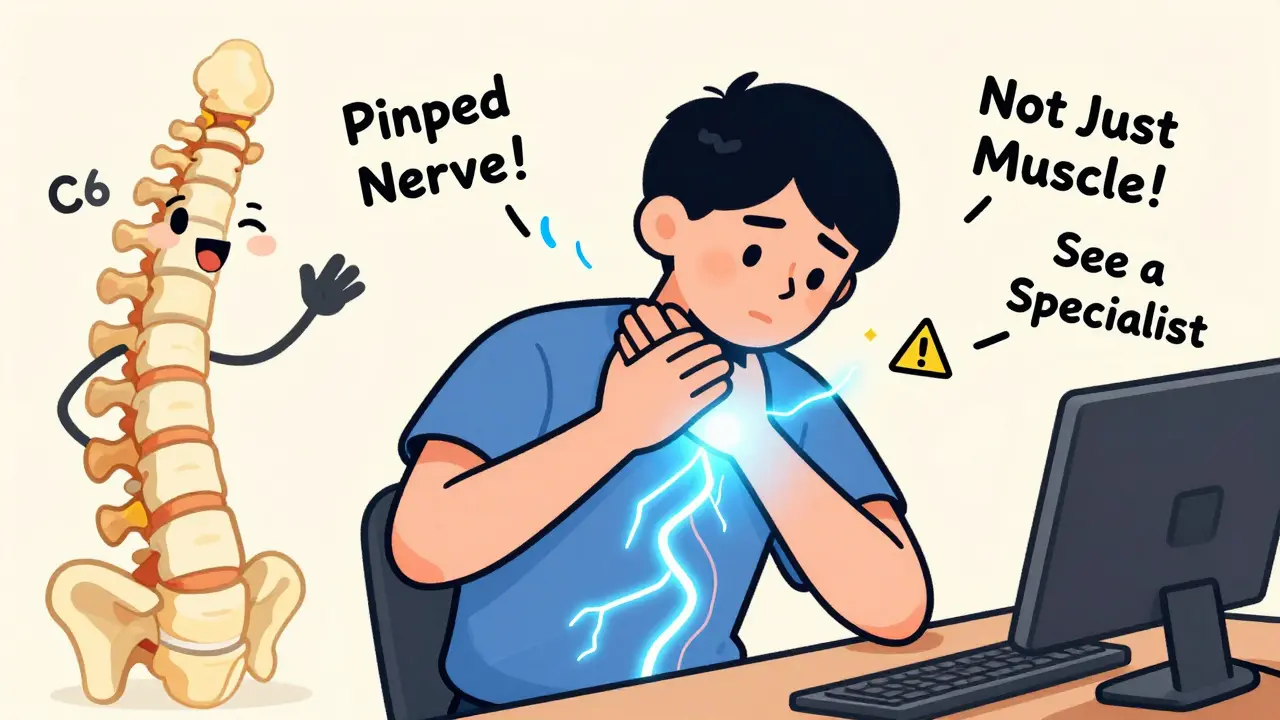
When your neck or lower back sends sharp, shooting pain down your arm or leg, it’s not just a sore muscle. It’s your nerve screaming for help. This is radiculopathy-a condition where a spinal nerve root gets squeezed or irritated, and it’s way more common than most people realize. In fact, about 1 in 50 adults will deal with it at some point. The good news? Most cases get better without surgery, if you know what to do and when to do it.
What Exactly Is Radiculopathy?
Radiculopathy happens when a nerve root-where the nerve exits your spine-gets pinched. It’s not a disease. It’s a symptom. And it shows up in two main places: your neck (cervical) or your lower back (lumbar). Cervical radiculopathy often feels like a burning or electric shock traveling from your neck into your shoulder, arm, or hand. Lumbar radiculopathy, often called sciatica, shoots pain from your lower back down your butt, thigh, calf, or even into your foot. It’s not just pain. You might notice numbness in your fingers or toes. Your grip could weaken. You might drop things. Or your foot might drag when you walk. These aren’t random glitches. They follow clear patterns based on which nerve is affected. For example, if the C6 nerve in your neck is compressed, you’ll feel it along your thumb and index finger. If L5 is pinched, you’ll have trouble lifting your big toe. These aren’t guesses-they’re mapped out in medical textbooks because they’re so consistent.Why Does It Happen? The Real Causes
People think it’s just "bad posture" or "lifting wrong." It’s more complex. Under 50, the #1 cause is a slipped or herniated disc. The soft center of the disc bulges out and presses on the nerve. After 50, it’s usually wear and tear-bone spurs, narrowed spaces between vertebrae, thickened ligaments. These slowly crowd the nerve over time. Cervical radiculopathy often comes after a car accident or sudden twist. About 23% of cases trace back to trauma. Lumbar radiculopathy? It’s tied to jobs that involve heavy lifting, twisting, or long hours standing. Construction workers, nurses, and warehouse staff are at higher risk. The data shows people who lift regularly are over three times more likely to develop it. And here’s something surprising: it’s not always the worst-looking MRI that causes the most pain. Some people have huge disc bulges on scans and feel fine. Others have tiny changes and are in agony. That’s why doctors don’t just look at images-they listen to your symptoms, test your strength, and check your reflexes. The story your body tells matters more than the picture.How Do You Know It’s Not Just a Stiff Neck or Back?
If your pain stays localized-just in your neck or lower back-it’s probably muscle strain. Radiculopathy travels. It follows the path of the nerve. Try this: sit down and slowly straighten your leg. If that triggers sharp pain down your calf, it’s likely sciatica. If you turn your head to the side and feel a jolt shoot into your shoulder, that’s cervical radiculopathy. Doctors use simple tests to confirm it. The Spurling test for neck pain: they gently press down on your head while turning it. If it reproduces your arm pain, it’s a strong sign. For the back, the straight leg raise test: you lie flat and they lift your leg. If pain shoots down your leg before it reaches 60 degrees, it’s a red flag. MRI is the gold standard for seeing the nerve compression. It catches 92% of cervical disc herniations. CT scans? Less accurate. X-rays? Only show bone, not nerves. So if your pain lasts more than a few weeks and moves into your limb, get an MRI. Don’t wait. Early diagnosis means faster recovery.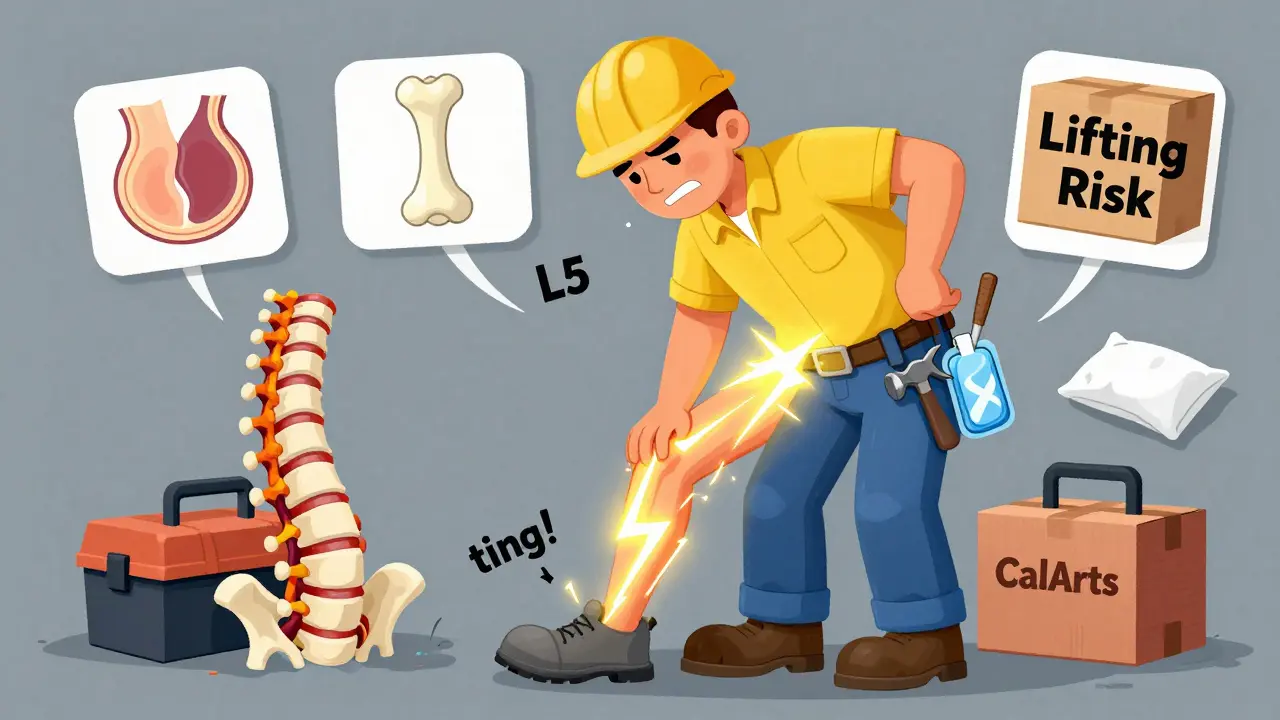
Conservative Treatment Works-If You Do It Right
Here’s the truth: 85% of people get better in 12 weeks without surgery. That’s not a guess. That’s from large studies published in top medical journals. But here’s the catch-you have to follow the plan. Not half-heartedly. Not when it feels better. Consistently. First step: give your nerves space. Avoid heavy lifting, prolonged sitting, or repetitive movements. Take short walks. Use a supportive pillow if you have neck pain. For lower back pain, try sleeping on your side with a pillow between your knees. Medications? Over-the-counter NSAIDs like ibuprofen (400mg three times a day) help reduce swelling around the nerve. But they don’t fix the cause. They just turn down the volume. Use them short-term, not as a long-term crutch. Physical therapy is the real game-changer. Not the generic "stretch and strengthen" routine you get at a chain clinic. Real rehab is personalized. For cervical radiculopathy, it starts with gentle traction-light weight pulling your head to open up space around the nerve. Then comes chin tucks, scapular retractions, and slow neck rotations. These aren’t just exercises. They’re nerve glides-movements that help the nerve slide freely instead of getting stuck. For lumbar radiculopathy, McKenzie exercises are key. Lie on your stomach and prop yourself up on your elbows. Hold it. Then push up into a full plank. This moves the disc material away from the nerve. Core stability comes later-planks, bird-dogs, dead bugs. But only after the sharp pain eases. Pushing too hard too soon makes it worse.What About Injections and Surgery?
Epidural steroid injections sound appealing. You get a shot near the nerve to reduce swelling. Some patients swear by them. But the science says they only help for 2 to 6 weeks. No long-term benefit. The Cochrane Review found no difference in recovery time compared to placebo. Yet, over half of pain specialists still use them because patients report feeling better-even if it’s temporary. Surgery isn’t a last resort. It’s a necessary step for a small group. If you’re losing muscle strength, having trouble controlling your bladder or bowels, or your pain is getting worse despite 6-8 weeks of rehab, you need to see a spine surgeon. Cauda equina syndrome-a rare but serious complication-requires emergency surgery. Don’t wait. If you feel numbness around your groin or can’t urinate, go to the ER. Most people don’t need surgery. Only 15% of cases progress that far. And even then, outcomes are good. 80% of patients who have a discectomy for lumbar radiculopathy report major improvement within a year.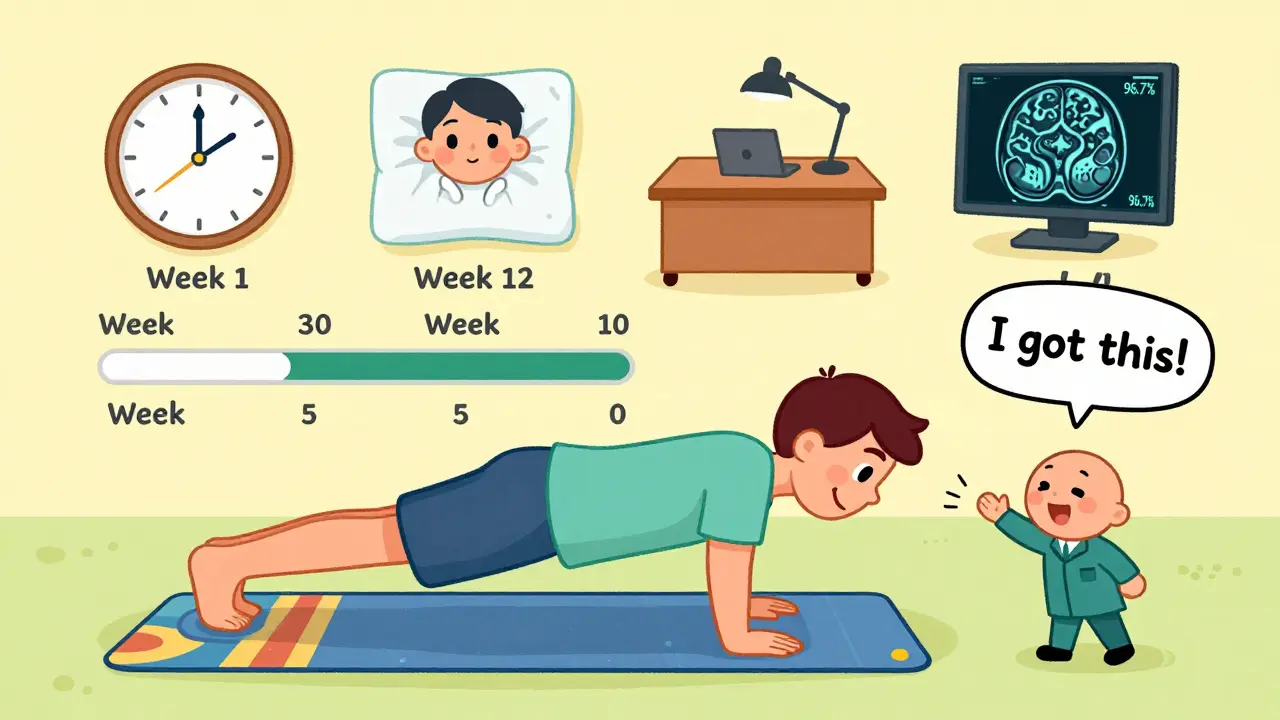


Comments (9)