
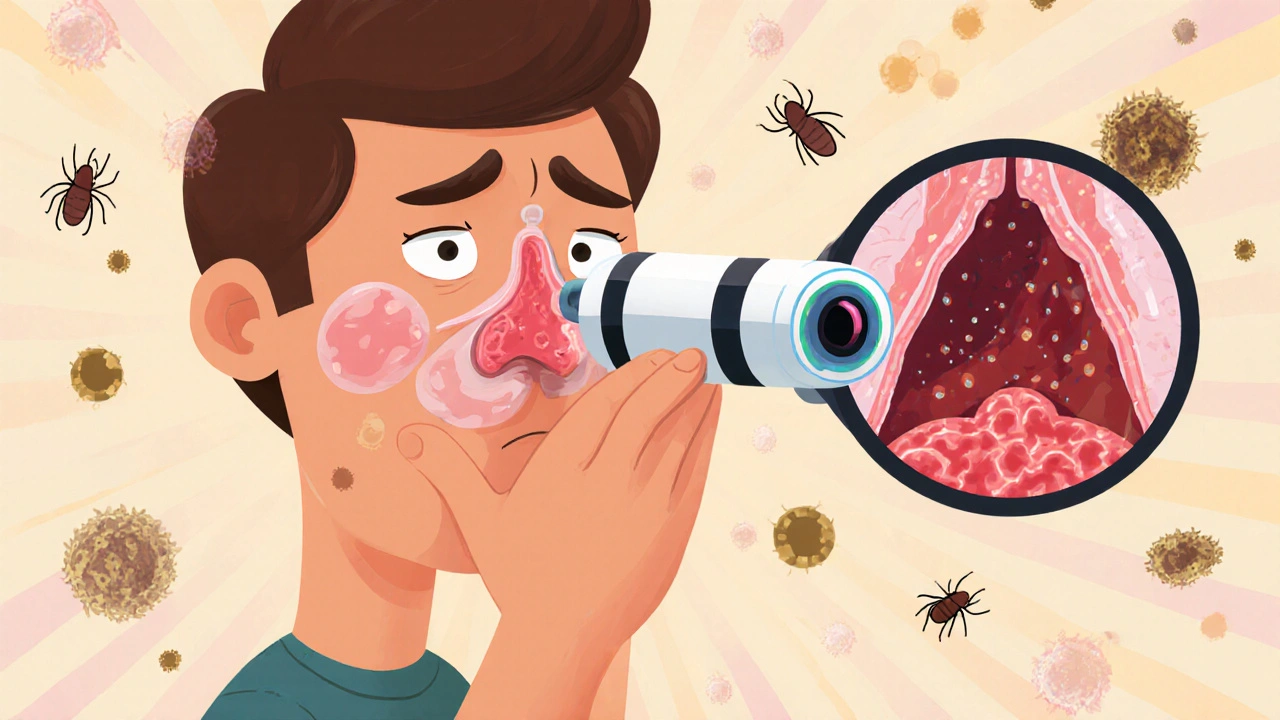
For many people, a stuffy nose that won’t go away isn’t just annoying-it’s exhausting. If you’ve had nasal congestion, facial pressure, or a lost sense of smell for more than three months, even after trying decongestants or antibiotics, you might be dealing with chronic sinusitis. Unlike a cold or a quick bout of sinus infection, this isn’t something that clears up in a week. It’s a long-term inflammation of the sinuses that can drag on for years if not properly managed.
What Exactly Is Chronic Sinusitis?
Chronic sinusitis, also called chronic rhinosinusitis, means your sinuses-the hollow spaces in your forehead, cheeks, and nose-are swollen and blocked for 12 weeks or longer, even with treatment. It’s not just a bad cold that won’t quit. It’s a condition where your body’s natural drainage system gets stuck, trapping mucus and triggering ongoing inflammation. According to the European Position Paper on Rhinosinusitis and Nasal Polyps (EPOS) 2020, you likely have it if you’re experiencing at least two of these symptoms for over three months: blocked nose, thick nasal discharge, facial pain or pressure, or trouble smelling things.Doctors don’t always know exactly why it starts, but they do know what fuels it. It’s rarely just a bacterial infection. In fact, about 70% of chronic cases aren’t caused by active germs at all. Instead, it’s more about your body’s reaction-whether it’s allergies, polyps, or environmental irritants like smoke or pollution.
The Three Main Types You Need to Know
Not all chronic sinusitis is the same. There are three main subtypes, and knowing which one you have changes how you treat it.- Chronic sinusitis without nasal polyps: This is the most common form. Symptoms are driven by inflammation from allergies, environmental triggers, or immune responses. You might feel pressure around your eyes or cheeks, and your nose feels constantly stuffed.
- Chronic sinusitis with nasal polyps: About one in four people with chronic sinusitis have these soft, grape-like growths inside the nose. They’re not cancerous, but they block airflow and mucus flow. People with this type often also have asthma or are sensitive to aspirin.
- Allergic fungal rhinosinusitis: This happens when your immune system overreacts to harmless fungi in the air. It’s less common but often more stubborn. You might notice thick, dark mucus and a strong loss of smell.
Getting the right diagnosis usually means a nasal endoscopy-where a thin camera looks inside your nose-or a CT scan to see if your sinuses are swollen or blocked. You can’t just guess based on symptoms alone.
How Allergies Make It Worse
If you have hay fever, eczema, or asthma, your chances of developing chronic sinusitis jump by 2.5 times. Why? Because allergies and sinus inflammation share the same inflammatory pathways. When your immune system reacts to pollen, dust mites, or pet dander, it doesn’t just make your eyes water-it also swells the lining of your sinuses.Antihistamines like loratadine or cetirizine can help reduce this reaction. Studies show they cut symptoms by 45-60% in allergic patients. But they’re not a cure. They just take the edge off. The real key is avoiding triggers. If you’re allergic to mold, fix the damp areas in your home. If pet hair triggers you, keep pets out of the bedroom. In dry climates, using a humidifier helps 40% of people breathe easier.
For those with Samter’s triad-asthma, nasal polyps, and aspirin sensitivity-doctors may recommend aspirin desensitization. This isn’t a quick fix. It takes weeks of carefully increasing doses under medical supervision, but 70-80% of people see major improvement in both polyps and breathing after completing it.
When Infections Play a Role (and When They Don’t)
Most people assume antibiotics will fix chronic sinusitis. They won’t. Not unless there’s a clear bacterial infection-and even then, it’s rare. The bacteria involved, like Streptococcus pneumoniae or Haemophilus influenzae, are usually only active during acute flare-ups. In chronic cases, the infection is often a side effect of the inflammation, not the cause.That’s why guidelines from the American Academy of Allergy, Asthma & Immunology warn against using antibiotics unless you have clear signs of an active bacterial infection-like thick yellow-green mucus, fever, or worsening symptoms after 10 days. Even then, doctors usually prescribe amoxicillin-clavulanate for 21-28 days, not just a quick 5-day course.
Using antibiotics unnecessarily doesn’t help. It can make future infections harder to treat and disrupt your gut microbiome. In fact, one study found that 60% of patients with chronic sinusitis who took antibiotics for months saw no lasting benefit.

The First-Line Treatment That Actually Works
The most effective, evidence-backed starting point for chronic sinusitis is simple: nasal saline irrigation and intranasal corticosteroid sprays.Saline rinses-using a neti pot or squeeze bottle with sterile saltwater-flush out allergens, mucus, and irritants. Do it daily, and you’ll notice less congestion and fewer infections. Studies show people who rinse regularly reduce their need for oral steroids and antibiotics by half.
Corticosteroid sprays like fluticasone (Flonase), mometasone (Nasonex), or budesonide (Rhinocort) go straight to the inflamed tissue. They don’t work overnight. It takes 4-8 weeks of consistent use to see results. But when used correctly, they reduce inflammation in 60-70% of patients. The problem? Only 55-65% of people stick with them because the spray can feel uncomfortable at first, or they don’t see immediate relief.
Here’s the trick: tilt your head forward, aim the spray away from the septum (the middle wall of your nose), and breathe gently through your nose. Don’t sniff hard-that sends the medicine down your throat instead of where it needs to go.
Biologics: The New Game-Changer for Severe Cases
If you’ve tried everything and still can’t breathe, there’s a newer option: biologic drugs. These are targeted injections that block specific parts of your immune system causing inflammation.Dupilumab (Dupixent), approved by the FDA in 2019, is the first biologic specifically for chronic sinusitis with nasal polyps. In clinical trials, it shrank polyps by 50-60% and improved breathing and smell in 30-40% of patients within 24 weeks. It’s not cheap-costing thousands per year-but for people who’ve failed surgery or steroids, it’s life-changing.
Other biologics like omalizumab (Xolair) and mepolizumab (Nucala) are also showing 35-55% effectiveness in reducing symptoms in resistant cases. These are typically given every 2-4 weeks by injection and require ongoing monitoring by an allergist or immunologist.
By 2027, experts predict biologics will treat 25-30% of severe chronic sinusitis cases, cutting down the need for surgery in many patients.
Surgery: When Medical Treatment Isn’t Enough
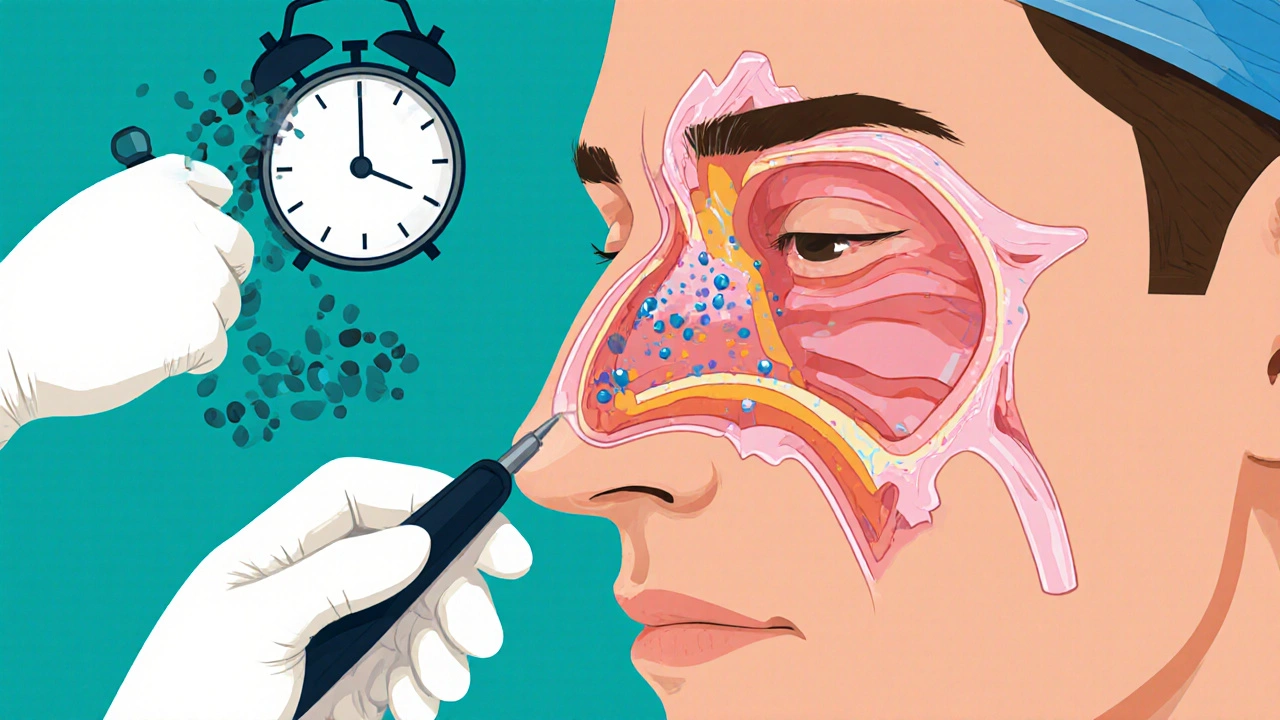
If you’ve tried saline rinses, steroid sprays, and even biologics-and still can’t breathe-surgery may be the next step. The gold standard is Functional Endoscopic Sinus Surgery (FESS).In FESS, a surgeon uses a thin camera and tiny tools to remove blockages, open up narrowed sinus passages, and clear out polyps. It’s done through the nose, so there are no external cuts. Most people go home the same day. Recovery takes about a week, and 75-90% report lasting improvement in symptoms.
Another option is balloon sinuplasty. Instead of removing tissue, a tiny balloon is inflated inside the sinus to widen the opening. It’s less invasive, with recovery in just 3-5 days. But it’s not as effective long-term for severe cases or large polyps. Success rates are around 70-80%, but recurrence is more common than with FESS.
If you have a deviated septum, surgeons may combine FESS with septoplasty. That fixes the crooked wall inside your nose, improving airflow and making other treatments more effective. About 65-75% of patients report major improvement after this combined procedure.
But here’s the catch: surgery doesn’t cure chronic sinusitis. It just clears the path. Without ongoing medical care-like daily saline rinses and steroid sprays-polyps can come back in as little as 18 months. That’s why surgery is never the end point. It’s part of a long-term plan.
What Happens If You Ignore It?
Most people think chronic sinusitis is just a nuisance. But left untreated, it can lead to real complications. In rare cases-less than 0.5%-the infection can spread to the eyes, bones, or even the brain. More commonly, it leads to constant fatigue, trouble sleeping, poor concentration, and even depression because you’re always tired from breathing poorly.One study of 1,200 patients found that those who got coordinated care from both an ENT and an allergist had 35-45% better outcomes than those who saw just one specialist. Chronic sinusitis isn’t just an ear, nose, and throat problem. It’s an immune, allergy, and sometimes even a sleep disorder.
Real-Life Management: What Works Outside the Clinic
Medicine helps-but your daily habits matter just as much.- Use a humidifier in dry weather. Dry air irritates the nasal lining.
- Avoid cigarette smoke and strong chemical fumes. They increase your risk by 35%.
- Stay hydrated. Thin mucus drains better.
- Wash bedding weekly in hot water to reduce dust mites.
- Try a nasal moisturizing gel at night if your nose feels raw from sprays or rinses.
There’s also emerging research on probiotics. Early studies from Johns Hopkins show that certain strains-like Lactobacillus sakei-may reduce inflammation when used as a nasal spray. It’s not mainstream yet, but it’s a promising area.
What to Do Next
If you’ve had symptoms for over 12 weeks:- Start daily saline rinses.
- Get a prescription for a nasal corticosteroid spray and use it every day for at least 8 weeks.
- See an allergist if you have asthma, eczema, or suspect allergies.
- Ask for a nasal endoscopy if symptoms don’t improve.
- Don’t demand antibiotics unless your doctor confirms a bacterial infection.
- If you have polyps or severe symptoms, ask about biologics or referral to an ENT surgeon.
Chronic sinusitis isn’t something you beat once. It’s something you manage. But with the right approach, you can get your breathing back-and your quality of life with it.
Is chronic sinusitis caused by bacteria?
No, not usually. While bacteria like Streptococcus pneumoniae can cause acute sinus infections, chronic sinusitis is primarily an inflammatory condition. About 70% of cases aren’t driven by active infection but by allergies, polyps, or environmental triggers. Antibiotics rarely help unless there’s a clear bacterial flare-up.
Can nasal sprays make chronic sinusitis worse?
Over-the-counter decongestant sprays like oxymetazoline (Afrin) can make it worse if used for more than 3 days-they cause rebound congestion. But prescription intranasal corticosteroid sprays (like Flonase or Nasonex) are safe for long-term use and are the cornerstone of treatment. They reduce inflammation, not just block symptoms.
Do I need a CT scan to diagnose chronic sinusitis?
Not always. A doctor can often diagnose it based on symptoms and a nasal endoscopy, which shows swelling or polyps inside the nose. But if symptoms are severe, treatment isn’t working, or surgery is being considered, a CT scan gives a detailed view of the sinus structure and helps plan the best approach.
Are nasal polyps cancerous?
No, nasal polyps are noncancerous growths. They’re caused by chronic inflammation, not tumors. But they can grow large enough to block your sinuses and reduce your sense of smell. If they return after removal, it usually means the underlying inflammation isn’t fully controlled.
How long does it take for biologics to work for chronic sinusitis?
Most people start noticing improvements in breathing and sense of smell within 4-8 weeks of starting biologics like dupilumab. Full benefits-like significant reduction in polyp size-usually appear by 12-24 weeks. Treatment is ongoing, typically given every 2-4 weeks, and must continue to maintain results.
Can I avoid surgery if I use biologics?
Yes, for many people. Biologics can shrink polyps and reduce inflammation enough that surgery isn’t needed. Studies show up to 40% of patients who start biologics avoid surgery entirely. But if polyps are very large or structural issues exist (like a severely deviated septum), surgery may still be necessary-even with biologics.


Comments (9)