
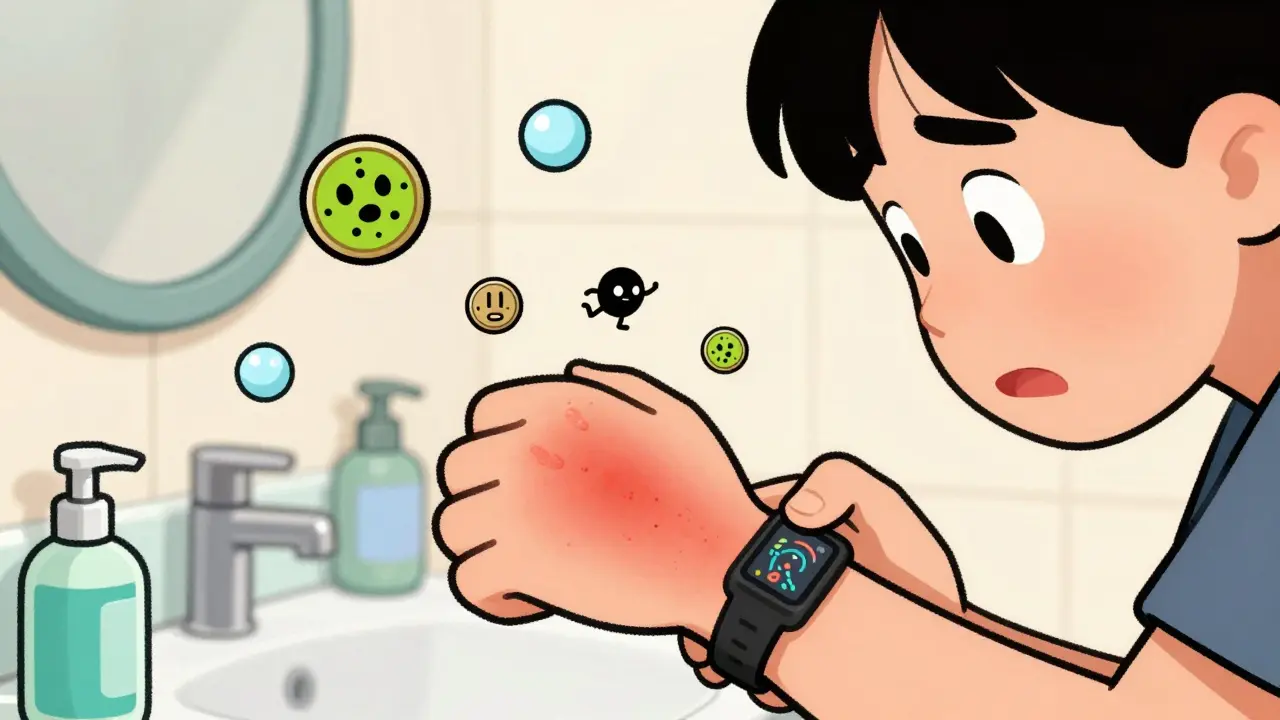
If you’ve had a stubborn, itchy rash that keeps coming back no matter what cream you use, you’re not alone. For millions of people, the real culprit isn’t dry skin or poor hygiene - it’s an allergic reaction to something touching their skin every day. This is contact dermatitis, and the key to stopping it isn’t more lotion. It’s finding out exactly what’s triggering it - and then avoiding it.
What Is Contact Dermatitis?
Contact dermatitis is a type of skin inflammation caused by direct contact with a substance. There are two kinds: irritant contact dermatitis, which happens when something like soap or bleach burns the skin, and allergic contact dermatitis (ACD), which is your immune system overreacting to a harmless chemical. ACD is the sneaky one. You might use a product for months - even years - with no problem. Then, one day, your skin says, "Enough." That’s when a red, blistering, itchy rash appears, usually 24 to 72 hours after contact.It’s not rare. About 13.7 million workers in the U.S. deal with it each year. Hairdressers, nurses, construction workers, and even office staff who use keyboards or phones with metal parts are at higher risk. Nickel, one of the most common triggers, affects 17.4% of women and 3% of men in North America. That’s why your earrings, belt buckle, or watch strap might be the real reason your neck or wrist is red and raw.
The Gold Standard: Patch Testing
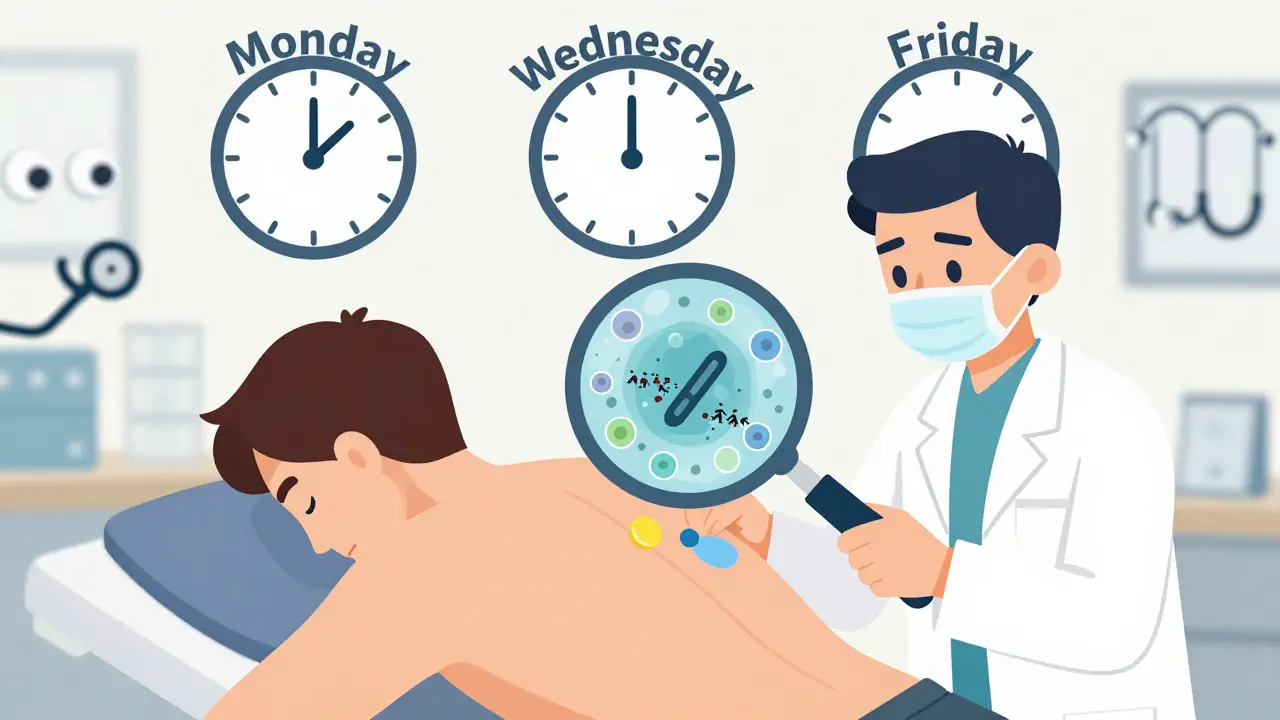
You can’t diagnose allergic contact dermatitis with a blood test or a skin prick test. Those are for food allergies or hay fever. ACD is a delayed reaction - your T-cells need time to react. That’s why patch testing is the only reliable method.The standard test, called the TRUE Test, uses small patches containing 29 common allergens. These are taped to your back for 48 hours. Then, you return for two more visits: one at 72 hours and another at 96 hours. The doctor checks for redness, swelling, or tiny blisters under each patch. A positive result means your immune system recognizes that chemical as an enemy.
Common triggers found in patch tests include:
- Nickel sulfate (found in 14.7% of positive cases)
- Cobalt chloride (4.8%)
- Thimerosal (5.0%) - a preservative in some eye drops and vaccines
- Fragrance mix (3.4%) - a blend of 8 common scent chemicals
- Balsam of Peru (3.0%) - used in perfumes, lotions, and even some foods
But here’s the catch: the TRUE Test only covers 29 allergens. There are thousands of chemicals in soaps, shampoos, lotions, and workplace materials. If you work with chemicals, have a history of unexplained rashes, or your initial test comes back negative but your symptoms don’t go away, you might need expanded testing. Some clinics now use 70 to 100 allergens to catch rarer triggers like epoxy resins, rubber accelerators, or preservatives in cosmetics.
Why Patch Testing Works - And When It Doesn’t
Patch testing changes the game. Dr. Matthew Zirwas, a leading expert, says it alters treatment in 60-70% of cases. One Reddit user, "EczemaWarrior87," spent five years trying every moisturizer before patch testing revealed they were allergic to cocamidopropyl betaine - a foaming agent in body wash. Once they switched to a product without it, their hand rash vanished.But it’s not perfect. About one-third of patients need a second round of testing because the first one missed the culprit. "RashQueen2023" on Reddit spent $350 extra to get expanded testing after the standard panel failed to detect their formaldehyde allergy. That’s because formaldehyde isn’t always in the standard TRUE Test panel - it’s often added as an extra.
Another issue? Interpretation. A 2023 study found that non-specialists misread results up to 30% of the time. That’s why it’s crucial to see a dermatologist trained in patch testing. A red patch could mean allergy - or it could mean friction, sweat, or a reaction to the tape. Only experts can tell the difference.
What Happens After a Positive Result?
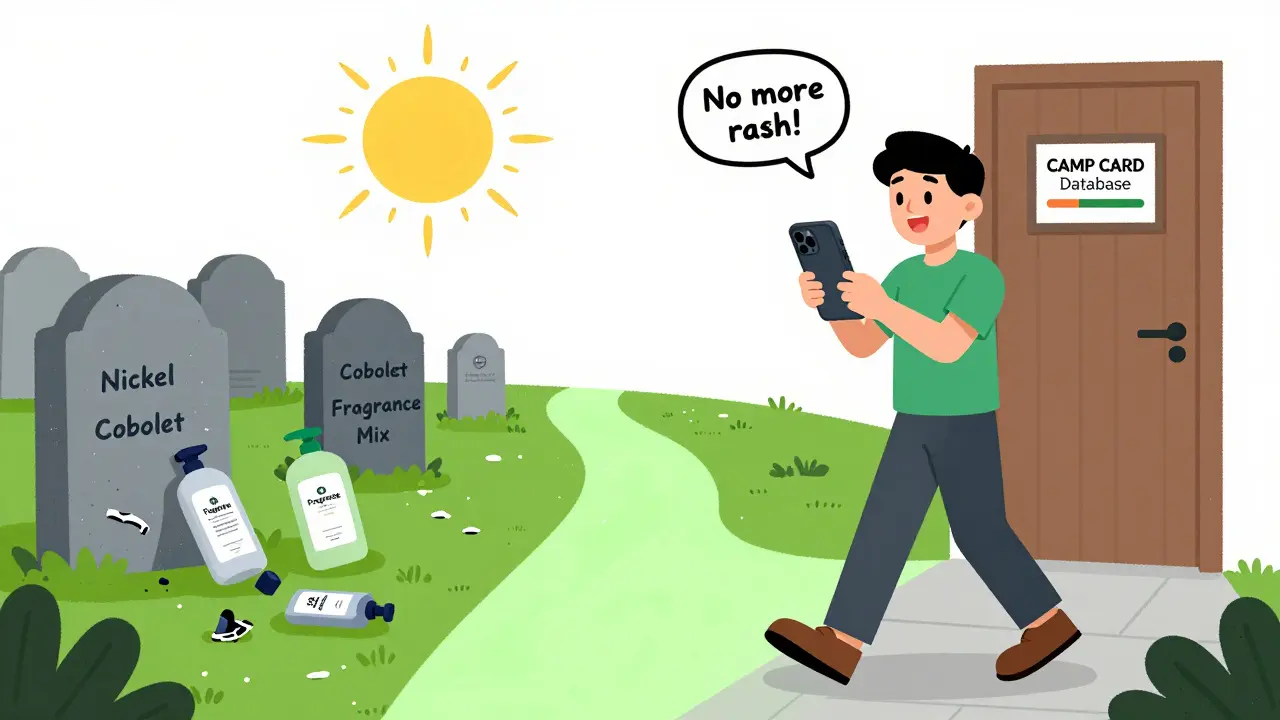
Finding the allergen is only half the battle. Avoiding it is the other half - and it’s harder than it sounds. Fragrance mix? That’s not just in perfumes. It’s in shampoo, laundry detergent, baby wipes, and even some sunscreens. Nickel? It’s in phone cases, laptop hinges, zippers, and even some kitchen utensils.The American Contact Dermatitis Society created the Contact Allergen Management Program (CAMP) to help. After a positive test, you get a personalized list of products that are safe for you. Their database, called CARD, has over 18,452 products labeled as free from 27 common allergens. You don’t have to guess anymore. Just scan the barcode or search the product name.
Most people see improvement within 2-4 weeks of avoiding their trigger. A 2023 survey of 1,247 patients found that 82% had fewer rashes and less itching after making changes. And 76% said knowing the exact cause reduced their anxiety - no more wondering if it’s the soap, the laundry, the new job, or something they ate.
Where Allergens Hide (And How to Find Them)
You can’t read every ingredient label. So here’s where to look:- Shampoos and conditioners: Avoid "fragrance," "parfum," "scent," or "essential oils." Look for products labeled "fragrance-free," not "unscented." Unscented often still has masking fragrances.
- Makeup and skincare: Balsam of Peru is hidden in lip balm, anti-aging creams, and even some acne treatments. Nickel shows up in foundations and eyeshadows.
- Workplace exposures: Hairdressers often react to paraphenylenediamine (PPD) in hair dye. Nurses may react to chlorhexidine in hand sanitizers. Construction workers deal with epoxy in adhesives and resins.
- Everyday items: Your phone case? Metal buttons? Watchband? Jewelry? Even your bra underwire could be nickel. Try switching to plastic or silicone alternatives.
Some products have been reformulated. In the EU, 26 fragrance allergens must be labeled since 2003. In the U.S., no such law exists. The Safe Cosmetics Act has been stuck in Congress since 2021. So you’re on your own here.
What’s Next? The Future of Diagnosis
Science is catching up. Researchers are studying blood markers like IL-18, which correlates with ACD severity. In the lab, scientists are using mass spectrometry to analyze skin samples and identify hidden allergens in complex products. By 2025, the TRUE Test will expand to 80 allergens, including new ones from electronics and "green" cosmetics.But don’t expect a magic blood test anytime soon. Dr. Howard Maibach says patch testing remains irreplaceable. No molecular test can yet replicate the real-world interaction between your skin and a chemical over days. Until then, patch testing is still the only way to know for sure.
What You Can Do Right Now
If you’ve had a recurring rash:- Stop using everything new - creams, lotions, soaps - for two weeks. Use only plain water and unscented, hypoallergenic soap.
- Take photos of the rash. Note where it appears and what you were doing before it showed up.
- See a dermatologist. Ask specifically for patch testing. Don’t accept a general "eczema" diagnosis.
- If the first test is negative but your rash persists, ask about expanded testing.
- Once you know your trigger, use the CARD database (available online) to find safe products.
It’s not always easy. But for many, it’s life-changing. One woman in Sydney stopped getting rashes on her wrists after learning her watchband was nickel. Another man’s chronic hand eczema vanished after he switched from hand sanitizer to soap - because his sanitizer contained fragrance mix. Knowledge isn’t just power. It’s relief.
Can contact dermatitis be cured?
There’s no permanent cure for allergic contact dermatitis - but there is a cure for the rash. Once you identify and avoid the allergen, the rash will clear up and stay away. The problem is that if you’re exposed again, the reaction returns. That’s why avoidance is lifelong.
Is patch testing painful?
No, it’s not painful. The patches are taped to your back and feel like sticky bandages. You might feel a little itch if you react, but it’s not sharp or burning. The biggest discomfort is not scratching - which you’re told not to do for four days.
Can I do patch testing at home?
No. Patch testing requires medical supervision. Home kits sold online are unreliable and can cause severe reactions. Only trained dermatologists can interpret the results correctly and rule out false positives or irritant reactions.
How long does patch testing take?
It takes about four days total. You visit the clinic on Monday (patches applied), Wednesday (first reading), and Friday (final reading). Some clinics do it over a weekend, but the standard is three visits over 96 hours.
Are there alternatives to patch testing?
Not yet for clinical use. Blood tests and skin prick tests don’t detect delayed reactions like ACD. Some labs offer chemical analysis of products, but they can’t tell if your skin will react. The only proven way to know is patch testing - and even then, sometimes you need multiple rounds.
What if I can’t avoid my allergen?
If it’s a workplace allergen - like epoxy for a mechanic or PPD for a hairdresser - talk to your employer. OSHA and similar agencies require them to help reduce exposure. For personal items, switch to alternatives: silicone phone cases, plastic watches, fragrance-free laundry detergent. If avoidance isn’t possible, your dermatologist may prescribe topical steroids or other treatments to manage flare-ups.


Comments (10)