
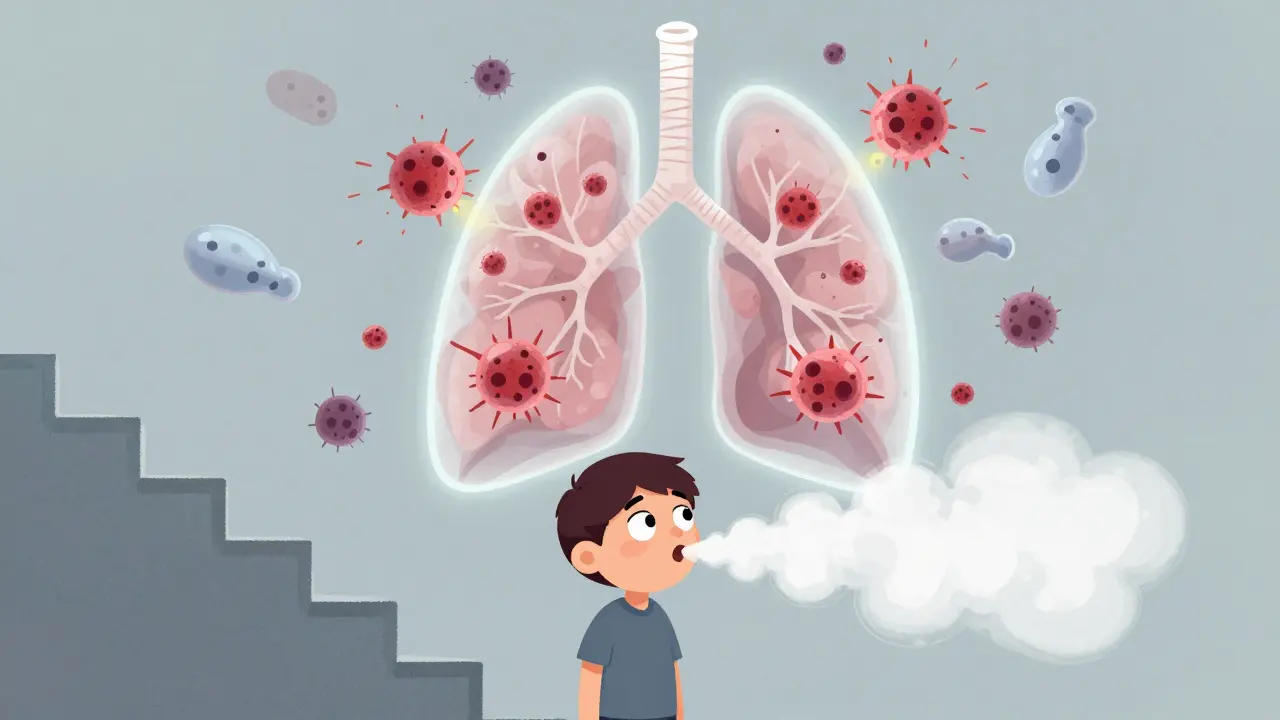
After surviving COVID-19, many people expect to feel back to normal within weeks. But for a significant number, the virus leaves behind something quieter and more persistent: trouble breathing. Not the kind that comes with a cold or allergies - this is the kind that makes climbing stairs exhausting, that leaves you gasping after brushing your teeth, or that wakes you up at night because you can’t get enough air. This isn’t just in your head. It’s real, measurable, and increasingly understood - thanks to new science that’s finally showing what’s happening inside the lungs after the virus is gone.
What’s Really Happening in Your Lungs After COVID-19?
Most people think of COVID-19 as a virus that attacks the lungs during the acute phase. But what happens after the fever breaks and the cough fades is where things get complicated. Research from the Centre for Heart Lung Innovation (HLI) in Vancouver, published in 2025, found that in about one-third of long COVID cases, the problem isn’t the virus itself - it’s the immune system’s lingering response.
Even after the virus is cleared, neutrophils - immune cells meant to fight infection - keep showing up in the smallest airways of the lungs. These cells don’t just sit there. They act like "dirty bombs," releasing chemicals that damage the delicate lining of the airways. This damage interferes with gas exchange: the process where oxygen moves from your lungs into your blood, and carbon dioxide moves out. You might not feel it on a regular chest X-ray or even a standard lung function test. But your body knows. You feel it when you can’t catch your breath walking to the mailbox.
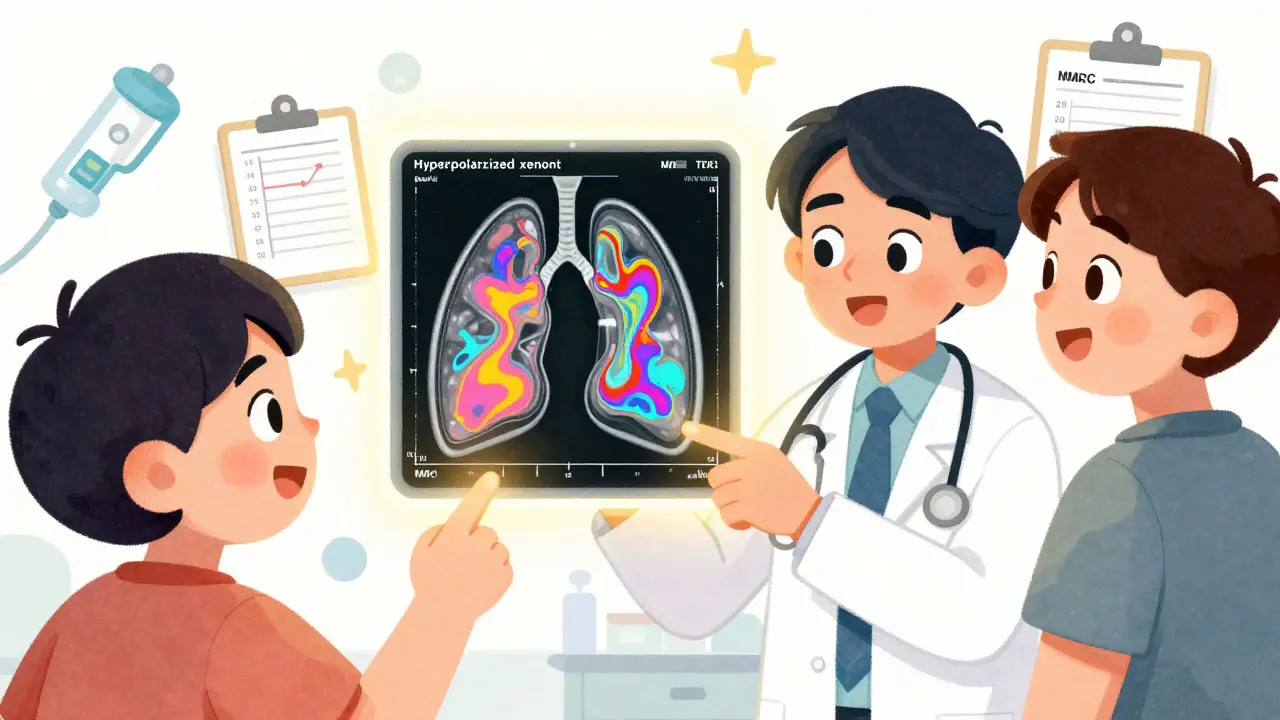
Advanced imaging, like hyperpolarized xenon MRI, is making this visible for the first time. Unlike traditional scans that only show structure, xenon MRI lets doctors see how well oxygen is actually moving through the lungs. Studies using this tech identified four distinct patterns of gas exchange failure - meaning there’s no single "COVID lung" but several different ways the damage can show up. This explains why two people with the same symptoms can have very different underlying problems.
Who’s Most at Risk for Long-Term Lung Damage?
Not everyone who gets COVID-19 ends up with lasting lung issues - but some groups are far more vulnerable. Hospitalized patients face the highest risk. A South Korean study of over 5,700 adults found that 12.6% developed post-COVID pulmonary fibrosis (PCPF), where scar tissue forms in the lungs and permanently reduces their ability to expand. That’s more than one in eight people who were sick enough to need hospital care.
Even among those not hospitalized, the risk of persistent breathlessness is 2.6 times higher than in people who never had COVID, according to a 2025 review of 50 studies. The more severe your initial illness, the more likely you are to have lingering problems. People who needed oxygen or mechanical ventilation during their acute infection don’t necessarily have worse long-term outcomes than those who didn’t - but they’re more likely to have been sick long enough for the immune system to go off track.
Pre-existing conditions make things worse. People with COPD who caught COVID had a 4.6% higher death rate and nearly double the number of flare-ups each year compared to COPD patients who never had the virus. Their lungs were already weakened - and COVID pushed them past a tipping point. Heart failure also showed up more often in hospitalized COVID patients, suggesting the virus doesn’t just attack the lungs - it strains the whole system.
How Doctors Are Diagnosing Lung Problems After COVID
Traditional tests often come back normal - which is why so many people are told, "It’s all in your head." But that’s changing. Clinicians now use a combination of tools to uncover what’s really going on.
The mMRC dyspnea scale - a simple questionnaire asking how breathless you feel during daily activities - is one of the most reliable early indicators. If your score is 2 or higher at one month after infection, you’re at high risk for persistent lung dysfunction. That’s a red flag for doctors to dig deeper.
Standard lung function tests like spirometry measure how much air you can blow out, but they often miss the real issue: oxygen transfer. That’s where diffusion capacity testing comes in. It checks how well oxygen moves from your lungs into your bloodstream. Many long COVID patients have normal spirometry results but low diffusion capacity - a sign the problem is in the tiny air sacs, not the larger airways.
And then there’s xenon MRI. Still mostly in research centers, this technology is becoming the gold standard for spotting hidden damage. It’s not yet widely available, but hospitals in Sydney, Toronto, and Kansas City are starting to use it to guide treatment. For patients with unexplained breathlessness, it’s becoming the missing piece in the puzzle.
Pulmonary Rehabilitation: What Actually Works
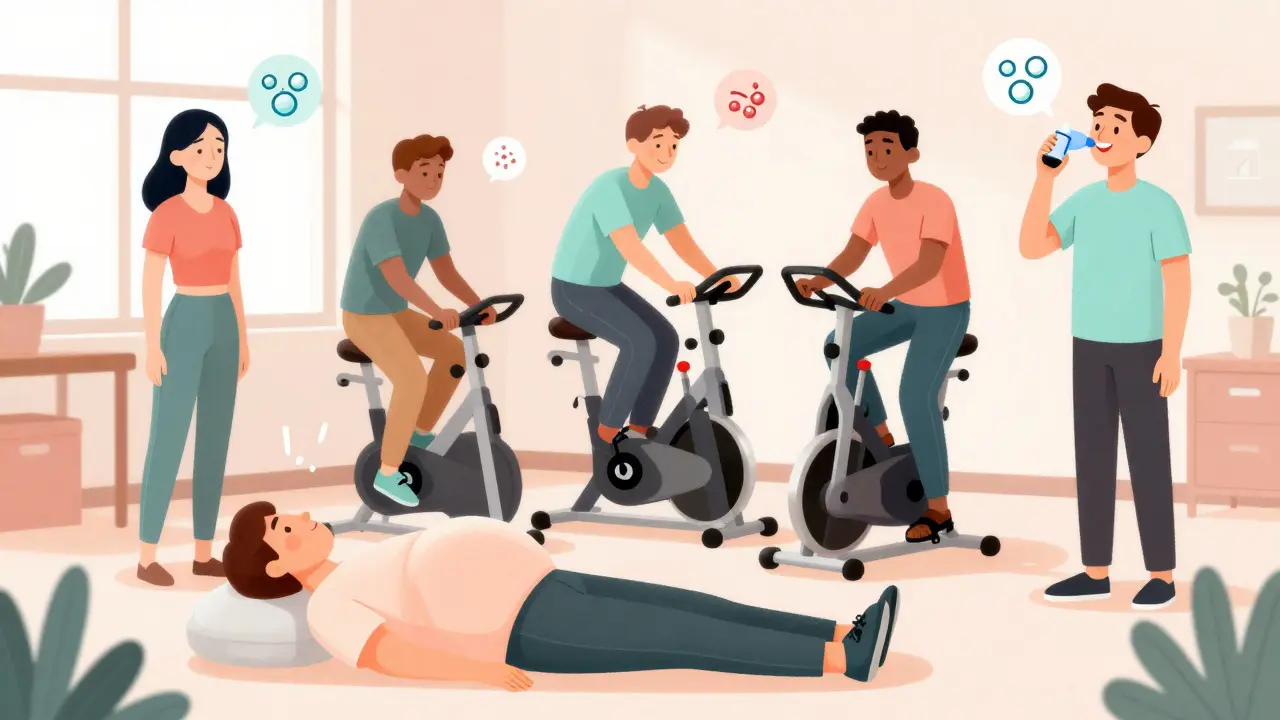
If you’re struggling to breathe after COVID, you’re not alone - and you’re not stuck like this forever. Pulmonary rehabilitation is the most proven way to recover. It’s not just exercise. It’s a structured, multidisciplinary program that usually lasts 8 to 12 weeks, with sessions two to three times a week.
Typical components include:
- Breathing retraining: Techniques like diaphragmatic breathing and paced breathing help reduce the feeling of air hunger.
- Aerobic conditioning: Treadmill walking, stationary cycling, or even walking outdoors at a slow pace - all done at a level you can handle without triggering post-exertional malaise.
- Strength training: Light resistance work for arms and legs helps reduce the effort needed for daily tasks like carrying groceries or climbing stairs.
- Education: Learning how to pace yourself, recognize warning signs, and manage anxiety around breathlessness.
Studies show measurable improvements. People who complete rehab see increases in FEV1 (how much air they can forcefully exhale), better diffusion capacity, and longer 6-minute walk distances. One Australian program reported that participants went from barely walking 300 meters to over 500 meters after 10 weeks. Their breathlessness scores dropped, and many returned to work or hobbies they thought were lost.
For people with COPD or heart issues, programs are adjusted. Monitoring is tighter, intensity is lower, and rest periods are built in. The goal isn’t to push past limits - it’s to rebuild safely.
What Doesn’t Work - and What Might Be Coming
Some treatments that helped during the acute phase don’t help afterward. Remdesivir, an antiviral given in hospital, was linked to lower rates of lung scarring in one study. But if you’re six months out, it’s too late for that. Baricitinib, an anti-inflammatory used early on, was associated with higher fibrosis risk - but again, timing matters. These drugs aren’t solutions for long-term lung damage.
What’s on the horizon? Researchers are now testing drugs that target neutrophils directly. If these cells are the "dirty bombs" causing ongoing damage, stopping them could prevent further harm. Clinical trials are already being planned by the RECOVER Initiative, with results expected in 2026.
Another big development is personalized rehab. Instead of a one-size-fits-all program, clinics are starting to use xenon MRI results to tailor exercises. If your oxygen transfer is poor in the upper lungs, you’ll do different breathing techniques than someone whose damage is in the lower lobes. This precision approach is still new, but early results are promising.
What You Can Do Right Now
You don’t need to wait for a fancy scan or a new drug to start healing. Here’s what works today:
- Start slow: Walk 5 minutes a day. If you’re breathless, stop. Rest. Try again tomorrow. Don’t push to exhaustion.
- Track your breathing: Use the mMRC scale. If you’re scoring 2 or higher, talk to your doctor about a referral to pulmonary rehab.
- Learn diaphragmatic breathing: Lie on your back, place one hand on your chest and one on your belly. Breathe in through your nose so your belly rises - not your chest. Exhale slowly through pursed lips. Do this 5 minutes twice a day.
- Avoid triggers: Smoke, pollution, and cold dry air make breathing harder. Use a humidifier in winter. Stay indoors on high-pollution days.
- Don’t isolate: Long COVID fatigue and breathlessness are lonely. Join a support group. You’re not the only one struggling.
Recovery isn’t linear. Some days will feel better. Others will feel like you’re back at square one. That’s normal. The key is consistency - not intensity. Progress is measured in small wins: walking to the end of the street without stopping, sleeping through the night, or carrying your own laundry.
Is the Damage Permanent?
For most people, no. The majority of those with moderate to severe initial infection show measurable improvement in lung function by six months. But for the 12.6% who develop pulmonary fibrosis, the scarring is permanent. That doesn’t mean you can’t live well - it just means you’ll need ongoing care. Regular check-ups, rehab maintenance, and avoiding further lung stress become part of your routine.
The good news? Science is moving fast. What was once invisible is now being seen. What was once dismissed is now being treated. You’re not broken. Your lungs are healing - and with the right support, they can get stronger than you thought possible.
Can you recover from long-term lung damage after COVID-19?
Yes, many people do. While 12.6% of hospitalized patients develop permanent scarring (pulmonary fibrosis), most others see significant improvement in lung function and breathlessness within 6 to 12 months, especially with structured pulmonary rehabilitation. Recovery is gradual and varies by individual, but consistent, guided therapy leads to measurable gains in oxygen use, walking distance, and daily function.
Why do I still feel breathless even though my chest X-ray is normal?
Standard chest X-rays and even basic lung function tests can’t detect damage in the smallest airways where oxygen exchange happens. COVID-19 can cause inflammation and scarring in these tiny areas, which affects how well oxygen enters your blood. Advanced tests like diffusion capacity measurement or hyperpolarized xenon MRI can reveal this hidden damage - which is why you feel breathless even when older tests say "everything’s fine."
Is pulmonary rehabilitation worth it if I had a mild case of COVID?
Absolutely. Even people with mild initial infections can develop lingering breathing problems. A 2025 review found that non-hospitalized patients still had a 2.6 times higher risk of persistent breathlessness compared to those who never had COVID. Pulmonary rehab isn’t just for the severely ill - it’s for anyone whose breathing is limiting daily life, no matter how "mild" the original infection seemed.
Can COVID-19 cause permanent lung scarring?
Yes. About 12.6% of hospitalized patients develop post-COVID pulmonary fibrosis (PCPF), where scar tissue replaces healthy lung tissue. This is visible on CT scans and reduces lung elasticity. While the scarring itself doesn’t reverse, rehabilitation can help you adapt - improving your breathing efficiency, reducing symptoms, and maintaining quality of life. Avoiding further lung damage (like smoking or pollution) becomes critical.
What’s the best way to monitor my lung recovery at home?
Use the mMRC dyspnea scale: Rate your breathlessness during daily activities from 0 (not breathless) to 4 (too breathless to leave the house). Track it monthly. Also, time how far you can walk in 6 minutes - even if it’s just down the hall. Record your distance and how you felt afterward. Improvements in these simple measures often come before you even notice feeling better. If your score worsens or plateaus, talk to your doctor about a rehab referral.
Should I get a CT scan or MRI to check for lung damage after COVID?
Not unless you have persistent symptoms. Routine imaging isn’t recommended for people who feel mostly recovered. CT scans expose you to radiation and often show harmless changes that cause unnecessary worry. MRI with xenon gas is powerful but still mostly in research settings. Focus first on symptoms: if you’re struggling to breathe during daily tasks, ask your doctor about pulmonary function tests and a rehab referral - not imaging.


Comments (14)