
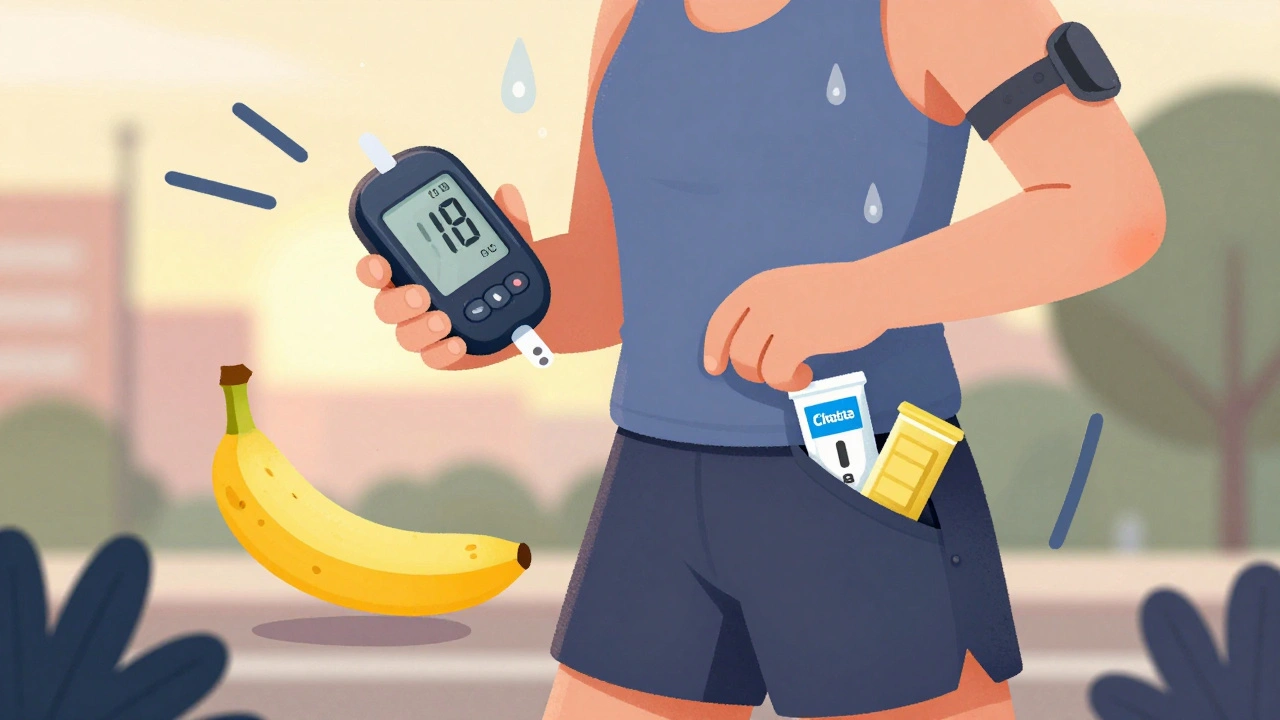
Working out with diabetes doesn’t have to mean avoiding exercise because you’re scared of crashing. But if you’ve ever felt shaky, sweaty, or dizzy halfway through a run - and had to stop to eat a banana or chug juice - you know the fear is real. About half of people with type 1 diabetes say they skip workouts just because they’re worried about their blood sugar dropping too low. The good news? You can train safely, stay strong, and avoid lows if you know what to look for and how to respond.
Why Exercise Drops Your Blood Sugar
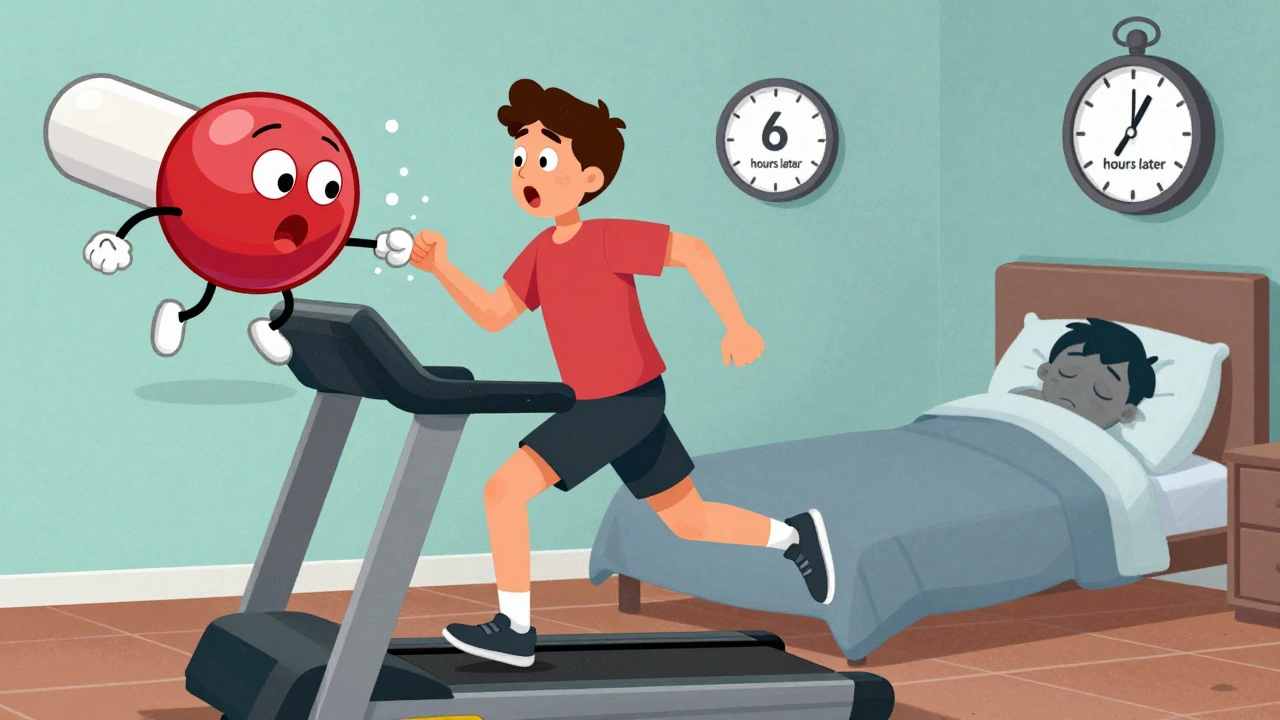
When you move, your muscles need energy. They pull glucose from your blood - even without insulin. That’s great for lowering high blood sugar, but it can go too far. Plus, exercise makes your body more sensitive to insulin for hours after you stop. So if you took a bolus before your workout, that insulin is still working hard, pulling glucose down even when you’re sitting on the couch later. That’s why lows don’t just happen during exercise - they can hit you hours later, even overnight.It’s not just about how hard you work. It’s about when you work, what you do, and how much insulin is still active in your body. A 30-minute bike ride might drop your sugar slowly. A 10-second sprint might actually lift it. Understanding the difference is the key to staying in control.
Check Your Blood Sugar - Before, During, and After
Don’t guess. Check. Always. The American Diabetes Association says to test your blood sugar 15 to 30 minutes before starting. If it’s below 90 mg/dL, you’re in the danger zone. Between 90 and 150 mg/dL? You’re okay to start, but you’ll need fuel. Above 150 mg/dL? You’re probably fine unless you’re on a long or intense session.During exercise, check every 30 to 60 minutes - especially if you’re doing something new or longer than 45 minutes. Afterward, check again in an hour, and then again before bed. Delayed lows are common. One study found that 70% of people with type 1 diabetes get a low 6 to 12 hours after working out. That’s why so many people crash in the middle of the night after a morning swim or afternoon gym session.
How Much Carbs Do You Need?
There’s no one-size-fits-all carb number. But here’s a solid rule: aim for 0.5 to 1.0 gram of carbohydrate per kilogram of body weight before and during moderate exercise. For a 70 kg person (about 154 lbs), that’s 35 to 70 grams of carbs. Start with the lower end if you’re not sure.Here’s a simple guide:
- Below 90 mg/dL: Eat 15-20 grams of fast-acting carbs (like glucose tabs, juice, or candy) and wait 15 minutes. Recheck. If still low, eat another 15g.
- Between 90-150 mg/dL: Eat 15-30 grams of carbs before starting. Have another 15g every hour during longer workouts.
- Above 150 mg/dL: You might not need carbs upfront - but keep them handy. Monitor closely.
Fast-acting carbs work best before and during. After? Mix carbs with protein - like a peanut butter sandwich or Greek yogurt with fruit - to help stabilize your sugar for hours.
Not All Workouts Are Created Equal
Aerobic exercise - like walking, running, cycling, or swimming - tends to lower blood sugar steadily. But resistance training and high-intensity bursts? They can do the opposite.Research shows that adding just 10 seconds of all-out sprinting - on a bike, treadmill, or even just running in place - before or after your main workout can stop your sugar from dropping. One person on a diabetes forum said adding a 10-second sprint before his 30-minute ride cut his lows from four times a week to once every two weeks.
Strength training is your secret weapon. Doing 45 minutes of lifting before a 45-minute jog? That combo cut glucose drops by nearly 40% in a clinical study. Why? Lifting uses glucose without insulin, and it triggers stress hormones that temporarily raise blood sugar. Even circuit-style workouts with short rest periods can help - but longer sessions with little break can still drop your sugar. Pay attention to how your body responds.
Insulin-On-Board Is Your Most Important Number
This isn’t just jargon. It’s your lifeline. Insulin-on-board (IOB) means how much active insulin is still working in your body from your last bolus. If you’ve taken a meal insulin 90 minutes ago and your pump says you have 1.2 units left, that’s not harmless. During exercise, that 1.2 units can act like 2 or even 3 units - and send your sugar plummeting.UCLA Health puts it simply: “The more insulin you have on board, the higher the likelihood of a low glucose.” So before you lace up, check your pump or logbook. If IOB is above 1 unit, consider lowering your basal rate or skipping your pre-workout bolus. For pump users, reducing your basal by 50-75% starting 60-90 minutes before exercise is a proven strategy. For those on injections, cutting your pre-workout bolus by 25-50% can make a big difference.
Technology Is Making It Easier
CGMs have changed everything. If you’re not using one, you’re flying blind. Modern devices like the Dexcom G7 now have an “exercise mode” that lowers alert thresholds by 20 mg/dL during activity - so you get warned earlier. In 2022, 68% of people with CGMs checked their sugar before working out. Only 42% of non-CGM users did.Even smarter tools are coming. The Tandem t:slim X2 pump now has an “Exercise Impact” feature that uses AI to predict your glucose drop based on your workout history and adjusts insulin delivery automatically. It’s not magic - but it’s close. Early trials show it cuts lows by nearly half.
And the future? Closed-loop systems that deliver glucagon during exercise are being tested right now. One NIH trial found a dual-hormone system reduced exercise-related lows by over 50%. In a few years, this won’t be experimental - it’ll be standard.
What to Do When You Crash
If your sugar drops below 70 mg/dL during exercise - stop. Don’t push through. Eat 15 grams of fast-acting carbs. Wait 15 minutes. Recheck. If it’s still low, eat another 15g. Once it’s back up, have a small snack with protein to hold the gain. Don’t just eat candy and go back to running. You’ll crash again.And if you’re on the verge of a low and don’t have glucose tabs? A banana, a few crackers, or even a regular soda will work. The goal isn’t perfection - it’s safety.

Common Mistakes (And How to Avoid Them)
- Mistake: Skipping carbs because your sugar was “fine” earlier. Solution: Glucose changes fast. Always check right before you start.
- Mistake: Exercising at peak insulin time. Solution: Stick to consistent times. If you always work out at 6 p.m., your body learns the pattern.
- Mistake: Not checking after workouts. Solution: Set a phone alarm for 1 hour and 2 hours after you finish. Sleep with your CGM on.
- Mistake: Believing “I did the same workout yesterday, so it’ll be the same today.” Solution: Stress, sleep, weather, hormones - they all change your response. Never assume.
One user on Reddit summed it up: “I did the same 5K run at the same time with the same insulin on board - and got 70 one day, 180 the next. It’s maddening.” That’s normal. Your body isn’t a machine. It’s alive. Learn its rhythm, not just the numbers.
Getting Started: A Simple 30-Day Plan
If you’re new to exercising with diabetes, start slow:- Week 1-2: Walk 20 minutes after dinner. Check sugar before, during (if over 30 min), and after. Log everything.
- Week 3-4: Add a 10-second sprint at the end of your walk. Notice how your sugar reacts.
- Week 5-6: Try a short strength session (10-15 minutes of bodyweight squats, push-ups, lunges) before walking. See if it helps.
- Week 7+: Adjust insulin based on what you’ve learned. Reduce basal or bolus if lows keep happening.
It takes 3 to 6 months to really understand your body’s patterns. Don’t get discouraged. Every workout teaches you something.
Final Thought: You Can Do This
Exercise isn’t the enemy. It’s one of the most powerful tools you have to manage diabetes - better than most medications. But you need to be smart about it. Check your sugar. Know your insulin. Fuel wisely. Use technology. And don’t be afraid to start small.The goal isn’t to never have a low. It’s to know how to handle it - so it doesn’t stop you from living your life.
Can I exercise if my blood sugar is below 70 mg/dL?
No. If your blood sugar is below 70 mg/dL, stop exercising and treat it immediately with 15 grams of fast-acting carbs like glucose tabs, juice, or candy. Wait 15 minutes and recheck. Only resume activity once your sugar is above 100 mg/dL and stable. Pushing through a low can lead to confusion, loss of coordination, or even passing out.
Why do I get low after I exercise, not during?
After exercise, your muscles keep pulling glucose from your blood to refill their energy stores - even hours later. At the same time, insulin sensitivity stays high. So if you had insulin on board during your workout, it’s still working hard afterward. This is called delayed-onset hypoglycemia. It’s most common 6-12 hours after exercise, especially if you worked out in the afternoon or evening. Always check your sugar before bed and consider a small snack with carbs and protein if you exercised that day.
Should I eat carbs before every workout?
Not always. If your blood sugar is above 150 mg/dL and you’re doing a short, moderate workout, you may not need extra carbs. But if your sugar is below 100 mg/dL, or you’re planning a longer or intense session, yes - eat 15-30 grams of carbs before starting. The key is matching your fuel to your starting sugar and your planned activity. Don’t eat carbs just because you’re working out - eat them because your numbers say you need them.
Does type 2 diabetes have the same risk of lows during exercise?
It depends. People with type 2 diabetes who are not on insulin or sulfonylureas (like glipizide or glyburide) rarely get low blood sugar from exercise alone. But if you’re taking insulin or certain pills that stimulate insulin release, yes - you can still get hypoglycemia. The same rules apply: check your sugar, know your meds, and carry fast-acting carbs. Don’t assume type 2 means you’re safe.
Can I use a continuous glucose monitor (CGM) to prevent lows?
Yes - and it’s one of the best tools you have. CGMs give you real-time trends, so you can see if your sugar is dropping fast before it hits a low. Many newer models, like the Dexcom G7, have special modes for exercise that lower alert thresholds to warn you earlier. If you’re not using one, consider talking to your doctor. Studies show people with CGMs check their sugar before exercise twice as often as those without them - and have far fewer lows.
What’s the best type of exercise for someone with diabetes who gets frequent lows?
Start with resistance training - lifting weights or doing bodyweight exercises like squats and push-ups. These activities raise blood sugar or keep it stable better than steady cardio. Then, add short bursts of high-intensity activity - like 10-second sprints - before or after your main workout. This can blunt the drop from aerobic exercise. Avoid long, slow cardio sessions (like jogging for an hour) unless you’ve learned how your body responds. Mix it up: strength first, then light cardio. You’ll stay safer and feel stronger.


Comments (13)