
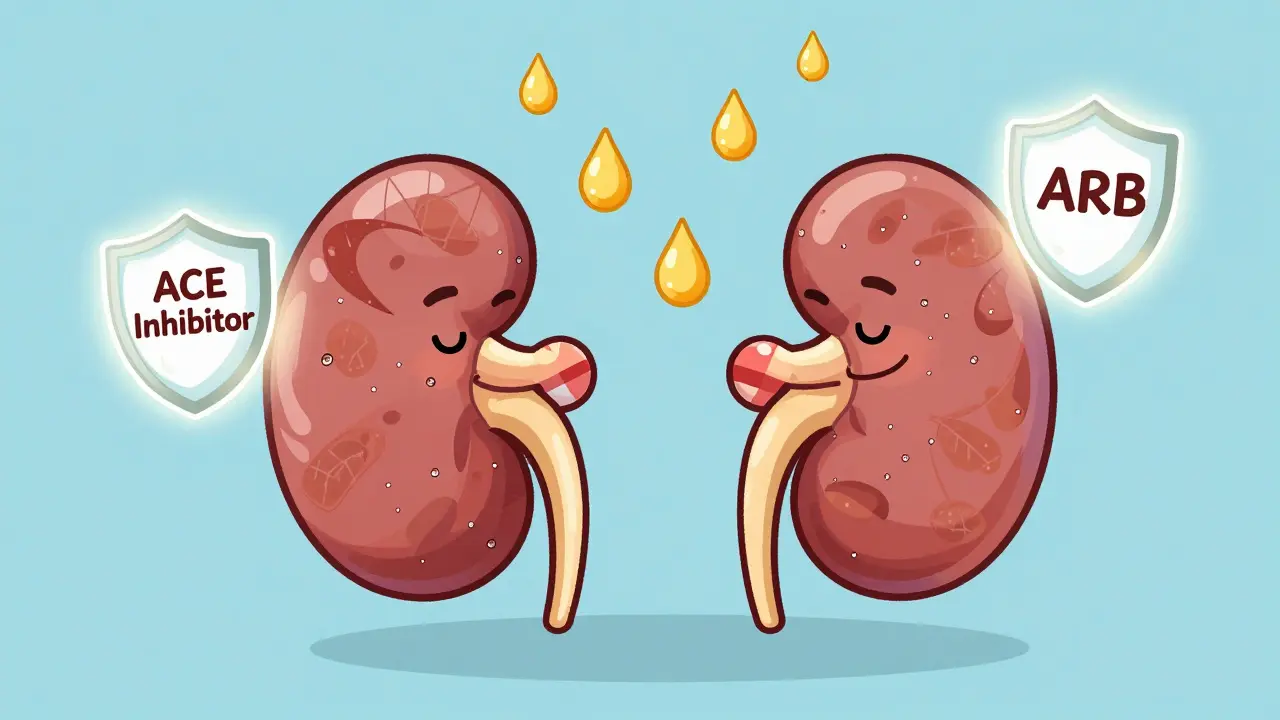
When diabetes starts damaging the kidneys, it doesn’t happen overnight. It creeps in quietly, often without symptoms, until protein begins leaking into the urine. This is diabetic nephropathy - the most common reason people with diabetes end up on dialysis. And yet, for decades, two simple classes of blood pressure pills have been stopping this damage in its tracks: ACE inhibitors and ARBs.
What Is Diabetic Nephropathy, Really?
Diabetic nephropathy isn’t just high blood pressure in the kidneys. It’s a specific injury caused by high blood sugar over time. The tiny filters in the kidneys - called glomeruli - get clogged and leak. That’s when albumin, a type of protein, starts showing up in urine. A single test isn’t enough. Doctors need two tests, at least three months apart, showing albumin levels above 30 mg/g to confirm it.
By the time you see swelling in the ankles or feel unusually tired, the damage is often advanced. That’s why catching it early - through routine urine tests - is critical. About 1 in 3 adults with diabetes will develop this condition. And if left unchecked, it leads to kidney failure, heart attacks, and early death.
How ACE Inhibitors and ARBs Work - Beyond Lowering Blood Pressure
Most people think these drugs are just for high blood pressure. But their real power in diabetic nephropathy is how they protect the kidney’s filters.
Both ACE inhibitors and ARBs block the renin-angiotensin-aldosterone system (RAAS). This system normally tightens blood vessels and increases pressure. In the kidneys, that pressure crushes the delicate filtering units. By blocking it, these drugs reduce the pressure inside the glomeruli. Less pressure means less protein leaks out.
Studies show that when used at full doses, ACE inhibitors and ARBs can cut proteinuria by 30% to 50%. That’s not just a lab number - it’s a direct link to slower kidney decline. The RENAAL and IDNT trials proved this: patients on ARBs like losartan and irbesartan had up to 30% fewer cases of kidney failure compared to placebo.
Here’s the catch: these drugs work best at high doses. Many doctors start low out of fear. But the data is clear. If you’re not giving the full dose, you’re not giving the full protection.
When to Start - And When Not To
The guidelines are straightforward:
- Start an ACE inhibitor or ARB if you have diabetes + high blood pressure + protein in your urine.
- Start one if you have diabetes + eGFR below 60 mL/min, even if your blood pressure is normal.
- Don’t start one if you’re normotensive and have no protein in your urine - it won’t help prevent damage.
That last point surprises a lot of people. If your kidneys are still filtering normally and your blood pressure is fine, there’s no evidence these drugs prevent future damage. They’re not magic bullets for everyone with diabetes. They’re targeted tools.
But if you’ve got proteinuria - even mild - and you’re over 30, starting an ACE inhibitor or ARB now can delay kidney failure by years. The American Diabetes Association’s 2025 guidelines say this is a Level B recommendation - meaning strong evidence, clear benefit.
Dosing Matters - And So Does Creatinine
Here’s where things get messy in real-world practice.
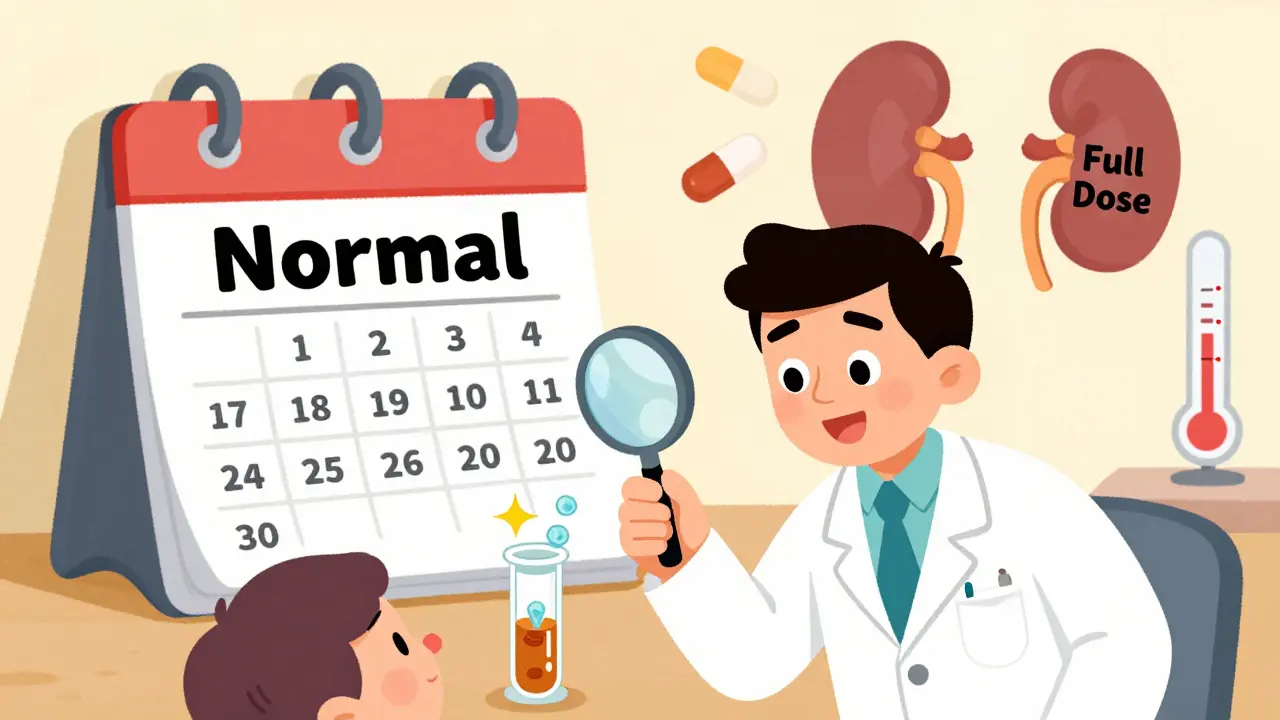
Doctors often see a rise in serum creatinine after starting an ACE inhibitor or ARB. That’s normal. It’s not kidney damage - it’s the drug working. The pressure drops, blood flow slows, and creatinine rises. A rise under 30% is expected. If you stop the drug because of this, you’re making things worse.
The ADA says this is suboptimal care. And they’re right. Many patients never get to the dose proven effective in trials - 25 mg of captopril three times a day, 10-40 mg of benazepril, or 10-20 mg of ramipril. Instead, they get 5 mg once a day. That’s like using a fire extinguisher to put out a candle.
One study found only 60% of eligible patients even get started on these drugs after kidney disease is diagnosed. Of those, most are on subtherapeutic doses. That’s a huge gap between what we know works - and what we actually do.
Why You Shouldn’t Combine ACE Inhibitors and ARBs
You might think: if one is good, two must be better. But that’s not true here.
The VA NEPHRON-D, ONTARGET, and ALTITUDE trials all tested combining an ACE inhibitor with an ARB. The results? No extra kidney protection. Just more side effects.
Patients had twice the risk of high potassium (hyperkalemia). Their chance of sudden kidney failure doubled. No one got fewer heart attacks. No one lived longer.
Same goes for adding a direct renin inhibitor like aliskiren. It doesn’t help. It hurts.
Stick to one. Pick the one that works best for you. Don’t double up.
What About Other Medications - Diuretics, NSAIDs, SGLT2 Inhibitors?
Diuretics like furosemide (Lasix) are often added to control fluid and blood pressure. But combining them with ACE inhibitors or ARBs? That raises the risk of acute kidney injury - especially if you’re dehydrated or on multiple medications.
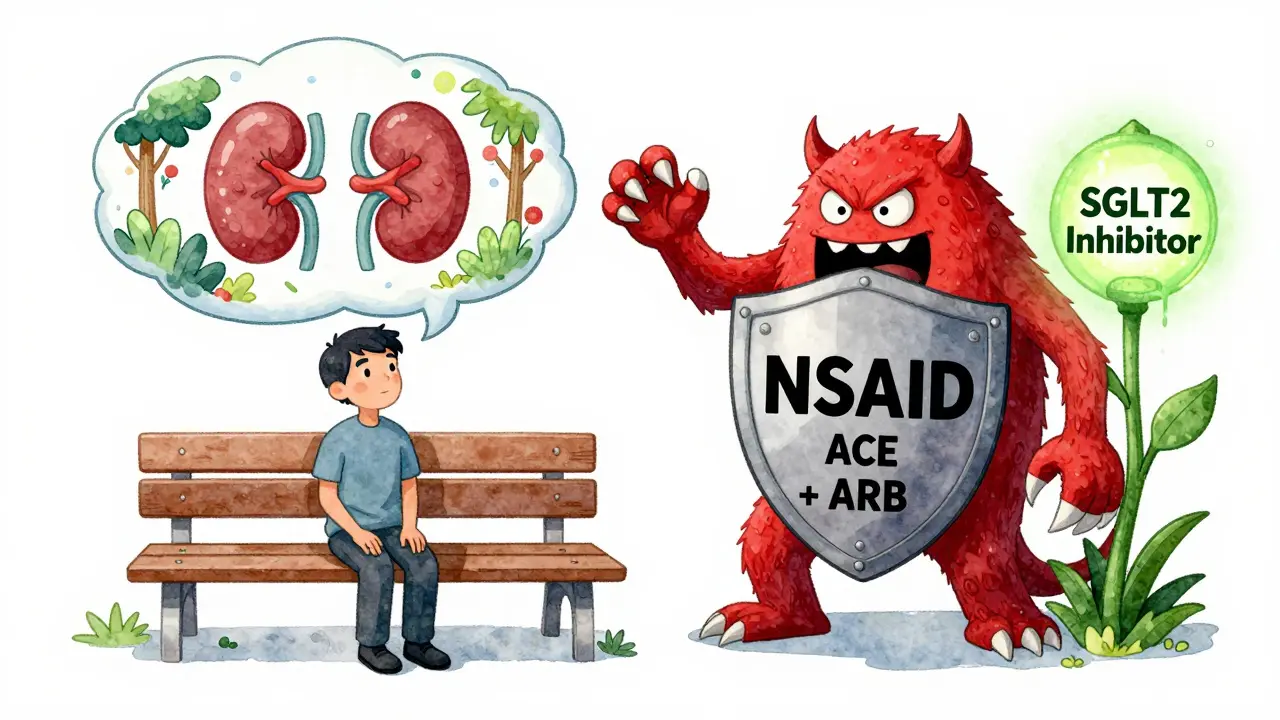
NSAIDs like ibuprofen or naproxen are even riskier. They reduce blood flow to the kidneys. When paired with RAAS blockers, they can trigger sudden kidney failure. Avoid them if you can. Use acetaminophen instead for pain.
Now, here’s the newest twist: SGLT2 inhibitors like empagliflozin and dapagliflozin. These drugs, originally for blood sugar, have shown amazing kidney protection. But here’s the key: every major trial proving their benefit did so in patients already on an ACE inhibitor or ARB.
That means: SGLT2 inhibitors don’t replace ACE inhibitors or ARBs. They build on them. If you can’t tolerate a RAAS blocker, then yes - an SGLT2 inhibitor can be your primary kidney protector. But if you can take one, you should.
The Bottom Line: Maximize the Dose, Don’t Delay
Diabetic nephropathy is preventable. Not always - but often. And the tools we have are simple, cheap, and backed by decades of evidence.
Here’s what you need to do:
- Get your urine tested yearly for albumin - even if you feel fine.
- If protein is high, start an ACE inhibitor or ARB at the highest tolerated dose.
- Don’t panic if creatinine rises by less than 30%. That’s normal.
- Never combine ACE inhibitors and ARBs. It doesn’t help - it hurts.
- Avoid NSAIDs. Use acetaminophen for pain.
- If you’re on an SGLT2 inhibitor, keep your RAAS blocker unless your doctor says otherwise.
These drugs don’t cure diabetes. But they can stop diabetes from killing your kidneys. And that’s worth everything.
What If You Can’t Tolerate ACE Inhibitors or ARBs?
Some people get a dry cough from ACE inhibitors. Others get dizziness or high potassium. If that happens, switching to an ARB often fixes it. ARBs rarely cause coughs.
If you can’t take either? Calcium channel blockers, beta blockers, or diuretics can help control blood pressure. But they won’t give you the same kidney protection. That’s why SGLT2 inhibitors are now so important - they’re the next best option.
Still, the goal is to get back on a RAAS blocker if possible. The benefit is too big to ignore.


Comments (10)