
Drug-Induced DIC Risk Calculator
This calculator uses the International Society on Thrombosis and Haemostasis (ISTH) scoring system to assess risk of drug-induced DIC. Enter the patient's lab values to determine risk level and clinical recommendations. Remember: clinical suspicion is critical - DIC can develop rapidly and lab values may be normal in early stages.
When a medication turns deadly not because of an overdose, but because of how your body reacts to it, you’re facing one of the most dangerous and overlooked emergencies in modern medicine: drug-induced disseminated intravascular coagulation (DIC). It doesn’t make headlines like heart attacks or strokes, but it kills just as fast-and often without warning. You might be on a new cancer drug, an anticoagulant, or even an antibiotic, and suddenly, your blood starts clotting everywhere while also bleeding everywhere. No one sees it coming until it’s too late. And yet, if caught early, survival is possible.
What Exactly Is Drug-Induced DIC?
Disseminated Intravascular Coagulation isn’t a disease on its own. It’s a syndrome-a chain reaction gone wrong inside your bloodstream. Normally, clotting keeps you from bleeding out after an injury. But in DIC, the system goes haywire. Clots form all over your body-in tiny blood vessels of your kidneys, brain, lungs, liver. These clots block blood flow, starving organs. At the same time, your body burns through its clotting resources. Platelets drop. Fibrinogen vanishes. And then, without enough clotting power left, you start bleeding from IV sites, gums, or even spontaneously inside your body.
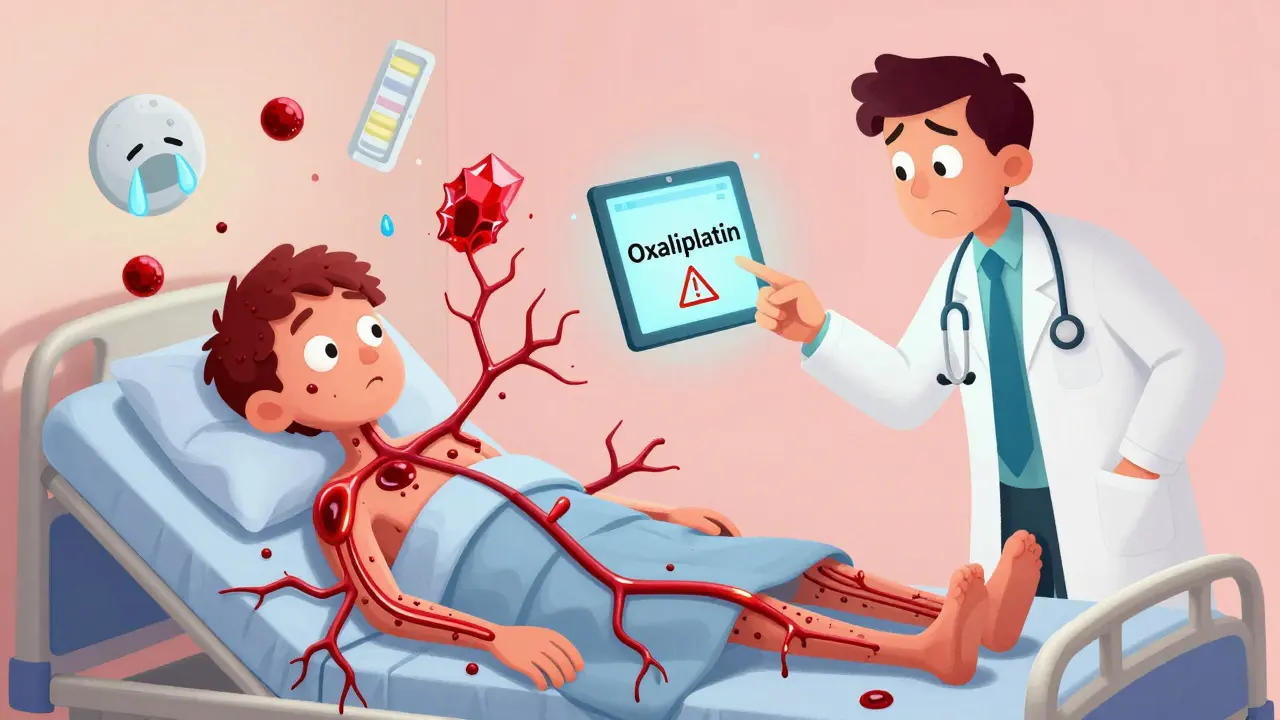
Drug-induced DIC happens when a medication triggers this cascade. Some drugs directly activate clotting proteins. Others damage the lining of blood vessels, tricking your body into thinking it’s injured everywhere. Anticancer drugs like oxaliplatin and bevacizumab, anticoagulants like dabigatran, and even certain antibiotics have been linked to this. A 2020 global review of adverse drug reports found 4,653 cases tied to 88 different drugs. Shockingly, many of these drugs don’t even list DIC as a risk in their official prescribing information.
Which Drugs Are Most Likely to Cause It?
Not all drugs carry the same risk. Some are far more dangerous than others. Based on data from the WHO’s global drug safety database, the top offenders are:
- Oxaliplatin (used in colorectal cancer): 75 reported cases, with a 1.77x higher risk than average
- Bevacizumab (a monoclonal antibody for cancers): 75 cases, but a 2.02x higher risk-meaning it’s more likely to trigger DIC than most others
- Dabigatran (a blood thinner): 94 reports, often mistaken for simple bleeding, but it’s DIC in disguise
- Gemtuzumab ozogamicin (a targeted cancer drug): ROR of 28.7-this one is extremely dangerous
- Vancomycin (an antibiotic): Surprisingly, even this common drug has been linked to DIC in rare cases
What’s worse? Many of these drugs are prescribed because they’re effective. A patient with advanced cancer might be on bevacizumab to extend life by months. But if DIC strikes, those months become hours. And because the condition is rare and poorly understood, doctors often miss it until the patient is in full-blown crisis.
How Do You Know It’s Happening?
The signs are subtle at first. A patient might just have a slightly low platelet count, or a mildly prolonged clotting time. But if you’re not looking for it, you’ll miss it.
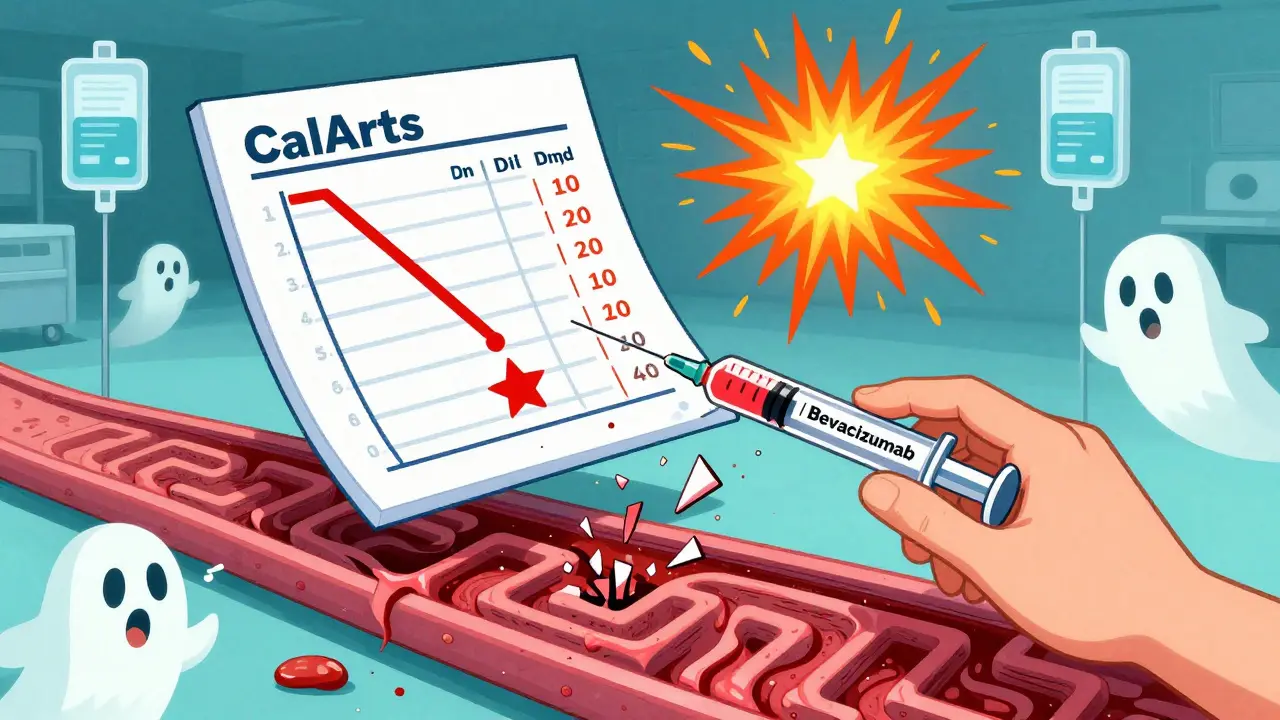
The International Society on Thrombosis and Haemostasis (ISTH) has a simple scoring system that works in real time:
- Platelet count: Less than 50,000/µL = 2 points
- Prothrombin time (PT): More than 6 seconds longer than normal = 2 points
- Fibrin degradation products (D-dimer): Strongly elevated = 3 points
- Fibrinogen: Below 1.0 g/L = 1 point
If the total is 5 or higher, it’s overt DIC. In drug-induced cases, the score often spikes within 24-72 hours after the drug is given. Lab results tell the story:
- Platelets: Often below 50,000/µL (normal is 150,000-450,000)
- D-dimer: More than 10 times the upper limit of normal
- Fibrinogen: Drops below 1.5 g/L-below 80 mg/dL means you can’t even safely give blood thinners
- PT and aPTT: Both prolonged
But here’s the catch: these labs can look normal in the early stages. That’s why clinical suspicion matters more than numbers. If a patient on a high-risk drug suddenly develops unexplained bruising, bleeding from catheters, or low urine output, DIC should be on the radar.
Why Is Timing Everything?
Mortality for DIC is 40-60%. That’s not a guess. That’s what studies show. And the biggest factor in survival? How fast you stop the drug.
One case from the Journal of Thrombosis and Haemostasis tells it all. A 62-year-old man received oxaliplatin for colon cancer. Two days later, he started bleeding from his gums and his platelets crashed. He was rushed to ICU. By the time they realized it was DIC, he’d already lost 4 liters of blood. He survived-but only because the oncologist remembered the drug’s association with DIC and stopped it immediately. If they’d given another round of chemo, he would have died.
That’s the pattern. In every case report, the turning point is stopping the drug. Not the transfusions. Not the heparin. Not the fibrinogen. Stopping the trigger.
How Is It Treated?
There’s no magic bullet. Treatment is supportive, but it’s precise.
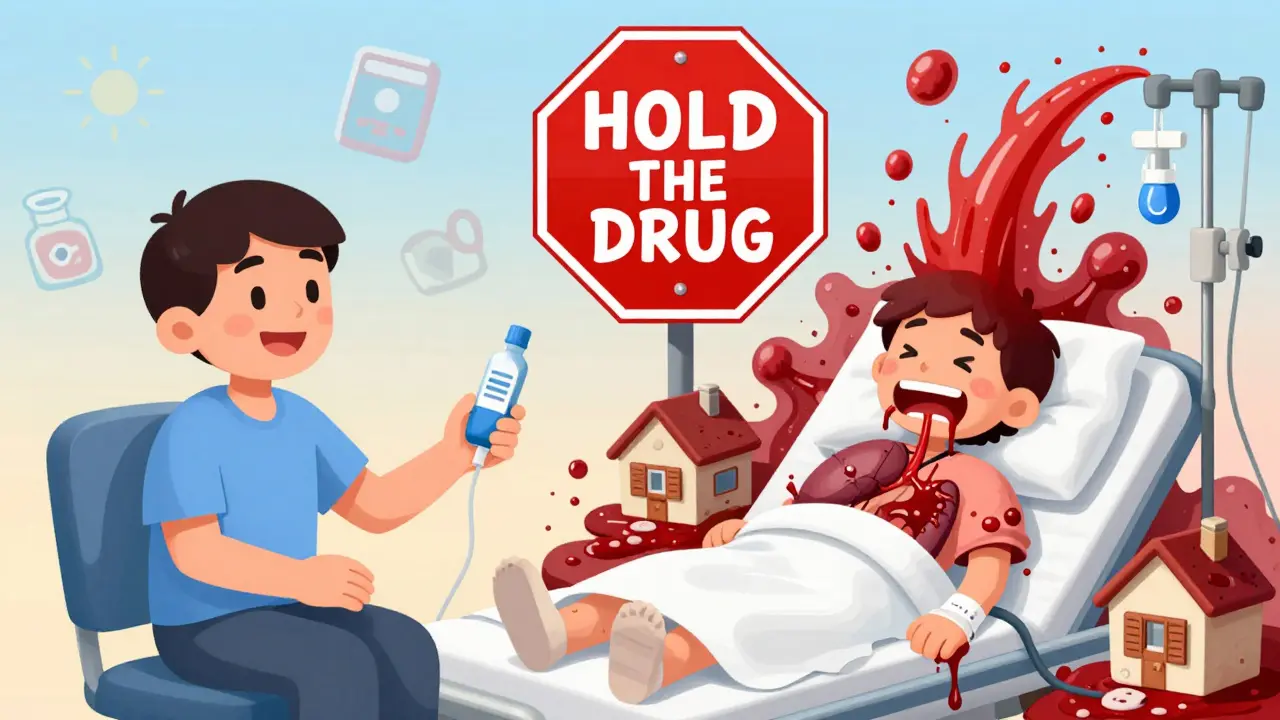
Step 1: Stop the drug. This is non-negotiable. If it’s dabigatran, give idarucizumab to reverse it. If it’s oxaliplatin, cancel the next dose. If you’re unsure, assume it’s DIC and hold the drug. The risk of continuing far outweighs the risk of pausing treatment.
Step 2: Replace what’s been used up. You’re bleeding because your body ran out of clotting tools. So you give them back:
- Platelets: Aim for above 50,000/µL if bleeding or high risk. Only 20,000/µL if no bleeding.
- Fibrinogen: Keep it above 1.5 g/L. Use fibrinogen concentrate or cryoprecipitate-not fresh frozen plasma, which is less effective.
- Red blood cells: For ongoing bleeding, not just low hemoglobin.
- FFP: Only if PT/aPTT are severely prolonged and you’re actively bleeding.
Step 3: Avoid the wrong treatments. This is where mistakes kill.
- Don’t give heparin unless you’re sure it’s safe. In some cases, low-dose heparin might help prevent more clots-but if the patient has heparin-induced thrombocytopenia (HIT), heparin will make things worse. And HIT can look exactly like DIC.
- Never give warfarin. It depletes natural anticoagulants first, making you more likely to clot-not less. Warfarin-induced skin necrosis has been reported in DIC patients.
- Don’t transfuse platelets blindly. If fibrinogen is below 1.0 g/L, giving platelets is useless. They’ll just get swallowed by the clots.
There’s no proven role for antithrombin, thrombomodulin, or other experimental drugs in routine care. Some trials showed benefit-but only in patients who weren’t getting heparin. That’s not a recommendation. It’s a research footnote.
What Happens After?
Survivors often need weeks of monitoring. Platelets and fibrinogen can take days to recover. Some patients develop chronic clotting problems or organ damage. Others never fully bounce back.
And here’s the quiet crisis: many of these drugs still aren’t labeled with DIC as a risk. The FDA and EMA are starting to catch on-since 2022, reports of DIC linked to monoclonal antibodies have jumped 23% year over year. That’s not just more use. It’s more awareness. But it’s still not enough.
Guidelines from the International Council for Standardization in Haematology now recommend weekly blood tests for patients on high-risk drugs like bevacizumab. That’s a step forward. But it’s not standard everywhere. Too many patients are still being treated without even a basic CBC before their next infusion.
What Should You Do?
If you’re a patient on a high-risk drug-especially cancer therapy or anticoagulants-know the signs:
- New bruising without injury
- Bleeding from IV sites or gums
- Dark urine or reduced output
- Sudden drop in energy or confusion
If you’re a clinician: check the drug’s profile. Look up its association with DIC in Vigibase or FAERS. Don’t wait for labs to scream. If the patient is deteriorating and you can’t explain why, test for DIC. Run the ISTH score. Stop the drug. Call hematology.
This isn’t a rare curiosity. It’s a preventable death sentence. And it’s happening right now-in hospitals, in clinics, in outpatient infusion centers. The tools to save lives exist. What’s missing is the urgency.
Can any drug cause disseminated intravascular coagulation?
Not every drug, but over 88 have been linked to DIC based on global adverse event data. The highest-risk categories are anticancer drugs (especially monoclonal antibodies and antibody-drug conjugates), anticoagulants like dabigatran, and some antibiotics. Even common drugs like vancomycin have been reported to trigger it in rare cases. The key is whether the drug directly activates clotting pathways, damages blood vessels, or causes immune-mediated destruction of platelets.
How quickly does drug-induced DIC develop after taking the medication?
It usually develops within 24 to 72 hours after exposure, especially with chemotherapy drugs like oxaliplatin or bevacizumab. In some cases, like with dabigatran, symptoms can appear even after the first dose. For drugs that cause immune reactions, it may take repeated doses over days or weeks. The timeline depends on the drug’s mechanism, but it’s rarely a slow process-DIC tends to escalate rapidly once it starts.
Is DIC always fatal?
No, but mortality is high-between 40% and 60% in severe cases. Survival depends almost entirely on early recognition and stopping the triggering drug. Patients who receive prompt blood product support and have no organ failure have much better outcomes. Those who develop multiorgan failure, especially kidney or lung damage, have a survival rate below 20%. It’s not inevitable, but delay is deadly.
Can you prevent drug-induced DIC?
You can’t prevent it in every case, but you can reduce the risk. For high-risk drugs like bevacizumab or gemtuzumab, weekly blood tests (CBC, PT, aPTT, fibrinogen, D-dimer) are now recommended by hematology experts. Monitoring platelets and clotting factors before each infusion can catch early signs. Also, avoid combining multiple high-risk drugs unless absolutely necessary. If a patient has a history of clotting disorders or recent surgery, extra caution is needed. Awareness is the best prevention.
Why isn’t DIC listed as a side effect on many drug labels?
Because reporting systems are slow, and drug companies often don’t update labels until dozens of cases are documented. A 2020 study found that 75% of drugs linked to DIC in global databases didn’t mention it in their official prescribing information. Regulatory agencies like the FDA and EMA are improving, but the process takes years. By the time a warning appears, many patients have already been affected. This is why clinicians must rely on pharmacovigilance databases like Vigibase, not just drug inserts.
What’s the difference between DIC from a drug vs. DIC from sepsis?
The lab findings look similar, but the triggers and treatments differ. Sepsis-induced DIC is caused by infection and inflammation, so antibiotics and source control are the priority. Drug-induced DIC comes from a medication, so stopping that drug is the first and most critical step. Also, sepsis patients often have fever and low blood pressure; drug-induced DIC may not. The ISTH score works for both, but the treatment path diverges sharply after diagnosis.


Comments (11)