
Side Effect Risk Calculator
Dose-Related Side Effect Risk Calculator
Enter information above to see your risk assessment
When you take a medication, you expect it to help-not hurt. But sometimes, drugs cause side effects. Not all side effects are the same. Some happen because you took too much. Others happen for no clear reason, even at the lowest dose. Understanding the difference between dose-related and non-dose-related side effects isn’t just for doctors-it’s key to staying safe with any medicine.
What Are Dose-Related Side Effects?
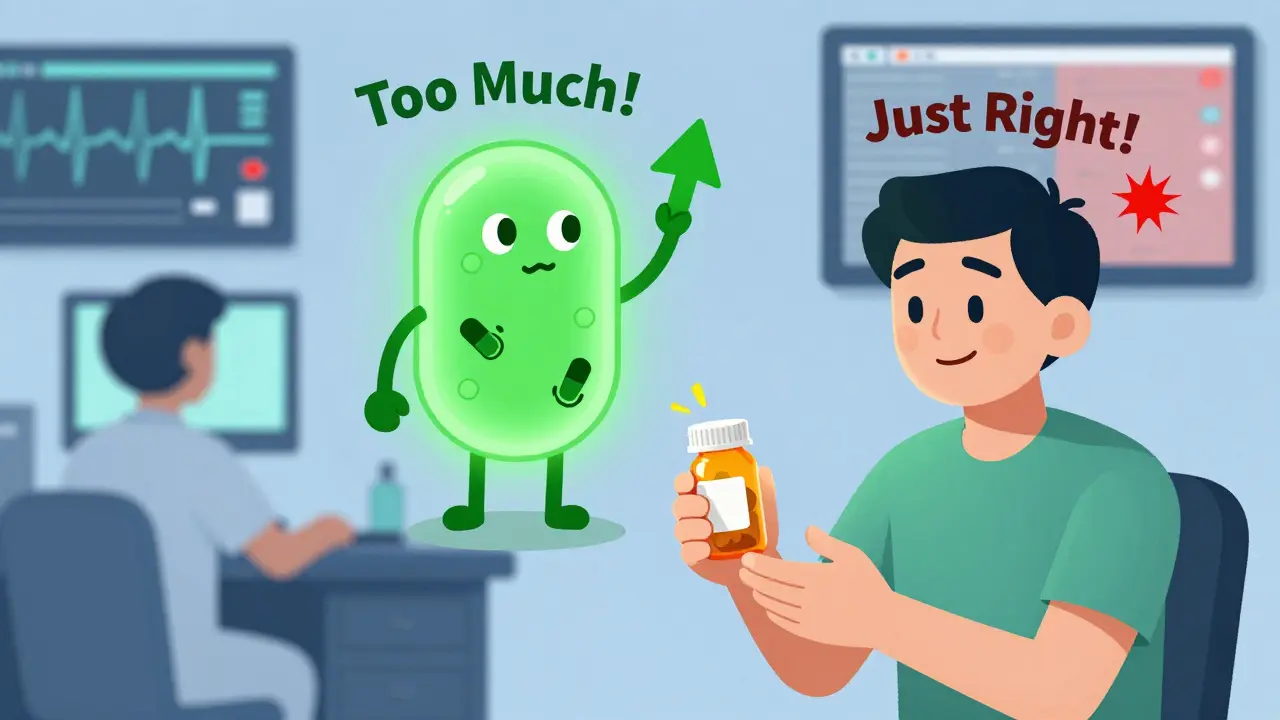
Dose-related side effects, also called Type A reactions, are predictable. They happen because the drug is doing exactly what it’s supposed to do-just too much of it. Think of it like turning up the volume on a speaker: at low volume, you hear the music. At high volume, it distorts. Same with medicine.
These reactions follow the law of pharmacology: the higher the dose, the stronger the effect. They’re common-making up 70 to 80% of all adverse drug reactions. And they’re often the reason people end up in the ER.
Examples? Insulin lowering blood sugar too far, causing dizziness or fainting. Warfarin thinning the blood so much that you bleed internally. Or a blood pressure pill dropping your systolic pressure below 90 mmHg, leaving you lightheaded. These aren’t surprises. Doctors know these risks. That’s why they monitor things like INR levels for warfarin users or blood glucose for diabetics.
Drugs with narrow therapeutic windows are especially risky. That means the gap between a helpful dose and a dangerous one is tiny. Digoxin, used for heart rhythm problems, works at 0.5-0.9 ng/mL. Above 2.0 ng/mL? Toxic. Lithium for bipolar disorder? Safe between 0.6-1.0 mmol/L. Go over 1.2? You’re in trouble. That’s why blood tests are routine with these drugs.
Why do these happen more in some people? Age, kidney or liver problems, or other meds can change how your body handles the drug. For example, if you’re over 65, your body clears diazepam 30-40% slower. Take the same dose as a younger person? You’re more likely to feel dizzy or fall. Or if you start clarithromycin while on a statin, your statin levels can spike 5-10 times higher-raising your risk of muscle damage.
What Are Non-Dose-Related Side Effects?
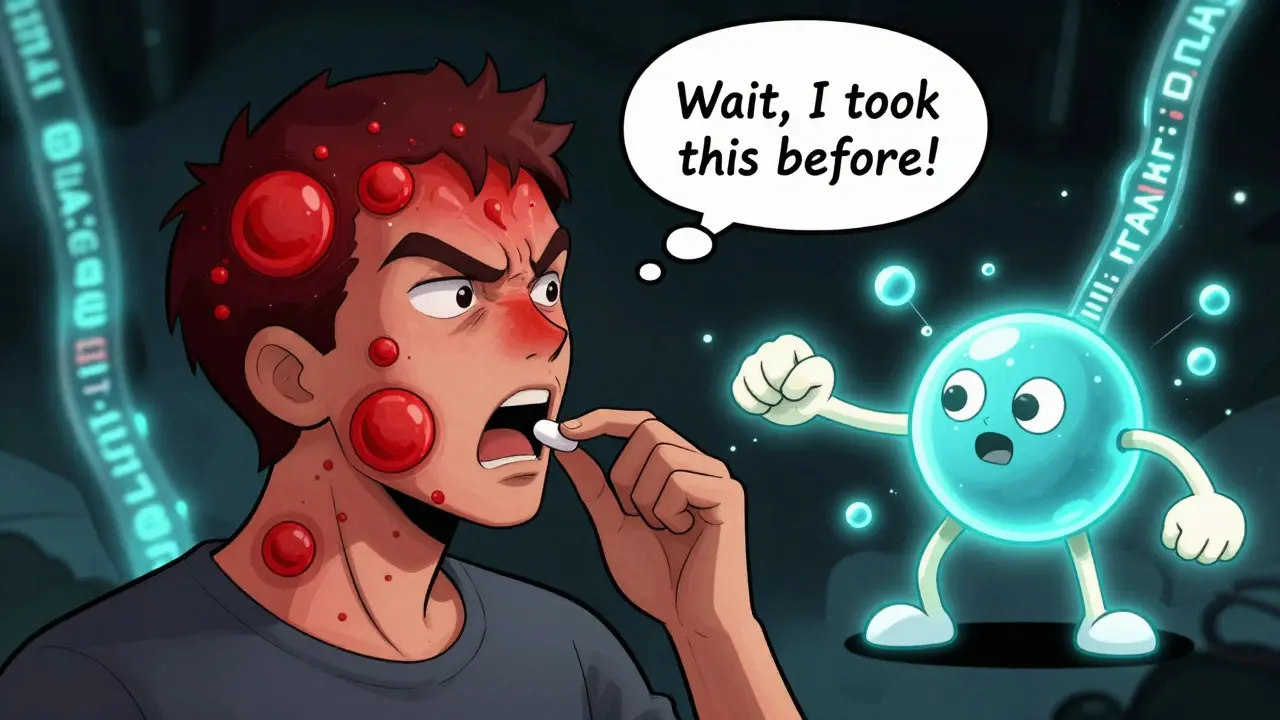
Non-dose-related side effects, or Type B reactions, are the opposite. They’re unpredictable. They don’t follow the rules of pharmacology. You can take the right dose, exactly as prescribed, and still get a severe reaction. That’s what makes them scary.
These reactions are rare-only 15-20% of all side effects-but they cause 70-80% of serious hospitalizations and most drug-related deaths. Why? Because they’re not about how much you took. They’re about who you are.
Most Type B reactions are immune-driven. Your body mistakes the drug for an invader and attacks. Anaphylaxis from penicillin is one example. Even one 500mg dose can trigger a life-threatening allergic reaction. Stevens-Johnson syndrome, a blistering skin condition, can happen after just one tablet of lamotrigine or sulfonamides. Drug-induced liver injury from amoxicillin-clavulanate? Also Type B.
These reactions often need prior exposure. Your immune system has to be sensitized first. So the first time you take a drug, you’re fine. The second time? Boom. That’s why some people think they’re “allergic” to a drug after one bad reaction-even if they took it safely before.
Genetics play a huge role. If you carry the HLA-B*57:01 gene, taking abacavir (an HIV drug) can trigger a deadly hypersensitivity reaction. Test for it first? You can prevent it entirely. The test costs $150-$300, but it’s worth it. The FDA now requires this screening before prescribing abacavir. Same with HLA-B*15:02 and carbamazepine in Asian populations-it reduces the risk of Stevens-Johnson syndrome by 97%.
Why the Confusion? The Paradox of Non-Dose-Related Reactions
Here’s the twist: everything in pharmacology should depend on dose. So how can a reaction truly be non-dose-related?
Researchers like Aronson and Ferner solved this paradox. They found four reasons why reactions seem unrelated to dose:
- The reaction isn’t real-it’s misdiagnosed or coincidental.
- Your body hits maximum sensitivity at a very low dose. So even 1mg triggers a reaction.
- People vary wildly in how they respond. One person reacts to 10mg. Another takes 100mg with no issue.
- We don’t measure the dose accurately. Did you take it? Did you skip a dose? Did you take it with food?
So even Type B reactions might have a dose threshold. But because that threshold is different for everyone, it looks random. That’s why you can’t predict them by dose alone.
Which Is More Dangerous?
Let’s compare them side by side.
| Feature | Type A (Dose-Related) | Type B (Non-Dose-Related) |
|---|---|---|
| Frequency | 70-80% of all ADRs | 15-20% of all ADRs |
| Severity | Mild to moderate | Often severe, life-threatening |
| Mortality Rate | Less than 1% | 5-10% |
| Predictability | High-based on pharmacology | Low-depends on genetics, immunity |
| Prevention | Dose adjustment, monitoring, avoiding interactions | Genetic screening, allergy testing, avoiding triggers |
| Common Drugs Involved | Warfarin, insulin, lithium, digoxin, statins | Penicillin, lamotrigine, carbamazepine, abacavir, amoxicillin-clavulanate |
Type A reactions are more common and cost the U.S. healthcare system $130 billion a year. But Type B reactions are the ones that lead to drug withdrawals. The European Medicines Agency says Type B reactions are behind 70% of drug safety-related withdrawals. Why? Because you can’t control them with better dosing. The only fix is to pull the drug off the market.
How Doctors Handle Each Type
For Type A reactions, the goal is control. You don’t stop the drug-you tweak it.
- Therapeutic drug monitoring: Checking blood levels of drugs like vancomycin, phenytoin, or digoxin to stay in the safe range.
- Dose reductions: Lowering enoxaparin by 50% if kidney function drops below 30 mL/min.
- Drug interaction checks: Avoiding combinations like clarithromycin + simvastatin.
For Type B reactions, the goal is avoidance.
- Genetic testing: HLA-B*57:01 before abacavir. HLA-B*15:02 before carbamazepine in Asian patients.
- Skin testing: For penicillin allergy-positive in 50-70% of true cases.
- Graded challenges: Slowly reintroducing a drug under supervision if the allergy history is unclear.
At Johns Hopkins, hospitals that use Type A prevention protocols cut major bleeding in warfarin patients by 35%. That’s not a small win. It’s life-saving.
What’s Changing in Pharmacology?
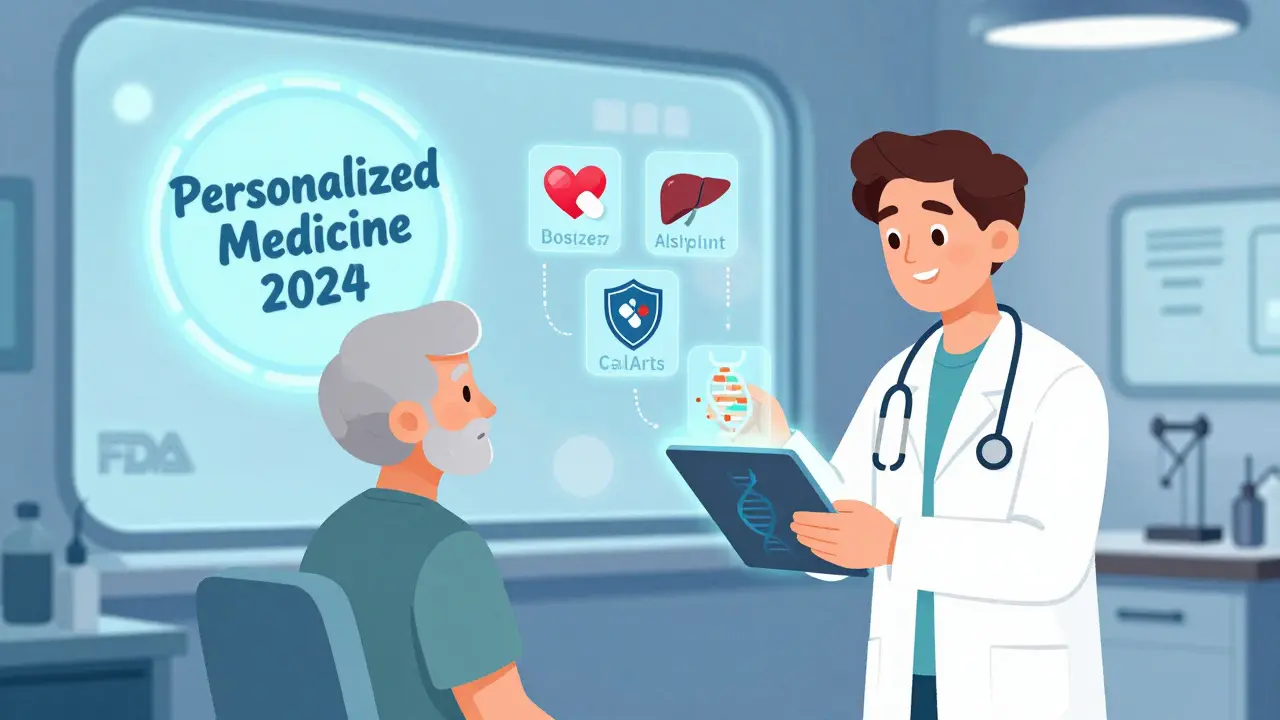
The future is personal. Pharmacogenomics-using your genes to guide drug choices-is growing fast. The global market will hit nearly $18 billion by 2030. The FDA now lists pharmacogenomic info on 311 drug labels. Twenty-eight of those drugs require genetic testing before use.
Tools like CPIC guidelines help doctors know exactly how to adjust doses based on your CYP2C9 or VKORC1 genes for warfarin. For Type B, they tell you to avoid abacavir if you’re HLA-B*57:01 positive.
Machine learning is helping too. Algorithms analyzing electronic health records can predict Type A reactions with 82% accuracy. But for Type B? Only 63%. That gap shows how much harder it is to predict immune reactions.
The FDA’s 2024 draft guidance on personalized dosing software signals that this isn’t science fiction anymore. Doctors will soon use apps that combine your genes, age, weight, kidney function, and current meds to calculate your perfect dose-reducing both Type A and Type B risks.
What Should You Do?
If you’re on medication:
- Know your drugs. Ask your pharmacist: “Is this one of the ones that needs blood tests?”
- Report even small side effects. A rash, nausea, or dizziness could be a warning sign.
- Keep a list of all your meds-including supplements. Drug interactions cause many Type A reactions.
- If you’ve had a severe reaction, carry a medical alert card. Don’t assume your doctor remembers.
- Ask about genetic testing if you’re prescribed abacavir, carbamazepine, or certain cancer drugs.
Side effects aren’t always your fault. Sometimes it’s the drug. Sometimes it’s your genes. But understanding the difference helps you speak up, ask questions, and stay in control.
Are all side effects dose-related?
No. About 70-80% of side effects are dose-related (Type A), meaning they happen because the drug’s effect is too strong. The other 15-20% are non-dose-related (Type B), caused by your immune system or genetics, not the amount you took. Even a tiny dose can trigger a Type B reaction.
Can you prevent dose-related side effects?
Yes. Doctors use therapeutic drug monitoring (blood tests) for drugs like warfarin, lithium, and digoxin. Dose adjustments based on kidney or liver function, avoiding drug interactions, and starting low and going slow can all reduce risk. Regular check-ins with your provider matter.
Why are non-dose-related reactions so dangerous?
Because they’re unpredictable and often severe. You can’t avoid them by taking less. They can happen on the first dose after prior exposure, and they’re often immune-driven-like anaphylaxis or Stevens-Johnson syndrome. These reactions carry a 5-10% mortality rate and are the main reason drugs get pulled from the market.
Is genetic testing worth it for drug reactions?
For certain drugs, absolutely. Testing for HLA-B*57:01 before abacavir prevents a deadly reaction with 99.9% accuracy. HLA-B*15:02 screening before carbamazepine cuts Stevens-Johnson syndrome risk by 97% in Asian populations. At $150-$300, it’s far cheaper than hospitalization or a life-threatening event.
Can a Type B reaction happen on the first dose?
Yes, but only if you were previously sensitized-often without knowing it. For example, you might have had a mild rash from penicillin as a child and didn’t tell your doctor. That exposure trained your immune system. Later, even one dose can trigger anaphylaxis. That’s why it’s critical to report any past reaction, no matter how small.
Which is more common: Type A or Type B reactions?
Type A (dose-related) reactions are far more common, making up 70-80% of all adverse drug reactions. But Type B (non-dose-related) reactions, while rarer, are responsible for most serious outcomes, including deaths and drug withdrawals.


Comments (13)