
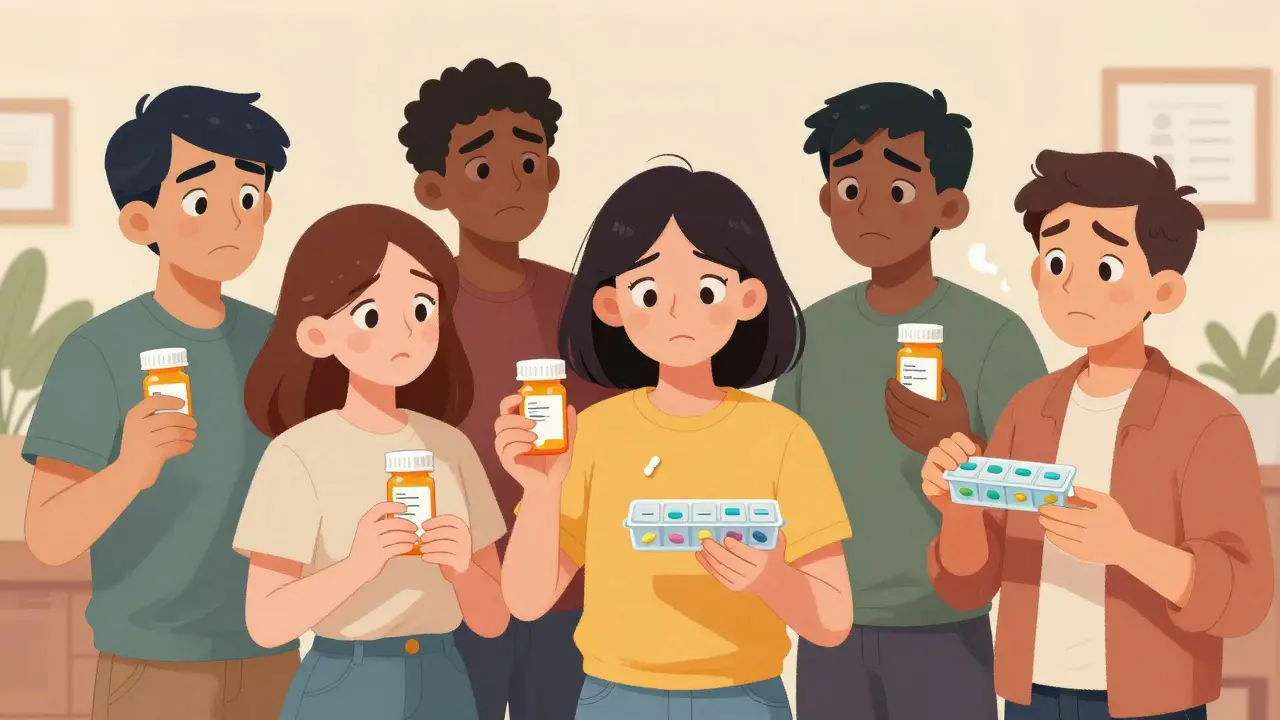
Every year, over 1.3 million people in the U.S. end up in the emergency room because of medication mistakes. Many of these aren’t caused by doctors or pharmacists-they happen at home, when someone takes the wrong pill, at the wrong time, or without realizing how it interacts with something else they’re taking. The good news? Most of these errors are preventable. The foundation for safe medication use has been around for decades, but it’s not just for hospitals. These same rules apply to you, whether you’re managing one pill or five.
Rule 1: Know the Right Patient-That’s You
It sounds obvious, but you’d be surprised how often people mix up their meds-especially if they live with a partner or share pill bottles. The first rule of medication safety is simple: make sure the medicine is meant for you. This isn’t just about names on the bottle. It’s about matching the drug to your diagnosis, your weight, your allergies, and your other medications.For example, if you’re on blood thinners, taking ibuprofen without checking with your doctor could cause dangerous bleeding. Or if you’re 120 pounds, a standard adult dose of a painkiller might be too much. Even something as small as confusing your diabetes medication with your thyroid pill can lead to serious problems. Always double-check the name on the label against your prescription. If you’re unsure, ask your pharmacist: “Is this really for me?”
Rule 2: Confirm the Right Drug-Name, Shape, Color
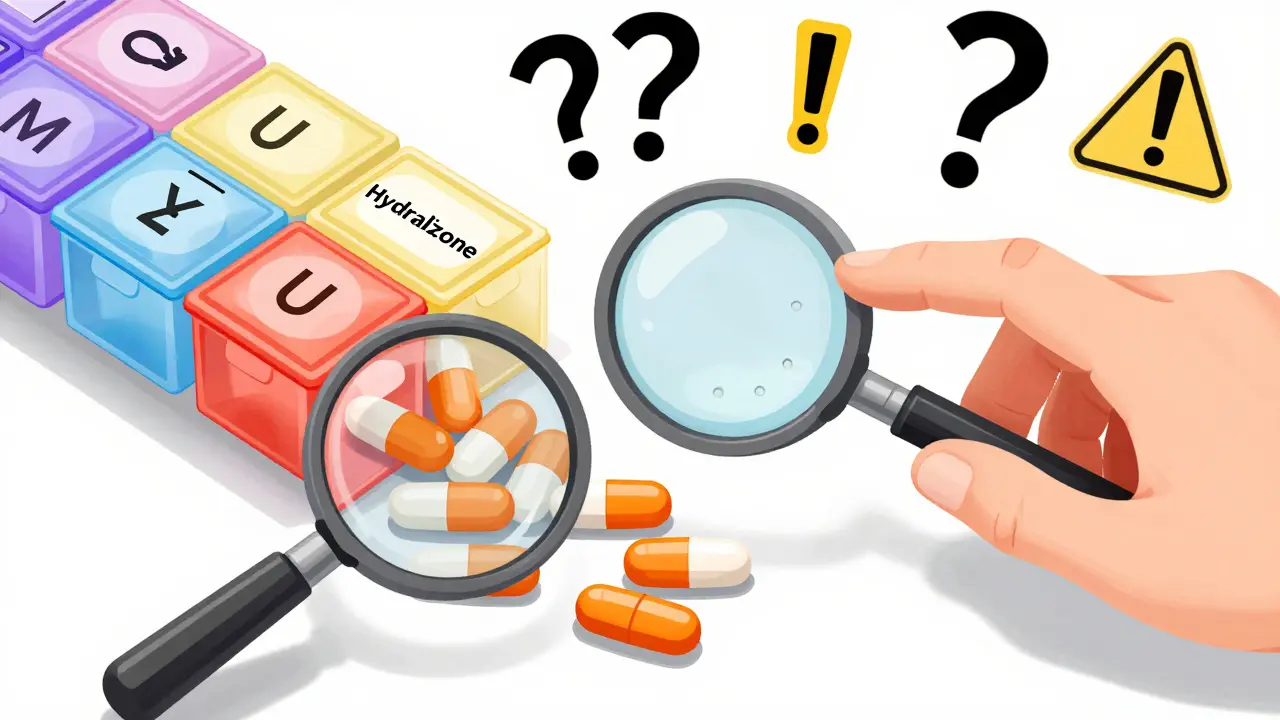
Not all pills look the same, even if they have similar names. Take Hydralazine (for blood pressure) and Hydroxyzine (for anxiety). They sound almost identical. That’s why the Institute for Safe Medication Practices calls these “look-alike, sound-alike” drugs-and they’re behind nearly 25% of all medication errors.Don’t rely on memory. When you pick up a new prescription, look at the pill. Does it match the description on the label? Is it the right color, size, or imprint? If your insulin pen looks different this month, or your antibiotic pills are now orange instead of white, ask why. Many pharmacies now use “Tall Man” lettering-like HYDROmorphone vs. HYDROxyzine-to make differences clearer. And if you’re using a pill organizer, make sure each compartment is labeled clearly. A quick visual check before you swallow can stop a mistake before it happens.
Rule 3: Get the Right Dose-Every Single Time
Dosing isn’t one-size-fits-all. A dose that’s safe for one person could be deadly for another. This is especially true for kids, seniors, and people with kidney or liver problems. Insulin, blood thinners, and opioids are called “high-alert” medications because even small mistakes can cause serious harm.Always check the dosage on the label. Is it in milligrams (mg) or micrograms (mcg)? Those two units differ by a factor of 1,000. One mistake there can be fatal. If your doctor says “take 5 mg,” but the bottle says “50 mg,” don’t guess. Call the pharmacy. For chronic conditions like high blood pressure or epilepsy, keep a written log of what you took and when. Many people use smartphone apps to track doses, but even a simple notebook works. If you’re on five or more medications, ask your pharmacist for a “brown bag review”-bring all your pills in, and they’ll check for duplicates or dangerous interactions.
Rule 4: Use the Right Route-Or Don’t Take It At All
How you take a medicine matters just as much as what you take. Swallowing a pill meant for your skin? Injecting a liquid meant for your nose? These aren’t just silly mistakes-they happen often.According to the Agency for Healthcare Research and Quality, 16% of medication errors involve the wrong route. A patch meant for your arm shouldn’t be chewed. Eye drops shouldn’t be swallowed. Inhalers shouldn’t be taken as tablets. Some medications are designed to be absorbed slowly-crushing or splitting them can release the full dose at once. If your pill is labeled “extended-release” or “sustained-release,” never break it open. And if you’re told to take something “sublingually” (under the tongue), don’t swallow it. Always read the instructions. If the label says “for oral use only,” that means just that. No exceptions.
Rule 5: Take It at the Right Time-Consistency Saves Lives
Timing isn’t just about being on schedule. It’s about keeping the right level of medicine in your body. Antibiotics, for example, need to be spaced evenly so they kill bacteria effectively. If you take your blood pressure pill at 8 a.m. one day and 10 p.m. the next, your pressure could swing dangerously.For time-critical meds-like insulin, seizure drugs, or chemotherapy pills-the window is often just 30 minutes before or after the scheduled time. Some require even tighter timing. A 2022 study found that 28% of seniors skipped doses because they couldn’t remember when to take them. Use alarms. Use pill boxes with days of the week. Set phone reminders. If you’re traveling across time zones, ask your doctor how to adjust your schedule. And never double up because you missed a dose. If you’re unsure, call your pharmacist. They’ve seen this before.
What They Don’t Tell You: The Hidden Rules
The five rules above are the core. But real safety goes deeper.- Right documentation: Keep a list of every medication you take-including vitamins and supplements-and update it every time something changes. Bring it to every appointment.
- Right reason: Ask your doctor: “Why am I taking this?” If you can’t answer that, you’re at risk.
- Right response: Pay attention to side effects. Dizziness? Nausea? Rash? Don’t ignore them. Some are signs of dangerous interactions.
- Right education: If your pharmacist doesn’t explain how to take it, ask. You have the right to understand your meds.
Also, check expiration dates. Old antibiotics can lose potency. Old insulin can fail. Expired meds aren’t just ineffective-they can be harmful. Store them properly: away from heat, moisture, and light. A bathroom cabinet isn’t ideal. A cool, dry drawer is better.
What Works in Real Life
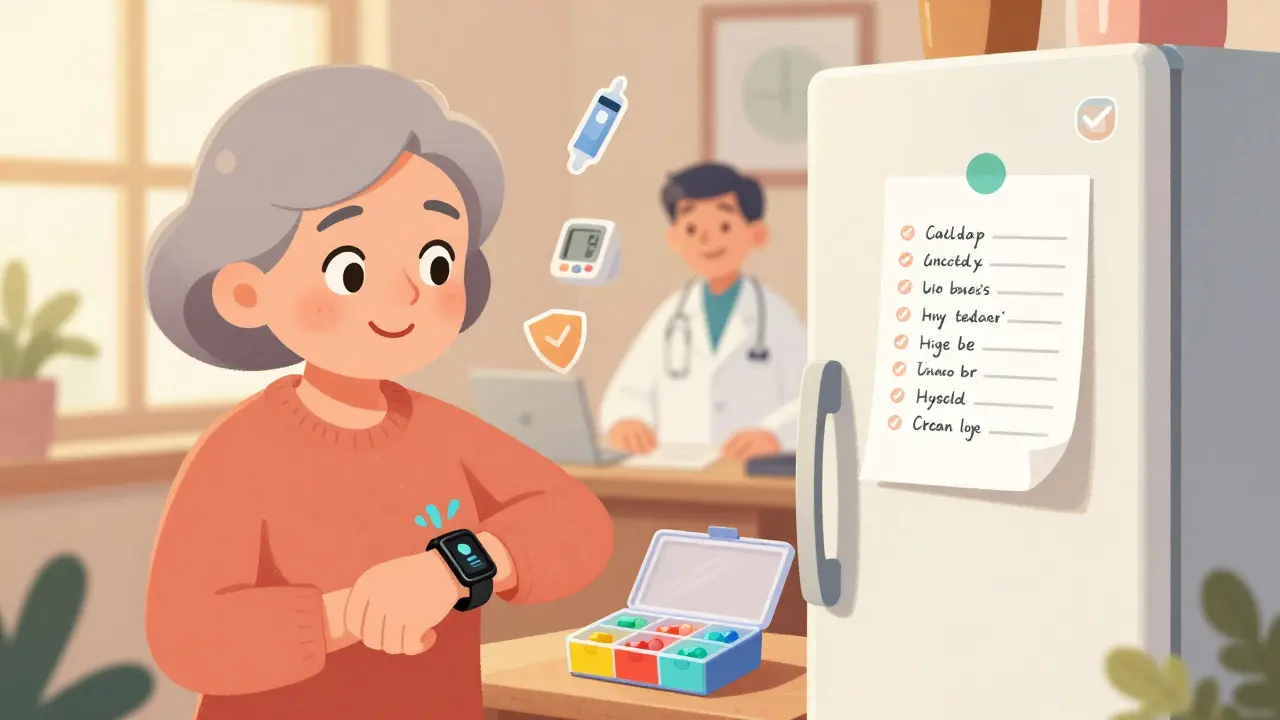
People who follow these five rules consistently cut their risk of medication errors in half. A 2023 study found that patients who used a combination of pill organizers, smartphone alerts, and regular pharmacist check-ins had 56% fewer adverse events than those who didn’t.One woman in her 70s, taking eight different meds, started using a color-coded pill box and a daily text reminder. Within three months, her blood pressure stabilized and she stopped going to the ER. A young man with epilepsy, who used to miss doses because his schedule changed, started using an app that synced with his smartwatch. His seizure frequency dropped by 70%.
It’s not about perfection. It’s about consistency. You don’t need to memorize pharmacology. You just need to slow down, double-check, and ask questions.
When to Get Help
If you’re ever confused-about what to take, when to take it, or why-you’re not alone. Talk to your pharmacist. They’re the medication experts. Ask for a medication therapy review. Most insurance plans cover it. If you’re caring for someone else, especially an elderly parent, sit down with them and go through all their pills together. Use a checklist. Take pictures of labels. Make a simple chart.And if you notice something wrong-like a pill that looks different, a side effect you’ve never seen, or a prescription that doesn’t match your condition-speak up. Your voice is part of the safety system.
What should I do if I miss a dose of my medication?
Don’t double up unless your doctor or pharmacist says it’s okay. For most medications, if you miss a dose by less than 2 hours, take it as soon as you remember. If it’s been longer, skip the missed dose and take the next one at the regular time. For critical meds like insulin or seizure drugs, always call your provider-never guess.
Can I crush my pills to make them easier to swallow?
Only if the label says it’s okay. Many pills-especially extended-release, enteric-coated, or sublingual ones-are designed to release slowly or protect the drug from stomach acid. Crushing them can cause dangerous side effects or make the medicine useless. If swallowing is hard, ask your doctor for a liquid version or a different formulation.
Are over-the-counter meds safe to take with my prescriptions?
Not always. Even common ones like ibuprofen, antacids, or sleep aids can interact badly with blood pressure drugs, blood thinners, or antidepressants. Always check with your pharmacist before adding any OTC medicine-even if it’s labeled “natural” or “herbal.”
How often should I update my medication list?
Update it every time you start, stop, or change a dose-even if it’s just a vitamin or supplement. Bring this list to every doctor’s visit, ER trip, or hospital admission. It’s one of the most effective ways to prevent dangerous interactions.
What’s the biggest mistake people make with their meds at home?
Assuming they know what’s in each pill. People often take meds from old bottles, mix up similar-looking pills, or skip doses because they “feel fine.” The biggest risk isn’t the medicine itself-it’s the lack of verification. Always check the label, every time.
Medication safety isn’t about being perfect. It’s about being aware. A few extra seconds checking your pills, reading labels, and asking questions can save you a trip to the ER-or worse. Make these five rules part of your routine. Your body will thank you.


Comments (11)