
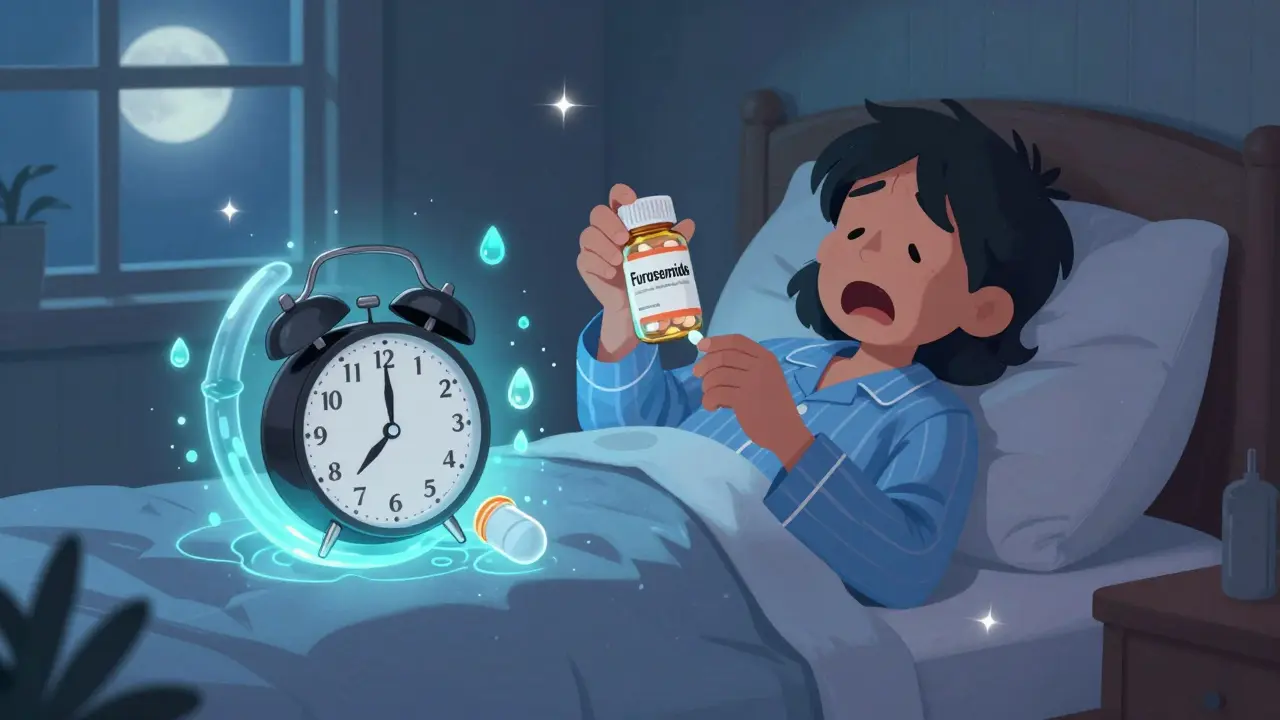
Medication Timing Calculator for Bladder Comfort
Determine the optimal time to take medications to minimize frequent urination and nighttime bathroom trips. Based on research showing that timing can reduce nighttime trips by up to 60%.
Results will appear here based on your selections
Waking up three times a night to use the bathroom? Feeling a sudden, sharp urge to go even when your bladder doesn’t feel full? You might not be dealing with aging or a urinary infection-you could be reacting to a medication you’re taking. Frequent urination and urinary urgency are among the most common but often overlooked side effects of prescription drugs. These symptoms don’t just disrupt sleep-they can make work, travel, and even social outings stressful. The good news? In many cases, they’re not permanent, and there are clear steps you can take to manage them.
Why Your Medication Is Making You Pee More
Your bladder doesn’t work in isolation. It’s controlled by nerves, muscles, and hormones-and many medications interfere with that system. Some drugs make your kidneys produce more urine. Others relax the bladder muscle so it can’t hold as much. A few even mess with the signals between your brain and bladder, making you feel like you need to go when you don’t. The most common culprit? Diuretics. These are often called "water pills" and are used to treat high blood pressure, heart failure, and swelling. Common ones include hydrochlorothiazide, furosemide (Lasix), and spironolactone (Aldactone). These drugs work by pushing extra fluid out of your body through urine. Within two hours of taking them, urine output can jump by 20% to 50%. That means your bladder fills faster-and faster than your body can adjust. About 65% of people on diuretics report needing to go more often during the day, and 40% wake up at night to urinate.Other Medications That Cause Bladder Issues
Diuretics aren’t the only offenders. Several other drug classes regularly cause urinary side effects:- Calcium channel blockers (like amlodipine, nifedipine, verapamil): Used for high blood pressure and chest pain, these drugs can weaken the bladder’s ability to contract. Studies show they increase the risk of nighttime urination by up to 42%, especially verapamil.
- Antidepressants (venlafaxine, escitalopram, fluoxetine): These can overstimulate the bladder, leading to urgency and frequency. About 22% of users report worsening overactive bladder symptoms.
- Lithium: Used for bipolar disorder, lithium can cause diabetes insipidus in about 1% of long-term users. This condition makes your kidneys produce massive amounts of dilute urine-sometimes over 3 liters a day.
- Antipsychotics (clozapine, risperidone, olanzapine): These often have anticholinergic effects, which can make it hard to empty the bladder fully, leading to overflow and urgency.
- Antihistamines (diphenhydramine, chlorpheniramine): Found in allergy meds and sleep aids, they relax the bladder muscle, which can cause retention and then overflow incontinence.
- ACE inhibitors and ARBs (captopril, losartan): These blood pressure drugs can cause a dry cough, and the force of coughing can trigger stress incontinence-especially in women.
How to Tell If It’s the Medication
Not every trip to the bathroom means your drug is to blame. But if you notice a pattern, it’s worth investigating. Ask yourself:- Did the symptoms start within 2 to 8 weeks of beginning a new medication?
- Are you taking more than one drug? Polypharmacy increases the risk.
- Do the symptoms get worse when you take the medication and improve when you skip a dose?

What You Can Do Right Now
You don’t have to live with constant urgency. Here’s what works:- Time your doses. If you’re on a diuretic, take it before 2 p.m. That simple change can cut nighttime bathroom trips by 60%. The same applies to other bladder-irritating meds-avoid them close to bedtime.
- Try bladder training. This means going to the bathroom on a schedule, even if you don’t feel the urge. Start by going every 90 minutes, then stretch it to every 2 hours. Studies show this reduces urgency episodes by 70% after 6 to 8 weeks.
- Strengthen your pelvic floor. Kegel exercises improve bladder control. Doing them daily can reduce incontinence by 55% when combined with timed voiding.
- Check your fluid intake. Drinking too much, especially caffeine or alcohol, makes things worse. Cut back after dinner. Sip water evenly through the day instead of chugging at night.
When to Talk to Your Doctor About Switching
Sometimes, lifestyle changes aren’t enough. If you’re still having problems after 4 weeks of trying adjustments, it’s time to revisit your meds. Your doctor might:- Lower your dose-especially with diuretics. A 2021 study found patients on high-dose furosemide (80mg) were nearly four times more likely to need incontinence products than those on 20-40mg.
- Switch to a different drug in the same class. For example, if a calcium channel blocker is causing nocturia, switching to an ACE inhibitor might help.
- Consider alternatives. For depression, bupropion (Wellbutrin) has less impact on the bladder than SSRIs. For high blood pressure, beta-blockers may be gentler on urinary function than calcium blockers.

What Not to Do
Don’t stop your meds on your own. Stopping diuretics suddenly can cause fluid buildup and heart strain. Quitting lithium without medical supervision can trigger a severe mood episode. Even if the side effects are annoying, they’re usually safer to manage than the risks of stopping. Also, don’t assume it’s "just in your head." A 2023 Reddit survey of 157 people found that 42% had to push hard to get their doctor to consider medication as the cause. Too often, urinary symptoms are dismissed as normal aging or stress. But they’re not. They’re a documented physiological reaction.Real People, Real Results
One man on Reddit shared how splitting his furosemide dose-taking half in the morning and half at noon-cut his bathroom visits from 12 a day to 5. Another woman on PatientsLikeMe said lithium made her life feel like a "bathroom hostage situation." After switching to a different mood stabilizer, her nighttime trips dropped from five to one. These aren’t rare stories. They’re common. And they’re fixable.What’s Next in Research
Scientists are now looking into why some people are more sensitive than others. Early data from the National Institute of Diabetes and Digestive and Kidney Diseases suggests that a gene variant called CHRM3 may make you 3.2 times more likely to react badly to anticholinergic drugs. In the future, a simple genetic test could help doctors pick medications that are less likely to cause bladder issues-for you specifically. Until then, the best tool you have is awareness. Track your symptoms. Note when you take your meds. Talk to your doctor. You don’t have to choose between treating your heart, your mood, or your bladder. With the right approach, you can manage all three.Can medications cause urinary urgency without increasing how much you pee?
Yes. Some drugs, like antidepressants and antipsychotics, don’t increase urine volume but make your bladder overactive. They lower the threshold for urgency, so even small amounts of urine trigger the urge to go. This is called overactive bladder syndrome caused by neural disruption-not increased output.
Is frequent urination from medication permanent?
Usually not. Most medication-induced urinary symptoms improve within days to weeks after adjusting the dose, changing the timing, or switching drugs. In rare cases like lithium-induced diabetes insipidus, symptoms may persist but can often be managed with desmopressin or fluid adjustments.
Can I take over-the-counter bladder pills for this?
Be careful. OTC bladder meds like oxybutynin or tolterodine are anticholinergics-and they can make urinary retention worse, especially if you’re already on other anticholinergic drugs. They’re not meant for medication-induced urgency unless prescribed and monitored by a doctor.
Why does my doctor ask about my bathroom habits when I’m here for high blood pressure?
Because many blood pressure meds-especially diuretics and calcium channel blockers-are top causes of urinary urgency and nocturia. Doctors are trained to look for side effects that affect quality of life. If you’re waking up 3 times a night, your sleep, mood, and safety are at risk. That’s just as important as your blood pressure number.
Do women experience this differently than men?
Women are more likely to develop stress incontinence from coughing (due to ACE inhibitors) or urgency from antidepressants. Men are more likely to have trouble emptying the bladder fully due to anticholinergic drugs or prostate issues. But both genders experience frequency and urgency equally. The difference is in the underlying mechanism, not the symptom.


Comments (9)