
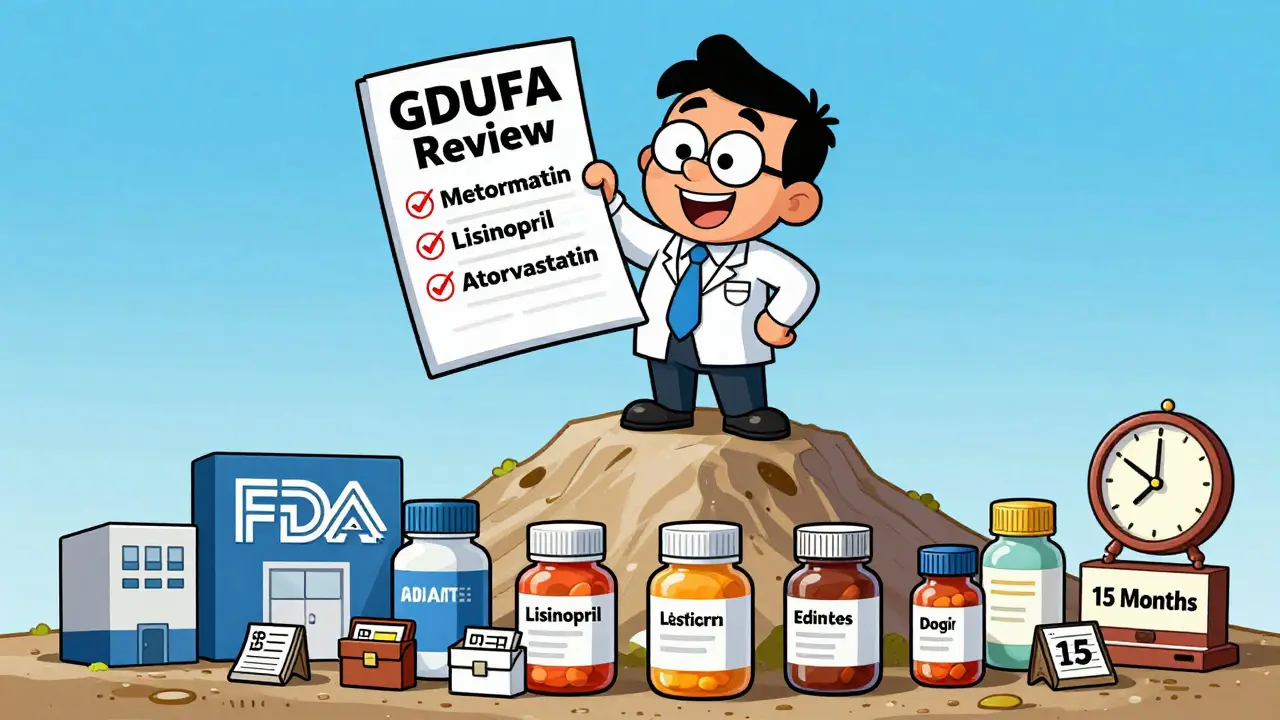
Every year, Americans fill over 4 billion prescriptions for generic drugs. These are the same medicines as brand-name drugs, but they cost 80-85% less. Behind the scenes, a quiet but powerful system keeps these affordable drugs flowing: the Generic Drug User Fee Amendments, or GDUFA. This isn’t just bureaucracy-it’s the financial engine that lets the FDA review thousands of generic drug applications each year without letting them pile up for years.
Why Generic Drug Fees Even Exist
Before 2012, the FDA’s generic drug review process was slow, unpredictable, and underfunded. Companies would submit applications for generic versions of popular drugs, and then wait-sometimes over three years-for a decision. Meanwhile, patients waited longer to get cheaper alternatives. The problem wasn’t lack of trying; it was lack of resources. The FDA’s budget didn’t cover the cost of hiring enough scientists, reviewers, and inspectors to handle the volume. GDUFA changed that. Congress gave the FDA the legal right to collect fees directly from generic drug manufacturers. These aren’t taxes-they’re fees paid by companies that benefit from faster approvals. The money goes straight into funding the Office of Generic Drugs. Today, about 75% of its budget comes from these fees, not taxpayer dollars. That means more reviewers, better technology, and clearer communication with companies.How the Fees Work: Four Types, One Goal
GDUFA doesn’t charge one flat fee. It has four distinct types, each tied to a different part of the approval process:- Application fees: Every time a company submits an Abbreviated New Drug Application (ANDA) to get a generic drug approved, they pay $124,680 (as of FY 2023). This covers the FDA’s cost to review the science, chemistry, and manufacturing details.
- Program fees: Companies with any approved generic drugs pay an annual $385,400 fee. This supports the overall infrastructure-staff, systems, training.
- Facility fees: If a factory makes the active ingredient or final pill form of a generic drug and it’s listed in an approved application, that facility owes $25,850 per year. This ensures manufacturing sites meet quality standards.
- Drug Master File (DMF) fees: These apply to companies that provide detailed chemical data (Type II DMFs) to support ANDAs. Each DMF referenced for the first time costs $25,850.
Here’s the key: paying these fees doesn’t guarantee approval. It just gets your application into the review queue faster. The FDA still checks every detail-bioequivalence, purity, stability-to make sure the generic works just like the brand.
Big Numbers, Big Impact
The scale of GDUFA is staggering. In 2022, the FDA received 1,128 ANDA applications. Compare that to just 68 new brand-name drug applications under PDUFA (the similar system for brand drugs). Yet, the fee for a brand drug application? Over $3.4 million-nearly 28 times more than a generic application. Why the difference? Because generics are copies. They don’t need new clinical trials. But they still need rigorous review. And there are far more of them. Before GDUFA, the average review time was 30 to 36 months. Today, the goal is to approve 60% of original ANDAs within 15 months. In 2021, the FDA hit 52%-close, but not quite there. Pandemic delays and more complex applications held things back. Still, that’s a massive improvement.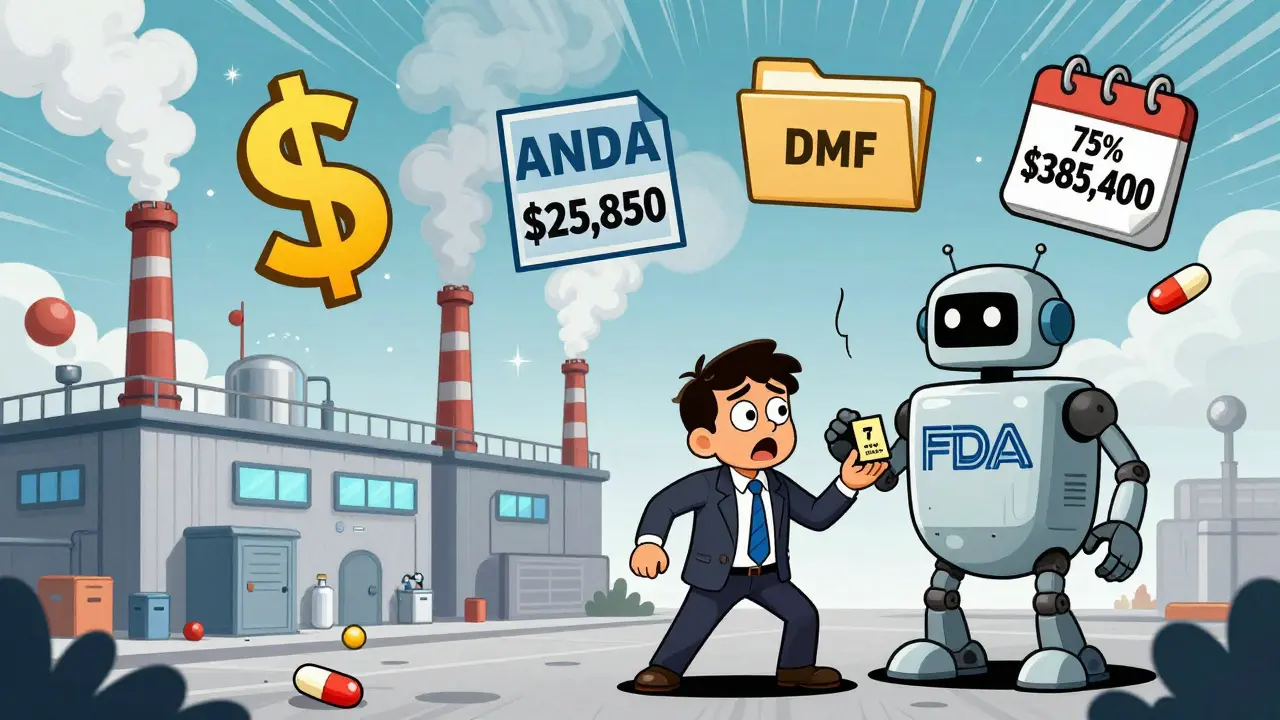
Who Pays? Who Benefits?
The top 10 generic drug makers control 60% of the U.S. market. Teva alone holds 17%. These big companies can easily absorb the fees. But for small manufacturers? It’s harder. A small company with one facility and three approved drugs might pay over $400,000 a year in fees. That’s 15% of their entire regulatory budget. Some have scaled back expansion plans just to stay afloat. The FDA offers a 75% fee reduction for qualifying small businesses, but only 18 such requests were approved in 2022. Many don’t even know it exists. On the flip side, patients win. GDUFA has helped increase generic drug approvals by 22% since 2012. More generics mean lower prices. The Federal Trade Commission estimates GDUFA has saved consumers $1.7 trillion over the last decade by speeding up market entry after brand patents expire.Where the System Still Stumbles
GDUFA isn’t perfect. One big issue: the backlog. Even after 12 years, around 1,500 ANDA applications submitted before 2012 are still sitting in the system. The FDA has pledged to clear all of them by September 2024. If they do, it’ll be a major milestone. Another gap: over-the-counter (OTC) drugs. Think pain relievers, antacids, allergy meds. These make up a $117 billion market. But GDUFA doesn’t cover them. They follow a different, outdated rulebook called the OTC monograph system. Experts are pushing to bring OTCs under GDUFA’s faster review model. A Congressional report estimates that could generate $150-200 million in new fees and cut approval times from years to months. There’s also confusion around corporate affiliations. If two companies are owned by the same parent, the FDA treats them as one entity for fee purposes. But figuring out who’s connected isn’t always clear. In 2022, the FDA got 147 requests from companies asking to reconsider their fee assessments.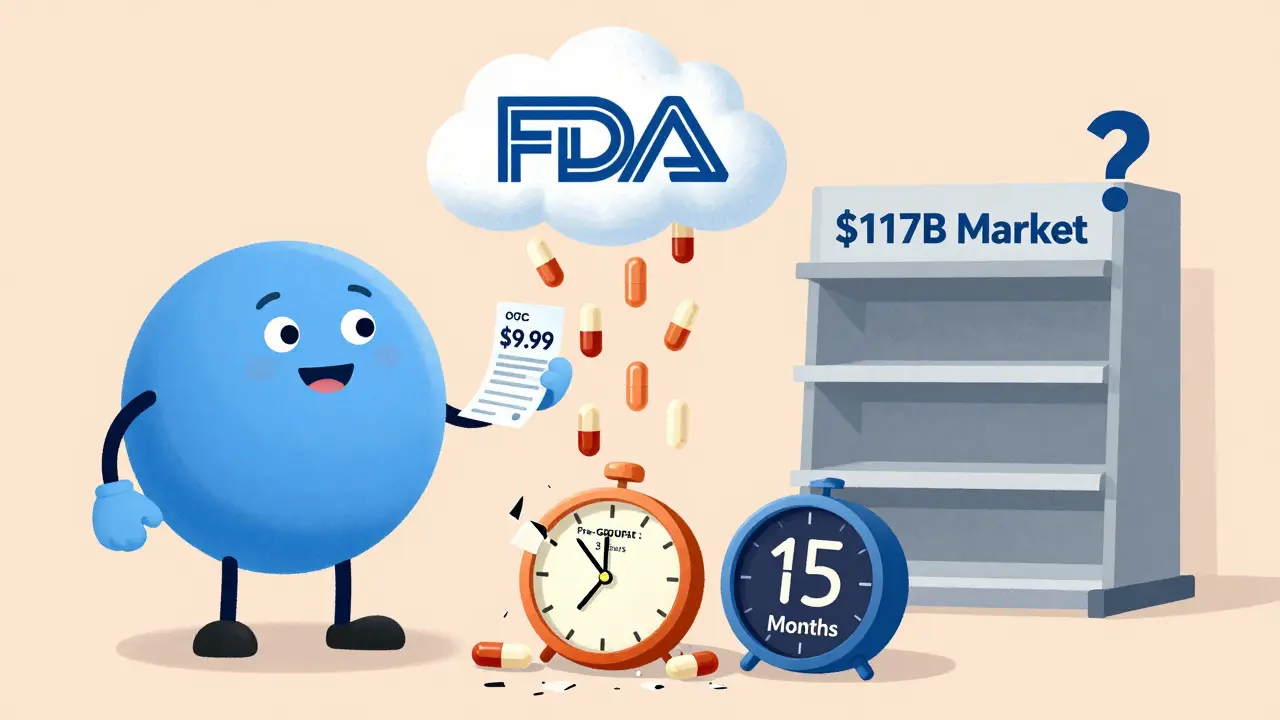
What’s Next? GDUFA III and Beyond
The current version, GDUFA III, runs through 2027. It introduced new tools to keep things moving:- DMF completeness assessments let companies get feedback on their chemical data before submitting a full ANDA. This cuts down on rejections.
- Inspections are now risk-based. Finished drug factories get checked every two years; API makers every three.
- The FDA is testing whether real-world data from pharmacies and electronic health records can help monitor generic drug safety after approval.
Industry feedback is mostly positive. A 2023 survey found 68% of generic drug companies rated GDUFA’s impact as “positive” or “very positive.” Why? Predictability. Before GDUFA, companies had no idea when they’d hear back. Now, they get structured timelines and detailed deficiency letters. Teva’s regulatory team says 90% of feedback now includes clear, actionable steps-not vague comments.
But the real test is whether GDUFA can keep improving. The Congressional Budget Office says it’s one of the most cost-effective FDA programs: for every $1 the government spends on generic reviews, $1.20 comes in from user fees. That’s a strong argument for reauthorization beyond 2027.
What This Means for You
If you take generic medications, GDUFA is working for you. It’s why you can get metformin, lisinopril, or atorvastatin for under $10 a month. It’s why new generics hit the market faster after patents expire. If you work in pharma-especially at a small company-you know the pressure. Fees are real. Paperwork is heavy. But the system is fairer and faster than it was a decade ago. The biggest takeaway? GDUFA isn’t about making the FDA rich. It’s about making sure the system doesn’t break under the weight of demand. It’s about ensuring that when a brand drug loses its patent, the generic version doesn’t get stuck in a bureaucratic loop for years. It’s about access. Affordability. And trust.When the next reauthorization comes in 2027, the question won’t be whether GDUFA should continue. It’ll be how to make it even better-faster, fairer, and more inclusive for every manufacturer, big or small.
What is GDUFA and how does it affect generic drug approval?
GDUFA, or the Generic Drug User Fee Amendments, is a U.S. law that lets the FDA collect fees from generic drug manufacturers to fund the review of generic drug applications. These fees pay for staff, inspections, and systems that speed up the approval process. Before GDUFA, it took 30-36 months on average to approve a generic drug. Now, the goal is to approve 60% of applications within 15 months. The fees don’t guarantee approval-they just ensure the FDA has the resources to review applications faster and more consistently.
How much do generic drug companies pay in FDA fees?
As of FY 2023, generic drug companies pay four types of fees: $124,680 per ANDA application, $385,400 annually for each company with approved generics, $25,850 per manufacturing facility referenced in an approved application, and $25,850 per Drug Master File (DMF) referenced for the first time. These fees fund the FDA’s Office of Generic Drugs and help cover the cost of reviewing over 1,000 applications each year.
Do GDUFA fees apply to over-the-counter (OTC) drugs?
No, GDUFA does not currently cover over-the-counter (OTC) drugs. OTC products follow a separate, older regulatory system called the OTC monograph process, which lacks the same review timelines and funding structure. This creates a bottleneck for OTC generics, even though they represent a $117 billion market. Experts and lawmakers are pushing to bring OTCs under GDUFA to improve speed and predictability.
Why are small generic manufacturers struggling with GDUFA fees?
Small manufacturers often operate just one facility and have only a few approved products. For them, the $25,850 facility fee and $385,400 program fee can represent 10-15% of their entire regulatory budget. While the FDA offers a 75% fee reduction for qualifying small businesses, few apply-only 18 were approved in 2022. Many don’t know about the program or find the paperwork too complex.
Has GDUFA actually lowered drug prices for patients?
Yes. By speeding up generic drug approvals, GDUFA has increased competition in the market. The FTC estimates that since GDUFA began, it has helped save U.S. consumers $1.7 trillion over the past decade. More generics entering the market sooner means lower prices. Generic drugs make up 90% of all prescriptions filled but only 23% of total drug spending-largely because of faster approvals enabled by GDUFA.


Comments (10)