
When you pick up a prescription, you might not realize you’re stepping into a complex system designed to save money - but sometimes at the cost of your peace of mind. The difference between a generic drug and a brand-name version isn’t about effectiveness. It’s about cost, rules, and how your insurance company decides what you pay. And those rules can change everything - from your monthly bill to whether your medication even works the way it should.
What’s Actually in a Generic Drug?
Let’s clear up a big myth right away: generic drugs are not cheaper because they’re weaker. By law, they must contain the exact same active ingredient, in the same strength, and work the same way in your body as the brand-name version. The U.S. Food and Drug Administration (FDA) requires this. If a generic doesn’t meet those standards, it doesn’t get approved. So when your doctor prescribes Lipitor and your pharmacy gives you atorvastatin, you’re getting the same medicine - just without the brand name on the bottle.
The difference? The inactive ingredients. Things like fillers, dyes, and coatings. These don’t affect how the drug works, but they can affect how your body reacts to it. Some people report side effects - like stomach upset or headaches - after switching from brand to generic. That’s not because the medicine is less effective. It’s because your body might be sensitive to a different dye or binder. For most people, it’s no big deal. For others - especially those on narrow therapeutic index drugs like warfarin, levothyroxine, or phenytoin - even small changes can matter.
How Insurance Plans Push Generics
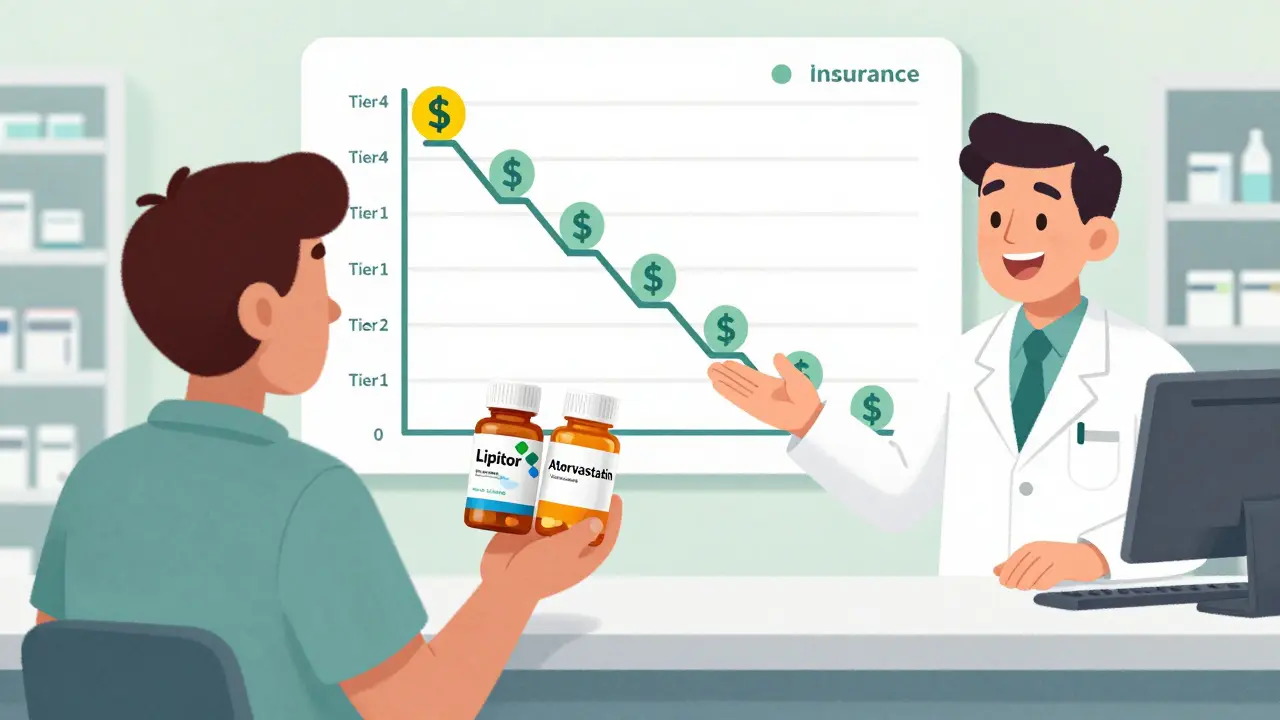
Insurance companies don’t just prefer generics - they design their entire system around them. Most plans use a tiered formulary. Think of it like a pricing ladder:
- Tier 1: Generics - Usually $5 to $15 for a 30-day supply.
- Tier 2: Preferred Brands - $40 to $60.
- Tier 3: Non-Preferred Brands - $70 to $100 or more.
- Tier 4: Specialty Drugs - Often coinsurance (like 33% of the cost).
Generics sit at the bottom because they cost the insurer way less. In 2022, 90% of all prescriptions filled in the U.S. were generics. But they only made up 23% of total drug spending. That’s $370 billion saved in one year alone, according to the Association for Accessible Medicines. That’s the whole point.
Here’s how it works in practice: if a generic exists, your pharmacist is legally allowed to swap it in - unless your doctor writes “dispense as written” on the prescription. In all 50 states, this substitution rule applies. But here’s the catch: if you choose the brand anyway, you don’t just pay the brand price. You pay the generic copay plus the full difference between the brand and generic cost. So if your brand costs $120 and the generic is $8, you might pay $120 - not $8. That’s called “clawback pricing.” It’s designed to make you pick the cheaper option. And for most people, it works.
When Insurance Makes You Try the Generic First
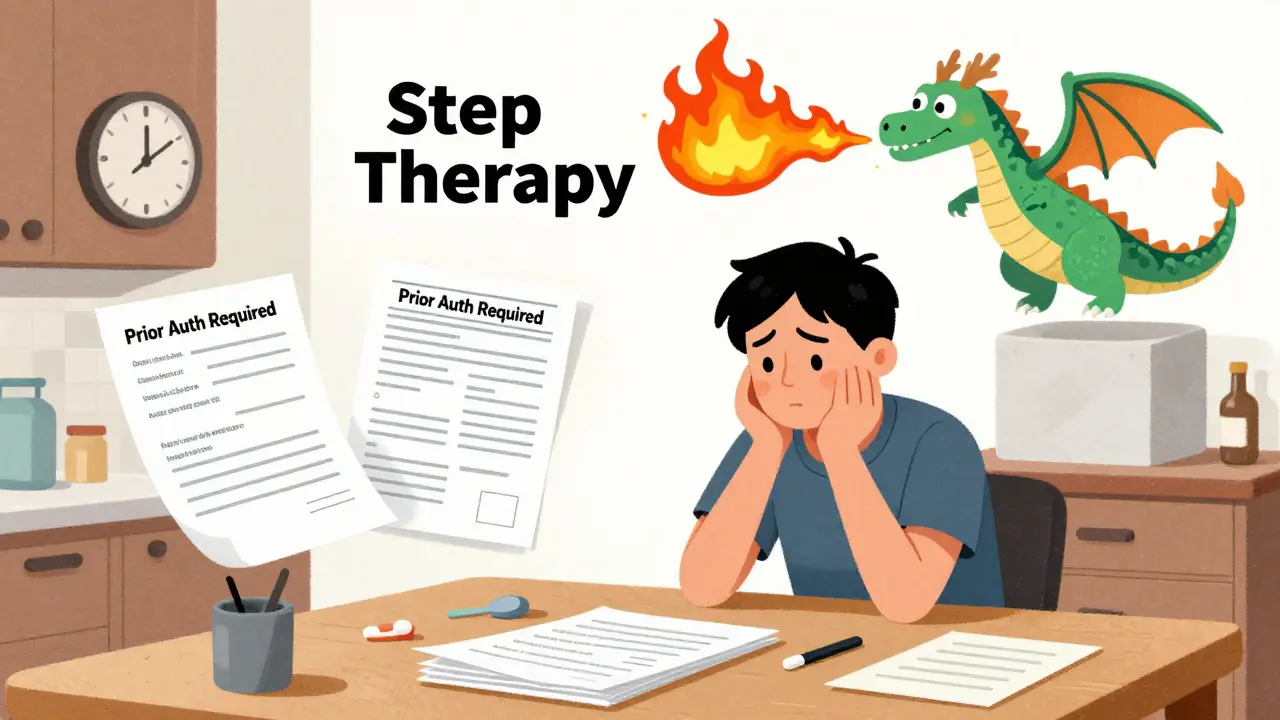
Many plans don’t just encourage generics - they force you to use them first. This is called “step therapy.” For conditions like depression, high blood pressure, or even epilepsy, your insurer might require you to try two or three generics before they’ll approve the brand-name drug. That means you could be on a cheaper version for weeks - maybe months - before you get the one your doctor originally wanted.
And it’s not just about cost. Pharmacy benefit managers (PBMs), the middlemen between insurers and pharmacies, also use “prior authorization” to block brand-name drugs. In 2022, 22.7% of brand-name prescriptions needed prior auth. For generics? Only 2.1%. That’s a 10x difference. If your doctor has to fill out paperwork, wait for approval, and call back, it can take 3 to 5 business days. For someone with chronic pain or anxiety, that delay can be unbearable.
Medicare, Medicaid, and the Hidden Rules
Medicare Part D plans follow similar rules but with extra layers. By 2022, 91% of prescriptions under Medicare Part D were generics. But here’s where it gets tricky: when you hit the “donut hole” - the coverage gap - you pay 25% of the cost for both brand and generic drugs. Sounds fair, right? But because brand-name drugs cost so much more, you’re paying a lot more in absolute dollars. And if you’re on a brand-name drug, you might not even realize you’re paying more until your bill arrives.
Medicaid is even stricter. Federal law forces states to pay the “best price” available to any private buyer. That means generics get reimbursed at rock-bottom rates - 87% lower than brand-name drugs. For many low-income patients, that’s a good thing. But it also means some pharmacies struggle to stock generics because the reimbursement barely covers their cost.
Why Some People Can’t Switch
Not everyone can take a generic. And the system knows it - sort of.
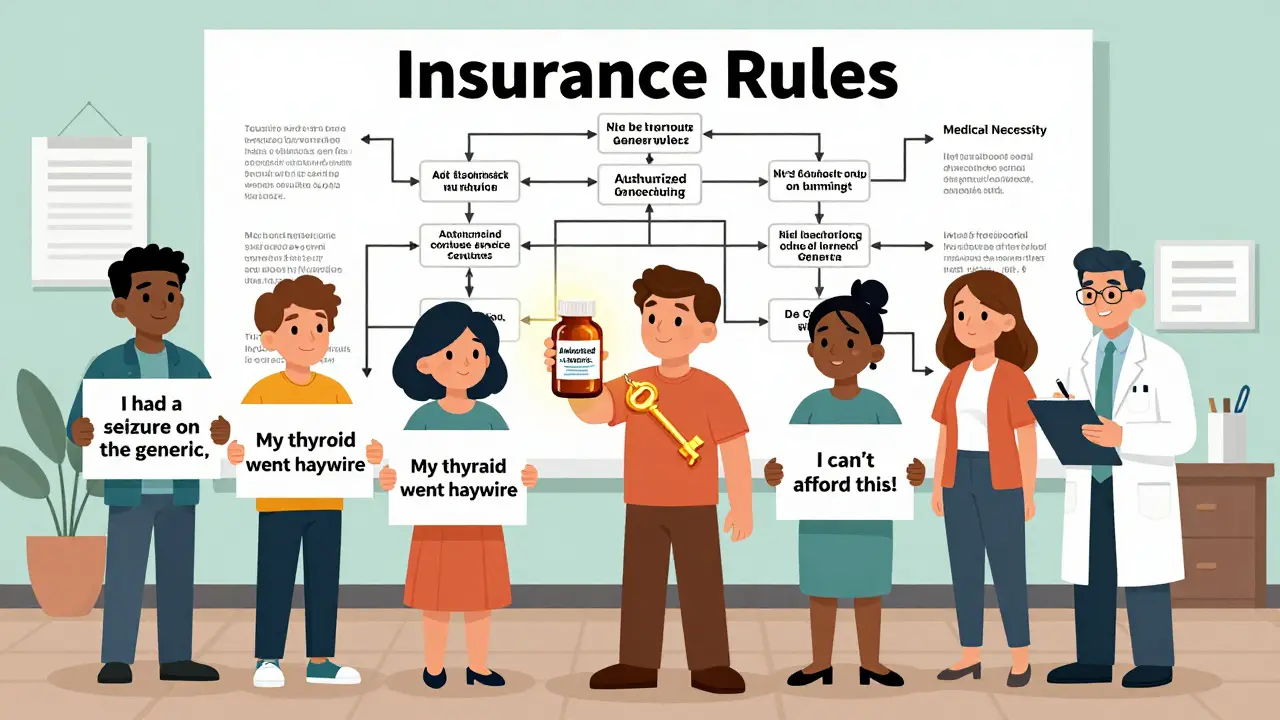
For drugs with a narrow therapeutic index - where tiny changes in blood levels can cause big problems - 27 states have special rules. In those states, if your doctor says you need the brand, you can get it without jumping through hoops. That’s because studies show switching generics for drugs like levothyroxine (for thyroid) or warfarin (a blood thinner) can lead to hospitalizations.
But even then, it’s not easy. Only 42 states allow doctors to easily write “medical necessity” on a prescription. In the other eight, you might need multiple failed attempts with generics before you’re approved. One patient on Reddit shared how they paid $85 for Crestor (a brand) after their insurance denied coverage - even though they’d had a bad reaction to the generic. Their doctor had to submit three forms, wait two weeks, and call the insurer three times just to get the prescription filled.
And then there’s the side effect issue. A 2022 study in Health Affairs found that 68% of physicians report patients having different side effects after switching to generics - even when the active ingredient is identical. That’s not because generics are bad. It’s because the body doesn’t always react the same to different fillers. For people with chronic conditions like epilepsy, depression, or migraines, that can mean a seizure, a relapse, or a missed workday.
What You Can Do
You don’t have to accept the system as it is. Here’s what works:
- Ask your pharmacist - Before you leave, ask if a generic is available and what your out-of-pocket cost will be for both. Sometimes the brand is cheaper if you pay cash.
- Check GoodRx or SingleCare - These apps often show cash prices lower than your insurance copay. You can pay cash and skip the insurance hassle entirely.
- Request a medical exception - If you’ve had side effects or your condition worsened after switching, ask your doctor to file a prior auth for the brand. Use the term “therapeutic failure” - it’s the language insurers understand.
- Know your plan’s formulary - Log into your insurer’s website and search your drug. Look for the tier and any step therapy rules. Don’t assume - check.
- Use patient assistance programs - Brand manufacturers often offer copay cards that reduce your cost to $0 or $10. But here’s the catch: you can’t use them if you’re on Medicare or Medicaid. So if you’re on Medicare, you’re out of luck.
The Bigger Picture
Insurance companies aren’t evil. They’re trying to control costs in a system where drug prices keep rising. The savings from generics are real - $2.2 trillion over the past decade. But the system isn’t perfect. It treats all patients the same, even when they’re not.
Some states are starting to fix this. California’s SB 1055 (2022) says insurers must cover the brand if a generic causes a bad reaction. Texas says brands are only covered if no generic exists. Meanwhile, the FDA is updating labeling rules in 2025 to make therapeutic equivalence ratings clearer - so insurers can’t just guess which generics are safe to swap.
And then there’s the rise of “authorized generics” - the brand-name company making its own generic version. These are often more reliable than third-party generics because they use the same formula. And guess what? Insurers often cover them at the same rate as other generics. Ask your pharmacist if your brand has an authorized generic. It might be the best of both worlds.
The truth? Generics are safe, effective, and save billions. But they’re not magic. And the rules around them are confusing, rigid, and sometimes harmful. If your medication isn’t working the way it should - don’t assume it’s you. It might be the system.
Are generic drugs really as good as brand-name drugs?
Yes - by law, generics must have the same active ingredient, strength, dosage form, and effectiveness as the brand-name version. The FDA requires them to meet the same quality and safety standards. The only differences are in inactive ingredients like fillers or dyes, which don’t affect how the drug works in your body - though they can sometimes cause side effects in sensitive individuals.
Why does my insurance make me try the generic first?
Insurance companies use a process called “step therapy” to control costs. Since generics are 80-85% cheaper, they require you to try them before approving the more expensive brand. This saves money for the insurer - but it can delay treatment. If the generic doesn’t work or causes side effects, you can request a medical exception with your doctor’s help.
Can I be forced to switch from a brand to a generic?
Yes - pharmacists are allowed to substitute generics unless your doctor writes “dispense as written” on the prescription. This is legal in all 50 states. But if you’ve had a bad reaction to a generic before, your doctor can file for a medical exception. Many insurers will approve the brand if you’ve tried at least two generics and they failed.
Why is the brand-name drug sometimes cheaper than the generic?
It sounds backwards, but it happens. Sometimes the brand has a manufacturer coupon or patient assistance program that lowers the price below your insurance’s generic copay. Or the generic might be priced higher because of supply issues. Always check cash prices on apps like GoodRx - you might pay less out of pocket without using insurance at all.
What should I do if a generic makes me feel worse?
Document everything - when you started the generic, what symptoms appeared, and how they affected your daily life. Then ask your doctor to write a letter of medical necessity to your insurer. Use terms like “therapeutic failure” or “adverse reaction.” Many insurers will approve the brand after one or two failed generic trials. If you’re on Medicare, you can’t use manufacturer coupons, but you can still appeal.
Are there any drugs where I should never use a generic?
For most drugs, generics are fine. But for drugs with a narrow therapeutic index - like warfarin, levothyroxine, phenytoin, and some epilepsy medications - small changes in blood levels can be dangerous. In 27 states, insurers are required to cover the brand if your doctor says it’s medically necessary. Always check with your doctor before switching these types of medications.


Comments (9)