
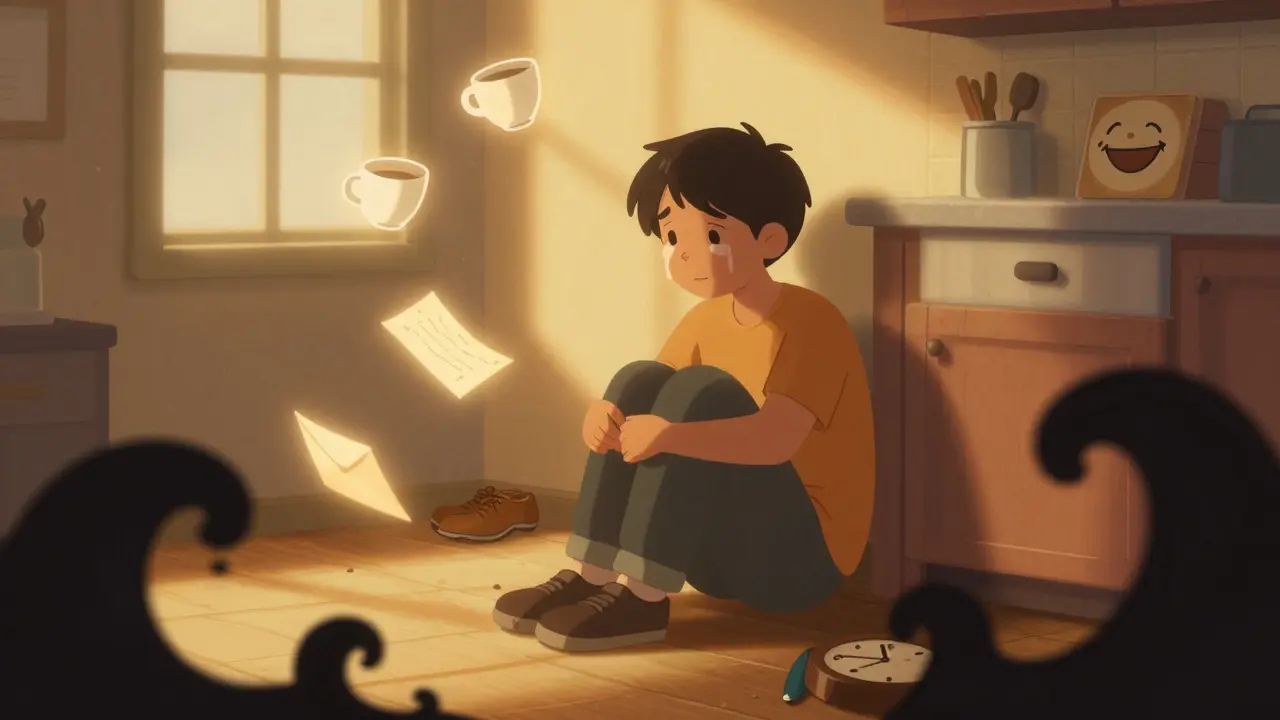
When someone you love dies, it’s normal to feel broken. You cry. You can’t sleep. You don’t want to eat. You feel empty. But is this grief-or is it depression? The difference isn’t just semantics. It’s the difference between healing and getting stuck.
What grief actually looks like
Grief isn’t a linear path. It doesn’t follow five neat stages like denial, anger, bargaining, depression, and acceptance. That model, from Elisabeth Kübler-Ross in 1969, was never meant to be a checklist. Real grief comes in waves. One moment you’re laughing at a memory of your partner singing off-key in the kitchen. The next, you’re curled up on the floor, sobbing because you forgot to call them on their birthday.
The pain is real-but so are the good moments. People grieving often say they feel a strange kind of warmth even in their sadness. They remember the way their parent hugged them, the sound of their child’s laugh, the inside jokes that still make them smile. That’s grief. It’s not about forgetting. It’s about carrying someone with you.
According to the DSM-5-TR (2022), uncomplicated grief typically eases over six to twelve months. Most people don’t need medication. They need time, space, and people who say, “I’m here,” instead of “You should be over it by now.”
What depression actually looks like
Depression doesn’t come in waves. It comes in a heavy, constant fog. You wake up and feel it before your feet even hit the floor. There’s no spark, no flicker of something good. Even memories of your loved one don’t bring comfort-they just make you feel guilty for not being sad enough, or worse, for remembering them at all.
The National Institute of Mental Health says major depressive disorder affects over 17 million American adults every year. Its symptoms aren’t tied to a single event. They’re persistent: low mood nearly every day, loss of interest in everything-even things you used to love-weight changes, trouble concentrating, constant fatigue, and thoughts of worthlessness or death.
Here’s the key: in depression, the pain isn’t about the person you lost. It’s about yourself. You don’t miss them-you feel like you don’t deserve to be here without them. That’s the difference.
The turning point: When grief turns into something worse
Not every long-lasting grief is depression. But some grief doesn’t soften. It hardens. That’s called Prolonged Grief Disorder, officially recognized in the ICD-11 in 2022 and added to the DSM-5-TR the same year.
If, after six months (or a year for children), you still can’t accept that the person is gone, if you’re constantly thinking about them with intense yearning, if you avoid anything that reminds you of life without them, if you feel emotionally numb or bitter, and if it’s wrecking your job, relationships, or health-you’re not just grieving. You’re stuck.
A 2016 study in the American Journal of Psychiatry followed nearly 400 bereaved people. At 12 months, 9.8% met criteria for Prolonged Grief Disorder. Only 2.6% had both it and depression. That means most people who are struggling long-term after a loss aren’t depressed-they’re grieving in a way that needs different help.
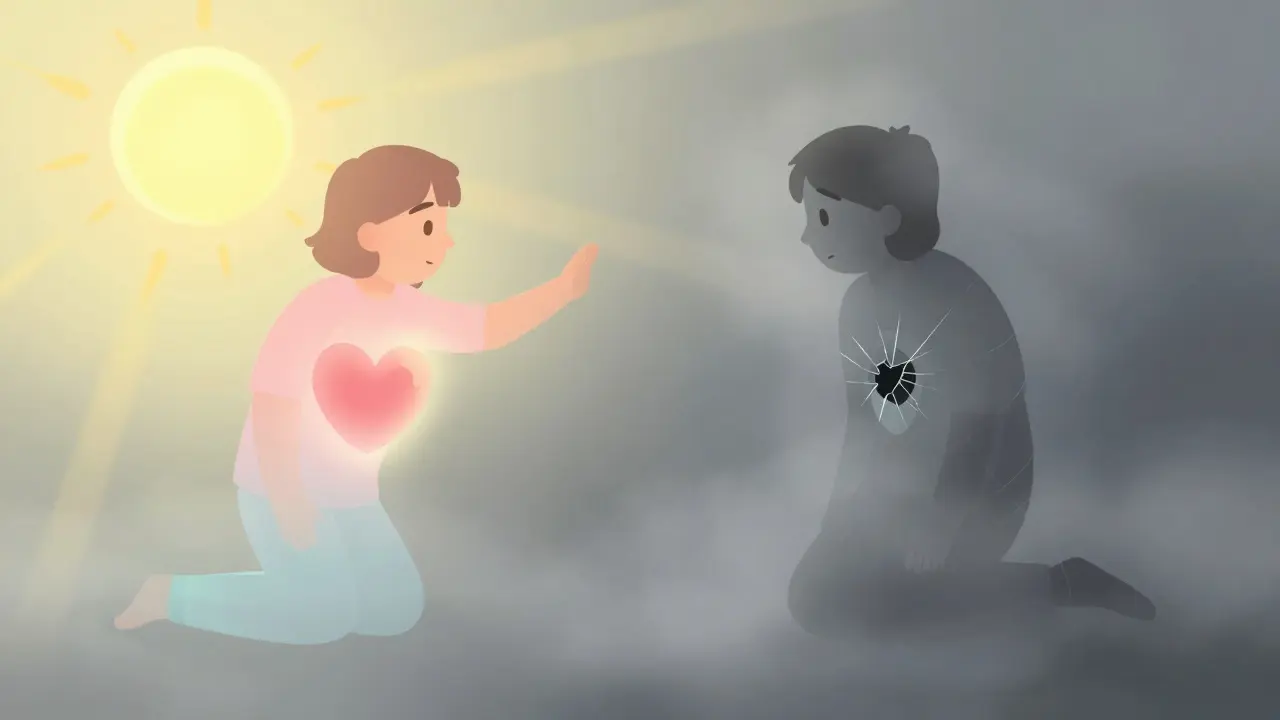
How to tell them apart: A simple checklist
Here’s what separates grief from depression in real life:
- Grief: Pain comes in waves. You can still feel joy, even briefly. You talk about the person often. You miss them, not life itself.
- Depression: Pain is constant. You feel worthless, guilty, or empty. You avoid memories. You don’t want to talk about the person because it makes you feel worse.
- Prolonged Grief: You can’t move forward. You feel like part of you died with them. You’re obsessed with the circumstances of their death. You feel disconnected from the world.
A 2017 study in Tidsskriftet for Den norske legeforening found that 87% of people with prolonged grief said their main symptom was longing for the deceased. Only 12% of people with depression said the same. Meanwhile, 93% of depressed people felt worthless. Only 18% of those with prolonged grief did.
What helps: Treatment that actually works
Antidepressants don’t fix grief. They might help with depression, but if you’re grieving, medication can mask the pain without healing it. The National Institute for Health and Care Excellence (NICE) says antidepressants shouldn’t be used for uncomplicated grief-73% of people improve naturally within six months.
For depression, the most effective treatment is a mix of therapy (like CBT) and medication. The STAR*D trial showed that 58% of people with major depression improved after 12 weeks of sertraline plus CBT.
For prolonged grief, there’s a targeted therapy called Complicated Grief Treatment (CGT), developed by Dr. Katherine Shear at Columbia University. It’s not talk therapy. It’s structured. It helps you face the reality of the loss, reconnect with your life, and rebuild your identity without the person you lost. In a 2014 JAMA study, 70% of people in CGT showed major improvement after 16 weekly sessions.
And it’s working. Since 2019, the number of certified grief counselors in the U.S. has jumped from 2,843 to over 4,200. Telehealth platforms like BetterHelp saw a 127% increase in grief-related therapy sessions between 2019 and 2022. People are finally getting the right kind of help.
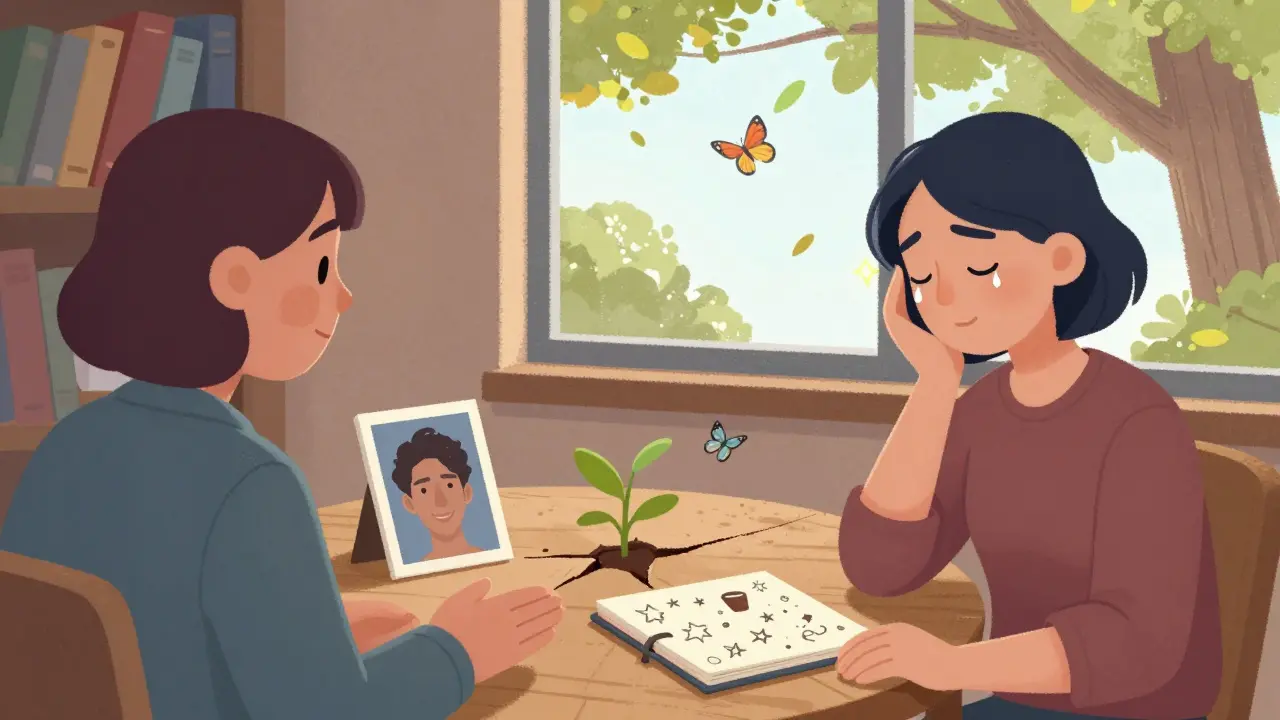
What to do if you’re unsure
If you’re grieving and you’re not sure whether you’re depressed or just heartbroken, ask yourself:
- Do I still feel moments of peace or joy when I remember them?
- Do I avoid talking about them because it hurts too much-or because I feel guilty for still being alive?
- Do I feel like I’m worthless, or do I just miss them terribly?
- Has it been over a year and I still can’t function at work, with friends, or even get out of bed?
If you answered yes to the last one, or if you’re not sure-talk to someone. Not just a friend. A professional. A therapist trained in grief. A doctor who knows the difference between depression and prolonged grief.
You don’t have to figure this out alone. And you don’t have to suffer in silence because you’re afraid you’re “not grieving right.”
How to support someone who’s grieving
Don’t say, “They’re in a better place.” Don’t say, “Time heals all wounds.” Don’t say, “You’ll get over it.”
Instead, say:
- “I’m here. I don’t know what to say, but I’m not going anywhere.”
- “I remember when [they] did [specific thing]. I still laugh about it.”
- “Would you like to talk about them? Or would you rather sit quietly?”
- “I’m bringing dinner on Thursday. No need to answer.”
People grieving don’t need solutions. They need witnesses. They need someone who remembers their loved one’s name, their favorite song, the way they made coffee.
And if you notice someone withdrawing completely, stopping eating, sleeping too much, talking about dying-don’t wait. Gently suggest they talk to a professional. Say: “I care about you. I think someone trained to help with this could make a difference.”
The future of grief care
Technology is starting to help. In 2023, a study in JAMA Network Open found that a grief-specific app called GriefShare reduced symptoms of prolonged grief by 42% over 12 weeks. That’s not a cure-but it’s a bridge for people who can’t afford therapy or live far from help.
Researchers are even using AI to listen to how people speak. A 2023 study in Nature Mental Health showed machine learning could tell grief from depression with 89.7% accuracy by analyzing pauses, tone, and word choice. That’s not science fiction. It’s the next step in making sure people get the right treatment, fast.
The NIH spent $47.3 million on grief research in 2023-up 28% from 2020. That’s a signal. We’re finally starting to treat grief like the medical issue it is, not just a sad phase you have to endure.
Healing isn’t about forgetting. It’s about learning how to carry the loss without letting it crush you. Grief doesn’t end. But it can change. And if it doesn’t-if it turns into something darker-there’s help. Real help. And you deserve it.
Can grief turn into depression?
Yes, grief can overlap with depression, especially if the loss is traumatic, sudden, or if the person had a history of mental health issues. But they’re not the same thing. About 14% of bereaved people develop major depression, while about 10% develop prolonged grief disorder. Only 2-3% have both. The key is whether the sadness is tied to the loss (grief) or to a general sense of worthlessness and hopelessness (depression).
How long is it normal to grieve?
There’s no timeline. But most people start to feel better within six to twelve months. The pain doesn’t disappear-it becomes part of your story. If after a year you’re still unable to work, maintain relationships, or find joy in anything-even memories of the person-you may have prolonged grief disorder. That’s not weakness. It’s a signal that you need specialized help.
Should I take antidepressants for grief?
No-not for normal grief. Antidepressants don’t fix the pain of loss. They may help if you’re also clinically depressed. The NICE guidelines say antidepressants shouldn’t be used for uncomplicated grief. Most people recover without them. If you’re unsure, talk to a doctor who understands the difference between grief and depression.
What’s the best therapy for prolonged grief?
Complicated Grief Treatment (CGT), developed at Columbia University, is the most effective. It’s a 16-session therapy focused on processing the loss, rebuilding identity, and reconnecting with life. Studies show 70% of people improve significantly after CGT. It’s not the same as regular talk therapy. It’s designed specifically for people who are stuck in grief.
Can I help someone who’s grieving without saying the wrong thing?
Yes. Don’t try to fix it. Don’t offer advice. Just show up. Say their loved one’s name. Share a small memory. Bring food. Sit with them in silence. Ask: “What do you need today?” Then listen. Sometimes, the most powerful thing you can do is say, “I’m still thinking about them.” That tells them they’re not alone.


Comments (14)