
Every year, thousands of people end up in the hospital not because their condition got worse, but because two medications they were taking clashed in ways no one expected. It’s not rare. In fact, drug-drug interactions are one of the most common causes of preventable harm in older adults taking multiple prescriptions. Understanding how these interactions happen isn’t just for doctors - it matters if you’re on even two pills a day.
What Exactly Is a Drug-Drug Interaction?
A drug-drug interaction (DDI) happens when one medication changes how another works in your body. This doesn’t mean the pills physically mix together in your stomach. It’s about what happens inside you - how your body absorbs, moves, breaks down, or gets rid of each drug. Sometimes the result is harmless. Other times, it’s dangerous.There are two main types: pharmacokinetic and pharmacodynamic. One affects the levels of a drug in your blood. The other affects the effect the drug has on your body.
Pharmacokinetic Interactions: How Your Body Moves the Drug
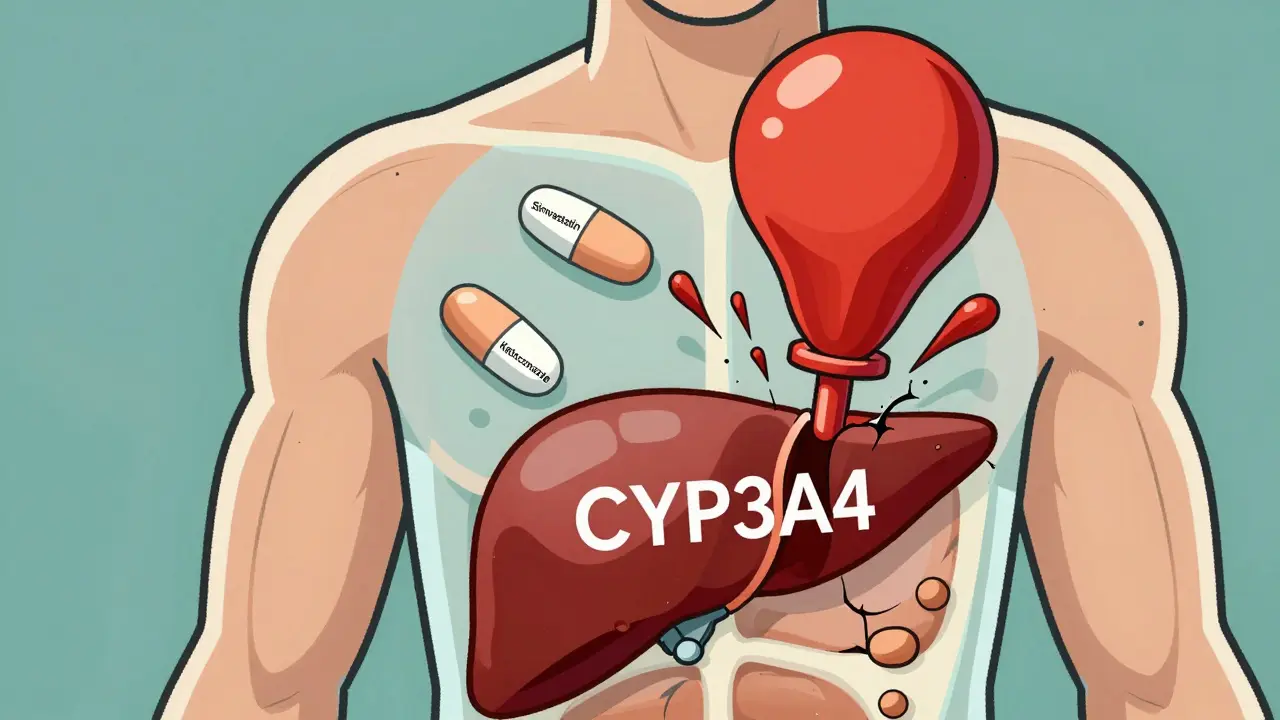
Think of your body as a delivery system. Drugs need to get to their target - whether it’s your brain, heart, or liver - and then get cleared out. If something interrupts that journey, the drug’s concentration changes. That’s pharmacokinetics.The biggest player here is the cytochrome P450 enzyme system, especially CYP3A4. This enzyme, found mostly in your liver and gut, breaks down about half of all prescription drugs. When another drug blocks or speeds up this enzyme, it changes how fast your body clears the first one.
For example, if you take simvastatin (a cholesterol drug) with ketoconazole (an antifungal), ketoconazole shuts down CYP3A4. That means simvastatin builds up in your blood - sometimes 10 to 20 times higher than normal. That spike can cause rhabdomyolysis, a serious muscle breakdown that can damage your kidneys.
It’s not just metabolism. Drugs can also interfere with how your body absorbs them. Antacids, for instance, raise stomach pH. That can stop certain antibiotics like ciprofloxacin from being absorbed properly. Or, if a drug slows down gut movement, like some antidepressants, it can delay how quickly another drug enters your bloodstream.
Another big factor is protein binding. Many drugs stick to proteins in your blood so they don’t float around freely. If Drug A kicks Drug B off those proteins, suddenly Drug B is more active - even if its total amount hasn’t changed. Warfarin, a blood thinner, is especially sensitive to this. Drugs like sulfonamides can displace it, increasing bleeding risk.
Finally, your kidneys and liver are responsible for clearing drugs. If a new drug blocks those pathways - like how trimethoprim inhibits kidney clearance of digoxin - levels of the original drug climb dangerously.
Pharmacodynamic Interactions: When Drugs Talk to Each Other
This type doesn’t change drug levels. Instead, it changes what the drugs do to your body - like two people giving conflicting orders to the same team.There are two flavors: synergistic (additive) and antagonistic (opposing).
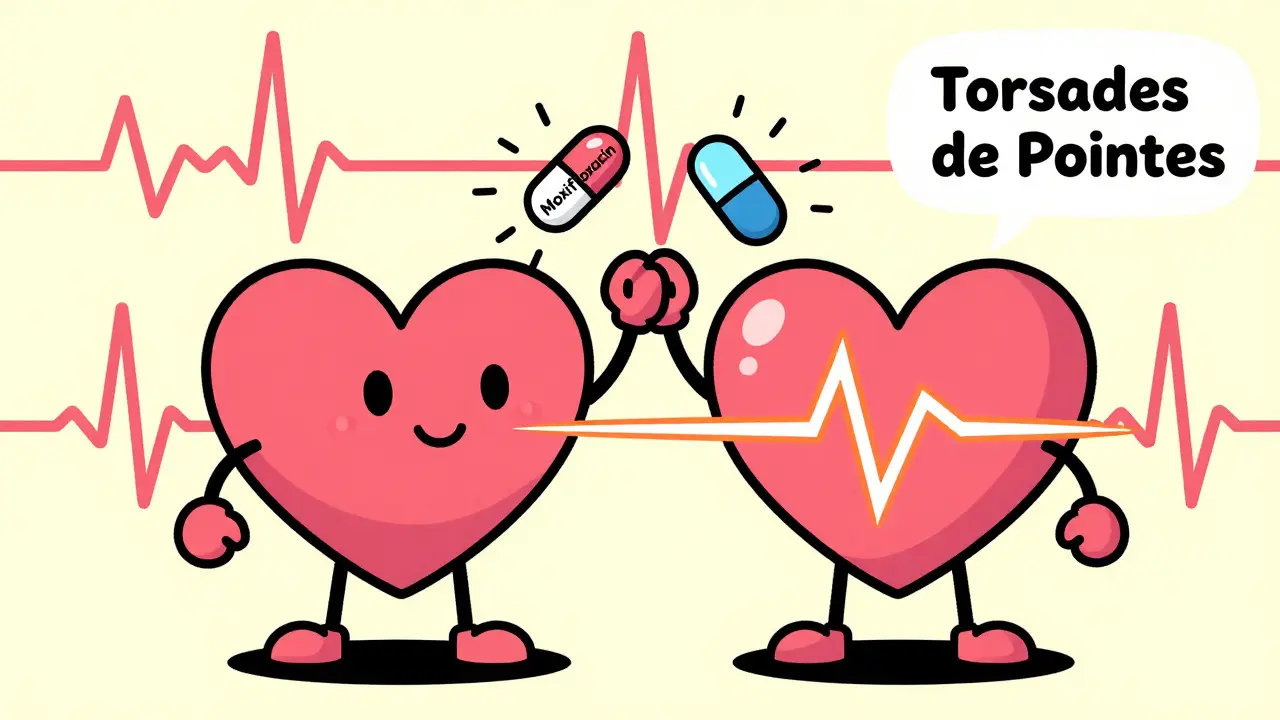
Synergistic interactions can be deadly. Take fluoroquinolone antibiotics (like moxifloxacin) and macrolides (like erythromycin). Alone, each can slightly prolong the QT interval - a measure of heart rhythm. Together, they increase that risk by 5.7 times. That can trigger torsades de pointes, a chaotic heart rhythm that can kill you.
Another classic: ACE inhibitors (like lisinopril) and potassium-sparing diuretics (like amiloride). Both raise potassium levels. Together, they can push potassium up by 1.0 to 1.5 mmol/L. That’s enough to cause dangerous heart rhythms. This combo is so risky, it’s on the Beers Criteria list of dangerous drug pairs for older adults.
Antagonistic interactions are trickier. They don’t always cause harm - sometimes they’re useful. For example, naloxone blocks opioid receptors to reverse overdoses. But if you’re on a painkiller and take a drug that blocks its effect, your pain might come back worse than before.
Who’s the Perpetrator? Who’s the Victim?
In DDI terms, one drug is the perpetrator - the one causing the change. The other is the victim - the one affected.Perpetrators are either inhibitors or inducers. Inhibitors slow down how fast your body processes other drugs. Inducers speed it up. The effect isn’t all or nothing. It’s graded:
- Strong: 5-fold increase or 80% decrease in drug levels
- Moderate: 2- to 5-fold increase or 50-80% decrease
- Weak: Less than 2-fold change
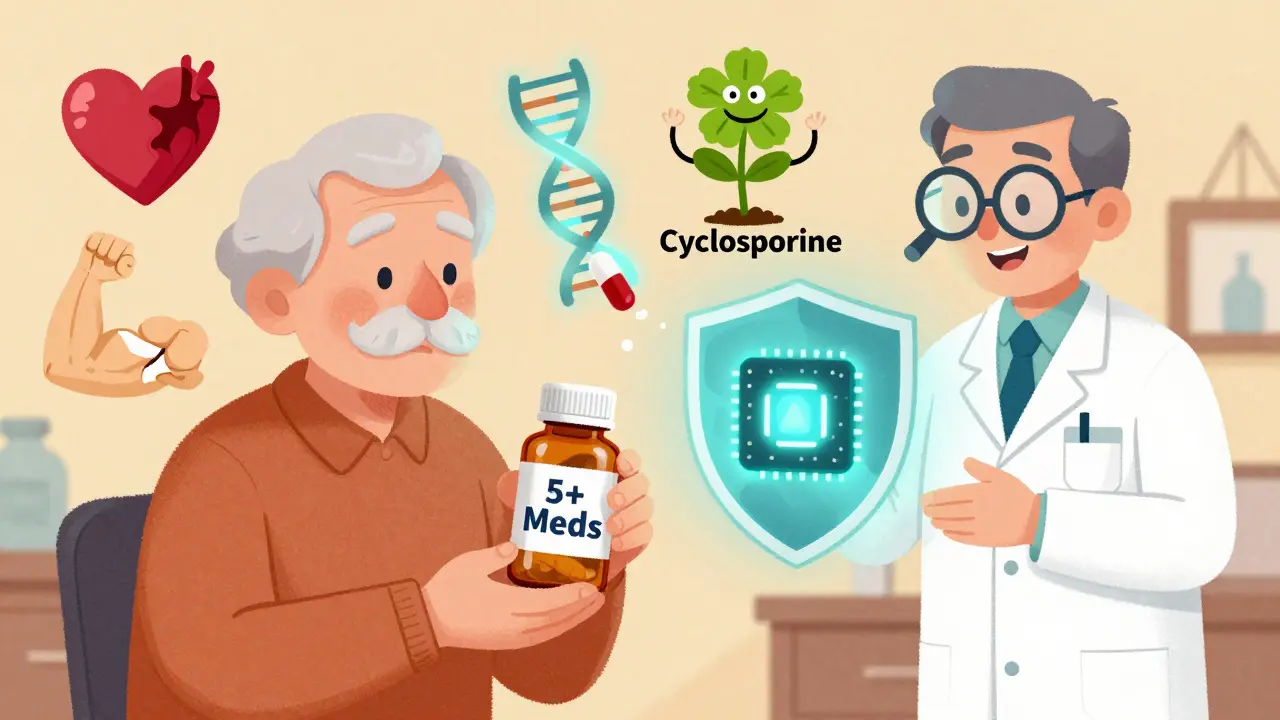
St. John’s Wort, a popular herbal supplement, is a strong CYP3A4 inducer. It can drop the levels of cyclosporine (used after transplants) by 50-60%. That means your body might reject the new organ. It also reduces the effectiveness of birth control pills, HIV meds, and even some antidepressants.
And here’s the twist: some drugs are both perpetrator and victim. Verapamil, used for high blood pressure and heart rhythm, inhibits CYP3A4 (so it makes other drugs stronger) - but it’s also broken down by CYP3A4. So if you take a CYP3A4 inducer like rifampin, your verapamil levels drop, and your blood pressure might spike.
Genes Play a Role Too
You might have heard of genetic testing for drug responses. That’s because your genes control how fast you make enzymes like CYP2D6 or CYP2C19.People with slow CYP2D6 metabolism (called poor metabolizers) can’t turn codeine into morphine. So it doesn’t work for pain. But if they take a CYP3A4 inhibitor like clarithromycin, their body might shift to another pathway - and still produce too much morphine, causing breathing problems.
On the flip side, ultrarapid metabolizers break down codeine so fast they get a dangerous morphine overdose even at normal doses. That’s why CPIC guidelines now say: avoid codeine entirely in ultrarapid metabolizers - especially if they’re also taking CYP3A4 inhibitors.
Real-World Consequences
DDIs aren’t theoretical. They’re behind 3-5% of hospital admissions in people over 65. The most common culprits? Blood thinners, heart meds, and antidepressants.Warfarin is the #1 drug involved in DDI reports. It interacts with antibiotics, painkillers, even vitamin K-rich foods like kale. A small change in its level can mean a stroke or a bleed.
Statins like simvastatin and atorvastatin are next. Combine them with grapefruit juice (a CYP3A4 inhibitor) or certain antibiotics, and your risk of muscle damage skyrockets.
In the U.S., preventable DDIs cost over $1.3 billion a year - mostly from hospital stays for bleeding or rhabdomyolysis.
How Do We Stop This?
You can’t avoid all interactions - but you can avoid the dangerous ones.- Always tell your doctor and pharmacist about everything you take - including supplements, herbs, and OTC painkillers.
- Ask: “Could this new pill interact with anything I’m already taking?”
- Use tools like the Liverpool HIV-Drug Interactions Checker or Epocrates if you’re on complex regimens.
- For high-risk drugs like warfarin, get regular blood tests (INR) and stick to the same brand of medication.
- Watch for symptoms: unexplained bruising, muscle pain, dizziness, irregular heartbeat, or sudden fatigue.
Pharmacists are your frontline defense. One study found pharmacist-led reviews cut serious DDIs by 37% in just one group of patients.
Electronic health records now warn doctors about interactions - but most alerts are wrong. About 80-90% are false alarms. That’s why doctors start ignoring them. The next wave of systems will be smarter - using AI to predict real risk based on your age, kidney function, and other meds.
One 2021 AI model trained on 89 million patient records predicted DDIs with 94.8% accuracy. That’s far better than old rule-based systems.
What’s Next?
The future of DDI management is personal. We’re moving beyond “one-size-fits-all” warnings. Now, we’re looking at:- Pharmacogenomics - tailoring drug choices based on your DNA
- Microbiome research - how gut bacteria affect drug metabolism
- Real-time DDI alerts in apps that sync with your prescriptions
The NIH is spending $14.7 million in 2022 alone to improve how we predict these interactions. Why? Because every time a drug is added to a regimen, the risk grows. For someone on five or six meds - common in older adults - the chance of a bad interaction isn’t low. It’s almost guaranteed without proper checks.
Knowing how these interactions work doesn’t make you a pharmacist. But it makes you a smarter patient. If you’re on more than one medication, ask the questions. Don’t assume it’s safe. Don’t assume your doctor knows every interaction. The system isn’t perfect - but you can be the safety net.


Comments (11)