
Getting your medications right isn’t just about taking pills on time. It’s about understanding why you’re taking them, when to take them, what to do if something goes wrong, and how to fit it all into your real life. That’s where a Medication Action Plan (MAP) comes in. It’s not a list. It’s a living guide you build with your care team - your doctor, pharmacist, and sometimes even your family - to make sure your meds work for you, not against you.
What Exactly Is a Medication Action Plan?
A Medication Action Plan is a personalized document that turns your medication list into a clear set of steps you can follow every day. It’s more than just a sheet of paper with drug names and doses. A good MAP answers questions like: What’s this pill for? What happens if I miss a dose? When should I call my doctor? How do I know if it’s working?It started as a safety tool in Germany in 2016, where patients on three or more medications got a standardized plan issued by their doctor and updated by their pharmacist. In the U.S., it became part of Medicare Part D’s Medication Therapy Management (MTM) program in 2006. Today, it’s a core part of managing chronic conditions like diabetes, heart disease, or high blood pressure - especially when you’re on five or more medications.
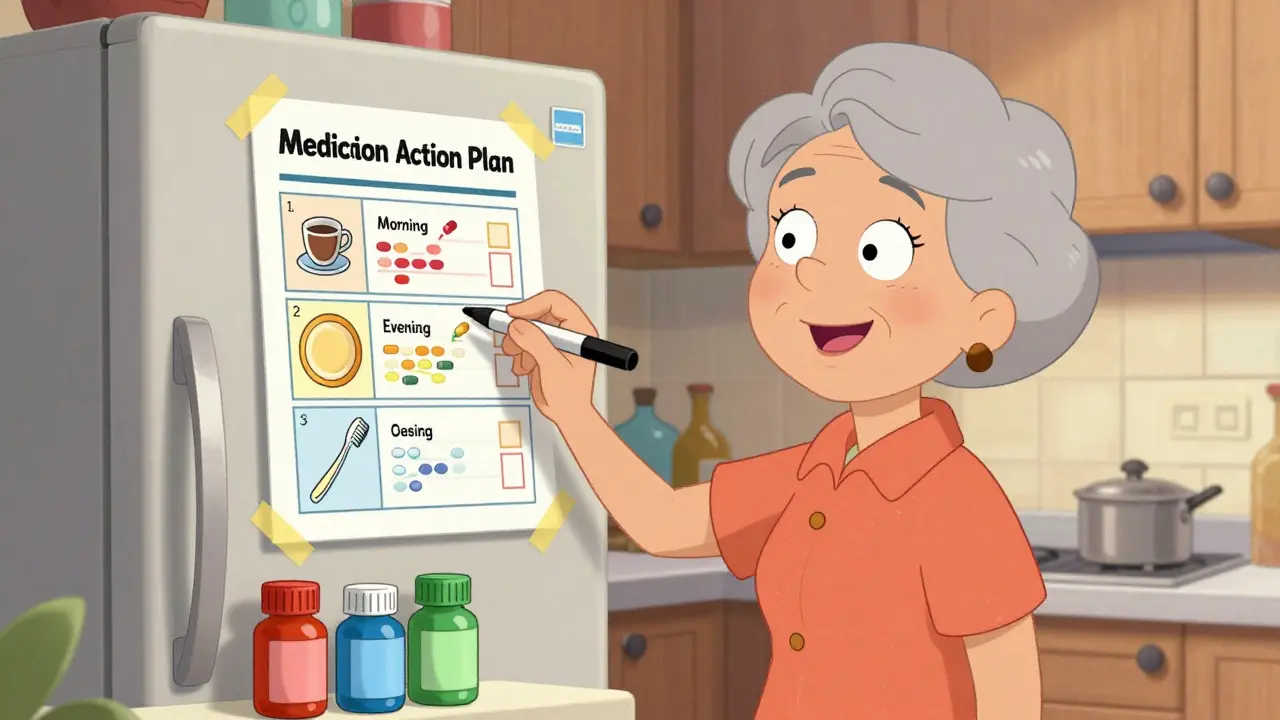
Research shows that when patients help create their own MAP, adherence improves by 25-40%. That means fewer hospital visits, fewer bad reactions, and more control over your health. One 68-year-old woman with type 2 diabetes turned her MAP into a visual chart: pictures of her pills next to her coffee cup (morning doses), dinner plate (evening doses), and toothbrush (nighttime insulin). Her adherence jumped from 65% to 95%.
Who Should Have a Medication Action Plan?
You don’t need to be sick to benefit. But if you fit any of these, you’re a strong candidate:- You take 5 or more prescription medications daily
- You also use over-the-counter drugs, vitamins, or herbal supplements
- You’ve been hospitalized or had an emergency due to a medication issue
- You have two or more chronic conditions (like diabetes and arthritis)
- You’re over 65 or have trouble remembering when to take pills
- You’ve been told your meds are “high risk” - like blood thinners, diabetes drugs, or opioids
In Australia, while there’s no national MAP requirement yet, many pharmacies and Medicare Advantage plans now offer free medication reviews. If you’re on a PBS script for multiple conditions, ask your pharmacist - they’re trained to help you build one.
How to Start Building Your Plan
You don’t wait for your doctor to bring it up. You start the conversation. Here’s how:- Gather everything. Collect every pill bottle, box, or capsule - including vitamins, CBD oil, painkillers, and herbal teas. Don’t skip anything. Even “natural” products can interact with your meds.
- Write down your concerns. What’s confusing? Do you forget doses? Do you feel dizzy after taking your blood pressure pill? Are you skipping pills because they’re expensive? Write it all down.
- Book a Medication Review. Call your pharmacy or GP and ask for a “Comprehensive Medication Review.” It usually takes 30-60 minutes and is often free if you’re on Medicare or a private plan that covers MTM.
During the review, your pharmacist or doctor will:
- Check for duplicates - like taking two different pills for the same condition
- Spot interactions - like grapefruit making your cholesterol drug dangerous
- Identify side effects you’ve been ignoring
- Match each drug to its purpose - “This is for your heart, not your sleep”
What Should Be in Your Plan?
A good Medication Action Plan includes five key parts:- Your complete medication list - names, doses, times, and why you take each one. Include OTCs and supplements.
- Clear action steps - not medical jargon. Instead of “Take lisinopril 10mg PO daily,” it says: “Take your blood pressure pill with breakfast, every morning.”
- Specific goals - “Take all doses for 28 days straight” or “Call the clinic if your swelling gets worse in 3 days.”
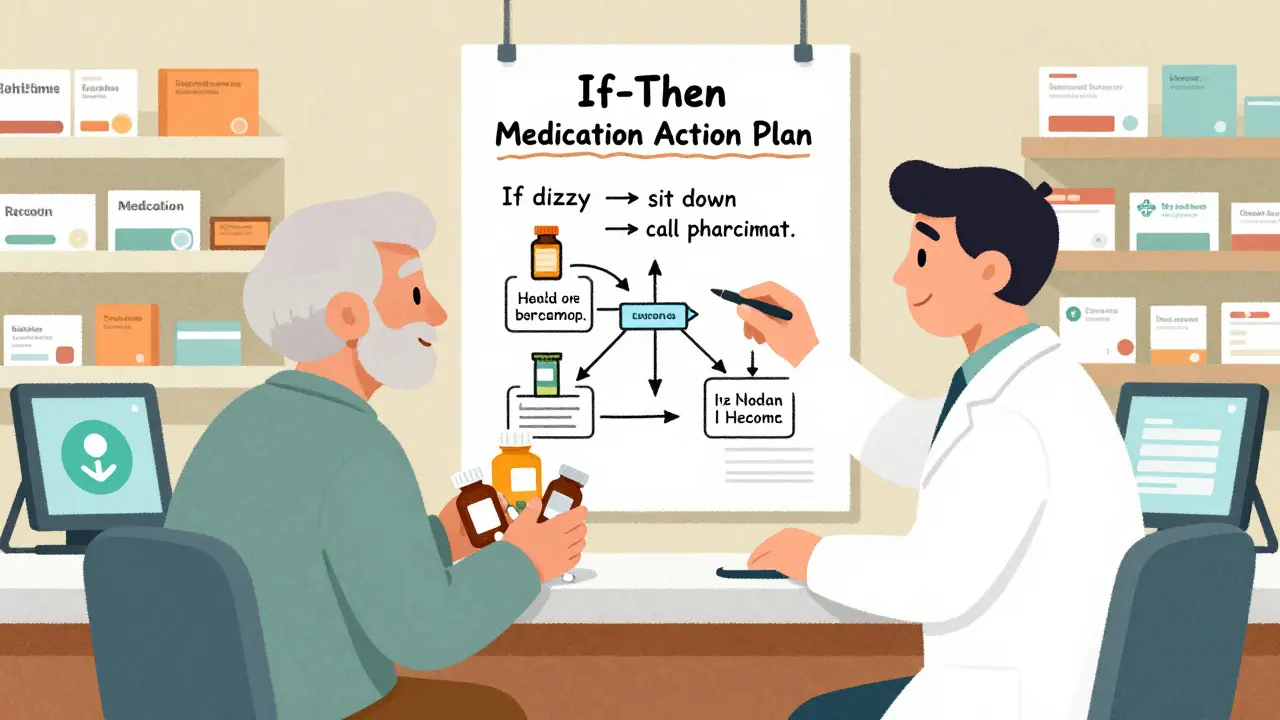
- “If-then” scenarios - “If I feel dizzy after taking my pill, sit down and call my pharmacist.” “If I miss a dose, take it within 4 hours - if not, skip it.”
- Who to contact - phone numbers for your pharmacist, doctor, and a 24/7 nurse line if you’re worried.
Make it visual. Use color codes: red for heart meds, blue for diabetes, green for pain. Stick it on your fridge. Put a copy in your wallet. Turn it into a checklist you can tick off.
Why Your Care Team Is Essential
You can’t do this alone. Your doctor knows your diagnosis. Your pharmacist knows how drugs interact. You know your life.One study found that patients given generic, pre-printed plans saw no improvement in adherence. But those who co-created their plan with their pharmacist - asking questions, adjusting times to match their routine - had 32% fewer hospital visits in the next year.
Ask your pharmacist: “Can we write this together?” Say: “I work nights. Can we move my pills to when I wake up?” Or: “I can’t afford all these. Is there a cheaper option?”
Pharmacists in Australia can now adjust prescriptions in some cases, prescribe for minor conditions, and even switch your meds to a lower-cost alternative - if it’s safe. They’re not just the person who hands you the bottle. They’re your medication coach.
Common Mistakes to Avoid
Most MAPs fail because they’re too generic. Here’s what to watch out for:- Too many words, not enough action. “Take as directed” isn’t helpful. What does “directed” mean?
- Ignoring your routine. If you never eat breakfast, don’t put a pill on your morning schedule.
- Not updating it. If you stop a pill or start a new one, change the plan. A plan that’s out of date is dangerous.
- Keeping it hidden. If your partner or caregiver doesn’t know what’s in it, they can’t help you.
- Using medical terms. “Hypertension” → “high blood pressure.” “Polypharmacy” → “taking too many pills.”
One man in Sydney had a MAP that said “take metformin with meals.” He thought that meant “only when I eat steak.” His blood sugar stayed high. His pharmacist changed it to: “Take this pill with your first bite of breakfast, lunch, or dinner - even if it’s toast.” Adherence improved in two weeks.
What If Your Care Team Doesn’t Offer This?
You’re not stuck. Here’s what to do:- Ask your pharmacist directly: “Can we make a Medication Action Plan together?”
- Call your health insurer. Ask: “Do you cover Medication Therapy Management?”
- Use free tools. The Australian Government’s My Health Record lets you upload your meds and share them with your care team.
- Bring a friend. Sometimes having someone else there helps you remember questions.
- Don’t wait for an appointment. Walk into a pharmacy and ask for a 15-minute med check.
Many community pharmacies in Sydney and Melbourne now offer free 20-minute medication reviews. No appointment needed. Just bring your pills.
Keep It Alive
Your MAP isn’t a one-time thing. It’s a living document. Update it when:- You start or stop a medicine
- You change your daily routine
- You have a new symptom
- You get a new doctor or pharmacist
- Every 3-6 months, even if nothing changed
Set a reminder on your phone: “Review meds - every 3 months.” Keep the latest version in your phone, your wallet, and your kitchen.
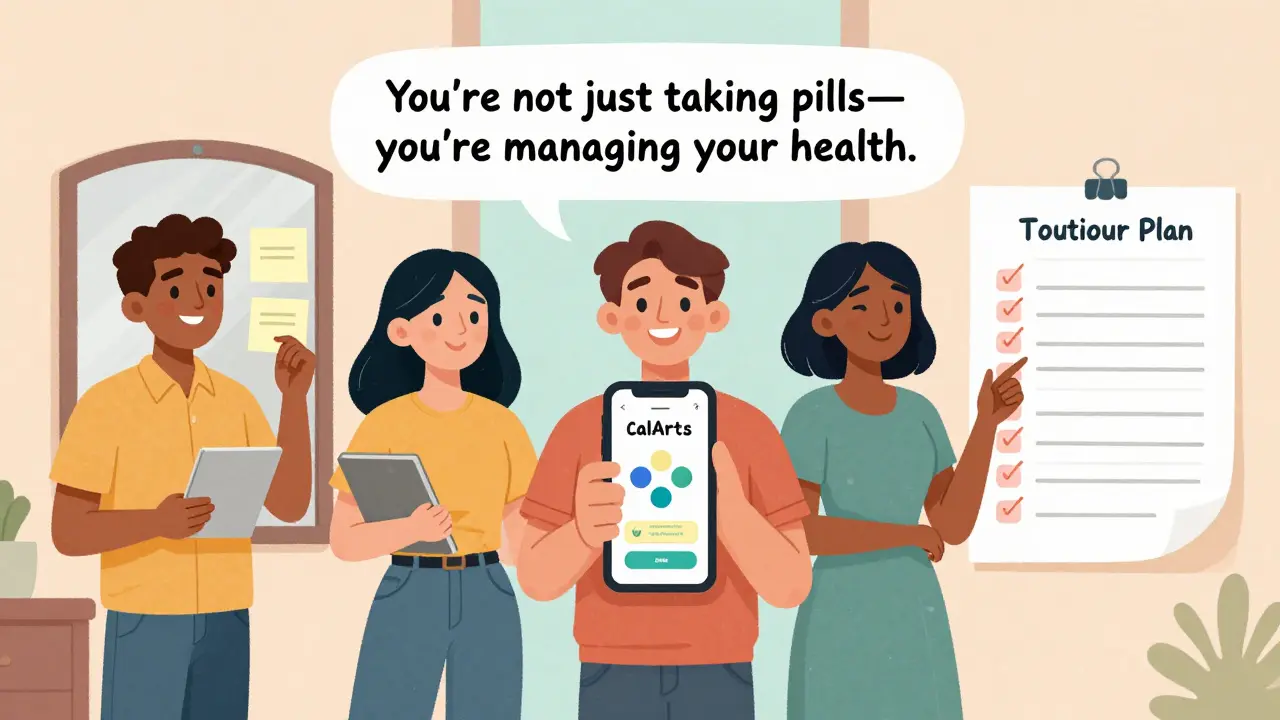
When you treat your medication plan like a tool - not a chore - you stop being a patient who takes pills. You become someone who manages their health.
Do I need a doctor to make a Medication Action Plan?
No, you don’t need a doctor to start. Pharmacists are trained to create Medication Action Plans and can do it during a free medication review. Your doctor should be involved if changes to prescriptions are needed, but the plan itself is co-created with you and your pharmacist. Many people start with their pharmacist and then share the plan with their GP.
Can I make a Medication Action Plan on my own?
You can make a draft, but it won’t be safe or complete without input from your care team. Without knowing drug interactions, side effects, or proper dosing, you might miss critical risks. A pharmacist can spot that your headache medicine cancels out your blood pressure drug - something you wouldn’t know. Use your own notes as a starting point, then bring them to your pharmacist.
Is a Medication Action Plan the same as a medication list?
No. A medication list just says what you take. A Medication Action Plan tells you why you take it, when to take it, what to do if you miss a dose, and who to call if something goes wrong. It’s action-oriented, not just informational.
How often should I update my Medication Action Plan?
Update it anytime your meds change - new prescription, stopped pill, different dose. Even if nothing changes, review it every 3-6 months. Your body, routine, or health goals might have shifted. A plan that worked last year might not fit your life now.
Can my family use my Medication Action Plan?
Yes - and they should. If you live alone or have memory issues, your partner, child, or caregiver needs to know what to do if you can’t take your meds. Give them a copy. Keep one in your bag. Leave one on your fridge. If you’re hospitalized or have an emergency, having a clear plan saves time and prevents mistakes.
What if I can’t afford my medications?
Say it. Your pharmacist can help. Many drugs have cheaper generic versions, patient assistance programs, or alternate treatments. Some pharmacies offer $4 generic lists. Others can apply for government subsidies. Your MAP should include cost as a factor - if a pill is too expensive, you won’t take it. That’s not failure - it’s a problem to solve together.
Are digital apps better than paper plans?
They can be. Apps can send reminders, track adherence, and share updates with your care team. But if you’re not tech-savvy, a paper plan on your fridge works just as well - if it’s clear and updated. The best plan is the one you’ll actually use. Some people use both: a paper copy for home, an app for on-the-go.
Next Steps: What to Do Today
1. Grab your meds. Pull out every bottle, box, and pill packet - including vitamins and supplements. 2. Write down three things that confuse you. Is it timing? Side effects? Why you’re taking something? 3. Call your pharmacy. Ask: “Can I book a free Medication Review to make a Medication Action Plan?” 4. Bring your list and questions. Don’t rely on memory. Write it down. 5. Get your plan in writing. Ask for a copy - paper or digital. Put it where you’ll see it every day. 6. Review it in 3 months. Set a reminder now.You’re not just managing pills. You’re taking control of your health - one clear step at a time.


Comments (11)