
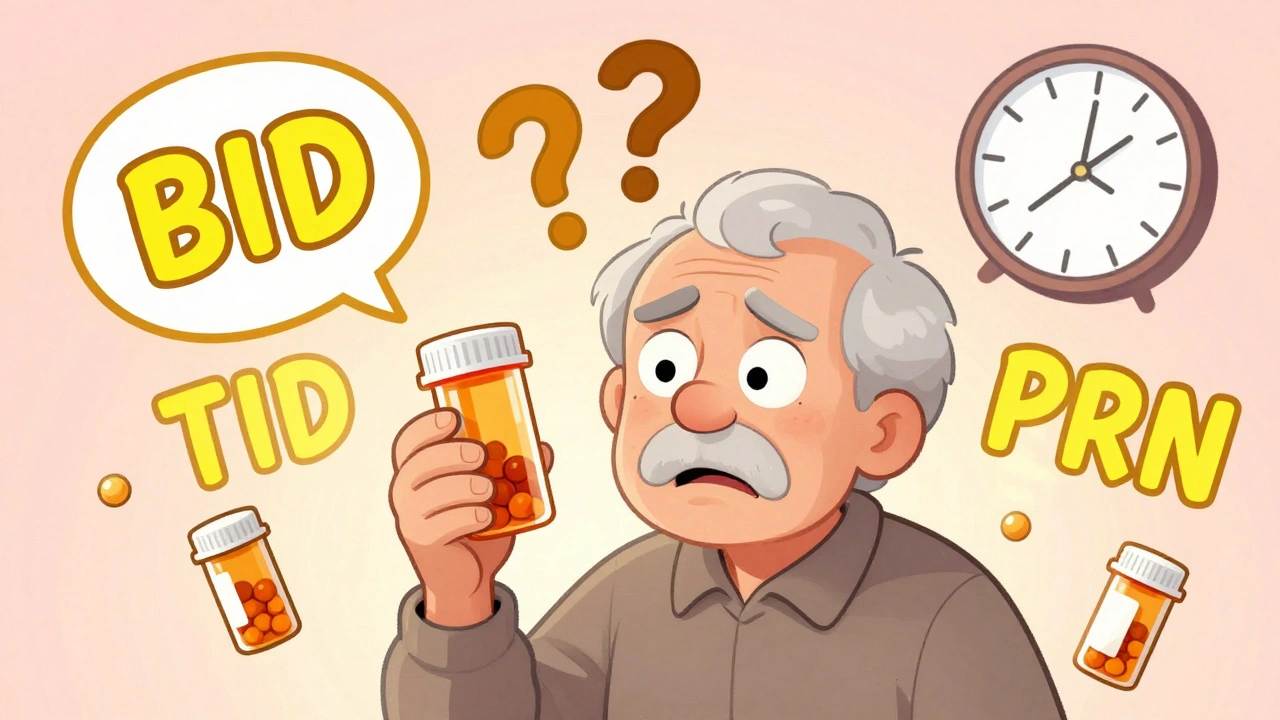
Ever looked at your prescription bottle and felt like you’re decoding a secret code? You see BID, TID, and PRN printed in small letters, and suddenly you’re unsure if you’re taking your medicine right. You’re not alone. Millions of people face this every day, and misunderstanding these abbreviations can mean the difference between getting better and making things worse.
What BID, TID, and PRN Really Mean
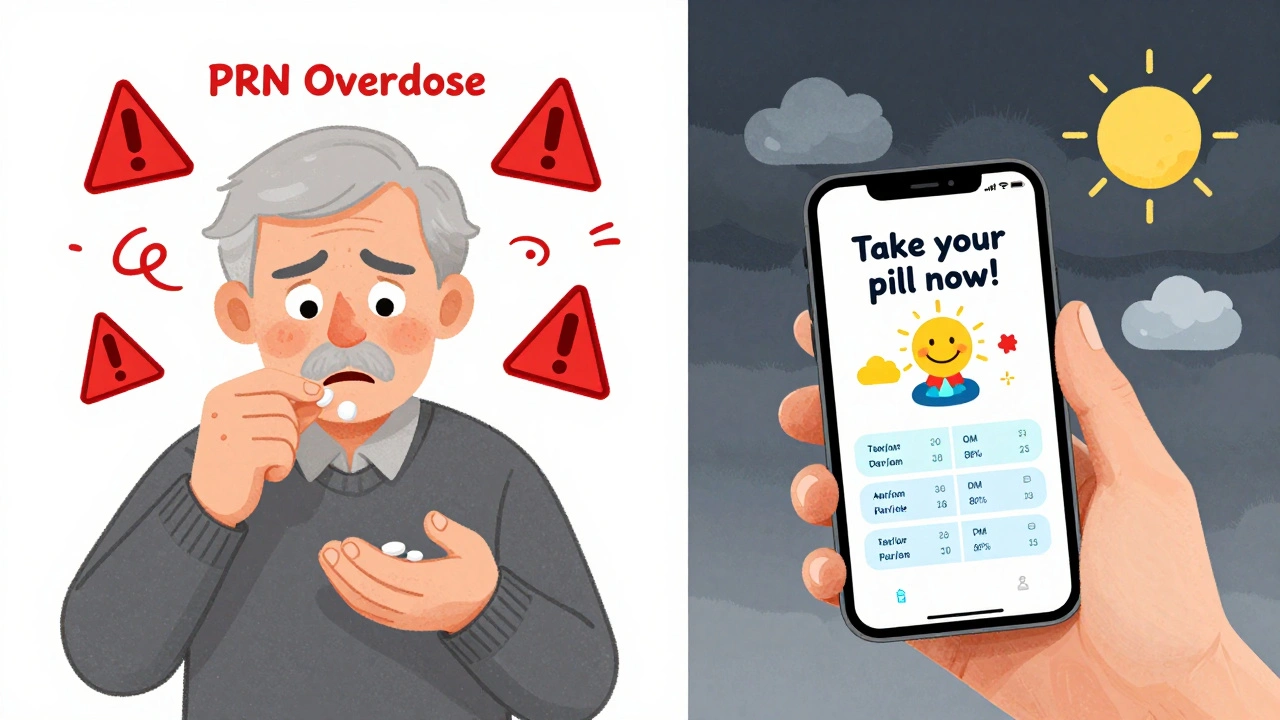
These aren’t random letters. They’re Latin shortcuts doctors and pharmacists have used for over a century. BID stands for bis in die - twice a day. That doesn’t mean morning and night, though. It means roughly every 12 hours. So if you take your first dose at 8 a.m., the second should be around 8 p.m. Skipping the evening dose or taking both at breakfast? That throws off your drug levels and can make antibiotics less effective. TID means ter in die - three times a day. This one’s trickier. It’s not breakfast, lunch, and dinner. It’s every 8 hours. So 6 a.m., 2 p.m., and 10 p.m. If you take your TID medication only at meals, you might go 12 hours without a dose, especially overnight. A 2020 Mayo Clinic study found that when people spaced TID doses more than 2 hours off schedule, drug effectiveness dropped by 38%. PRN is short for pro re nata - “as needed.” Sounds simple, right? But it’s one of the most misunderstood terms. PRN doesn’t mean “take it whenever you feel like it.” It means take it only when you have a specific symptom - like pain, nausea, or anxiety - and only up to a set limit. For example: “Ibuprofen 400mg PRN for pain, max 3 doses in 24 hours.” Taking four doses because you’re still sore? That’s dangerous. A 2021 FDA report showed PRN medications caused 31% of all dosing errors, mostly because patients didn’t know the limits.Other Common Abbreviations You’ll See
You’ll likely run into more than just BID, TID, and PRN. Here’s what the rest mean:- QD - once daily. Take it at the same time every day, like 8 a.m. Consistency matters more than the exact hour.
- QID - four times a day. That’s every 6 hours: 6 a.m., 12 p.m., 6 p.m., 12 a.m.
- Q4H - every 4 hours. This is common with pain meds. Set alarms if you need to.
- AC - before meals. Take it 30 to 60 minutes before eating. Some meds need an empty stomach to work right.
- PC - after meals. Take it within 30 minutes of eating. This helps reduce stomach upset.
- HS - at bedtime. This isn’t “when you feel sleepy.” It’s right before you turn off the lights.
- PO - by mouth. Just means you swallow it. Not a shot, not a patch.
The U.S. Pharmacopeia lists 47 approved abbreviations. But here’s the problem: not everyone uses them correctly. A 2022 survey found that 22% of doctors still write “BID” without periods or use lowercase “bid.” That’s enough to confuse patients - and even pharmacists.
Why These Abbreviations Are Still Around
You’d think we’d have ditched these old Latin terms by now. After all, we have electronic prescriptions and smartphone apps. But change moves slowly in medicine. Many doctors were trained using these abbreviations. Some still write prescriptions by hand - about 17% of U.S. prescriptions, according to the American Pharmacists Association. And in those handwritten notes, space is tight. “Twice daily” takes up more room than “BID.” Plus, some clinicians believe Latin terms are “more precise.” But that’s a myth. A 2022 JAMA Internal Medicine study showed that when electronic systems replaced handwritten scripts, abbreviation-related errors dropped by 44%. The real precision comes from plain English: “Take 1 tablet every 12 hours.”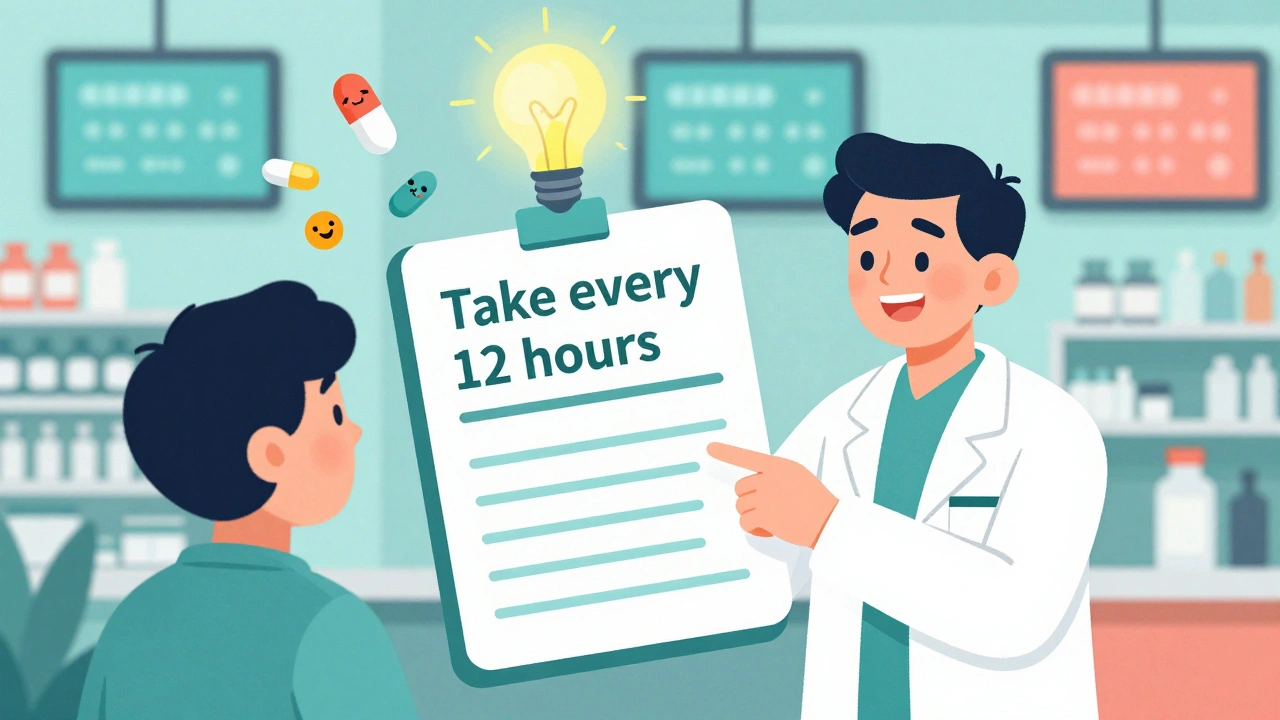
The Real Danger: Mistakes That Hurt People
Misreading these abbreviations isn’t just inconvenient - it’s dangerous. Between 2015 and 2019, over 1,200 medication errors were directly tied to confusing abbreviations. One case involved a patient who took insulin labeled “U” for units. The “U” was mistaken for a “0,” leading to a 10-fold overdose. That’s life-threatening. Another common error: patients think TID means “three days.” A Reddit user shared how their grandmother took her antibiotic only at breakfast and dinner for a week - thinking she was done after three days. The infection came back worse. Older adults are especially at risk. A 2023 Consumer Reports survey found that 42% of people over 65 thought BID meant “before and after dinner.” That’s not how it works. It’s twice a day - not tied to meals.What You Can Do: Protect Yourself
You don’t have to guess. Here’s how to make sure you’re taking your meds right:- Ask the pharmacist. Seriously. They’re trained to explain this stuff. A 2022 Pharmacy Times survey found 89% of patients felt more confident after a pharmacist walked them through their label. Don’t be shy - they expect these questions.
- Use the “teach-back” method. After the pharmacist explains, say it back in your own words. “So you’re saying I take this pill every 8 hours, no matter what I’m doing?” If they nod, you got it. If they hesitate, ask again.
- Use a pill organizer with time labels. Buy one with AM, PM, and 6 a.m., 2 p.m., 10 p.m. slots. A 2021 study in the Annals of Internal Medicine found this improved adherence by 52%.
- Download a medication app. Apps like Medisafe (used by over 18 million people) let you enter your prescription and it converts “TID” into alarms that say “Take 1 pill now.” It even reminds you if you miss a dose.
- Bring all your meds to appointments. The “brown bag review” - dumping your pills on the table during a doctor visit - catches hidden interactions and mislabeling. One patient found their blood thinner label said “PRN,” but their doctor meant “weekly INR check.” It took three calls to figure out.


Comments (8)