
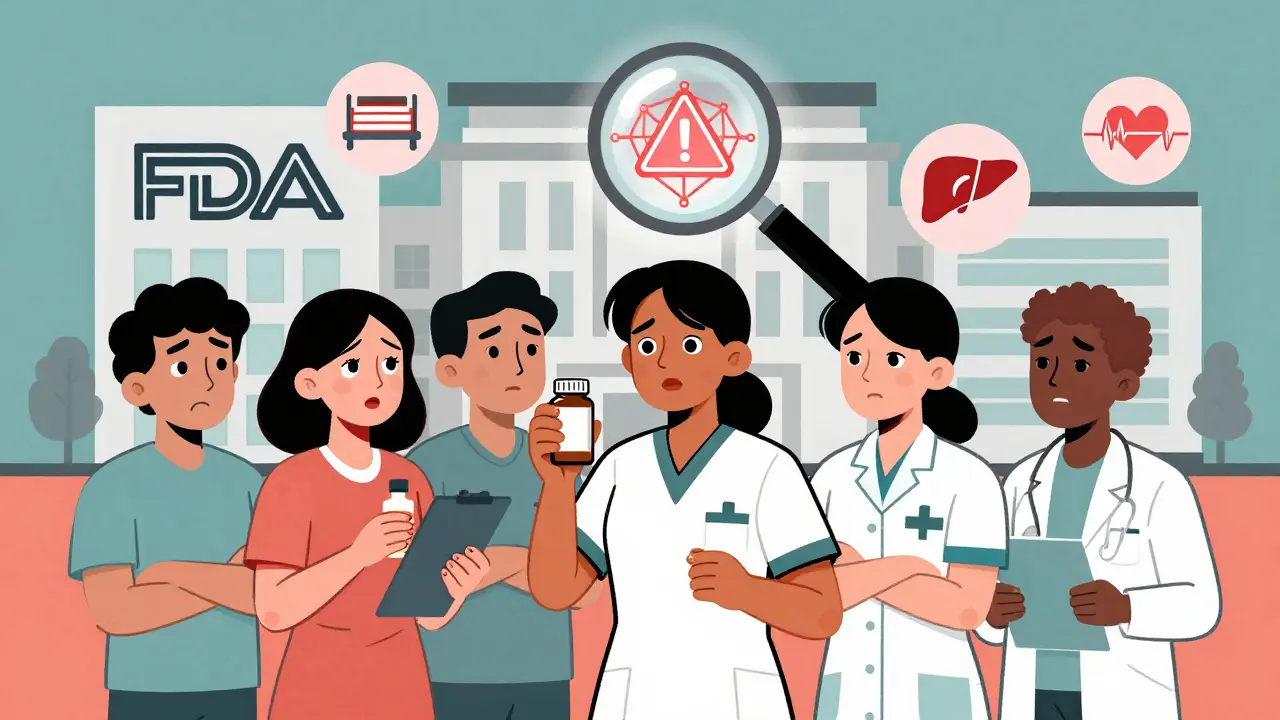
Every year, over 1.3 million reports of bad reactions to medicines, devices, and supplements flow into the FDA’s MedWatch system. Most of these come from drug companies. But the rest? They come from people like you - doctors, nurses, pharmacists, and patients who noticed something wrong and decided to speak up. That’s how safety gaps get found. A patient gets sick after taking a new pill. A nurse sees a rash no one expected. A pharmacist notices a pattern of fainting after a generic drug switch. These aren’t just anecdotes. They’re signals. And MedWatch is the only official channel in the U.S. that collects them.
What Is MedWatch, Really?
MedWatch isn’t a database you can browse like Google. It’s a reporting system. Officially called MedWatch: The FDA Safety Information and Adverse Event Reporting Program, it’s the FDA’s main tool for catching problems after a drug or device hits the market. Clinical trials involve thousands of people. But real life? Millions. And in real life, people take five meds at once. They have different genetics. They’re older, sicker, or pregnant. That’s where things go wrong - and where MedWatch steps in.
The system started in 1993. Back then, the FDA realized it couldn’t wait for a drug to kill dozens before acting. So they built a way for anyone to report bad reactions - even if they weren’t 100% sure the medicine caused it. Today, MedWatch handles everything: prescription drugs, over-the-counter pills, vitamins, supplements, medical devices, even food allergens if they land in the ER.
Here’s the key thing to understand: MedWatch doesn’t prove cause. It flags suspicion. One report? Just noise. But 20 reports of the same rare heart rhythm after taking a new antibiotic? That’s a signal. And when enough signals pile up, the FDA investigates. Sometimes, they update the warning label. Sometimes, they pull the drug. Sometimes, they just add a new caution for doctors. All because someone took five minutes to report it.
Who Can Report? And Who Should?
Anyone can report. You don’t need a medical degree. You don’t need to be a doctor. If you’re a patient who had a scary reaction, you can report it. If you’re a nurse who saw a patient collapse after a new injection, you can report it. If you’re a pharmacist who noticed 12 people got dizzy on the same generic version, you can report it.
But here’s the catch: most reports come from manufacturers. About 85% of the 1.3 million annual reports are filed by drug companies - and they’re legally required to do it. The remaining 15%? That’s healthcare workers and patients. That’s the part that’s broken.
A 2023 AMA survey found 68% of doctors rarely or never report. Why? Time. Uncertainty. The belief that “someone else will report it.” But here’s the truth: if you don’t report, the FDA doesn’t know. And if they don’t know, they can’t act. Your report might be the only one. And that’s enough.
How to Report: The Three Forms
There are three forms, but you only need to know two.
- FDA Form 3500 - For healthcare professionals. This is the most detailed. It asks for your license number, patient info, drug name, dose, timing of the reaction, lab results, and medical history.
- FDA Form 3500B - For patients and consumers. This one’s in plain English. No medical jargon. You just answer: What happened? When? What medicine did you take? Did you go to the hospital? It takes 15-20 minutes.
- FDA Form 3500A - For manufacturers and hospitals. You don’t need this unless you work for a drug company.
You can file online at fda.gov/medwatch. Or download the PDF and mail or fax it. The online form auto-saves. You can start it on your phone and finish it on your laptop. No login needed. No account required.
Pro tip: Even if you’re unsure whether the drug caused the problem - report it anyway. The FDA doesn’t need proof. They need suspicion. If you think it might be linked, it counts.
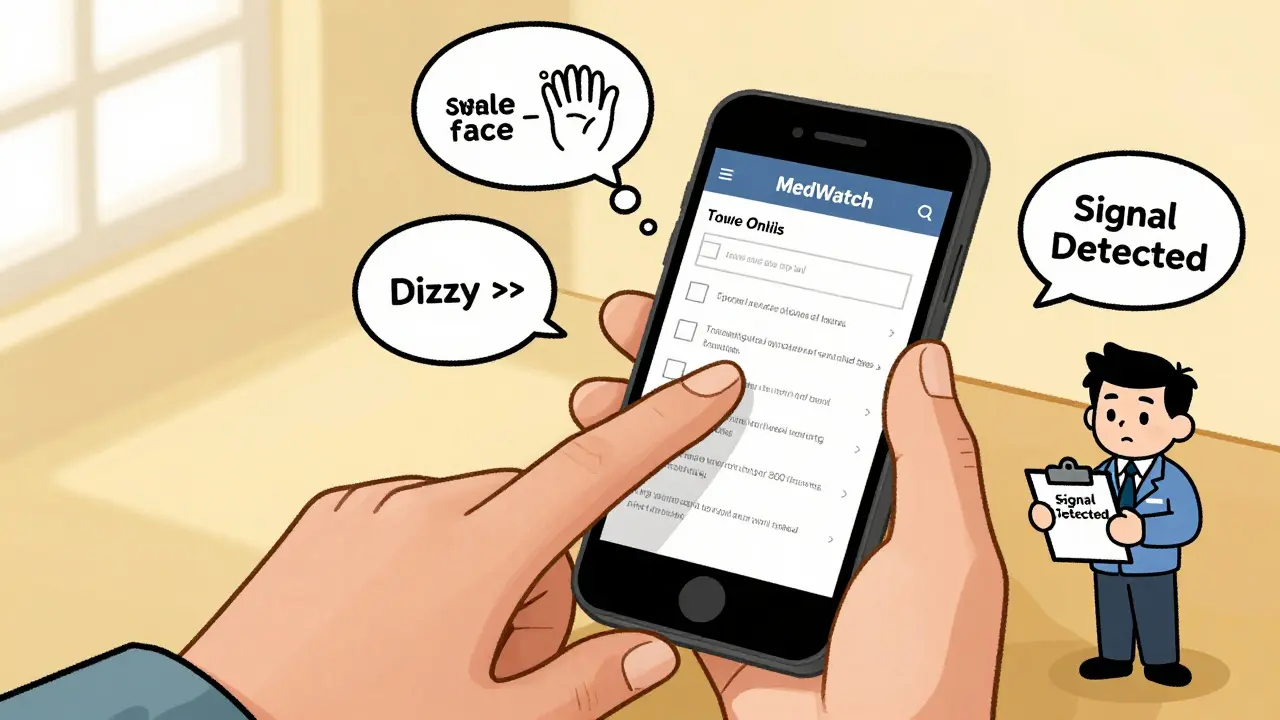
What Counts as a Reportable Event?
You don’t need to be an expert to know what’s serious. The FDA defines a “serious” adverse event as one that:
- Caused death
- Required hospitalization
- Led to a permanent disability
- Caused a birth defect
- Was life-threatening
- Required medical or surgical intervention to prevent one of the above
Examples: A 72-year-old man develops a severe rash and swelling after starting a new blood pressure pill. He ends up in the ER. That’s reportable. A teenager has a seizure after taking a new migraine med. That’s reportable. A woman gets liver failure after taking a popular herbal supplement. That’s reportable.
Even if it’s not on the label? Report it. If the drug’s side effects list says “headache” but you got kidney pain? Report it. If the label says “rare” but you’ve seen three cases in your clinic? Report it.
The FDA says: “If you’re unsure, report it.”
What Happens After You Report?
Here’s the part most people worry about: “Will I get a reply?”
The answer is: probably not. That’s the biggest complaint. In a 2022 ASHP survey, 87% of healthcare workers said they never got any feedback after submitting a report. No thank-you note. No update. No “we looked into it.”
But that doesn’t mean it didn’t matter.
Reports go into the FDA Adverse Event Reporting System (FAERS), a giant database with over 17 million entries since 1968. Analysts run algorithms to find patterns. If 15 people report the same rare reaction to the same drug within a month, the system flags it. That might lead to a safety alert. Or a label change. Or a study. Or a recall.
MedWatch reports helped trigger safety warnings for Vioxx, Avandia, and even some COVID-19 vaccines. They also helped uncover dangerous interactions between herbal supplements and heart meds. One report might not change anything. But 100? 1,000? That’s how change happens.
Why Most People Don’t Report - And Why You Should Anyway
Let’s be honest. Reporting feels pointless. You’re one person. The system is slow. You’ll never hear back.
But here’s what you’re not seeing: the people who never got to report.
Think of MedWatch like a smoke detector. You don’t hear it go off every day. But when there’s a fire? You’re glad it’s there. Every report is a sensor. If you skip it, the system has one less ear. And the more ears it loses, the harder it is to hear the warning before it’s too late.
Studies estimate only 1% to 10% of serious adverse events are ever reported. That means 90% of the signals are missing. The FDA knows this. That’s why they launched “MedWatch Plus” in 2023 - aiming to boost reporting by 30% by 2025 through mobile tools and EHR integration.
So if you’re thinking, “It’s not my job,” remember: safety isn’t just a job. It’s a shared responsibility. You don’t need to be a scientist. You just need to be observant. And willing to take 15 minutes.

How to Make Your Report Count
Here’s what makes a report useful:
- Be specific. Don’t just say “I felt bad.” Say: “After taking 20 mg of lisinopril on April 5, I developed swelling in my face and throat. Went to ER. Diagnosed with angioedema.”
- Include dates. When did you start the drug? When did symptoms begin? When did they end?
- Include doses. Was it 5 mg? 10 mg? Once a day? Twice?
- Include other meds. Did you take aspirin? A supplement? Antibiotics? That matters.
- Include outcomes. Did you recover? Did you need treatment? Was there permanent damage?
Even if you don’t know all the details, write what you do know. The FDA can often pull your medical records if needed. But they can’t fill in blanks you didn’t provide.
What’s Changing in 2025?
MedWatch isn’t standing still. The FDA is working on AI tools to scan 1.3 million reports faster. They’re testing automatic alerts from electronic health records - so if a patient’s chart shows a sudden drop in kidney function after starting a new drug, the system could auto-generate a report.
Also, dietary supplements are under tighter scrutiny now. Since 2019, manufacturers must report serious side effects from supplements - not just drugs. So if your multivitamin gave you liver damage? That’s reportable. And the company has to report it too.
By 2027, experts predict MedWatch will handle nearly 1.8 million reports a year. But without more people reporting, the system will still miss the big ones.
Final Thought: Your Report Might Save Someone’s Life
There’s no glory in reporting. No award. No spotlight. Just a quiet form on a website.
But imagine this: a woman in Ohio takes a new antidepressant. She gets a strange tremor. She reports it. Two months later, a doctor in Texas sees the same reaction in a patient. He checks MedWatch. Sees your report. Connects the dots. He changes the prescription. Saves the patient.
You never met either of them. But you helped.
That’s what MedWatch is for. Not to punish companies. Not to create paperwork. But to catch the hidden dangers before they hurt more people.
So if you’ve had a bad reaction - or seen one - take five minutes. Go to fda.gov/medwatch. Fill out the form. Hit submit.
It’s the easiest way to make sure the next person doesn’t have to go through what you did.
Do I need a doctor’s note to report an adverse drug reaction to MedWatch?
No. You don’t need any documentation, a doctor’s note, or proof. If you’re a patient and experienced a serious side effect - like hospitalization, a life-threatening reaction, or a birth defect - you can report it yourself using Form 3500B. The FDA accepts reports based on suspicion, not confirmed causation.
How long does it take to file a MedWatch report?
For patients using Form 3500B, it usually takes 15 to 20 minutes. Healthcare professionals using Form 3500 may take slightly longer - up to 25 minutes - because they include more clinical details like lab results and medical history. The online form saves your progress, so you can start and finish later.
Can I report a reaction to a supplement or over-the-counter medicine?
Yes. MedWatch covers prescription drugs, over-the-counter medicines, dietary supplements, medical devices, and even certain foods if they cause serious allergic reactions. Since 2019, manufacturers are required to report serious side effects from supplements, and consumers can report them too.
Will I be contacted after I file a MedWatch report?
Most people don’t receive a follow-up. In a 2022 survey, 87% of healthcare professionals said they never heard back after submitting a report. That doesn’t mean your report wasn’t used - it just means the FDA doesn’t have the resources to respond to each one individually. Your report goes into a database used by analysts to spot safety trends.
What if I report something that turns out not to be related to the drug?
It still counts. The FDA doesn’t require proof of causation. They’re looking for patterns. Even if your reaction was caused by something else - like a virus or another medication - your report helps them understand what’s happening in the real world. Overreporting is safer than underreporting. When in doubt, report.


Comments (14)