
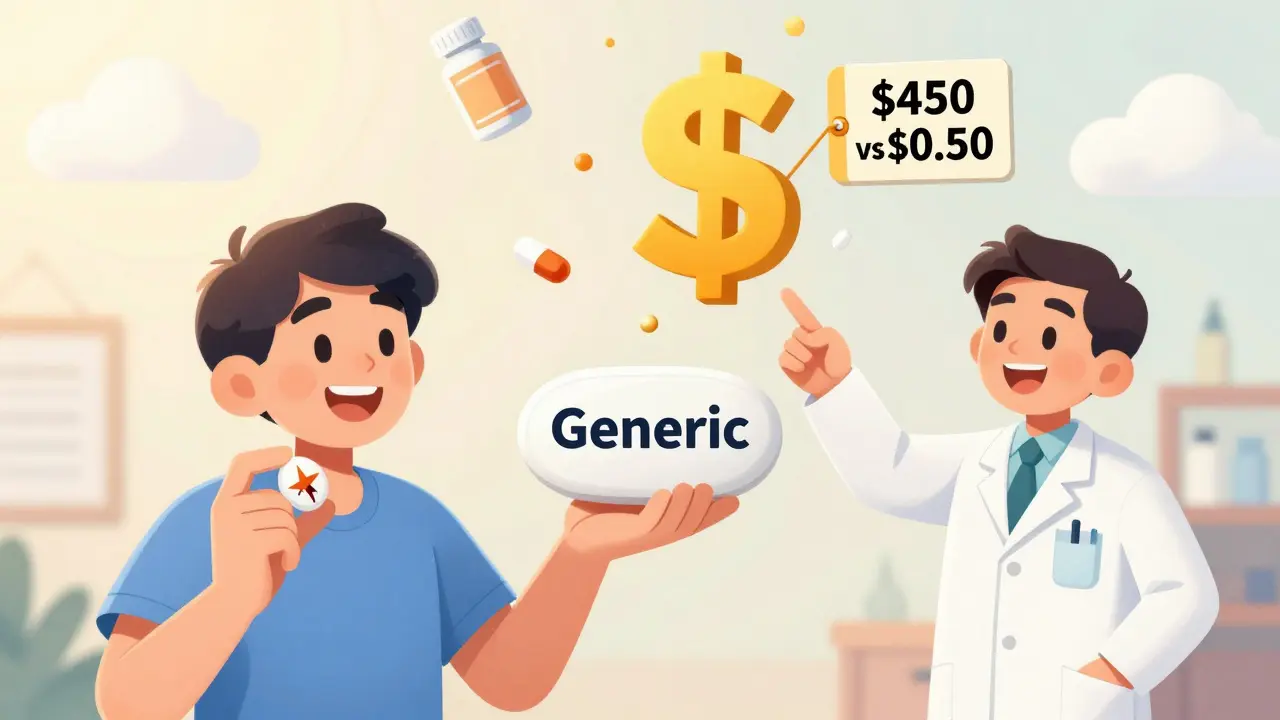
Every year, millions of people in Australia and around the world pay hundreds of dollars for prescription medications - often without realizing they could be paying a fraction of that price without losing any effectiveness or safety. The truth is simple: generic medications are not second-rate. They’re the same drug, made to the same strict standards, but priced 80-85% lower than their brand-name versions. The question isn’t whether generics work - it’s how to use them wisely so you never have to choose between your health and your budget.
What Exactly Is a Generic Drug?
A generic drug contains the exact same active ingredient as the brand-name version. That means if you’re taking atorvastatin a cholesterol-lowering medication, whether you get the brand-name Lipitor or a generic, your body gets the same molecule doing the same job. The FDA, Health Canada, TGA in Australia, and other global regulators require generics to match the brand in strength, dosage, how fast it’s absorbed, and how well it works. They don’t just rely on paperwork - they test them in real people. Bioequivalence studies involve 24-36 healthy volunteers who take both versions, and blood tests confirm the generic delivers the same amount of drug into your system within 80-125% of the brand. For drugs like warfarin or levothyroxine, where even tiny differences matter, that range is even tighter: 90-111%.
The only differences you’ll see are in the inactive ingredients - the colors, fillers, or coatings. A generic might be a white oval pill instead of a blue capsule. That doesn’t change how it works. It just changes how it looks. And yes, some people notice the difference. But not because the drug is weaker. Often, it’s because the new pill feels different in the throat, or the coating tastes odd. These are minor, temporary issues - not safety risks.
How Much Money Can You Really Save?
The numbers speak for themselves. In the U.S., a 30-day supply of brand-name Lipitor costs around $450. The generic atorvastatin? About $0.50. Plavix (clopidogrel) is $380 a month. The generic? $1.20. Even in Australia, where the Pharmaceutical Benefits Scheme (PBS) subsidizes many drugs, switching to a generic can cut your out-of-pocket cost by 60-90%. For someone on multiple medications, that’s easily $500-$1,200 saved per year.
It’s not just about one drug. A 2024 survey by the Generic Pharmaceutical Association found that 72% of patients saved $500 or more annually just by switching to generics. And those savings aren’t just personal - they ripple through the entire healthcare system. Since 2009, generics have saved the U.S. system over $1.97 trillion. In Australia, the PBS saved over $2.1 billion in 2023 alone thanks to generic substitution.
Are Generics Really as Safe as Brand-Name Drugs?
Here’s where people get nervous. “What if the generic doesn’t work as well?” The answer, backed by decades of data, is: for the vast majority of drugs, it works just as well.
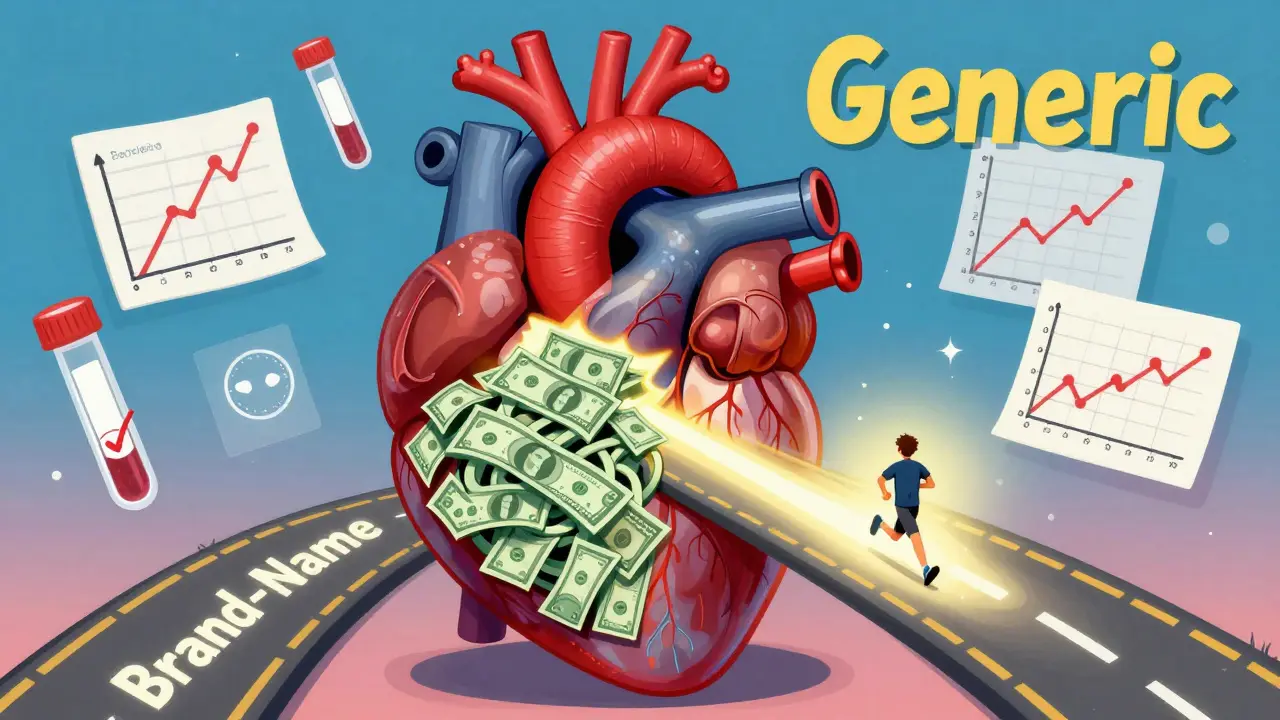
A landmark 2020 study in Nature Communications looked at 17 cardiovascular drugs and found that patients taking generics had fewer heart attacks and deaths in 10 out of 17 cases. Another large 2024 study tracking 2.3 million patients found that generic statins, when taken consistently from the same manufacturer, had the same safety profile as brand-name versions. The hazard ratio for major heart events? 0.98 - meaning no difference.
But there are exceptions. A few drugs have what’s called a narrow therapeutic index a small difference between an effective dose and a toxic one. These include warfarin (blood thinner), levothyroxine (thyroid hormone), phenytoin (seizure drug), and cyclosporine (organ transplant drug). For these, even tiny changes in absorption can matter. That’s why doctors often recommend sticking with one manufacturer - brand or generic - once you’ve found what works. Switching between different generic brands of levothyroxine, for example, has been linked to inconsistent symptom control in some patients. One 2022 review found 23% of patients reported issues with generic levothyroxine compared to 8% with Synthroid.
That doesn’t mean generics are unsafe. It means you need to be smart about them. If you’re on one of these sensitive drugs, don’t switch manufacturers unless your doctor approves it. And if you notice new side effects after a switch - like feeling more tired, jittery, or dizzy - talk to your pharmacist or doctor right away.
When Should You Avoid Generics?
You don’t need to avoid generics altogether. But there are a few situations where caution helps:
- You’re on a narrow therapeutic index drug (warfarin, levothyroxine, etc.). Stick with the same manufacturer. If your pharmacy switches to a different generic, ask them to keep you on the same one.
- You’ve had a bad reaction to a specific generic before. If one version made you nauseous or gave you headaches, don’t assume all generics are the same. Tell your pharmacist.
- You’re on a complex medication like a biologic (e.g., Humira, Enbrel). These are harder to copy exactly. The generic versions, called biosimilars, are safe but not identical. They’re still much cheaper than the brand.
- You’re switching multiple times. Frequent switches - going from brand to generic A to generic B - can confuse your body. Consistency matters more than the name on the bottle.
How to Switch Smartly - 3 Questions to Ask Your Pharmacist
Switching to a generic shouldn’t be a guessing game. Here’s what to ask every time you pick up a prescription:
- “Is this generic made in an FDA- or TGA-approved facility?” All legitimate generics, whether made in India, the U.S., or Australia, must meet the same quality standards. You can verify this by checking the TGA’s database or asking your pharmacist to confirm the manufacturer’s compliance.
- “Are there multiple generic manufacturers for this drug?” If yes, that means competition is driving prices down. You can ask for the cheapest one - often, it’s just a few cents more than the lowest cost option.
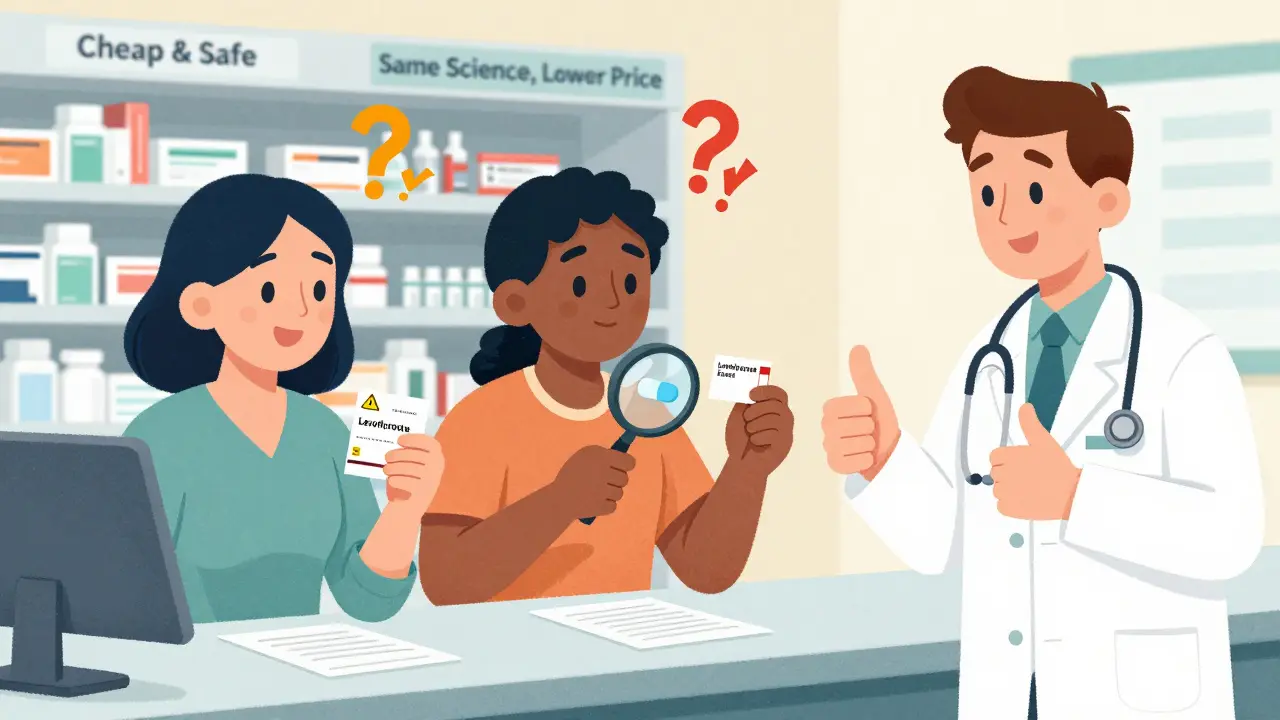
- “Is this a narrow therapeutic index drug? Should I stick with one brand or generic?” This is critical. If the answer is yes, ask to be kept on the same manufacturer every time. Write it down in your notes or ask for a sticker on your prescription.
Pharmacists are trained to help you with this. A 2023 University of Michigan study showed patients who got clear counseling about generics had 32% better adherence and 27% fewer problems. Don’t be shy - your pharmacist wants you to stay healthy and on your meds.
What to Do If You Notice a Change
Some people report feeling different after switching to a generic. Maybe you’re more tired. Or your blood pressure feels off. Or you’ve had more headaches. Before you assume the generic isn’t working:
- Check the pill. Look at the shape, color, and imprint. Use the Drugs@FDA a public database of approved drug products (or the TGA’s equivalent) to confirm the manufacturer. Sometimes, your pharmacy switches suppliers without telling you - and that’s okay, unless you’re on a sensitive drug.
- Don’t stop taking it. Suddenly stopping medication can be dangerous. Call your doctor or pharmacist first.
- Keep a symptom journal. Note when you switched, what symptoms started, and how long they lasted. Many side effects fade in 1-2 weeks as your body adjusts.
Research shows that 65% of adverse event reports linked to generics came from unexpected manufacturer changes - not from poor quality. So if you’re stable on a generic, don’t switch unless you need to.
The Bigger Picture: Why Generics Are the Future
The global generic drug market is projected to hit $681.6 billion by 2028. In 2024 alone, over $78 billion in brand-name drugs lost patent protection, opening the door for cheaper alternatives. Drugs like Trulicity and Skyrizi - once priced at $1,000+ per month - now have generics entering the market. Even complex biologics are becoming available as biosimilars, with 32 approved as of March 2024.
The FDA and TGA are pushing harder than ever to make sure these drugs are safe and available. In 2024, the FDA launched a Generic Drug Shortage Task Force to prevent supply issues like the 2022 Adderall and amoxicillin shortages. They’re also requiring manufacturers to use modern production methods - like continuous manufacturing - to improve quality and reduce disruptions.
What does this mean for you? More choices. Lower prices. Better access. The system is designed to work in your favor - if you know how to use it.
Final Thought: Generics Are Not a Compromise - They’re the Standard
There’s no magic in the brand name. There’s no extra power in the blue capsule. The active ingredient is the same. The safety standards are the same. The results are the same. The only thing that’s different is the price tag.
For 90% of prescriptions, generics are the smarter, safer, more affordable choice. You don’t have to sacrifice safety to save money. You just have to ask the right questions, stay consistent with your manufacturer when it matters, and trust the science - not the marketing.
Are generic drugs as effective as brand-name drugs?
Yes, for the vast majority of medications. Generic drugs must meet the same strict standards as brand-name drugs to be approved by regulators like the FDA or TGA. They contain the same active ingredient, in the same strength and dosage form, and must prove they are absorbed into the body at the same rate and extent. Studies show that for drugs like statins, blood pressure meds, and antibiotics, generics perform just as well - and sometimes even better - than brand-name versions.
Can switching to a generic cause side effects?
Sometimes, but rarely because the drug itself is unsafe. Side effects are more often linked to changes in inactive ingredients - like fillers or coatings - which can affect how the pill feels in your mouth or how quickly it dissolves. For most people, these effects are mild and temporary. If you notice new symptoms after switching, give it 1-2 weeks. If they persist, talk to your pharmacist or doctor. For narrow therapeutic index drugs (like levothyroxine or warfarin), switching manufacturers can sometimes cause issues, so consistency matters.
Why do some generics cost more than others?
Price differences come from competition, manufacturing costs, and how many companies make the same generic. If only one company produces a generic, it can charge more. But when five or six companies make the same drug, prices drop dramatically - sometimes to pennies. Always ask your pharmacist which generic option is cheapest. You might be paying more than necessary.
Should I always choose the cheapest generic?
For most drugs, yes - the cheapest generic is just as safe and effective. But for drugs with a narrow therapeutic index (like warfarin or levothyroxine), it’s better to stick with one manufacturer you know works for you. If your pharmacy switches brands without telling you, it could affect your health. Ask your pharmacist to keep you on the same one unless your doctor says otherwise.
How can I tell if my pharmacy switched my generic?
Check the pill. Look at the color, shape, and imprint (the letters or numbers on it). Compare it to your last prescription. If it looks different, ask your pharmacist if they switched manufacturers. You can also check the TGA’s online database or ask for the name of the manufacturer. If you’re on a sensitive medication, always confirm the manufacturer hasn’t changed.
Next time you fill a prescription, don’t assume the brand-name version is better. Ask if there’s a generic. Ask if it’s the cheapest option. Ask if it’s safe for your specific drug. You’ll save money - and you won’t sacrifice a single thing that matters.


Comments (12)