
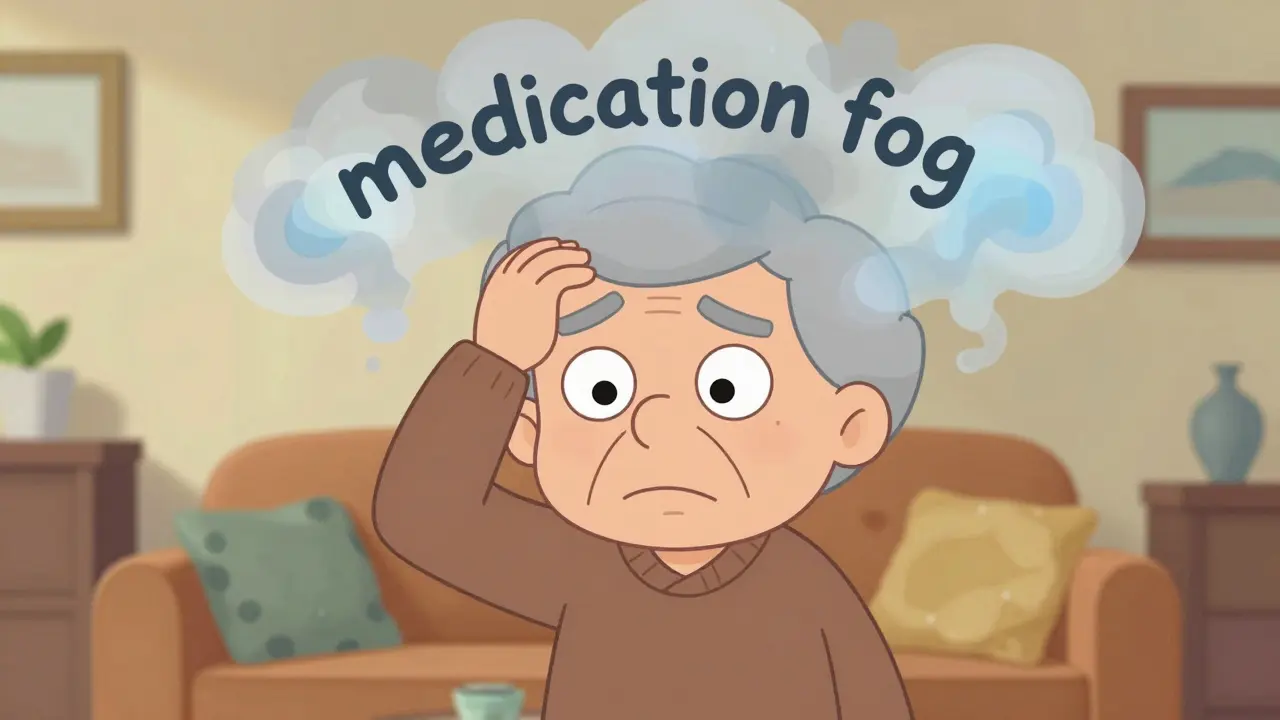
Imagine your elderly parent suddenly becomes confused, forgets a conversation they had ten minutes ago, or starts stumbling during a walk. The immediate reaction for most families is a heavy heart and a terrifying question: "Is this dementia?" It is a common story, but here is the shocking part: it might not be aging at all. In many cases, it is actually a reaction to the pills in their medicine cabinet. When drugs cause symptoms that look like cognitive decline, it is often misdiagnosed as a natural part of getting older, leaving seniors trapped in a state of "medication fog" that could actually be reversed.
The Hidden Trap of "Medication Fog"
When we talk about medication side effects is adverse drug reactions (ADRs) that occur when pharmaceuticals induce symptoms like confusion and memory loss, often mimicking neurodegenerative diseases. For a senior, this doesn't always feel like a sudden allergic reaction. Instead, it feels like a slow fade. You might notice they seem "in slow motion" or struggle to find words. This is what experts call medication fog. While it looks like dementia, the difference is often in the timing. True dementia is a slow, progressive slide. Medication-induced impairment often hits faster-sometimes within two weeks of starting a new prescription or changing a dose.
Why does this happen more to seniors? It comes down to how the body changes. As we age, our liver and kidneys don't clear drugs as efficiently as they used to. In fact, some seniors see a 40-60% drop in kidney clearance. This means the medicine stays in the system longer and reaches higher concentrations in the brain, making a "standard" dose feel like an overdose to an 80-year-old.
The Usual Suspects: Anticholinergics and Beyond
One of the biggest culprits in senior health is a group of drugs known as anticholinergics. These aren't just one type of drug; they are found in everything from over-the-counter allergy meds and sleep aids to prescription bladder control and antidepressants. They work by blocking acetylcholine, a chemical messenger in the brain essential for memory and learning. When you block that messenger, the brain struggles to function.
The risk is amplified by polypharmacy, which is the medical term for taking four or more medications daily. When a senior takes multiple drugs with these properties, the effects stack. This creates a high "anticholinergic burden." For example, someone taking a bladder medication and a certain antidepressant might experience a massive spike in confusion and dizziness, which a doctor might simply write off as "old age."
| Drug Class | Common Examples | Symptom That Mimics Aging | Actual Drug Effect |
|---|---|---|---|
| Anticholinergics | Benadryl, Oxybutynin | Severe confusion, memory loss | Blocks acetylcholine receptors |
| Benzodiazepines | Xanax, Ativan | Slow reaction time, forgetfulness | Sedative effect on the CNS |
| Opioids | Codeine, Morphine | Mental cloudiness, lethargy | Depression of cognitive function |
| Corticosteroids | Prednisone | Mood swings, irritability | Hormonal and neurological shift |

How to Tell the Difference: Red Flags to Watch For
Since we aren't doctors, how do we know if it's a pill or a pathology? There are a few concrete clues. First, look at the timeline. Did the confusion start shortly after a new prescription? If symptoms appear within 14 days of a change, the drug is the prime suspect. Second, look for "fluctuation." Dementia is usually constant; medication side effects often wax and wane based on when the dose was taken.
Pay attention to the physical "clues" that don't usually come with early dementia:
- Dry Mouth and Constipation: These are classic signs of anticholinergic overdose.
- Sudden Dizziness: This spikes fall risks significantly and often correlates with blood pressure or sedative meds.
- Blurred Vision: If they suddenly can't focus, it might be a drug effect rather than cataracts.
- The "Slow Motion" Feeling: A feeling of being mentally lagged or physically sluggish.

Taking Action: The Path to Deprescribing
The good news is that many of these symptoms are reversible. The process of carefully reducing or stopping unnecessary medications is called deprescribing. It sounds simple, but you should never stop a senior's medication abruptly, as this can cause dangerous withdrawal or "rebound" symptoms.
The best way to handle this is to request a comprehensive medication review. You can bring a complete list of every single pill-including vitamins and supplements-to a geriatrician or pharmacist. Ask them to check the list against the Beers Criteria. This is a gold-standard list maintained by the American Geriatrics Society that highlights medications that are generally inappropriate for people over 65.
A successful review often follows a structured plan: identifying the highest-risk drug, tapering the dose over 4 to 12 weeks, and monitoring for a return of mental clarity. In some cases, doctors use the Anticholinergic Cognitive Burden (ACB) scale to quantify the risk. If the score is 3 or higher, the risk of long-term cognitive issues increases significantly, making a review urgent.
The Role of the Caregiver
As a child or caregiver, you are the "eyes and ears" of the operation. Doctors only see the patient for 15 minutes; you see them for 15 hours. Keep a simple log. Note the time they take their medication and the time they seem most confused. If you notice that your loved one is most "out of it" four hours after their evening pill, that is vital data for their doctor.
Don't be afraid to be a squeaky wheel. If a doctor says, "Well, they're 85, this is just how it is," push back. Ask, "Could this be a side effect of the [Drug Name]?" or "Can we check this against the Beers Criteria?" Evidence shows that adjusting medications can improve apparent dementia cases in up to 40% of seniors. That is a massive difference in quality of life.
Can these side effects actually cause permanent dementia?
While many symptoms are reversible, long-term use of strong anticholinergics may increase the risk. Some research indicates that taking high-burden anticholinergics for three years could increase dementia risk by nearly 50%. This makes early detection and deprescribing critical.
Are over-the-counter (OTC) meds a risk?
Absolutely. Many common OTC drugs, like diphenhydramine (found in many sleep aids and allergy meds), have strong anticholinergic properties. Seniors should be very cautious with "PM" versions of painkillers or old-school allergy syrups.
How do I start a conversation about this with a doctor?
Start by presenting a list of observed changes and the timing. Use a phrase like, "I've noticed a change in cognitive function that seems to correlate with their medication schedule. Could we perform a medication review to see if any of these are mimicking dementia?"
Why does the doctor prescribe these if they are risky?
Many medications were developed and tested on younger adults. Doctors may be treating a specific symptom (like an overactive bladder) without realizing the cognitive trade-off is too high for an older brain. This is why geriatric specialists are so important.
Is "medication fog" the same as delirium?
Not exactly, but they are related. Medication fog is often a chronic state of mild cognitive impairment. Delirium is more acute and severe, often involving hallucinations or extreme agitation, and can be a medical emergency.