
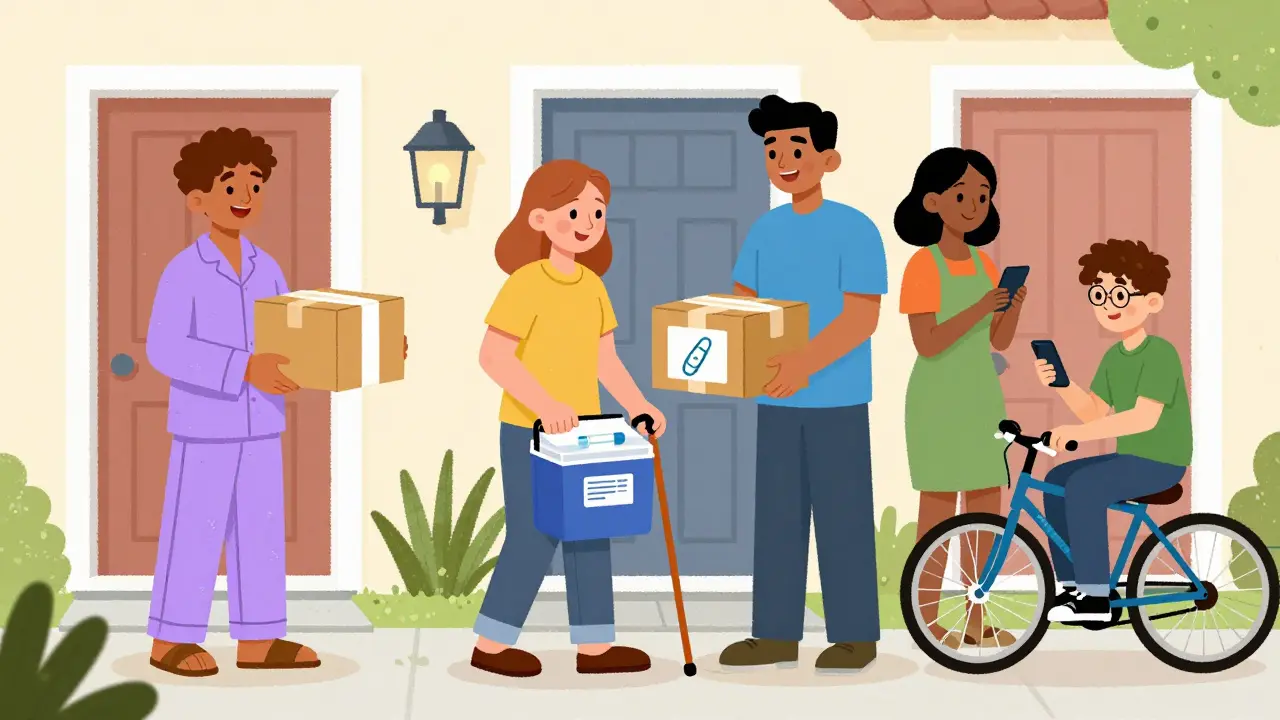
Running out of medication isn't just inconvenient-it can be dangerous. For people managing chronic conditions like diabetes, high blood pressure, or cholesterol, missing even one dose can lead to serious health setbacks. Many people don’t realize there’s a simple, proven way to avoid this: pharmacy delivery and mail-order services. These aren’t just for elderly or disabled people-they work for anyone who wants to save time, money, and stress while staying on track with their meds.
How Mail-Order Pharmacy Works
Mail-order pharmacies send your prescriptions straight to your door. Instead of going to a local pharmacy every 30 days, you get a 90-day supply shipped in one package. Most services are run by big pharmacy benefit managers like Express Scripts, CVS Caremark, or OptumRx, but some insurers and employers offer their own branded options like Birdi Pharmacy or Patient Direct Pharmacy. You don’t need a special plan to use them-most health insurance plans include mail-order as a standard benefit, often with lower copays than retail.The process is straightforward. First, check if your plan covers it. Nearly all Medicare plans and 85% of large employer plans do. Then, ask your doctor to write a 90-day prescription. Some doctors can send it electronically; others may need you to pick up a paper copy. Once you have it, sign up through your insurer’s website or call their pharmacy support line. You’ll need your insurance ID, a mailing address, and sometimes your current pharmacy’s info to transfer the prescription. The whole setup usually takes 3-5 business days.
Why It Boosts Medication Adherence
This is where mail-order really shines. People who fill 30-day prescriptions at retail pharmacies only take their meds as prescribed about 52% of the time. That number jumps to 82% when they use mail-order. Why? Because convenience removes the biggest barriers: forgetting to refill, running out of time to go to the pharmacy, or struggling to get there due to mobility issues, work schedules, or lack of transportation.Imagine you have hypertension. Every month, you have to take time off work, drive to the pharmacy, wait in line, and pay a copay. After three months, you’re tired of the routine. You skip a refill. Your blood pressure spikes. A mail-order service eliminates that friction. You get your 90-day supply delivered before you run out. No trips. No waiting. No excuses. That’s why Blue Cross NC found that patients on mail-order refills had 40% fewer hospital visits related to medication non-adherence.
Cost Savings You Can’t Ignore
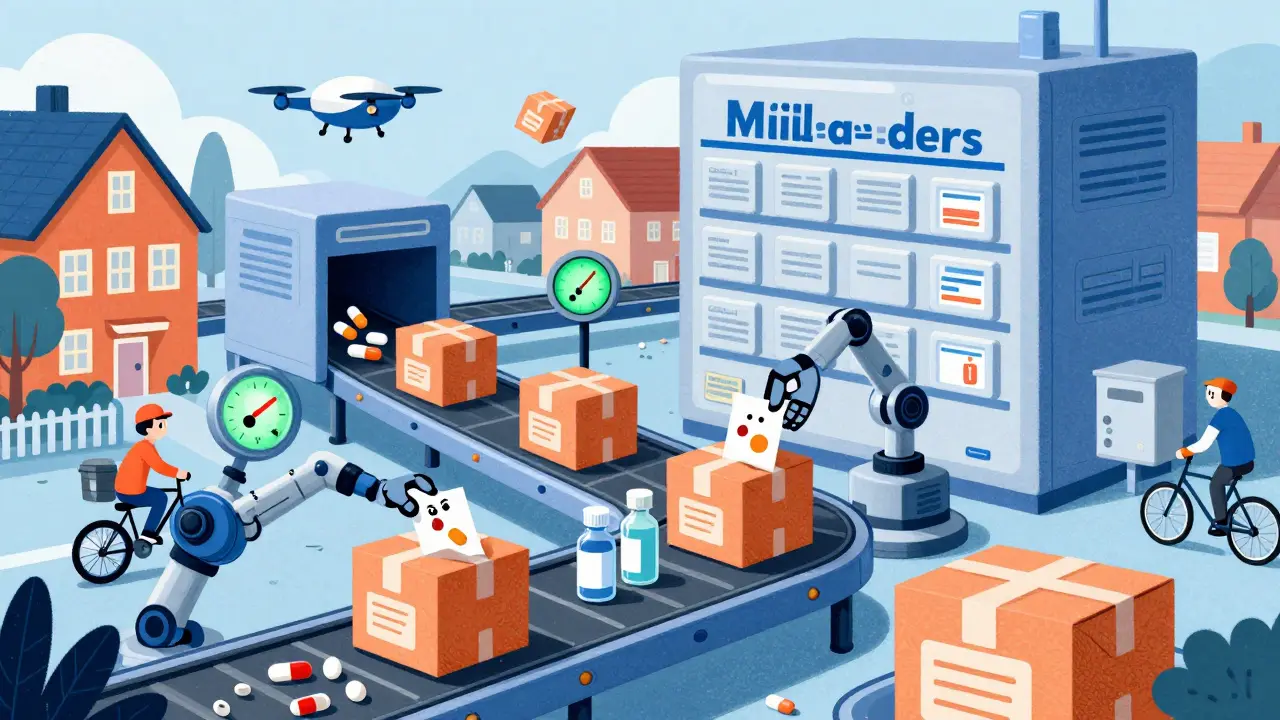
Mail-order isn’t just easier-it’s cheaper. A 90-day supply typically costs 25-35% less than buying three separate 30-day supplies. For someone on a $120/month medication, that’s $108 saved every three months, or $432 a year. Many plans structure it so you pay only two copays for a 90-day supply instead of three. Birdi Pharmacy, used by the University of Michigan, charges exactly that: two copays for three months of meds. That’s a 33% discount right there.Even if you pay cash, mail-order pharmacies often have better pricing than retail chains. Patient Direct Pharmacy, for example, offers brand-name drugs at prices up to 40% lower than Walmart or CVS. And because they dispense thousands of prescriptions daily using robotic systems, their error rate is 23 times lower than retail pharmacies. Fewer mistakes mean fewer dangerous mix-ups or wrong dosages.
What You Can and Can’t Get
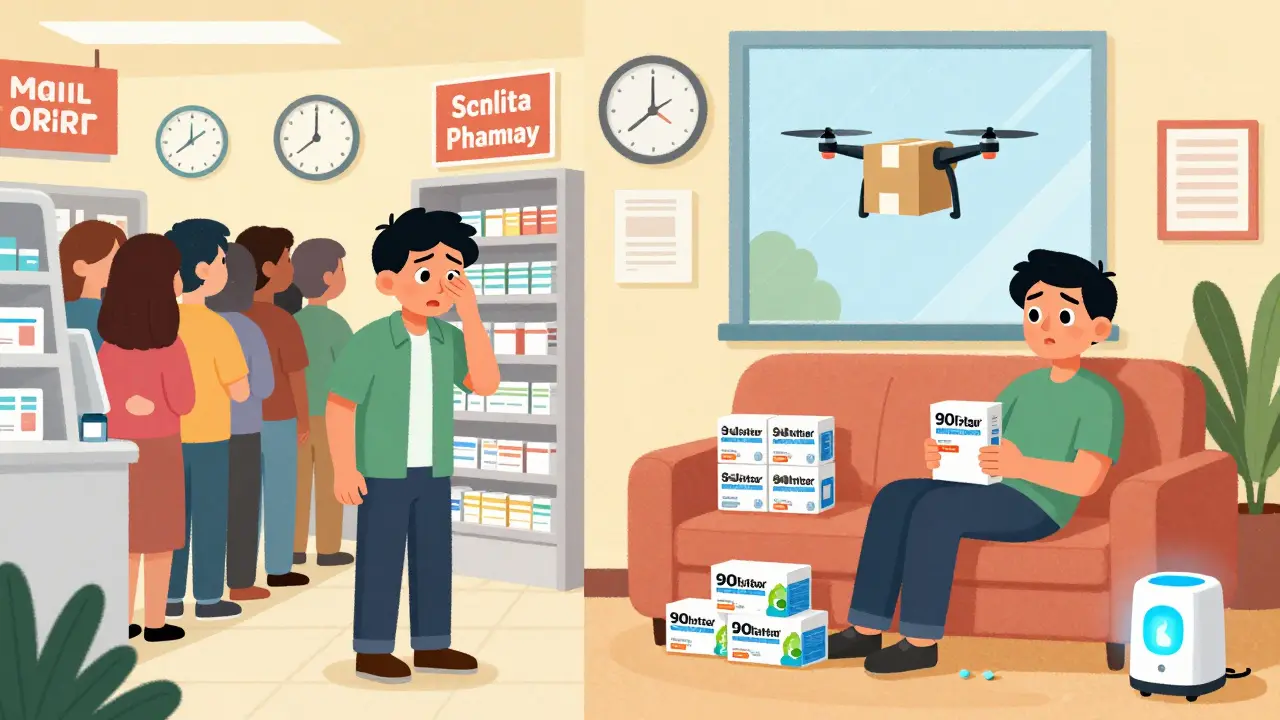
Not all medications can be mailed. Controlled substances like opioids, benzodiazepines, and stimulants are excluded because of strict federal rules. Some specialty drugs-like injectables for MS or rheumatoid arthritis-may require in-person counseling, so they’re still filled at retail pharmacies. But the vast majority of maintenance meds are eligible: blood pressure pills, statins, diabetes drugs, thyroid medication, antidepressants, and birth control.Temperature-sensitive drugs like insulin or certain biologics are shipped in insulated coolers with ice packs. Reputable mail-order pharmacies track temperature throughout transit and won’t send out meds if conditions aren’t safe. You’ll usually get a notice if your package needs to be refrigerated upon arrival.
Delivery and Reliability
Standard delivery takes 3-5 business days. Expedited options like next-day shipping are available for urgent needs-though they may cost extra. Most services let you track your package like an Amazon order. Delivery delays happen, but they’re rare. About 8.3% of users report late shipments, usually due to weather or processing backlogs. The best tip? Order your refill at least 10 days before you run out. That gives plenty of time for processing and shipping.Lost or damaged packages? That occurs in about 1.2% of shipments. Most pharmacies will replace them free of charge. Just call their 24/7 support line. Many also offer automated refill reminders via text, email, or app notifications. Some even integrate with smart pill dispensers that alert you when it’s time to take your meds.
When to Stick with Retail
Mail-order isn’t perfect for everything. If you’re starting a new medication, especially antibiotics or painkillers, it’s better to get it from a local pharmacy. Why? Because you might need to adjust the dose, talk to a pharmacist about side effects, or get it immediately if you’re feeling sick. About 87% of doctors recommend retail pickup for acute prescriptions.Also, if you’re on a complex regimen-say, five different meds with different schedules-mail-order might not sync them all. But many services now let you request synchronized delivery, so all your prescriptions arrive on the same day. That’s a huge help for people juggling multiple conditions.
Real People, Real Results
Reddit user u/ChronicWarrior2020 shared: “As someone with MS, getting to the pharmacy was exhausting. Now I get my disease-modifying drugs delivered. It’s the only thing keeping me stable.”Trustpilot reviews for Patient Direct Pharmacy show a 4.7/5 rating. Users love next-day delivery and how smoothly it works with workers’ comp claims. University of Michigan students praise Birdi for its helpful pharmacists and low copays.
One common complaint? Getting new prescriptions transferred. It can take a few days. That’s why it’s smart to plan ahead. If you know you’ll be switching to mail-order, ask your doctor for the 90-day script a week before your current supply runs out.
What’s Next for Pharmacy Delivery
The industry is growing fast. The U.S. mail-order market hit $102 billion in 2022 and is projected to hit $189 billion by 2028. More insurers are adding coverage for specialty drugs. UnitedHealthcare now uses AI to predict when patients might skip doses and sends alerts before it happens-cutting lapses by 17%.Some companies are testing drone deliveries in rural areas. Others are adding smart packaging that records when a pill bottle is opened. These aren’t sci-fi-they’re real features being rolled out right now.
For now, the biggest win is simple: fewer trips, lower costs, and better health outcomes. If you’re on long-term medication, switching to mail-order isn’t just a convenience-it’s a health strategy.
Can I use mail-order pharmacy if I don’t have insurance?
Yes. Even without insurance, many mail-order pharmacies offer cash prices that are lower than retail pharmacies. Services like Patient Direct Pharmacy and Birdi Pharmacy publish their cash rates online. You can compare prices before ordering. Some even offer discounts for bulk orders or loyalty programs.
How do I transfer my prescriptions to a mail-order pharmacy?
You can transfer your prescriptions in three ways: 1) Call the mail-order pharmacy and give them your current pharmacy’s info and prescription details; 2) Use your insurer’s online portal to request a transfer; or 3) Ask your doctor to write a new 90-day prescription and send it directly. Transfers usually take 3-5 business days. Don’t wait until your last pill is gone-start the process at least a week before refill time.
Are mail-order pharmacies safe and private?
Yes. All licensed mail-order pharmacies follow HIPAA rules for patient privacy. Your prescription history is encrypted, and packages are shipped in plain, unmarked boxes with no branding. Pharmacists are licensed professionals who review every order for drug interactions and dosage safety. Their dispensing accuracy is 23 times higher than retail pharmacies thanks to automated systems and double-checking protocols.
Can I get my medications delivered faster than 3-5 days?
Some services offer expedited delivery. Patient Direct Pharmacy, for example, provides next-day shipping for urgent needs-for a small fee. If you’re traveling or have an emergency, call their 24/7 support line. They can often prioritize your order. Standard delivery is still the norm, so plan ahead to avoid running out.
What if my medication is temperature-sensitive, like insulin?
Mail-order pharmacies use insulated shipping containers with cold packs to keep temperature-sensitive drugs safe. They monitor conditions during transit and won’t ship if temperatures aren’t stable. When your package arrives, check the packaging for ice packs or cooling indicators. Store the meds in the fridge immediately. If it arrives warm or damaged, call customer service right away-they’ll replace it at no cost.
Do I have to use mail-order if my plan offers it?
No. Mail-order is optional. But if you don’t use it, you’ll likely pay more out of pocket. Many plans charge higher copays for retail refills if mail-order is available. For example, your copay might be $10 for mail-order but $35 for retail. Even if you prefer going to the pharmacy, it’s worth checking your plan’s cost difference before deciding.


Comments (13)