
Hypoglycemia Risk Checker for Seniors
Assess Hypoglycemia Risk
This tool identifies high-risk medications and symptoms in older adults with diabetes
Risk Assessment Results
Key Findings:
Recommendations:
Next Steps:
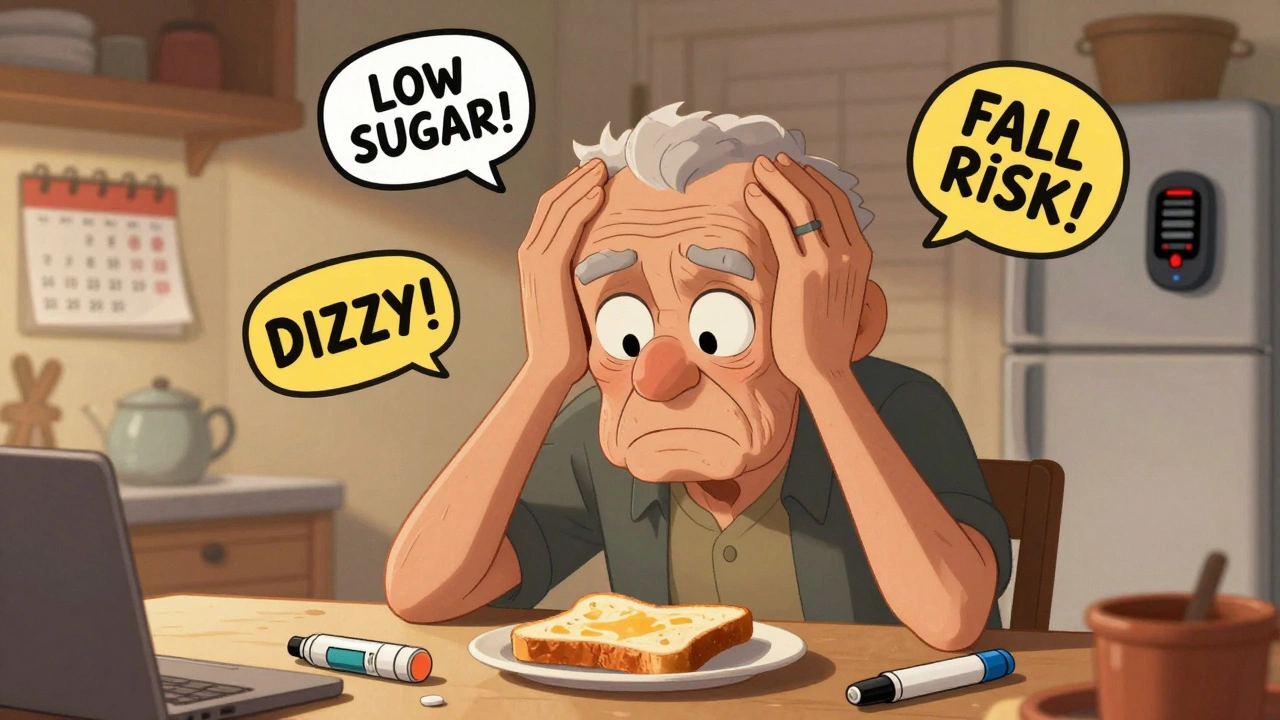
When blood sugar drops below 70 mg/dL, it’s called hypoglycemia. For younger people, it might mean a quick snack and a few minutes to recover. But for older adults, especially those with diabetes, a low blood sugar episode can mean a fall, a trip to the ER, or even a stroke. The truth is, hypoglycemia in seniors isn’t just inconvenient-it’s dangerous, and it’s happening far more often than most people realize.
Why Older Adults Are at Higher Risk
Older adults don’t respond to low blood sugar the way younger people do. Their bodies don’t release epinephrine or glucagon the same way, which means the usual warning signs-sweating, shaking, heart racing-often don’t show up until blood sugar is already dangerously low, sometimes below 50 mg/dL. About 25% of older adults with type 1 diabetes and 15-20% with type 2 diabetes lose these early warning signals entirely. This is called hypoglycemia unawareness, and it’s one of the biggest hidden dangers.It’s not just about biology. Many seniors take multiple medications for heart disease, high blood pressure, or kidney problems. When you add diabetes drugs like insulin or sulfonylureas into the mix, the risk of a low blood sugar event skyrockets. One study found that seniors with chronic kidney disease are nearly three times more likely to have a severe hypoglycemic episode than those with normal kidney function.
And it’s not always obvious. A senior might seem confused, tired, or even a little irritable. Family members might think it’s just aging-or dementia. But these are classic signs of low blood sugar in older adults. Research shows 40-60% of hypoglycemic episodes in seniors go unreported because the symptoms are mistaken for something else.
The Real Costs of a Low Blood Sugar Episode
A single severe hypoglycemia event in an older adult doesn’t just cost money-it costs mobility, independence, and sometimes life.Each episode increases the risk of a fall by 40%. That fall can lead to a broken hip, which often means surgery, months of rehab, and a permanent loss of independence. The risk of a heart attack or stroke also jumps by 30% after a low blood sugar episode. A five-year study of 782 older adults with diabetes found those who had severe hypoglycemia were 2.5 times more likely to die during the study period. Even after adjusting for other health problems, the risk stayed elevated.
It’s not just physical. Repeated low blood sugar episodes are linked to faster cognitive decline. Seniors who experience hypoglycemia are 1.8 times more likely to develop new memory problems or confusion within just two years. For someone already dealing with early dementia, a low blood sugar episode can accelerate the loss of daily skills-like remembering to eat, take meds, or call for help.
And the financial burden is huge. In the U.S., hypoglycemia sends about 100,000 older adults to the emergency room each year. Each hospital visit averages $1,200 in costs. With over 25% of Americans over 65 having diabetes, this isn’t a small problem-it’s a growing crisis.
Medications That Increase the Risk
Not all diabetes drugs are created equal when it comes to hypoglycemia risk. Some are far more dangerous for older adults than others.Long-acting sulfonylureas like glyburide are among the worst offenders. The American Geriatrics Society Beers Criteria lists glyburide as a potentially inappropriate medication for seniors because it stays in the body too long, increasing the chance of a low blood sugar episode-even if the person skips a meal or is less active than usual. Studies show glyburide causes 50% more severe lows in older adults than shorter-acting alternatives like glipizide.
Insulin, especially if dosed too high or not adjusted for changing activity levels or kidney function, is another major trigger. Many seniors are on insulin regimens designed for younger patients with tighter blood sugar goals. That’s a recipe for trouble.
On the flip side, newer medications like SGLT2 inhibitors (e.g., empagliflozin) and GLP-1 receptor agonists (e.g., semaglutide) have a much lower risk of causing hypoglycemia, especially when used without insulin or sulfonylureas. For many older adults, switching from glyburide to one of these safer options can cut hypoglycemia risk in half.
What a Prevention Plan Actually Looks Like
There’s no one-size-fits-all fix. A good prevention plan is personal, practical, and built around the individual’s health, lifestyle, and goals.Step 1: Review every medication. A doctor should look at every pill the senior takes-not just diabetes drugs. Some blood pressure meds, antibiotics, and even herbal supplements can increase hypoglycemia risk. The goal isn’t to eliminate all diabetes meds-it’s to remove the ones that are most dangerous and replace them with safer options.
Step 2: Set realistic blood sugar goals. The American Diabetes Association now recommends different A1c targets based on health status. For a healthy, active 70-year-old, an A1c under 7% might be fine. For someone with multiple chronic conditions, dementia, or limited life expectancy, an A1c under 8.5% is safer. Tight control isn’t always better-it can be deadly.
Step 3: Use continuous glucose monitoring (CGM). CGM devices like the Dexcom G7 or FreeStyle Libre 3 can alert caregivers when blood sugar drops, even if the senior doesn’t feel anything. They’re especially helpful for people with hypoglycemia unawareness. But only about 15% of older adults use them, mostly because of cost and lack of provider support. Medicare now covers CGM for insulin users, but many seniors on sulfonylureas are left out-even though they’re at just as much risk.
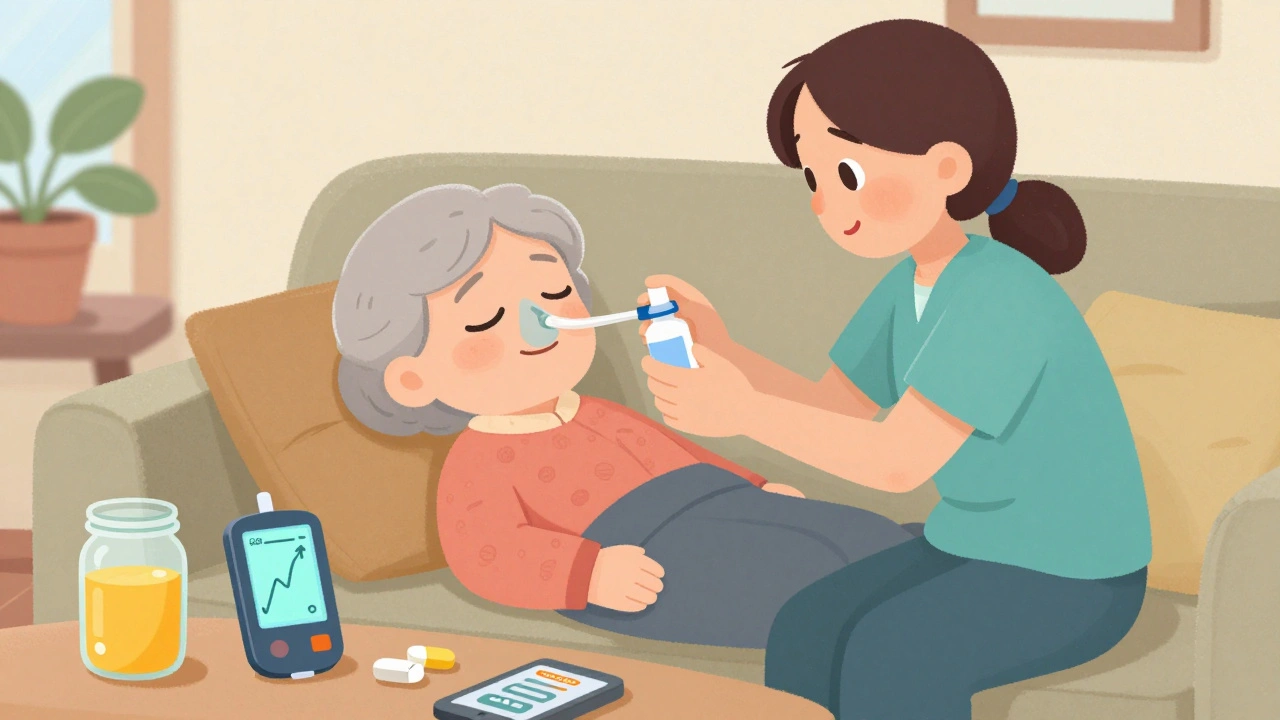
Step 4: Train caregivers and family members. Many seniors live alone or with spouses who are also aging. A caregiver needs to know the signs of low blood sugar, how to check blood glucose, and how to give glucagon. The new nasal glucagon spray is a game-changer-it doesn’t require an injection, and even someone with shaky hands can use it. One caregiver said it saved her mother’s life when she couldn’t swallow juice.
Step 5: Build a routine around meals and activity. Skipping meals, drinking alcohol on an empty stomach, or suddenly walking more than usual can trigger lows. Seniors should aim to eat small, consistent meals throughout the day. Keeping fast-acting carbs (like glucose tablets or juice boxes) in the kitchen, car, and bedside drawer is a simple but powerful step.
What Works in Real Life
A study in Pottstown, Pennsylvania, showed that a simple three-visit plan over six months reduced the number of seniors at high risk for hypoglycemia by 46%. Doctors reviewed medications, adjusted insulin doses, and educated patients and families. A1c levels barely changed-up by only 0.3%-but severe lows dropped dramatically.One 82-year-old man with dementia and type 2 diabetes was on 40 units of insulin daily and had weekly lows. His doctor cut his insulin in half and switched him from glyburide to a GLP-1 medication. Within a month, he stopped having lows. His A1c stayed at 7.8%. His family said he was more alert, more engaged, and no longer afraid to walk to the kitchen alone.
Another woman, 78, broke her hip after a low blood sugar episode while walking to get juice. After that, her daughter installed a CGM and started checking her blood sugar before bed. Within weeks, the nighttime lows stopped. She hasn’t fallen since.
What to Do Right Now
If you’re caring for an older adult with diabetes, here’s what you can do today:- Check their medication list. Is glyburide on it? Ask the doctor if it can be switched to glipizide or another safer option.
- Ask if they’ve ever had a low blood sugar episode they didn’t recognize. If yes, request a CGM evaluation.
- Make sure they have glucagon-preferably the nasal spray-within reach at all times.
- Keep juice boxes, glucose tablets, or hard candy in places they frequent: the bedroom, the car, the bathroom.
- Set up a daily check-in with a family member or neighbor to make sure they’ve eaten and are feeling okay.
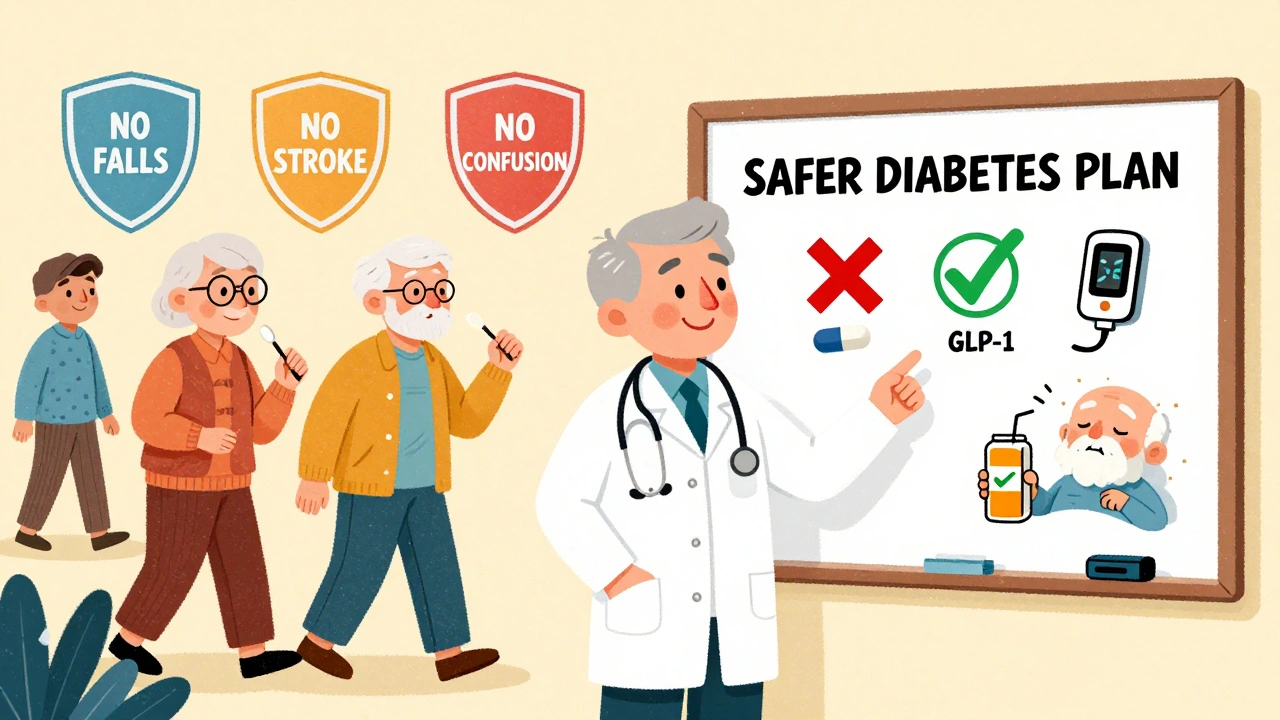
Diabetes management in older adults isn’t about hitting a number. It’s about staying safe, staying independent, and staying alive. Lowering blood sugar too hard can do more harm than good. The goal isn’t perfection-it’s protection.
Frequently Asked Questions
Can hypoglycemia cause dementia in older adults?
Hypoglycemia doesn’t directly cause dementia, but repeated low blood sugar episodes can accelerate cognitive decline. Each episode deprives the brain of glucose, which can damage neurons over time. Studies show seniors with frequent hypoglycemia are nearly twice as likely to develop new memory problems or confusion within two years. This is especially dangerous for those already showing early signs of dementia.
Is glyburide safe for seniors with diabetes?
No, glyburide is not considered safe for most older adults. It’s a long-acting sulfonylurea that stays in the body too long, increasing the risk of severe hypoglycemia-even when meals are skipped or activity levels change. The American Geriatrics Society explicitly lists it as a potentially inappropriate medication for seniors. Safer alternatives like glipizide, sitagliptin, or GLP-1 medications are preferred.
Should older adults with diabetes use continuous glucose monitors (CGM)?
Yes, especially if they have hypoglycemia unawareness, take insulin or sulfonylureas, or live alone. CGMs can alert caregivers to low blood sugar before symptoms appear, preventing falls and emergencies. Even though Medicare only covers CGMs for insulin users, many seniors on sulfonylureas are at equal risk and should still be evaluated for CGM use. Studies show CGM reduces hypoglycemia by 40% in older adults.
What’s the best way to treat a low blood sugar episode in an older adult who can’t swallow?
If an older adult is confused, unconscious, or unable to swallow, do not give them juice or food by mouth-it can cause choking. Use nasal glucagon spray immediately. It’s easy to use, requires no injection, and works within minutes. Keep it accessible at all times. After administering glucagon, call emergency services. Even if the person wakes up, they still need medical evaluation.
How low should blood sugar go before calling for help?
If blood sugar drops below 54 mg/dL, it’s considered a Level 2 hypoglycemia event and requires immediate action. If it’s below 50 mg/dL and the person is confused, unresponsive, or having trouble moving, treat it as a medical emergency. Call 911 or administer glucagon right away. Don’t wait for symptoms to worsen.
Can reducing diabetes medication make blood sugar worse?
It’s a common fear, but reducing the wrong medication often improves overall health. Many seniors are on too much insulin or glyburide, leading to dangerous lows. When doctors adjust doses or switch to safer drugs, blood sugar becomes more stable. A1c may rise slightly-by 0.3% on average-but the number of severe lows drops by half or more. Safety matters more than a perfect A1c number in older adults.
Next Steps for Caregivers and Clinicians
If you’re a family caregiver: Start by listing every medication your loved one takes. Cross-check them with the Beers Criteria list of potentially inappropriate drugs for seniors. Ask the doctor: "Is this medication safe for someone with my parent’s health conditions?" If glyburide is on the list, ask about alternatives.If you’re a clinician: Use the TRIM-HYPO survey to understand how hypoglycemia affects your patient’s quality of life. This helps patients see why reducing medication isn’t giving up-it’s gaining safety. Offer CGM referrals even if the patient isn’t on insulin. And always set individualized A1c goals-never a one-size-fits-all target.
Hypoglycemia in older adults isn’t inevitable. It’s preventable. But it requires awareness, action, and a shift in mindset-from chasing perfect numbers to protecting real lives.


Comments (8)