

Imagine looking at a streetlight at night and seeing not one bright dot, but a starburst of streaks, halos, and ghost images. For people with keratoconus, this isn’t a trick of the light-it’s their everyday reality. The cornea, the clear front surface of the eye, starts to thin and bulge outward into a cone shape. This isn’t just blurry vision. It’s distorted, unpredictable, and often doesn’t fix itself with regular glasses. The good news? rigid contact lenses can completely change that. They don’t cure keratoconus, but they restore clear vision for most people, often for decades.
What Actually Happens in Keratoconus?
Keratoconus isn’t a disease you catch. It’s a structural breakdown. The cornea, normally smooth and dome-shaped, begins to weaken. Enzymes in the tissue start breaking down collagen fibers faster than the body can replace them. This leads to progressive thinning, usually starting in the teens or early 20s. The center of the cornea pushes forward, forming a cone. This shape change bends light in weird ways, causing blurry vision, glare, and double images. It often affects both eyes, but one eye usually gets worse faster. The progression slows down by the time most people hit their 40s. But while it’s active, vision can deteriorate quickly. By the time someone notices their glasses aren’t helping anymore, the cornea may already be significantly distorted. That’s why early diagnosis matters. Specialized corneal topography scans can detect these subtle shape changes before symptoms become severe.Why Regular Glasses and Soft Contacts Don’t Work
Regular prescription glasses correct simple nearsightedness or astigmatism. But keratoconus creates an irregular, uneven surface. Think of it like trying to focus a camera through a warped lens. No matter how you adjust the prescription, the image stays fuzzy. Soft contact lenses, which conform to the shape of the eye, just follow the cornea’s irregular curve. They can’t smooth it out. So even the best soft lenses often leave people with vision that’s still blurry, especially in low light or when reading fine print. That’s where rigid lenses step in. Unlike soft lenses, they don’t bend to match the cornea. They hold their shape. And that’s exactly what makes them work.How Rigid Lenses Fix the Problem
Rigid gas permeable (RGP) lenses, hybrid lenses, and scleral lenses all work the same way: they create a new, perfectly smooth optical surface over the irregular cornea. Think of them as a clear, hard contact lens that acts like a new, flawless cornea. Light enters through this smooth surface and focuses correctly on the retina. The result? Vision jumps from 20/400 to 20/200 or better in many cases. RGP lenses are small-about 9 to 10 millimeters in diameter. They sit directly on the cornea. They’re made from materials that let oxygen pass through, so the eye stays healthy. But they’re not for everyone. In advanced cases, where the cornea is too steep or scarred, RGP lenses can feel uncomfortable or won’t stay centered. That’s where scleral lenses come in. These are bigger-15 to 22 millimeters-and they vault over the entire cornea, landing on the white part of the eye (the sclera). Between the lens and the cornea is a reservoir of saline solution. This fluid layer doesn’t just improve vision-it protects the sensitive, irregular cornea. For people with severe keratoconus, scleral lenses are often the only way to get comfortable, stable vision. Studies show they work for 85% of advanced cases, compared to 65% for RGP lenses.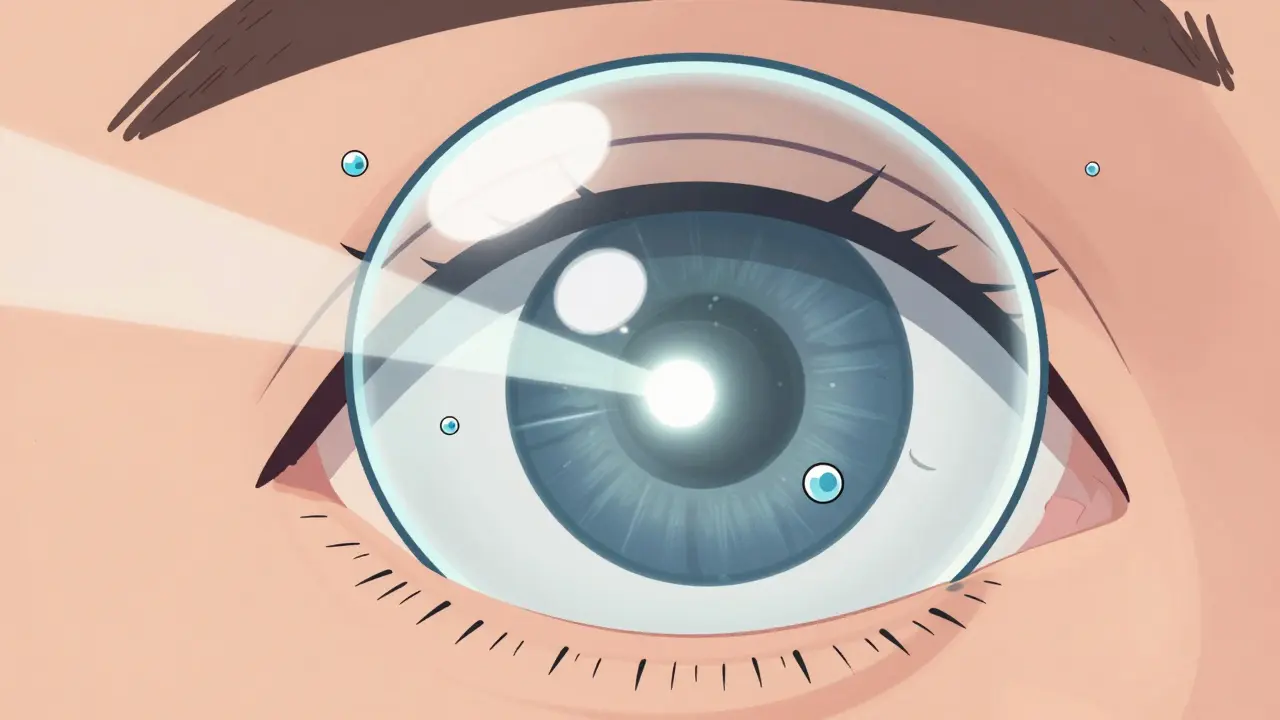
How They Compare to Other Treatments
Many people hear about corneal cross-linking (CXL) and assume it’s a cure. It’s not. CXL strengthens the cornea’s collagen fibers using UV light and riboflavin. It stops the thinning from getting worse. But it doesn’t fix the shape that’s already changed. So after CXL, most patients still need rigid lenses to see clearly. In fact, 78% of eye specialists now recommend doing both together-CXL to halt progression, and rigid lenses to restore vision. INTACS are tiny plastic inserts placed in the cornea to flatten the cone. They help a bit, but 35 to 40% of patients still need rigid lenses afterward. Corneal transplants are a last resort. About 10 to 20% of people with keratoconus end up needing one, usually because lenses no longer fit or the cornea is too scarred. But transplants come with risks: rejection, infection, and a recovery that can take over a year. Even after a transplant, many people still need rigid lenses to get the sharpest vision. Rigid lenses aren’t perfect. They require effort. But they’re the most effective non-surgical option for most people.The Learning Curve: What to Expect When You Start
Getting fitted for rigid lenses isn’t a one-time visit. It takes time. You’ll likely need three to five appointments over six weeks. The fitter uses detailed corneal maps to choose the right lens design. You’ll try on different types-RGP first, then scleral if needed. Adapting takes patience. Most people start with just two to four hours a day. You add an hour or two each day. Within two to four weeks, 85% of people can wear them full-time. The first few days? Uncomfortable. About 45% feel like there’s something in their eye. 38% notice the lens is there all the time. Inserting and removing them feels awkward at first. But the payoff is real. People report sharper vision, less glare, and fewer headaches. One patient in Sydney told me she could read her phone again after years of struggling. Another said she stopped avoiding night driving. These aren’t just improvements-they’re life changes.Common Problems and How to Solve Them
Not every fit works perfectly. Lens fogging happens in 25% of users, especially in humid weather. The fix? Switching to a preservative-free rewetting drop or changing the cleaning solution. Lens decentration-when the lens shifts off-center-is another issue. It’s often fixed by tweaking the lens curve or size. Dry eyes can make things worse. If your eyes feel gritty or red, your fitter might recommend a different lens material or a tear film supplement. Solution sensitivity affects about 10% of users. Switching to a preservative-free solution usually helps. And yes, there are failure cases. About 12% of advanced keratoconus patients can’t get a lens to stay centered. Another 8 to 10% have chronic dry eye that makes lens wear unbearable. That’s when transplants or newer options like topography-guided custom lenses come into play.
What’s New in Rigid Lens Technology
The field is moving fast. In 2023, the FDA approved the first digital manufacturing process for scleral lenses. Now, lenses are designed from 3D scans of your cornea-down to the micrometer. This means better fit, faster, with fewer trial lenses. New materials now offer oxygen permeability (Dk) values over 200, far higher than older lenses. That means less risk of corneal swelling, even with long wear. Brands like Contex and Alden Optical are leading this shift. And the market is growing. Around 1 in 2,000 people have keratoconus. In the U.S., 60 to 70% of them use rigid lenses as their main vision correction. That’s over 100,000 people relying on them daily. Specialty centers like BostonSight’s PROSE clinics now number around 350 across the country.Final Thoughts: Rigid Lenses as Lifelines
Keratoconus doesn’t have a cure. But rigid lenses are the closest thing to one. They don’t stop the disease. But they restore the ability to see clearly, to drive, to work, to live without constant visual frustration. For most people, they’re the first and best step. For many, they’re the only step they’ll ever need. If you’ve been told your glasses aren’t working anymore, don’t give up. See a cornea specialist. Get a topography scan. Try a rigid lens fitting. The difference between seeing blurry and seeing sharp isn’t just about vision. It’s about confidence, independence, and reclaiming your life.Can keratoconus be cured with rigid contact lenses?
No, rigid contact lenses don’t cure keratoconus. They don’t stop the cornea from thinning. But they do correct the vision problems caused by the irregular shape. For most people, they restore clear, stable vision. To actually stop the disease from progressing, corneal cross-linking (CXL) is needed. Many patients use both treatments together-CXL to halt progression and rigid lenses to see clearly.
Are scleral lenses better than RGP lenses for keratoconus?
It depends on the stage of the disease. For early to moderate keratoconus, RGP lenses often work well and are easier to fit. For advanced cases-where the cornea is very steep, scarred, or sensitive-scleral lenses are usually better. They vault over the cornea, creating a fluid cushion that improves comfort and vision. Success rates are higher: 85% for scleral lenses in stage III-IV cases, compared to 65% for RGP lenses. But scleral lenses are more expensive and require more expertise to fit.
How long does it take to get used to rigid contact lenses?
Most people adapt within two to four weeks. You start by wearing them just a few hours a day, then gradually increase the time by one or two hours daily. Initial discomfort is normal-about 45% of new wearers feel a foreign body sensation. But after a few weeks, 85% of patients report comfortable full-time wear. The key is patience and following your fitter’s instructions.
Do rigid lenses stop keratoconus from getting worse?
No, rigid lenses don’t stop progression. They only correct vision. The thinning and bulging of the cornea continue unless treated with corneal cross-linking (CXL). CXL uses UV light and eye drops to strengthen the corneal structure. Studies show it halts progression in 90 to 95% of cases. That’s why experts recommend combining CXL with rigid lenses: one treats the cause, the other treats the symptom.
What are the risks of wearing rigid contact lenses for keratoconus?
The main risks are related to fit and hygiene. Poorly fitted lenses can scratch the cornea or cause irritation. Not cleaning them properly increases the risk of infection. Dry eyes can make wear uncomfortable. About 10% of users have sensitivity to lens solutions. Lens fogging and decentration are common but usually fixable with adjustments. Serious complications like corneal ulcers are rare if you follow your eye care provider’s instructions for cleaning, wearing time, and checkups.
How often do I need to replace rigid contact lenses?
Rigid lenses typically last one to two years, depending on how well you care for them. Scleral lenses may last longer because they’re made from more durable materials. But if your keratoconus progresses and your cornea shape changes, you may need a new lens sooner. Your eye care provider will monitor your fit at each visit and recommend replacement when needed. Never wear lenses beyond their recommended lifespan-they can warp or become less oxygen-permeable.
Can I still have LASIK if I have keratoconus?
No. LASIK and other laser vision correction surgeries are absolutely not safe for people with keratoconus. These procedures remove corneal tissue, which weakens the structure even more. Doing LASIK on a cornea already thinning from keratoconus can lead to rapid, severe vision loss. In fact, it’s considered a contraindication. If you have keratoconus, your only options are rigid contact lenses, corneal cross-linking, INTACS, or transplant-not laser surgery.


Comments (14)