
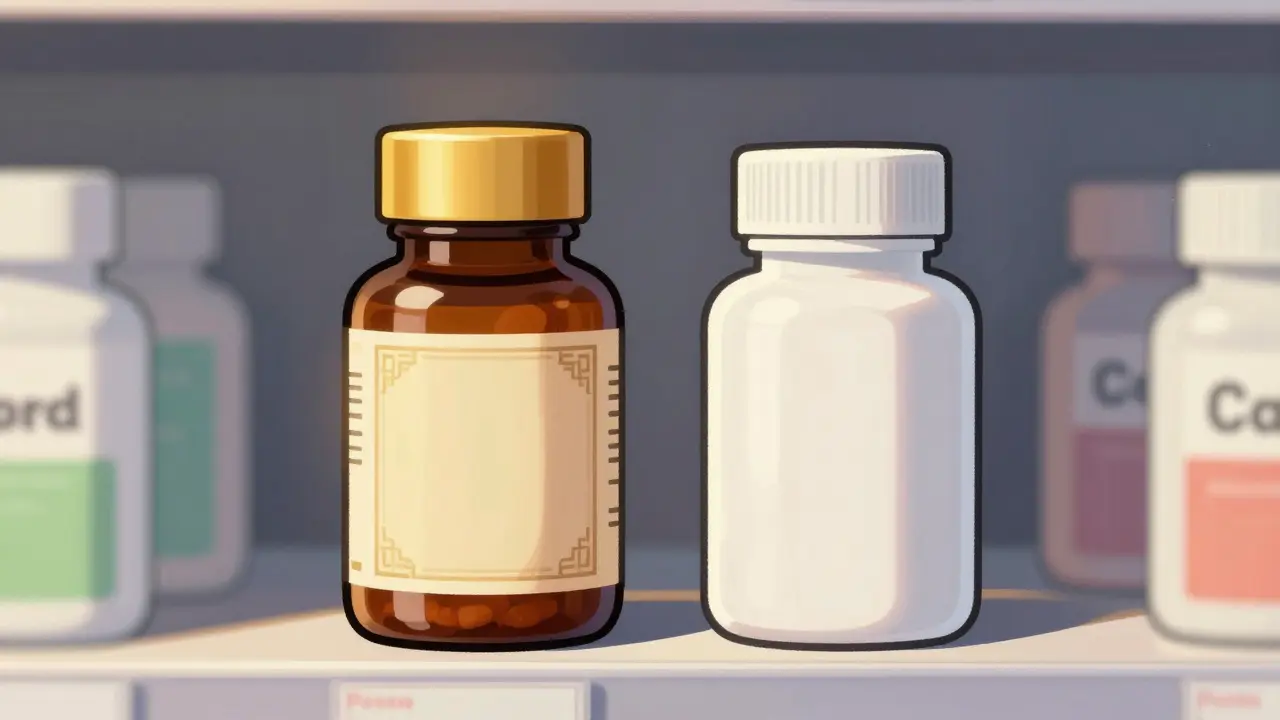
You walk into a pharmacy and see two bottles side-by-side. One costs fifty dollars, the other costs four. They contain the same active ingredient. Why is the price tag so different? Most people assume it comes down to marketing or greed, but the real story lies in how many hands touch the product before it reaches your counter.
The pharmaceutical industry operates on fundamentally different math when making generic drugs versus brand-name medicines. While no single invoice itemizes every hour spent by a worker, deep analysis of industry benchmarks reveals a massive gap in labor allocation. For brand-name drugsare pharmaceutical products developed by innovator companies that hold patent protection and typically have higher manufacturing costs due to complex regulatory pathways and initial production requirements., labor represents a significant chunk of the budget during early phases. In contrast, generic manufacturers run streamlined operations designed to maximize efficiency.
The Real Breakdown of Manufacturing Costs
When we look at where the money actually goes, the disparity becomes clear. According to comprehensive industry analysis, only about thirty-six dollars out of every hundred spent on a generic drug covers actual production and manufacturing costs. Within that slice, direct production expenses-including the labor required to mix, test, and package the medicine-take up a smaller portion than you might expect. However, the composition of those costs differs wildly depending on whether a company holds the original patent or is producing a copycat version once patents expire.
For brand-name producers, the labor equation changes because they are managing a much more complex lifecycle. Data suggests that labor accounts for roughly 30% to 40% of total manufacturing costs when launching a new brand-name drug initially. This includes highly specialized staff required for development, validation, and setting up the initial production lines. Once established, these costs stabilize, but the initial burden remains high. Generics skip this discovery phase entirely, which allows them to allocate labor differently. Their teams focus on speed and volume rather than creating new chemical entities from scratch.
Risk and Research: Where Brand Labor Goes
You need to understand why brand companies pay more per person-hour during creation. Developing a new molecular entity is a long game. It takes decades on average-from the initial spark of an idea to the moment a regulator approves it for sale. That process involves thousands of hours of skilled labor. Scientists, lab technicians, and compliance officers spend years testing for safety and efficacy. When a brand launches, they haven't just paid for the pill itself; they've paid for the labor of finding that pill.
This creates a huge upfront investment. Reports indicate the average cost to bring a new drug to market exceeds two billion dollars, spread over ten to fifteen years. Generic manufacturers do not carry this debt. Their labor force isn't paying for failed experiments or clinical trials. Instead, their workforce focuses on replicating a formula that already works. This shift means the generic workforce can operate with less specialized training requirements in some areas, though quality control remains just as strict.
| Cost Component | Brand-Name Production (Initial Phase) | Generic Production |
|---|---|---|
| Labor Share of COGS | 30% - 40% | 15% - 25% |
| R&D Burden | High (Discovery & Trials) | Low (Replication Focus) |
| Volume Efficiency | Fixed Cost Heavy | Highly Scalable |
| Geographic Strategy | Diverse Locations | Often Consolidated (Asia) |
The Power of Volume and Scale
One of the biggest drivers of labor cost reduction in the generic market is simple volume. When a factory produces millions of units, the work required to make each individual pill drops significantly. A benchmark study found that generic manufacturers achieve a substantial drop in unit costs every time production volume doubles. Specifically, they saw a 27% reduction in cost when output doubled. This efficiency ripple effect hits labor hard. You don't need twice as many workers to make twice the pills if the machines run continuously.
This is where economies of scale kick in. If a facility makes one batch of ten thousand pills, the overhead per pill is massive. Make a million batches, and that labor cost spreads thin. Brand-name drugs often start small because they are new to the market. Generics enter the market when demand is already proven. They can plan their staffing levels knowing exactly how many units the market will absorb, avoiding the idle labor costs associated with building capacity for a future that might never happen.
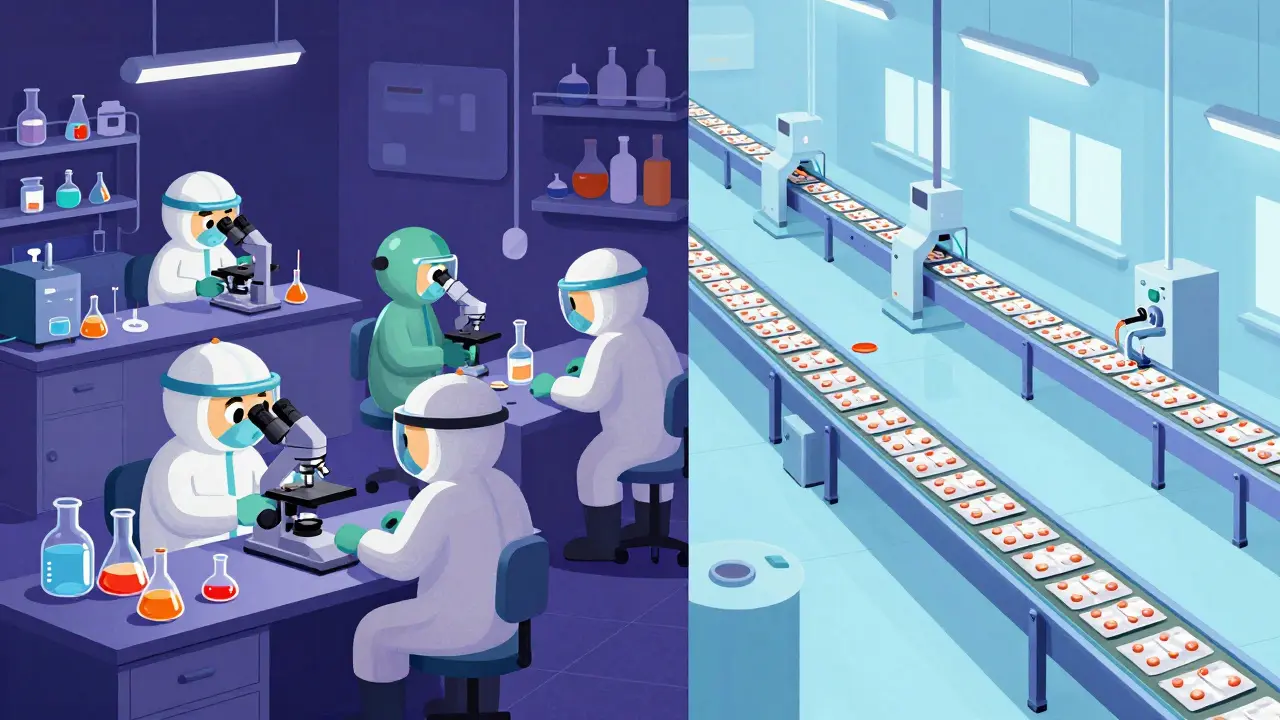
Where Are the Pills Made?
Geography plays a huge role in the sticker price you see at the register. The location of your medicine's factory determines the wage rates involved in its creation. Research shows that producing Active Pharmaceutical Ingredients (APIs)-the core chemicals that do the healing-in countries like India or China can be roughly forty percent cheaper than doing it in domestic facilities.
This doesn't mean the workers are working harder; it reflects broader labor market dynamics and subsidies in those regions. However, it directly impacts the overall labor cost profile of the final product. Generic manufacturers frequently utilize these lower-cost international hubs to manufacture APIs. Then, they ship them back to finished dosage sites for packaging. This separation of processes allows them to optimize labor spending at each step. By contrast, brand manufacturers often maintain integrated facilities to protect proprietary technology, which keeps their internal labor costs higher regardless of geographic location.
The Hidden Burden of Quality Control
Don't think for a second that cheap generics cut corners on safety. In fact, quality assurance can consume more than twenty percent of total production costs for generic drugs. This is a major labor expense. Every batch of raw materials gets tested. Every mixture gets checked. And the documentation process is exhaustive. If a batch fails a test, it gets destroyed. That wasted labor adds up fast.
Regulatory bodies require meticulous records to prove that every bottle coming off the line meets safety standards. A single firm might spend hundreds of thousands of dollars annually just on maintaining compliance systems. This is a hidden layer of labor costs. You aren't seeing it in the manufacturing time of the pill, but you are seeing it in the salaries of the quality assurance analysts who sign off on the paperwork. For medium-sized firms, maintaining these systems alone costs significantly, adding pressure to find efficiencies elsewhere. Interestingly, investing more in prevention-like better training for staff-often saves money later by reducing rework. Companies that train workers well see fewer deviations and faster release times, lowering the total cost of production in the long run.

Outsourcing the Workforce
A growing trend is changing how companies handle labor entirely. Many generic manufacturers are turning to Contract Manufacturing Organizations (CMOs). Instead of hiring their own factory staff, they pay another company to make the pills for them. This shifts labor from a fixed cost to a variable cost. If demand spikes, the contract manufacturer ramps up without the generic company needing to hire permanent staff immediately.
Data indicates that businesses making biosimilar drugs spend a higher percentage of their costs on external manufacturing compared to those making standard small-molecule drugs. This flexibility helps generic companies manage labor risks. They avoid the overhead of firing and hiring based on seasonal fluctuations. It also means they can access specialized equipment without buying the assets themselves. This strategy effectively lowers the barrier to entry for new generic competitors, increasing competition and driving prices down further for the consumer.
Competition Drives Price Pressure
Finally, the market dictates the cost. When just one generic competitor enters the space, prices drop significantly. As more competitors join, the price continues to fall. This creates intense pressure on every dollar of the cost structure, including labor. Manufacturers feel the squeeze. If they can't produce efficiently enough to undercut the price set by the next competitor, they lose the contract. This forces continuous innovation in labor management.
There is a delicate balance here, though. Industry reports warn that excessive cost-cutting could risk supply stability. If companies slash labor too deeply to win bids, they might compromise quality or cause shortages. Regulatory agencies watch this closely, noting that while lower costs benefit consumers, they create pressure to adopt strategies that could threaten supply reliability. The goal is always to maintain safety while optimizing the workforce.
Frequently Asked Questions
Are generic drugs cheaper just because labor is cheaper?
Not exactly. While labor is a factor, the main reason is that generics avoid the massive Research and Development costs that brand companies face. Plus, generic production benefits from economies of scale and simpler regulatory pathways since the drug's safety is already proven.
Does lower labor cost mean lower quality?
No. Regulatory agencies enforce strict quality standards for both brand and generic drugs. In fact, quality control is a major labor cost for generics. Savings come from efficiency and lack of R&D debt, not cutting corners on safety tests.
Why does geography affect the price of my medication?
Production locations matter because labor laws and wages vary globally. Many APIs are produced in regions with different cost structures. This affects the overall price passed to the pharmacy, though final retail prices depend on many factors including insurance coverage.
What is the role of Contract Manufacturing Organizations?
CMOs allow drug companies to outsource production tasks. This turns fixed labor costs into variable costs, helping companies manage demand fluctuations without the overhead of maintaining a large internal permanent workforce year-round.
How much of a drug cost is actually labor?
It varies. For generics, labor is typically 15-25% of total manufacturing costs. For brand-name drugs in their initial production phases, this can range from 30-40%. The remaining costs cover raw materials, supply chains, overhead, and compliance.


Comments (8)