
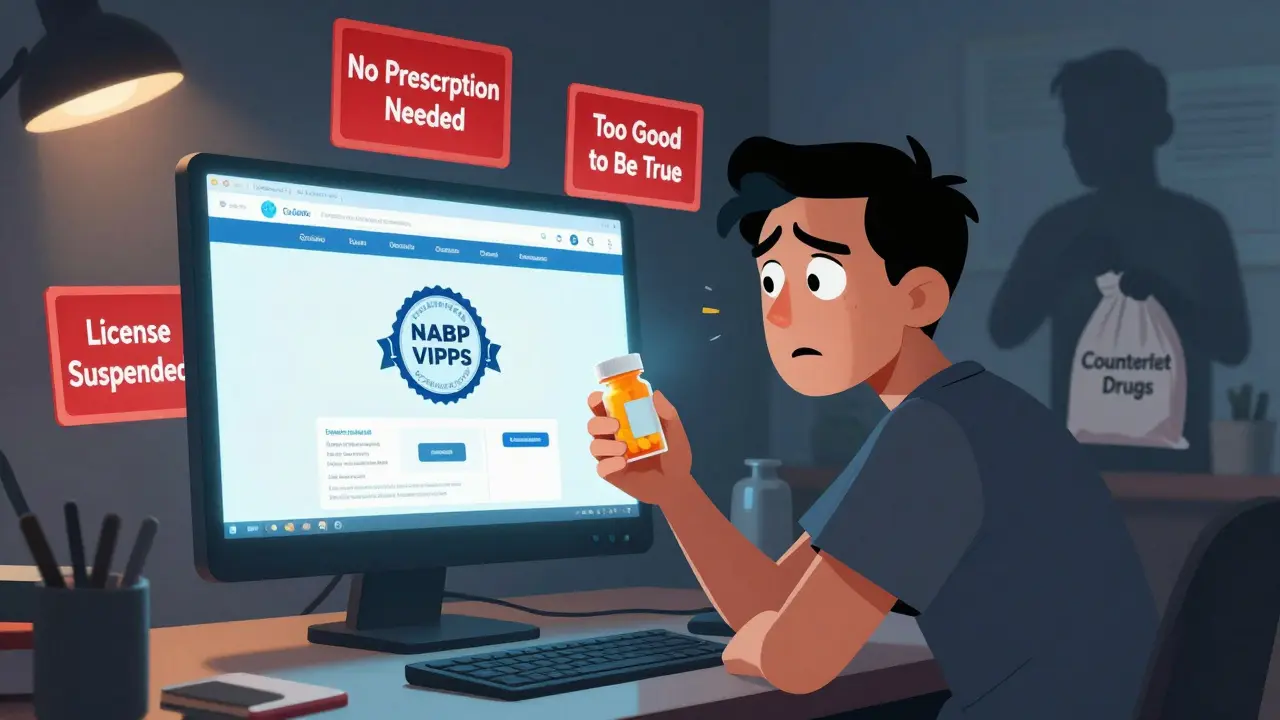
Every year, millions of people in the U.S. buy medications online. Some are looking for lower prices. Others need access to hard-to-find prescriptions. But behind the convenience lies a quiet danger: counterfeit drugs. The FDA estimates that 1% to 3% of the $575 billion U.S. prescription drug market comes from unlicensed, illegitimate pharmacies. That’s between $5.75 billion and $17.25 billion in fake, dangerous, or ineffective medications circulating every year. And it’s not just happening overseas - many fake pharmacies operate right from U.S. soil, using professional-looking websites and fake licenses to trick consumers.
What Makes a Pharmacy Licensed?
A licensed pharmacy isn’t just a business with a storefront or a website. It’s a regulated health care provider that must meet strict state and federal standards. Each state has its own Board of Pharmacy that issues licenses. To get one, a pharmacy must prove it has qualified pharmacists, secure storage for medications, proper record-keeping, and a system to prevent drug diversion. Pharmacists must pass the North American Pharmacist Licensure Examination (NAPLEX), scoring at least 75 out of 150, and often take a state-specific law exam like California’s CPJE.These aren’t just paperwork checks. Licensed pharmacies are inspected. Their staff is background-checked. Their supply chains are tracked. If a pharmacy sells controlled substances like oxycodone or Adderall, it must register with the DEA and follow strict dispensing rules. A pharmacy without a license can’t legally dispense prescription drugs - and if it does, it’s breaking the law.
How to Check If a Pharmacy Is Legitimate
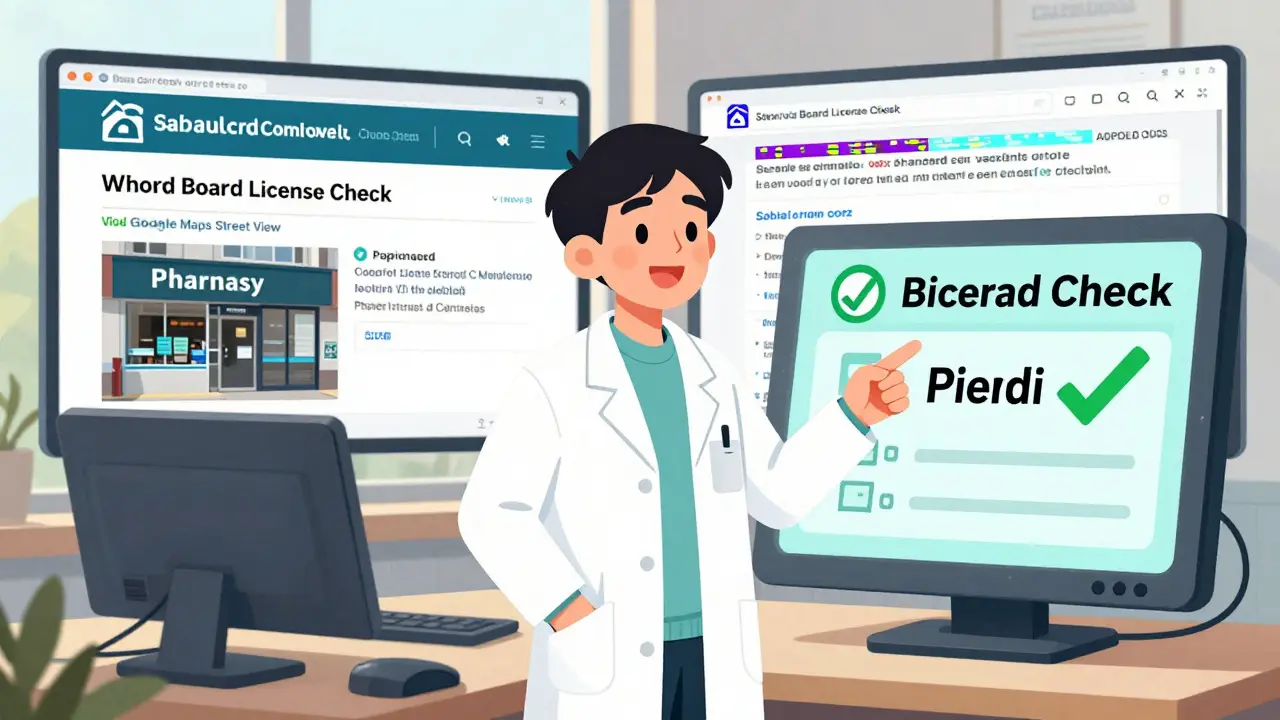
You don’t need a degree in pharmacy to verify a pharmacy’s legitimacy. You just need to know where to look. Here’s how to do it in under five minutes:- Find the state pharmacy board website - Every state has one. Search for “[Your State] Board of Pharmacy.” For example, in California, it’s www.pharmacy.ca.gov. In Florida, it’s flhealthsource.gov.
- Use the license lookup tool - Enter the pharmacy’s name or the pharmacist’s name. Don’t include prefixes like “Pharm.” or “Rx.” Just the exact name or license number. In California, the system will tell you if the license is active, expired, suspended, or under investigation.
- Look for the NABP VIPPS seal - The Verified Internet Pharmacy Practice Sites (VIPPS) program, run by the National Association of Boards of Pharmacy, certifies online pharmacies that meet U.S. standards. The seal should link to a real verification page on the NABP site. If clicking it leads to a dead link or a generic homepage, it’s fake.
- Check for a physical address and phone number - Legitimate pharmacies list a real, verifiable address. Use Google Maps Street View to confirm the building exists and looks like a pharmacy. Call the number. If you get an answering machine or no one answers, that’s a red flag.
- Never buy from pharmacies that don’t require a prescription - If a website lets you buy Viagra, insulin, or antibiotics without a doctor’s order, it’s illegal. Period. The Ryan Haight Act of 2008 made it a federal crime to sell controlled substances online without a valid prescription.
According to a 2023 University of Florida study, 92% of consumers successfully verified a pharmacy’s legitimacy using state board websites - but 38% got confused by terms like “administrative suspension” or “inactive.” If you’re unsure, call the state board directly. They’re there to help.
The NABP Verify Program: A National Solution?
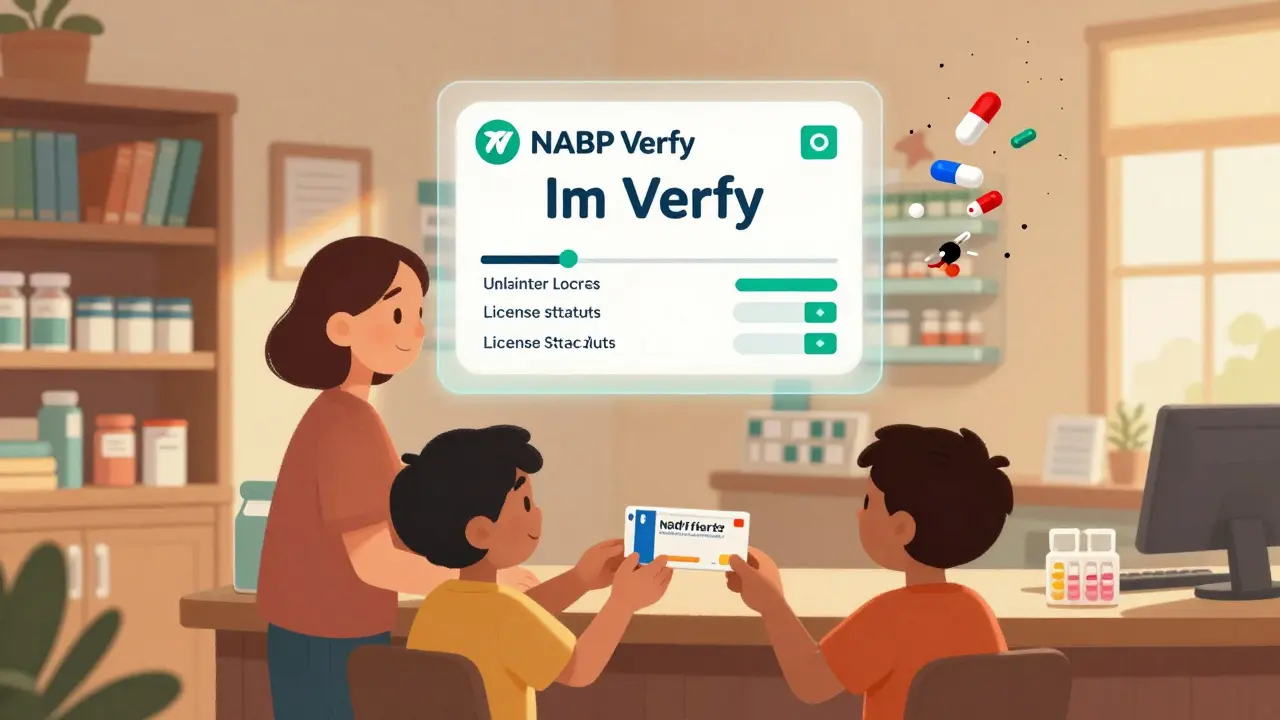
The National Association of Boards of Pharmacy (NABP) launched its Verify program in 2018 to make it easier to check licenses across state lines. Instead of visiting 50 different websites, you can search all participating states in one place. As of 2024, 43 states are fully integrated into the system, with real-time updates on license status.But it’s not perfect. The service costs $125 per year for pharmacists - and while it saves time for multi-state operators, single-state pharmacies argue it’s redundant. They’re already paying state renewal fees ranging from $100 in Texas to $409 in California. Some states, like Florida, offer free verification. Others, like California, charge $120 for written requests and take up to 30 days to respond.
For consumers, NABP Verify is still the most reliable national tool. It’s used by 68% of major prescription benefit managers (PBMs) to determine which pharmacies can join their networks. If a pharmacy isn’t in the NABP system, it’s likely not trustworthy.
What Happens When You Buy From a Fake Pharmacy?
The risks aren’t theoretical. In March 2024, a California woman named Maria Chen discovered her pharmacy’s pharmacist-in-charge had resigned - and no one was legally authorized to fill prescriptions. She caught it because she checked the state board’s website. If she hadn’t, she could have received pills with the wrong dosage, wrong ingredients, or no active drug at all.Counterfeit drugs have been found to contain:
- Paint, chalk, or rat poison instead of active ingredients
- Too much or too little of the actual drug
- Expired or degraded medications
- Unknown mixtures of other drugs
The FDA’s Operation Safety Script has shut down hundreds of fake websites since 2020. In one case, a consumer paid $850 for “generic Viagra” from a site with a fake NABP seal. The pills had no sildenafil - the active ingredient - and contained a banned chemical linked to heart attacks. That’s not a rare case. The FDA reports a 22% year-over-year increase in enforcement actions against unlicensed online pharmacies in 2023.
Why State Laws Vary - and Why It Confuses People
One of the biggest problems is inconsistency. In 17 states, pharmacists must submit fingerprint-based background checks (costing about $65.75 per person). In 12 states, online background checks are accepted at $35.25. Some states require a physical inspection of the pharmacy space. Others don’t. California now requires out-of-state pharmacies shipping to residents to offer an 800-number for pharmacist consultation. Florida doesn’t.This patchwork system makes it hard for consumers to know what’s normal. It also creates loopholes for bad actors. A fake pharmacy might use a license from a state with weak oversight, then ship nationwide. That’s why experts like Dr. Carmen Catizone of NABP say the system needs to evolve. “Pharmacies operating without proper licensure are 8.2 times more likely to be involved in controlled substance diversion,” she said in a 2023 webinar.
What You Can Do Today
Don’t wait for a national standard. Protect yourself now:- Always verify before you buy - even if the site looks professional.
- Use NABP’s LegitScript tool to screen online pharmacies - it flags 98.7% of illegitimate sites.
- When in doubt, go to a local pharmacy. Pharmacists are trained to spot counterfeit meds and can help you find affordable options.
- Report suspicious sites to the FDA’s MedWatch program or the NABP.
Legitimate pharmacies don’t hide. They welcome verification. If a pharmacy avoids questions, refuses to show a license, or pressures you to buy quickly, walk away. Your health isn’t worth the risk.
What’s Changing in 2024 and Beyond
The system is improving - slowly. In January 2024, NABP launched Phase 2 of its InterConnect system, allowing real-time license updates across 43 states. The FDA has allocated $15 million to detect and shut down fake online pharmacies by 2026. And 97% of state boards say they plan to expand verification tools.But experts warn that digital pharmacy models are evolving faster than regulations. Dr. Kevin T. Fuji of Pacific University points out that the average consumer spends just 2.7 minutes verifying a pharmacy - often missing key details. The goal isn’t to make verification harder. It’s to make it faster, simpler, and standardized.
By 2027, NABP predicts national licensure standards will emerge, cutting verification complexity by 60%. Until then, the responsibility falls on you. Don’t assume. Don’t guess. Verify.
How do I know if an online pharmacy is real?
Check for a valid state pharmacy license using your state’s Board of Pharmacy website. Look for the NABP VIPPS seal that links to a real verification page. Make sure the pharmacy requires a prescription, has a physical address you can verify on Google Maps, and offers a working phone number where you can speak to a pharmacist. If any of these are missing, it’s likely fake.
Can I trust pharmacies that offer much lower prices?
Not necessarily. Legitimate pharmacies follow strict pricing rules and can’t sell prescription drugs below cost without violating regulations. If a price seems too good to be true - like $10 for a 30-day supply of insulin - it’s a red flag. Counterfeit drugs are often sold at low prices to attract buyers, then replaced with dangerous fillers. Always verify the license before buying.
What’s the difference between NABP Verify and VIPPS?
NABP Verify is a tool that checks if a pharmacy holds a valid license in any participating state. VIPPS is a certification program that says a pharmacy meets additional safety standards for online operations - including requiring valid prescriptions, having licensed pharmacists on staff, and maintaining secure systems. All VIPPS-certified pharmacies are verified, but not all verified pharmacies are VIPPS-certified.
Do I need to verify my local pharmacy too?
Yes. Even if a pharmacy has been around for years, licenses can be suspended or revoked. In 2024, a California pharmacy was found to be operating without a licensed pharmacist on-site for over six months - and customers didn’t know until someone checked the state database. Always confirm the license is active, especially if you’re starting a new prescription.
What should I do if I think I bought counterfeit medication?
Stop taking the medication immediately. Contact your doctor and pharmacist. Report the pharmacy to the FDA through MedWatch (medwatch.fda.gov) and to the NABP. Keep the packaging and any receipts. If you feel sick, seek medical help. Counterfeit drugs can cause serious harm - even death - and reporting helps protect others.


Comments (9)