
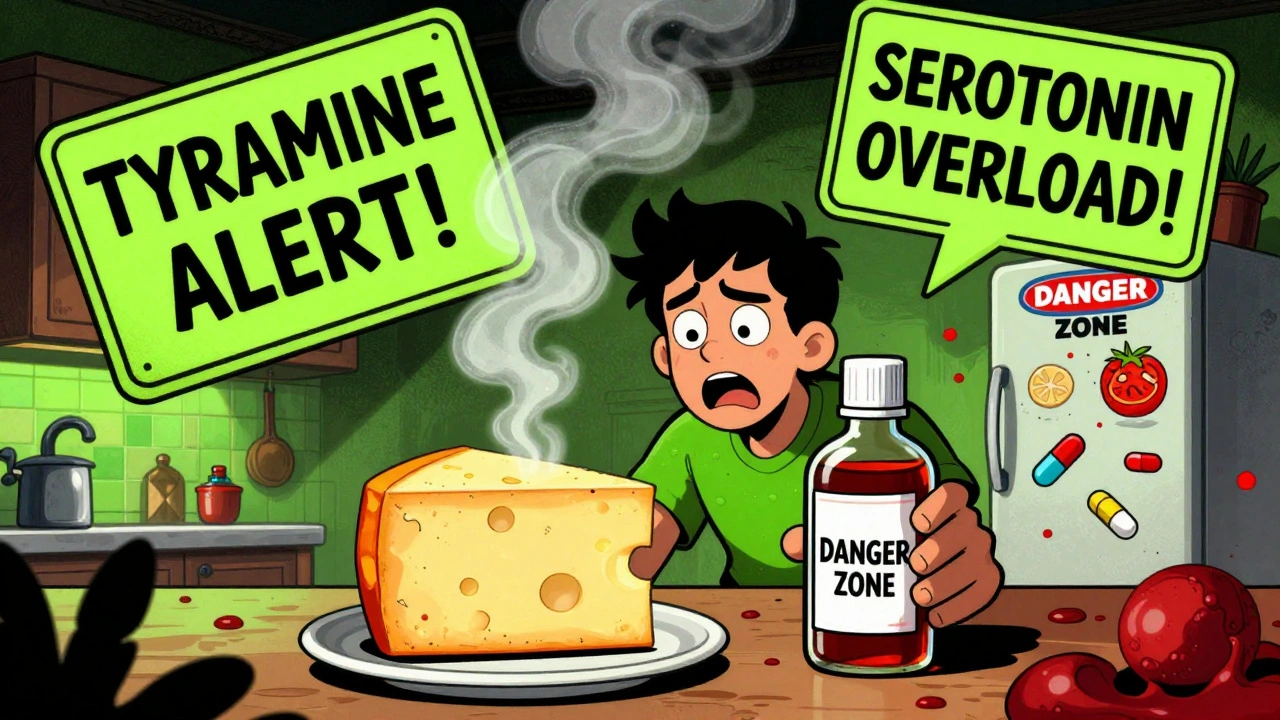
MAO inhibitors, or MAOIs, are one of the oldest classes of antidepressants still in use today-but they’re also among the most dangerous if taken with the wrong medications or foods. While they can be life-changing for people with treatment-resistant depression, the risks aren’t theoretical. A single over-the-counter cough syrup, a slice of aged cheese, or even a common antibiotic can trigger a medical emergency. This isn’t just a warning on a label. It’s a real, documented threat that has killed people-and still does.
How MAOIs Work (and Why That’s Risky)
MAOIs block an enzyme called monoamine oxidase, which normally breaks down brain chemicals like serotonin, norepinephrine, and dopamine. By stopping this breakdown, these drugs boost mood. But that same mechanism turns the body into a ticking time bomb when other substances enter the picture. The brain isn’t the only place where these chemicals are regulated. They’re active throughout the nervous system, including blood vessels and the gut. When MAOIs interfere with that balance, the results can be sudden, severe, and deadly.
The Two Biggest Threats: Hypertensive Crisis and Serotonin Syndrome
There are two main dangers with MAOIs. The first is a hypertensive crisis. This happens when tyramine-a compound found in aged, fermented, or spoiled foods-builds up in the body. Normally, monoamine oxidase breaks down tyramine. But when MAOIs are active, tyramine floods the system, triggering a massive release of norepinephrine. Blood pressure can spike from normal levels to 200/120 mmHg or higher in under two hours. Symptoms include pounding headache, blurred vision, chest pain, nausea, and sweating. In extreme cases, it causes stroke, heart attack, or death.
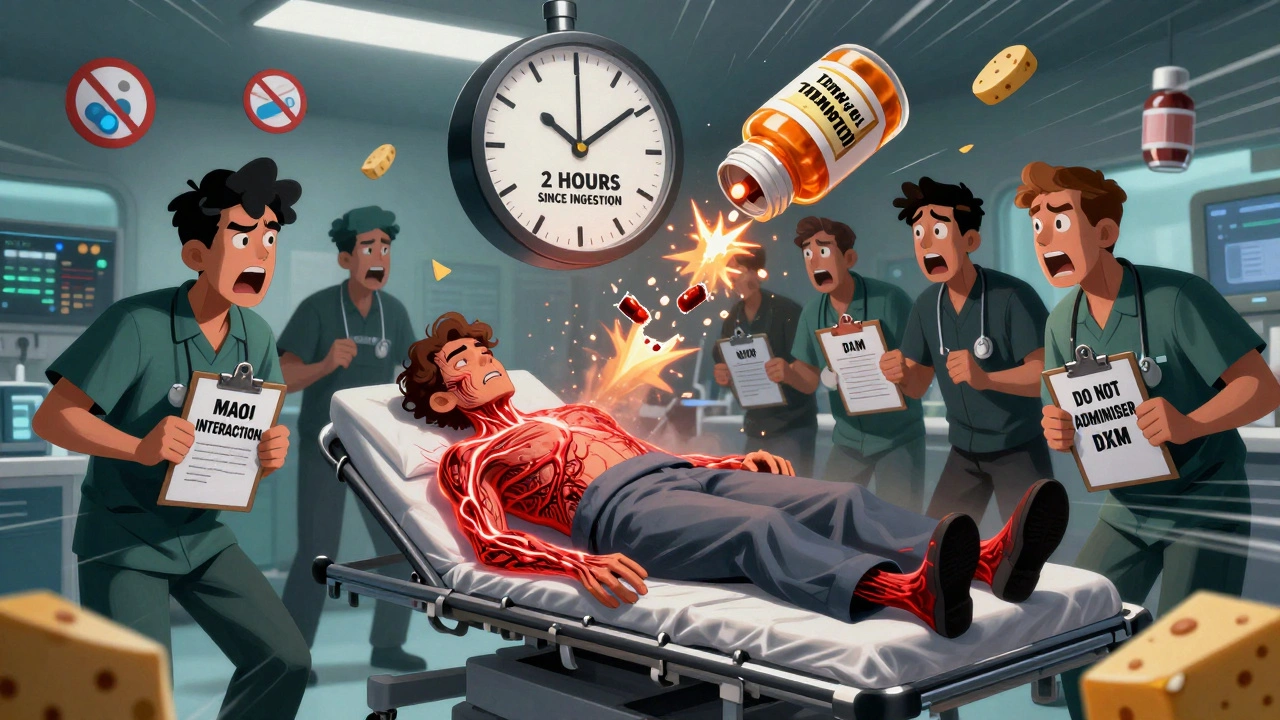
The second threat is serotonin syndrome. This occurs when MAOIs are mixed with other drugs that increase serotonin. It’s not just antidepressants. It includes common painkillers, cold medicines, herbal supplements, and even some illicit drugs. Symptoms start mild-shivering, diarrhea, restlessness-but can escalate rapidly to high fever (over 106°F), muscle rigidity, seizures, and organ failure. About 2-12% of severe cases are fatal. There’s no antidote. Treatment is intensive care and supportive care until the drugs clear the system.
Medications That Can Kill When Mixed with MAOIs
Here’s what you absolutely cannot take with an MAOI:
- SSRIs and SNRIs (like fluoxetine, sertraline, venlafaxine): Even if you stop one and start the other, you need a 14-day gap. For fluoxetine, wait five weeks because it lingers in your body for weeks after the last dose.
- Dextromethorphan (found in Robitussin, Delsym, NyQuil): A single 30mg dose has triggered serotonin syndrome in people on MAOIs. The FDA issued a warning in 1992 after multiple hospitalizations. Many people don’t realize it’s in cough syrup.
- Tramadol, meperidine, methadone: These opioids are not safe. A 32-year-old man was intubated after taking tramadol while on selegiline. He survived-but many don’t.
- Linezolid (an antibiotic): This drug also inhibits monoamine oxidase. Combining it with an MAOI is like doubling the dose. Fatal cases were reported as early as 2008.
- Phenylephrine and pseudoephedrine (in Sudafed, Claritin-D, many cold medicines): These constrict blood vessels and raise blood pressure. With an MAOI, the effect is explosive.
- St. John’s Wort, 5-HTP, SAMe: These herbal supplements are marketed as natural mood boosters. They’re not safe. One patient on phenelzine developed a 40.5°C fever and blood pressure of 220/110 after taking 200mg of 5-HTP.
Even ginseng has been linked to mania and tremors in people on MAOIs-though researchers suspect caffeine contamination may have played a role. The bottom line: if it affects your mood, energy, or blood pressure, assume it’s risky.
Foods to Avoid
You can’t just avoid medications. Your diet matters too. Tyramine builds up in foods that are aged, fermented, or spoiled. Here’s what to skip:
- Aged cheeses (cheddar, blue, parmesan, brie-anything aged over 6 months)
- Cured or smoked meats (pepperoni, salami, pastrami)
- Tap beer, draft beer, and some wines (Chianti, red table wine)
- Fermented soy products (soy sauce, miso, tofu that’s been aged)
- Overripe fruits (bananas, avocados)
- Home-brewed beer or homemade fermented foods
You don’t need to starve. A small amount of aged cheese might not trigger a crisis-but 15mg of tyramine (about one ounce of strong cheddar) has been enough to cause a dangerous spike in blood pressure. The threshold is low. And you can’t predict who will react.
One Exception: The Emsam Patch
Not all MAOIs are the same. The selegiline patch (Emsam) delivers the drug through the skin, not the gut. At the lowest dose (6mg/24 hours), it doesn’t block the enzyme in the digestive tract as much. That means you can eat tyramine-rich foods without restriction at this dose. But if you increase the dose to 9mg or 12mg, the dietary restrictions return. This is the only MAOI with a built-in safety advantage. That’s why it now makes up nearly 70% of all MAOI prescriptions in the U.S.
What Happens When You Switch Medications?
If you’re switching from an MAOI to an SSRI-or vice versa-you can’t just stop one and start the other the next day. The washout period is non-negotiable. For most MAOIs, you need 14 days. For fluoxetine, you need five weeks. Why? Because fluoxetine and its active metabolite, norfluoxetine, stick around in your bloodstream for weeks. Taking an SSRI too soon after an MAOI is like lighting a fuse. Electronic health records now block doctors from prescribing both at the same time. But not all systems catch everything. That’s why patients need to be their own advocates.
Who Prescribes MAOIs Today?
MAOIs are rarely used in primary care. Only 8% of prescriptions come from family doctors. The rest-92%-are written by psychiatrists. Why? Because managing these drugs requires deep knowledge. A 2021 study found that 34% of primary care physicians didn’t know dextromethorphan was dangerous with MAOIs. That’s terrifying. If your doctor doesn’t specialize in mental health, they might not know what’s on the list. Always carry a list of your medications and ask: “Is this safe with an MAOI?”
What You Can Do to Stay Safe
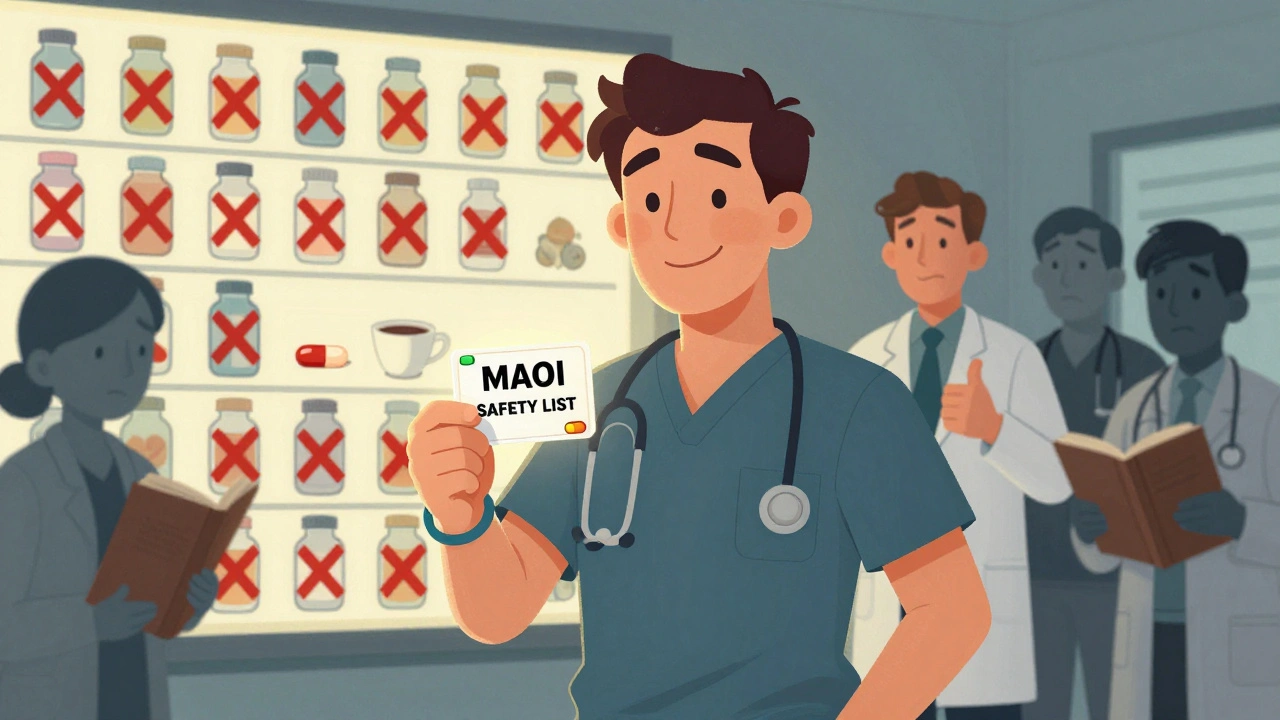
- Carry a wallet card listing all your MAOI contraindications. Many psychiatrists give these out. Use one from the American College of Medical Toxicology.
- Always check the label of any new medication-even over-the-counter ones. Look for dextromethorphan, phenylephrine, pseudoephedrine, or any “cold and flu” combo.
- Don’t assume natural = safe. St. John’s Wort, 5-HTP, and SAMe are not harmless supplements. They’re potent serotonin boosters.
- Keep a food log. If you feel a headache or rapid heartbeat after eating something unusual, stop and call your doctor.
- Wear a medical alert bracelet. If you’re ever in an emergency room, they need to know you’re on an MAOI.
Why Are MAOIs Still Used?
They’re not first-line anymore. SSRIs are safer, easier, and just as effective for most people. But for those who’ve tried everything else-SSRIs, SNRIs, therapy, even ketamine-MAOIs can be the only thing that works. People with atypical depression (sleeping too much, eating too much, feeling heavy) often respond better to MAOIs than to other antidepressants. That’s why they’re still prescribed, even if only to a tiny fraction of patients. Less than 1% of all antidepressant prescriptions in the U.S. are for MAOIs. But for those 1%, they’re everything.
The Bottom Line
MAOIs aren’t dangerous because they’re old. They’re dangerous because they change how your body handles chemicals in ways that are hard to reverse. One mistake can be fatal. But with strict rules, clear communication, and careful monitoring, they can be used safely. The key isn’t fear-it’s awareness. Know your meds. Know your foods. Ask questions. And never assume a pharmacist or doctor knows everything on your list. You’re the only one who’s with you every day. Protect yourself.
Can I take Tylenol with an MAOI?
Yes, acetaminophen (Tylenol) is generally safe with MAOIs. It doesn’t affect serotonin or norepinephrine levels. But avoid combination products that include decongestants like phenylephrine or dextromethorphan. Always check the full ingredient list.
Is coffee safe with MAOIs?
Moderate coffee is usually fine. But high doses of caffeine can increase nervous system stimulation, which may worsen side effects like jitteriness or high blood pressure. If you’re sensitive to caffeine, cut back. There’s no direct interaction, but the combined effect can be risky.
Can I drink alcohol while on an MAOI?
It’s not recommended. Alcohol can lower blood pressure, which might seem helpful-but it can also increase drowsiness and dizziness. More importantly, some alcoholic drinks (like red wine, tap beer, and certain liqueurs) contain tyramine. Even a small amount could trigger a hypertensive crisis. Stick to non-alcoholic options.
What if I accidentally take a dangerous drug with an MAOI?
Call emergency services immediately. Do not wait for symptoms. If you’ve taken dextromethorphan, phenylephrine, or a serotonin-boosting supplement, go to the ER. Time is critical. Symptoms can appear within 30 minutes. Tell them you’re on an MAOI. Bring your medication list. Early treatment saves lives.
Are there safer alternatives to MAOIs?
Yes. For most people, SSRIs, SNRIs, or newer options like vortioxetine or brexanolone are safer and just as effective. For treatment-resistant depression, ketamine infusions or transcranial magnetic stimulation (TMS) are now preferred. MAOIs are reserved for cases where all else has failed. Talk to your psychiatrist about alternatives before starting an MAOI.
Can I take an MAOI if I’m over 65?
It’s possible, but riskier. Older adults often take multiple medications, increasing the chance of dangerous interactions. They’re also more sensitive to blood pressure changes. If an MAOI is prescribed, start with the lowest possible dose. The Emsam patch is often preferred because it avoids gut absorption. Close monitoring is essential.
Do MAOIs cause weight gain?
Unlike many SSRIs, MAOIs are less likely to cause weight gain-and some people actually lose weight. This is one reason they’re used for atypical depression, where increased appetite and weight gain are common. But side effects like dizziness and fatigue can reduce activity, which may indirectly affect weight.
How long do I need to stay on an MAOI?
Most people take MAOIs for at least 6-12 months. If they work well and side effects are manageable, some stay on them for years. Stopping suddenly can cause withdrawal symptoms like anxiety, irritability, and flu-like feelings. Always taper under medical supervision.
If you’re on an MAOI, your life changes. But it doesn’t have to be scary. Knowledge is your best defense. Know your meds. Know your food. Speak up. And never assume it’s safe unless you’ve checked with someone who understands the risks.


Comments (14)