
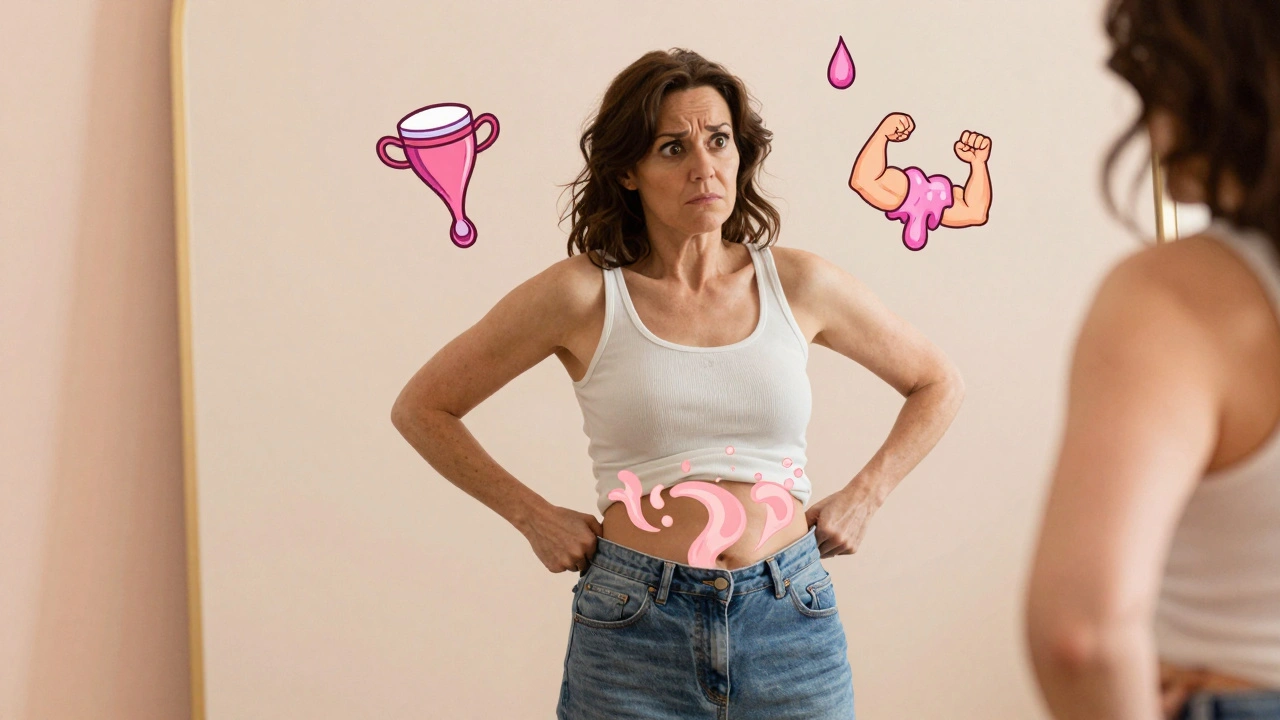
Women in their 40s and 50s often wake up one day and realize their clothes don’t fit like they used to-even though they haven’t changed what they eat or how much they move. It’s not laziness. It’s not a lack of willpower. It’s biology. Menopause weight gain isn’t just about eating too many cookies. It’s a complex shift in hormones, muscle, and metabolism that rewires how your body stores fat. And if you’re still trying to lose weight the way you did in your 30s, you’re fighting an uphill battle with the wrong tools.
Why Your Body Changes During Menopause
The drop in estrogen during menopause doesn’t just cause hot flashes and sleepless nights. It triggers a full metabolic overhaul. Estrogen, especially estradiol, helps regulate where fat is stored. Before menopause, your body tends to store fat in your hips, thighs, and buttocks-areas with more estrogen-sensitive fat cells. After menopause, estrogen levels plunge from 70-150 pg/mL to as low as 10-20 pg/mL. That shift flips the script. Fat starts moving to your abdomen. This isn’t just cosmetic. Visceral fat-the kind that wraps around your organs-isn’t just padding. It’s metabolically active. It releases inflammatory chemicals that increase insulin resistance, raise blood pressure, and spike your risk of heart disease. Postmenopausal women are nearly five times more likely to develop abdominal obesity than premenopausal women. And here’s the kicker: you can gain weight even if you eat the same amount you always have. Research from the Study of Women’s Health Across the Nation (SWAN) shows women gain about 1.5 kilograms (3.3 pounds) per year during perimenopause. That adds up to 10-15 pounds over a few years, even with unchanged habits. Why? Because your resting metabolism slows down by 2-3% every decade after 30-and menopause speeds that up. Muscle mass drops 3-8% per decade after 30, and menopause adds another 1-2% loss per year. Less muscle means fewer calories burned at rest. Your body becomes a slower furnace, burning fewer calories just to keep you alive.The Hormone Rollercoaster: Estrogen, Testosterone, and Appetite
It’s not just estrogen falling. It’s the balance shifting. As estrogen drops, testosterone becomes relatively higher. That’s not about becoming more masculine-it’s about fat redistribution. Higher relative testosterone pushes fat storage toward the belly. At the same time, leptin-the hormone that tells you you’re full-drops by 20-30%. And ghrelin, the hunger hormone, rises by 15-25%, especially if you’re not sleeping well. Hot flashes and night sweats disrupt sleep in 75% of perimenopausal women. Poor sleep = more ghrelin = more cravings for carbs and sugar. You’re not weak. Your brain is being hijacked by biology. Add in the fact that your body becomes less sensitive to insulin after menopause, and you’ve got a perfect storm: more hunger, less fullness, slower metabolism, and fat piling up around your middle. This is why diets that worked before now fail. Cutting calories alone doesn’t fix hormonal shifts. You’re not failing-you’re using outdated tools.Muscle Is Your Secret Weapon
The biggest mistake women make is focusing only on cardio. Running, cycling, and elliptical machines burn calories during the workout-but they don’t rebuild what’s been lost. Muscle is the engine that keeps your metabolism firing. Every pound of muscle burns 6-10 calories a day at rest. Fat burns less than 2. That difference adds up. Strength training isn’t optional. It’s essential. Studies show that women who lift weights 2-3 times a week during menopause gain 1.8-2.3 kilograms of lean muscle over six months. That’s not just about looking toned. It’s about raising your resting metabolic rate. One randomized trial found that combining strength training with high-intensity interval training (HIIT) reduced abdominal fat by 8-12% in just six months. You don’t need to lift heavy weights like a bodybuilder. Start with bodyweight exercises: squats, lunges, push-ups (even against a wall), and resistance bands. Add dumbbells or kettlebells as you get stronger. Aim for 30 minutes, three times a week. That’s it. The key is consistency, not intensity.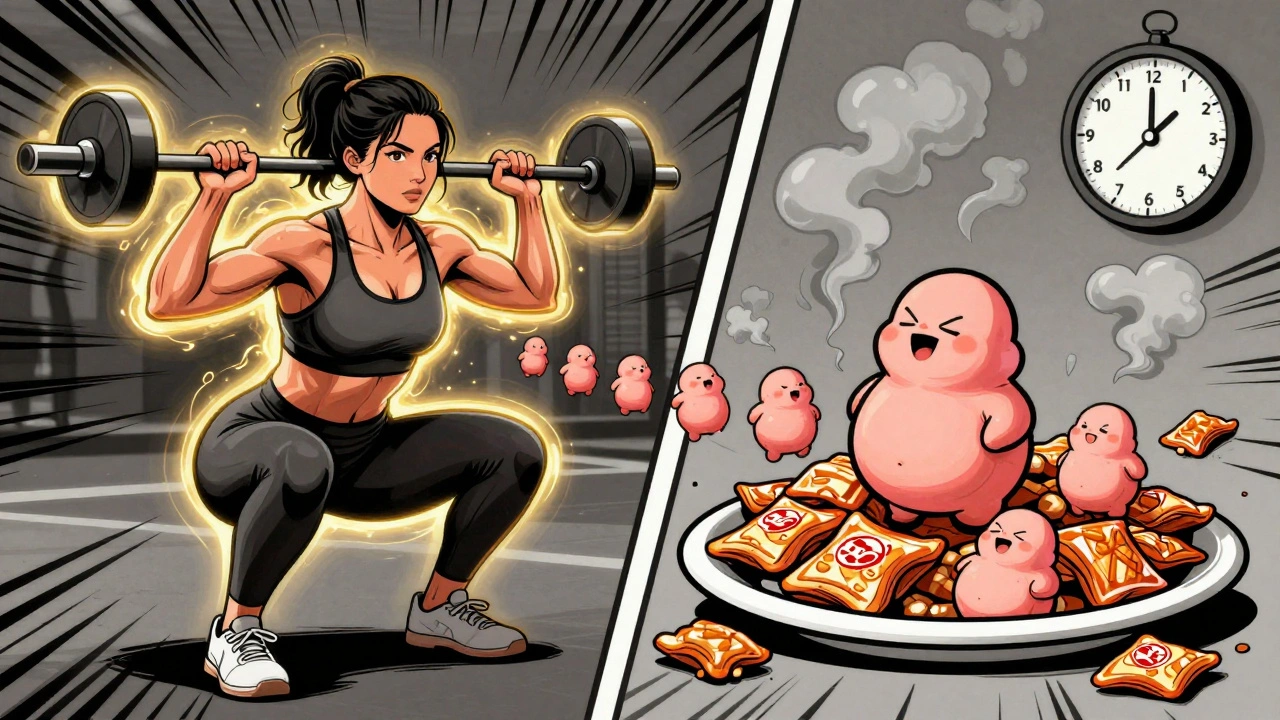
What to Eat: Protein, Timing, and Real Food
You need more protein-not less. As you age, your body becomes resistant to the muscle-building signals from food. This is called anabolic resistance. To fight it, you need to hit a protein target at every meal: 25-30 grams per meal. That’s about three eggs, a chicken breast, a cup of Greek yogurt, or a scoop of whey protein. The British Menopause Society recommends 1.2-1.6 grams of protein per kilogram of body weight daily. For a 70kg (154lb) woman, that’s 84-112 grams of protein per day. Spread it out. Don’t save it all for dinner. Eat protein at breakfast, lunch, and snacks. Focus on whole foods: lean meats, fish, eggs, legumes, tofu, dairy, nuts, and seeds. Avoid ultra-processed foods. They’re loaded with hidden sugars and refined carbs that spike insulin and feed visceral fat. You don’t need to count calories. You need to prioritize protein, fiber, and healthy fats.Sleep Is Non-Negotiable
You can’t out-exercise poor sleep. If you’re tossing and turning because of night sweats, your body is flooded with stress hormones like cortisol. That increases belly fat and makes it harder to lose weight. Aim for 7-8 hours of quality sleep. Keep your bedroom cool. Wear moisture-wicking pajamas. Avoid caffeine after 2 p.m. and alcohol before bed-it might help you fall asleep, but it ruins deep sleep cycles. Improving sleep can reduce ghrelin by 15-25% and boost leptin sensitivity by 20-30%. That means you’ll feel fuller longer and crave less junk food. If hot flashes are keeping you up, talk to your doctor. Low-dose hormone therapy or non-hormonal options like gabapentin can help.
Why Traditional Diets Fail (And What Works Instead)
A 2023 survey of women on Mayo Clinic Connect found that 78% gained weight despite eating the same way they always had. That’s not coincidence. It’s physiology. Diets that worked in your 20s-cutting carbs, fasting, low-fat eating-often backfire after menopause. Low protein diets accelerate muscle loss. Extreme calorie restriction slows your metabolism even more. The most successful women don’t follow trends. They build habits:- Strength train 3 times a week
- Eat 25-30g protein at each meal
- Do 1-2 sessions of HIIT per week (like 20-minute bursts of sprinting or stair climbing)
- Sleep 7-8 hours
- Manage stress with walking, yoga, or meditation
What’s on the Horizon
Science is catching up. In September 2023, the FDA approved bimagrumab for Phase 3 trials-a drug that increases muscle mass by 5-7% and reduces fat by 8-10% in just 24 weeks. The NIH is also funding the EMPOWER study, testing whether early hormone therapy can prevent fat from shifting to the abdomen. These aren’t magic pills, but they show we’re moving toward personalized solutions. Right now, the best tools are simple: move your body, eat enough protein, sleep well, and be patient. You’re not broken. Your body is changing-and you can adapt.Why am I gaining weight even though I eat the same as before?
Your metabolism slows down because you’re losing muscle mass and estrogen levels drop, which changes how your body stores fat. Even if your calorie intake hasn’t changed, your body burns fewer calories at rest. Hormonal shifts also increase hunger and reduce fullness signals, making it easier to overeat without realizing it.
Is abdominal fat during menopause more dangerous than fat elsewhere?
Yes. Visceral fat around your organs releases inflammatory chemicals that increase insulin resistance, raise blood pressure, and raise your risk of heart disease and type 2 diabetes. Postmenopausal women with abdominal fat have a 3.2 times higher risk of metabolic syndrome-even if their overall weight is normal.
Should I do cardio or strength training to lose menopause weight?
Both help, but strength training is non-negotiable. Cardio burns calories during the workout. Strength training builds muscle, which burns more calories all day, even when you’re resting. Combine strength training 2-3 times a week with 1-2 sessions of HIIT for the best results.
How much protein do I need daily after menopause?
Aim for 1.2-1.6 grams of protein per kilogram of body weight. For a 70kg (154lb) woman, that’s 84-112 grams per day. Spread it across meals: 25-30 grams per meal. This fights muscle loss and helps control hunger.
Can hormone therapy help with menopause weight gain?
Hormone therapy isn’t a weight-loss drug, but it can help prevent fat from shifting to the abdomen by restoring estrogen balance. Studies show it may reduce visceral fat accumulation, especially if started early in menopause. Talk to your doctor about risks and benefits-it’s not for everyone, but it can be part of a broader strategy.
How long does it take to see results from a menopause weight strategy?
Most women notice changes in body composition-like looser clothes or better energy-after 3-6 months of consistent strength training, protein intake, and sleep. Weight loss is slower than before menopause, so focus on how you feel, not just the scale.


Comments (9)