
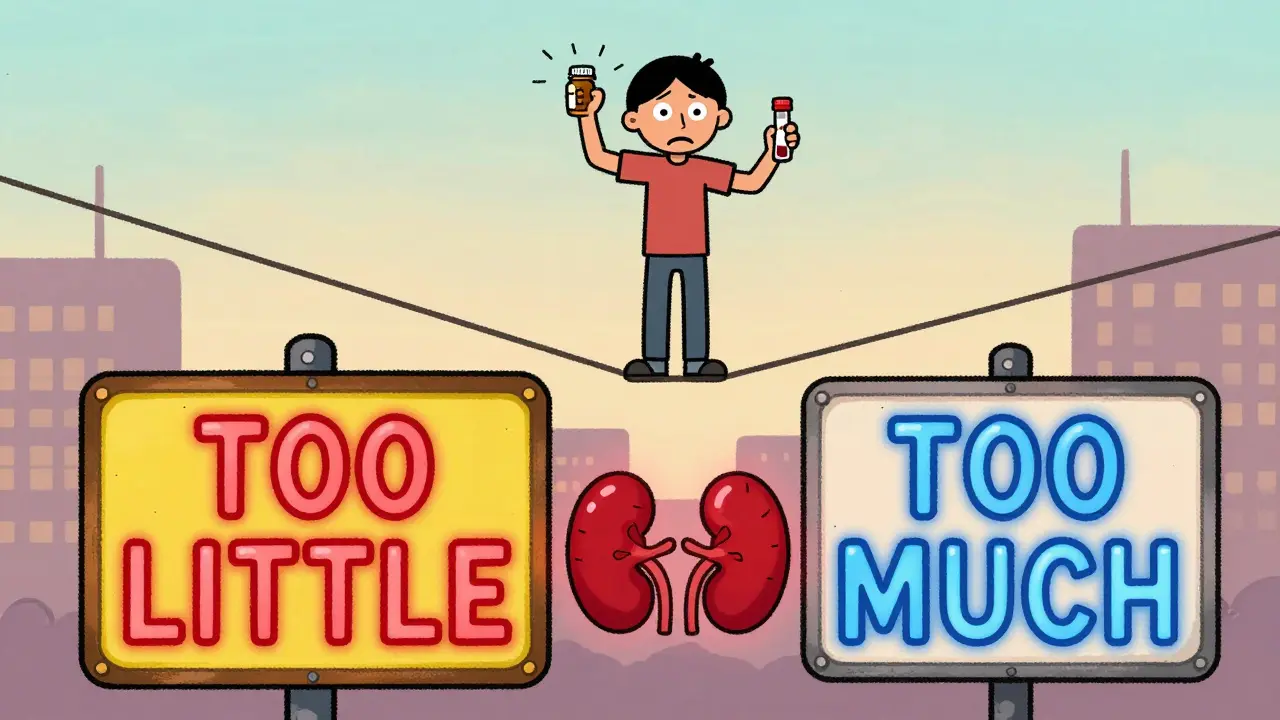
Some medications are like walking a tightrope. One milligram too much, and you risk poisoning. One milligram too little, and the treatment fails. These are NTI drugs - Narrow Therapeutic Index drugs. They don’t play nice with guesswork. A small change in dose or even switching brands can send your body into crisis. If you’re taking one of these, you’re not just on medication - you’re in a high-stakes monitoring game.
What Makes a Drug an NTI Drug?
NTI stands for Narrow Therapeutic Index. That means the gap between a dose that works and a dose that harms is tiny. For most drugs, your body can handle some variation. Not with NTI drugs. The difference between a therapeutic level and a toxic level is often less than double. For example, digoxin works at 0.5 to 2.0 nanograms per milliliter in your blood. Go over 2.0? You could get heart rhythm problems. Drop below 0.5? Your heart failure won’t improve. That’s a razor’s edge.
The U.S. Food and Drug Administration (FDA) defines NTI drugs as those where small changes in blood concentration can cause serious harm - like organ failure, seizures, or life-threatening bleeding. It’s not about being “strong.” It’s about precision. These drugs don’t have a safety buffer. Your kidneys, liver, age, diet, and even other meds you take can shift the balance. That’s why blood tests aren’t optional. They’re mandatory.
The Core NTI Drug List: What You’re Likely to Encounter
There’s no single official global list, but doctors, pharmacists, and state health boards agree on a core group. These are the drugs you’ll see flagged in hospital systems and pharmacy records. Here are the most common ones:
- Warfarin - The classic NTI drug. Used to prevent clots, but too much causes internal bleeding. Too little, and you risk stroke. Doctors track it with INR tests. The target range? 2.0 to 3.0. A single INR of 4.0 or higher increases major bleeding risk by over 7 times.
- Digoxin - Used for heart failure and atrial fibrillation. Therapeutic range: 0.5-2.0 ng/mL. Toxicity can cause nausea, vision changes, and fatal arrhythmias. Even a small dose change can push levels into danger.
- Lithium - A mood stabilizer for bipolar disorder. Works at 0.6-1.2 mmol/L. Above 1.5? You’re looking at tremors, confusion, kidney damage. Below 0.5? Depression returns. Patients need blood tests every 3-6 months, even when stable.
- Phenytoin - An older antiseizure drug. Effective at 10-20 mcg/mL. Levels outside that range mean either seizures or dizziness, slurred speech, and even coma. It interacts with so many other drugs that dosing is a constant balancing act.
- Tacrolimus - A transplant lifesaver. Keeps the immune system from rejecting organs. Target trough levels: 5-15 ng/mL. A drop below 5? Rejection risk spikes. Above 15? Kidney damage, nerve problems, high blood pressure. Patients get tested 3 times a week right after transplant.
- Carbamazepine - Another seizure and nerve pain drug. Therapeutic range: 4-12 mcg/mL. It’s also used for bipolar disorder. Levels change with food, other meds, and even time of day. One study showed 30% of patients had levels outside the safe range within 6 months of starting.
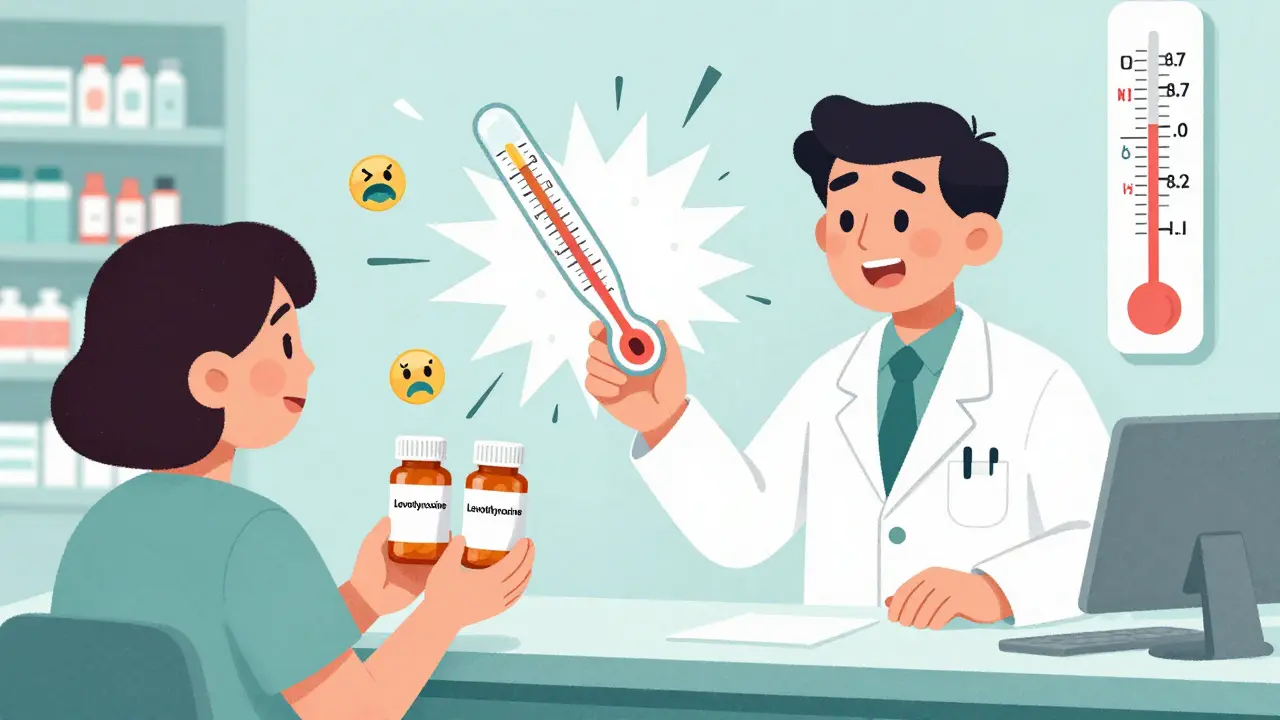
- Levothyroxine - Used for hypothyroidism. Doesn’t sound dangerous, right? But even a 12.5 mcg change - the size of half a pill - can throw TSH levels from 1.2 to 8.7 mIU/L. That’s the difference between feeling fine and being exhausted, gaining weight, and risking heart problems. Many patients report feeling worse after switching generic brands.
These eight are the most frequently monitored and legally recognized in most U.S. states. North Carolina, for example, officially lists them as NTI drugs. Oklahoma’s 2025 list adds nortriptyline, desipramine, and esketamine - showing the list is growing.
Why Generic Switching Can Be Dangerous
You might think all pills with the same name are the same. They’re not - not with NTI drugs. The FDA requires stricter bioequivalence standards for generics of NTI drugs. For regular meds, the active ingredient can vary by 20% between brand and generic. For NTI drugs? It’s capped at 11.1%. That’s tighter than most people realize.
But even that isn’t foolproof. A 2023 Reddit thread from a pharmacist described a 62-year-old patient whose TSH jumped from 1.2 to 8.7 after switching from brand-name Synthroid to a generic levothyroxine. It took three months to get back to normal. That’s not a fluke. Studies show up to 15% of patients on levothyroxine have unstable thyroid levels after switching generics.
That’s why 47 U.S. states have laws restricting automatic substitution of NTI drugs. In 28 of them, your doctor must write “Dispense as Written” or “Do Not Substitute” on the prescription. Pharmacists can’t swap it out without your doctor’s okay. It’s not bureaucracy - it’s safety.
Monitoring Isn’t Optional - It’s Life-Saving
There’s no way around it: if you’re on an NTI drug, you need regular blood tests. No exceptions. Here’s what monitoring looks like for key drugs:
- Warfarin: INR every 3-5 days after starting, then weekly until stable, then every 4-6 weeks. Miss one test? Your risk of bleeding skyrockets.
- Lithium: Every 3-6 months, even if you feel fine. Lithium builds up slowly. Toxicity can sneak up.
- Tacrolimus: 3x per week after transplant, then weekly, then monthly. Levels change with infections, fever, even grapefruit juice.
- Phenytoin: Every 2-4 weeks initially, then every 3-6 months. Levels drop if you start or stop antibiotics.
These tests cost $25-$150 each. Medicare covers 80%, but copays add up. And 32% of lithium patients miss appointments, according to JAMA Internal Medicine. That’s not laziness - it’s lack of awareness. Many don’t realize how critical these tests are until something goes wrong.
Newer Drugs Are Joining the List
The NTI drug list isn’t frozen in time. Cancer treatments are changing the game. Drugs like axitinib, ponatinib, and olaparib - used for kidney, leukemia, and ovarian cancers - now have defined therapeutic ranges. For example, ponatinib needs to stay between 20-50 ng/mL. Too low? Cancer grows. Too high? Blood clots or heart failure.
The FDA is reviewing 15 more drugs for NTI status, including newer anticoagulants like apixaban and rivaroxaban. Some experts argue these are safer than warfarin. Others say even small overdoses can cause fatal bleeding. The debate continues - but the reality is, more drugs are falling into this high-risk category.

What Happens When Monitoring Fails
NTI drug errors aren’t rare. They’re common - and deadly. Dr. Lawrence Yu from the FDA once said NTI drugs make up only 15% of those requiring blood monitoring, but they cause 30% of dosing-related hospitalizations. Why? Because the consequences are severe.
One patient on phenytoin got a dose increase after a missed appointment. Two days later, she was in the ER with slurred speech and unsteady walking - signs of toxicity. Another took generic levothyroxine, didn’t get tested, and developed atrial fibrillation from an undiagnosed overdose. These aren’t hypotheticals. They’re documented cases.
Hospitals with automated alerts for out-of-range levels reduced NTI-related errors by 28% in a 2022 pilot study. That’s huge. But only 45% of hospital systems have those alerts. Most still rely on nurses and pharmacists catching mistakes manually.
What You Need to Do
If you’re prescribed an NTI drug, here’s what you must do:
- Know your drug. Ask your doctor: “Is this an NTI drug?” If yes, treat it like a precision tool.
- Never switch brands without talking to your doctor. Even if the pharmacy says it’s “the same.”
- Keep all blood test appointments. Don’t skip them because you “feel fine.”
- Keep a log. Write down your doses, test dates, and results. Bring it to every appointment.
- Tell every new provider. Emergency rooms, dentists, even physical therapists need to know you’re on an NTI drug.
There’s no room for assumptions. No room for convenience. NTI drugs demand respect - and attention. Get it right, and they save your life. Get it wrong, and they can end it.
Are all generic drugs unsafe for NTI medications?
No. Generic NTI drugs must meet stricter FDA standards than regular generics. But even approved generics can cause small variations in how your body absorbs the drug. That’s why doctors often recommend sticking with one brand - especially for drugs like levothyroxine or warfarin. If you must switch, your levels need to be checked within 2-4 weeks.
Can I stop blood tests if I’ve been stable for years?
Never. Stability doesn’t mean permanent. Your weight, diet, other medications, liver function, and even stress can change how your body handles the drug. Lithium levels can rise with dehydration. Warfarin can become stronger if you start eating more leafy greens. Blood tests are your safety net - don’t remove it.
Why do some doctors say apixaban isn’t an NTI drug?
It’s a debate. The European Medicines Agency says apixaban has a wider safety margin than warfarin. But the Institute for Safe Medication Practices still flags it as narrow because bleeding risk increases sharply at higher doses. The FDA is currently reviewing it for NTI status. Until then, many clinicians treat it cautiously - especially in elderly patients or those with kidney issues.
Do NTI drugs interact with supplements or herbal products?
Yes - often dangerously. St. John’s Wort can drop levels of tacrolimus and phenytoin, leading to rejection or seizures. Garlic, ginkgo, and fish oil can boost warfarin’s effect, increasing bleeding risk. Even vitamin K supplements can interfere with warfarin. Always tell your pharmacist about every supplement you take.
Is there a way to avoid NTI drugs entirely?
Sometimes. For example, newer anticoagulants like apixaban or rivaroxaban may replace warfarin in some patients. For epilepsy, newer drugs like lacosamide may be alternatives to phenytoin. But not everyone can switch. Your condition, age, kidney function, and other factors determine what’s safe. Don’t stop a drug without talking to your doctor - the risk of stopping may be higher than the risk of monitoring.


Comments (15)