
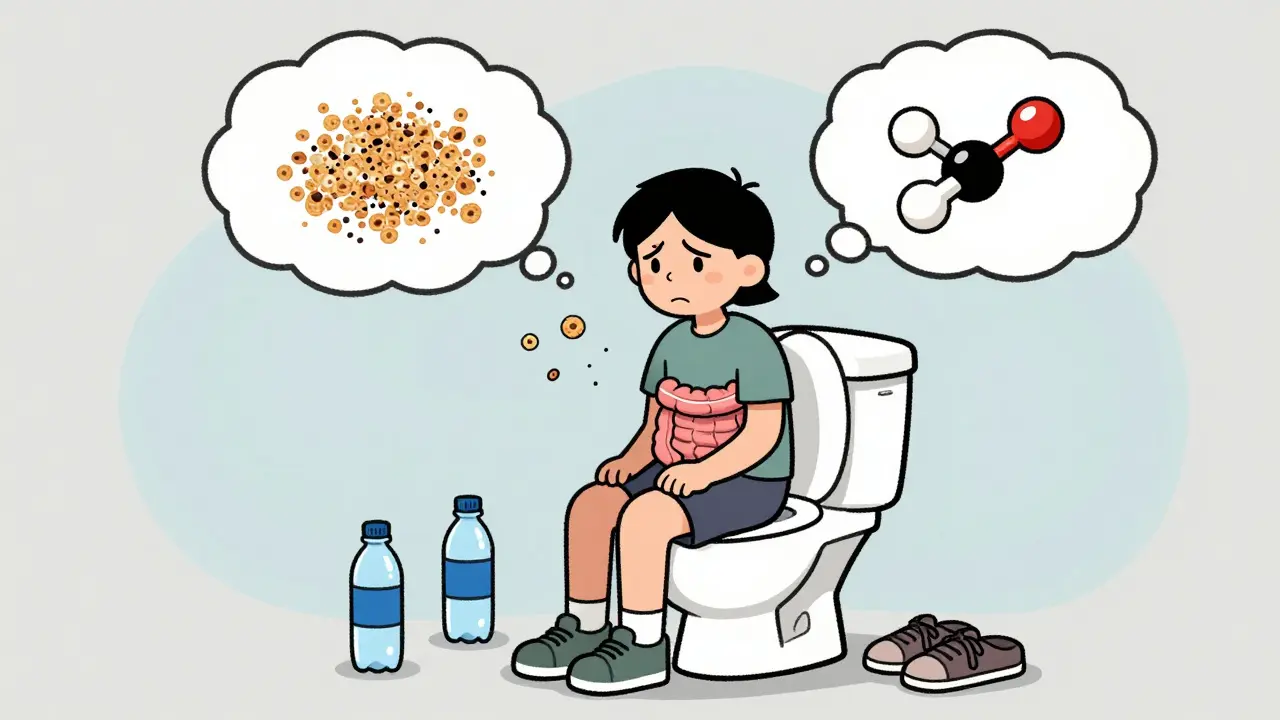
When you start taking opioids for chronic pain, most people focus on how well it controls their pain. But there’s another side effect that hits harder and lasts longer - constipation. Not the kind you get from eating too much cheese or skipping veggies. This is opioid-induced constipation (OIC), and it doesn’t go away. It sticks with you for as long as you’re on opioids. And if you don’t manage it, it can make you quit your pain medication altogether.
Up to 95% of people on long-term opioids develop OIC. That’s not rare. That’s the norm. And here’s the kicker: standard constipation remedies often don’t work. Eating more fiber? That can make it worse. Over-the-counter laxatives? They help only about half the time. Why? Because opioids don’t just slow down your gut - they change how it works at a cellular level. They shut down fluid secretion, suck moisture out of stool, and freeze the muscles that push waste along. It’s not laziness. It’s biology.
Why Fiber Doesn’t Help - And Might Hurt
You’ve heard it a hundred times: “Eat more fiber to fix constipation.” That advice works for general sluggish bowels. But with OIC, it backfires. Opioids block the natural movement of your intestines. When fiber sits in a slow-moving gut, it ferments. That causes bloating, gas, and sometimes even fecal impaction - a dangerous buildup that can block your bowel entirely. The American Gastroenterological Association and other major groups now warn against high-fiber diets for OIC patients. In fact, 25-40% of people on opioids who increase fiber report worse symptoms.
Instead of reaching for bran cereal or chia seeds, focus on hydration and movement. Drink water consistently - at least 2 liters a day. Walk daily, even if it’s just 20 minutes. Physical activity helps trigger natural gut contractions. But don’t expect these alone to fix the problem. They’re support tools, not solutions.
First-Line Treatments: What Actually Works
The first step in managing OIC isn’t fancy. It’s simple, proven, and cheap. Start with osmotic laxatives. Polyethylene glycol (PEG), sold as Miralax or Movicol, is the gold standard. Take 17-34 grams daily. It pulls water into the colon without irritating the gut lining. Unlike stimulant laxatives, it doesn’t cause cramping or dependency. Studies show it works better than senna or bisacodyl for OIC, even though many doctors still prescribe those first.
If PEG alone isn’t enough, add a stimulant laxative like bisacodyl (5-10 mg) or senna (8.6-17.2 mg). Use them sparingly - no more than every other day. Long-term use can damage the nerves in your colon. But short-term, they can jump-start your system when you’re stuck.
Important: Don’t wait until you’re in pain to start. Begin treatment the same day you start opioids. Prophylaxis is key. A 2021 study found that only 15-30% of patients on chronic opioids even get a laxative prescribed at all. That’s not negligence - it’s ignorance. But it’s changing.
When Over-the-Counter Fails: Prescription Options
If you’ve tried PEG, senna, and bisacodyl and still haven’t had a bowel movement in 3-4 days, it’s time to talk about prescription options. These aren’t just stronger laxatives. They work differently - targeting the root cause.
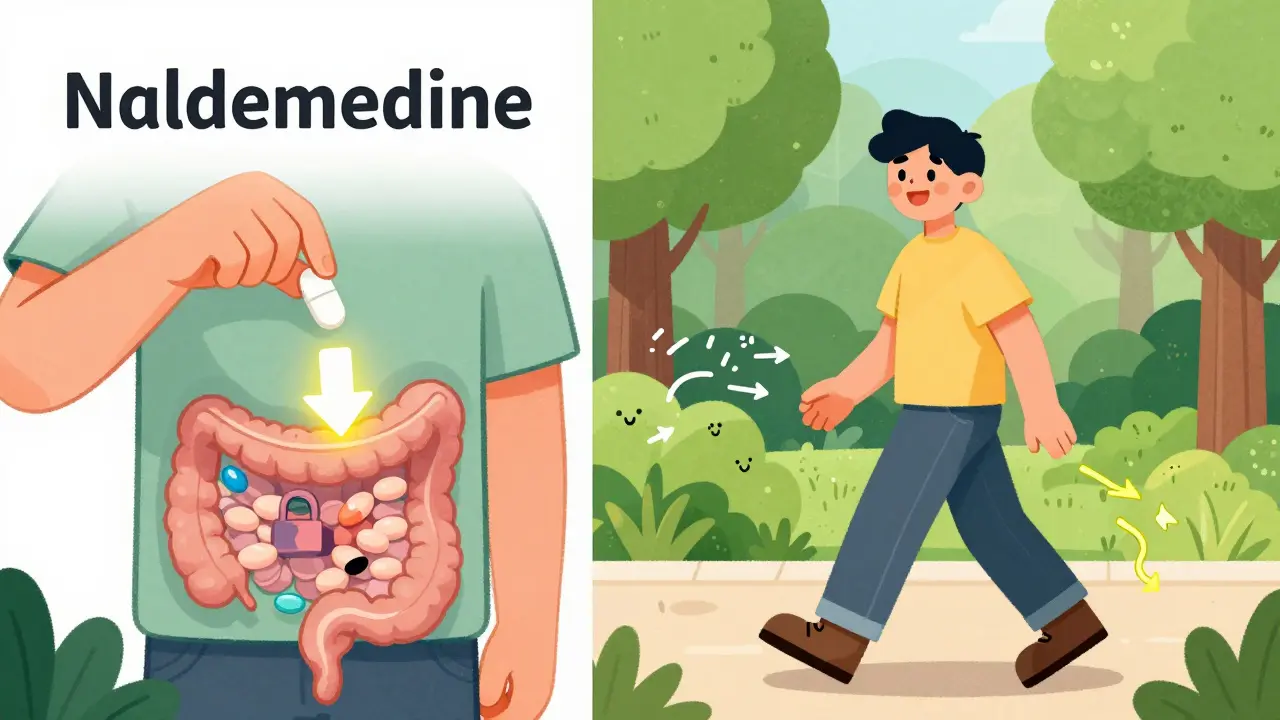
Peripherally Acting μ-Opioid Receptor Antagonists (PAMORAs) are the game-changers. They block opioids from acting on your gut receptors - without touching the pain relief in your brain. Three are approved in the U.S.:
- Methylnaltrexone (Relistor®): Injected under the skin. Works in under 4 hours for many. Used mostly for palliative care patients. Cost: $800-$1,200/month. Side effects: injection site pain (47% of users), dizziness.
- Naloxegol (Movantik®): Daily pill. Approved for chronic non-cancer pain. Works in 24-48 hours. Side effects: abdominal pain (18%), diarrhea (15%). Cost: $600-$900/month.
- Naldemedine (Symcorza®): Also daily pill. Works well for both cancer and non-cancer pain. FDA approved for kids in March 2023. Side effects: mild abdominal pain (38%), diarrhea (12%). Cost: $500-$800/month. Highest patient satisfaction rating among PAMORAs.
Response rates? Around 40-50% of patients have meaningful improvement - double the placebo rate. That’s why these are now recommended as second-line therapy by the American College of Gastroenterology.
Lubiprostone: A Different Kind of Fix
Lubiprostone (Amitiza®) works by activating chloride channels in the gut lining, pulling fluid into the colon. It’s FDA-approved for OIC since 2013. But it has quirks. Originally approved only for women because early trials didn’t include enough men - even though later data shows it works just as well in men. Common side effects: nausea (30%) and diarrhea (15-20%). It’s not a first pick, but for someone who can’t tolerate PAMORAs or can’t afford them, it’s a solid backup.
Also, avoid combining it with diuretics. Low potassium levels can become dangerous.
The Real Problem: Under-Treatment
Despite clear guidelines, OIC is still massively under-treated. A 2023 AMA survey found that only 22-35% of community doctors use standardized tools to screen for it. Nurses? 80% say a simplified protocol helps. General practitioners? Only 19% agree. That gap is dangerous.
Patient stories tell the same story. On Reddit’s r/ChronicPain, 68% of users say they’ve changed their laxative dose on their own because their doctor didn’t help. One man in Sydney told me he doubled his Miralax dose for months - until he started getting cramps and bloating. He didn’t know opioids were the cause. He thought he was just “getting old.”
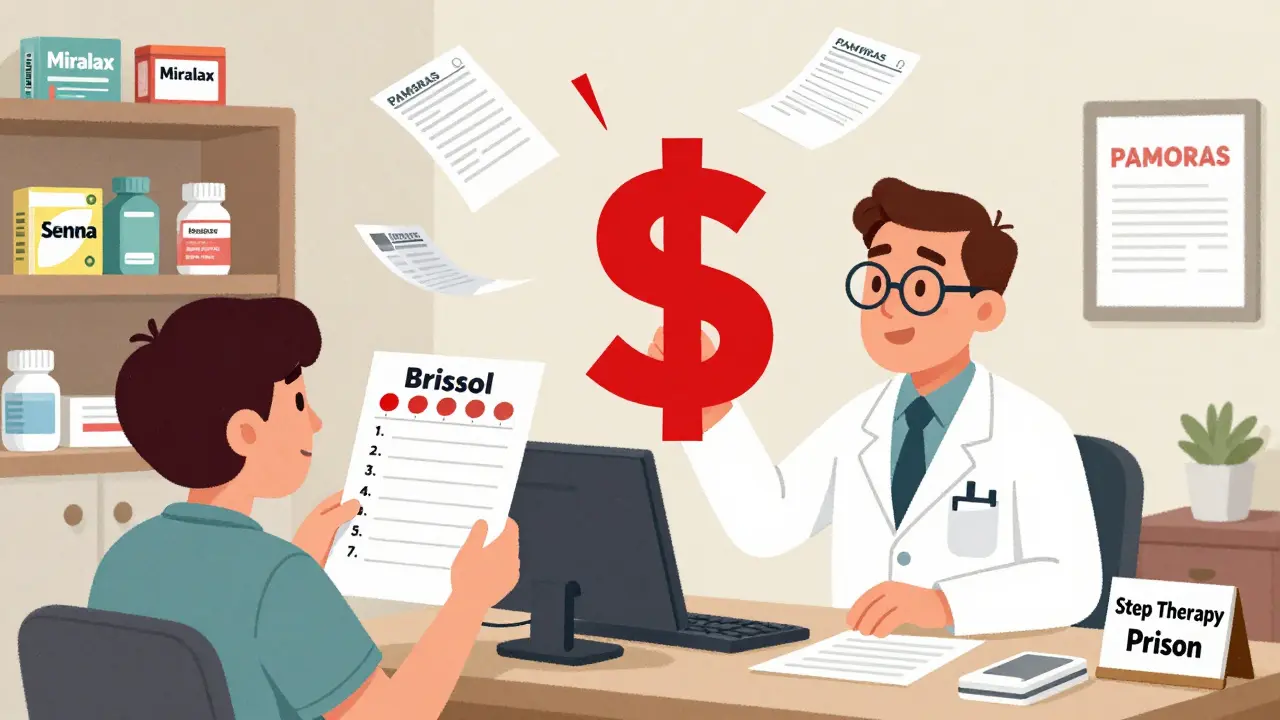
And cost? Huge barrier. PAMORAs cost $500-$1,200 a month. Most insurers make you try cheaper laxatives first - even if they’ve failed. That’s called step therapy. And it’s why so many patients quit opioids entirely. One JAMA Internal Medicine review found 30-40% of people reduce or stop their pain meds because of unmanaged constipation. That’s not just a side effect. It’s a treatment failure.
What You Should Do Right Now
If you’re on opioids and haven’t talked to your doctor about constipation:
- Ask for a bowel function assessment. Use the Bristol Stool Scale - it’s simple. Type 1-2 = constipation. Type 3-5 = normal. Type 6-7 = diarrhea.
- Start polyethylene glycol (PEG) at 17g/day. Increase to 34g if needed after 3 days.
- If no improvement in 5-7 days, ask about naloxegol or naldemedine. Don’t wait until you’re in pain.
- Track your bowel movements daily. Use a note app. Bring it to your next visit.
- Stop adding fiber unless your doctor says it’s safe. Hydration and movement matter more.
And if your doctor says, “Just take a laxative,” push back. Say: “I’ve tried that. It’s not working. I need something that targets the opioid effect in my gut.”
What’s Coming Next
The future of OIC treatment is combination therapy. Phase III trials are underway for a pill that mixes naloxone (a weak opioid blocker) with polyethylene glycol. If approved in mid-2024, it could be cheaper and easier to use than PAMORAs. Market analysts predict the OIC treatment market will hit $3.4 billion by 2028. But unless access improves, that growth won’t help the people who need it most.
Right now, the best tool you have is knowledge. OIC isn’t something you just have to live with. It’s a treatable condition. And you deserve pain relief without the prison of constipation.
Can opioid-induced constipation go away on its own?
No. Unlike nausea or drowsiness from opioids, which often fade after a few weeks, constipation persists as long as you’re taking opioids. The mechanism - reduced gut motility and fluid secretion - doesn’t adapt. Without treatment, it gets worse over time. Prophylactic treatment from day one is the only way to prevent long-term complications like fecal impaction or bowel obstruction.
Is it safe to take laxatives long-term for OIC?
Osmotic laxatives like polyethylene glycol are safe for long-term use. They don’t damage the colon or cause dependency. Stimulant laxatives like senna or bisacodyl should be limited to short-term or intermittent use - no more than every other day - because they can irritate the nerves in your gut over time. PAMORAs like naldemedine and naloxegol are designed for daily, long-term use and have no known risk of dependency.
Why don’t doctors prescribe PAMORAs right away?
Cost and insurance rules. Most insurers require you to try cheaper laxatives first - even if they’ve failed. This is called step therapy. Also, many doctors aren’t trained in OIC management. Only 22-35% of community practices use standardized screening tools. That’s changing, but slowly. If your constipation isn’t improving after two weeks on PEG, ask specifically about PAMORAs.
Can I use enemas or suppositories for OIC?
They can help for acute blockage, but they’re not a long-term solution. Enemas and suppositories (like glycerin or bisacodyl) work locally and don’t address the underlying cause - opioid activity in the gut. Frequent use can irritate the rectum and lead to dependence on external stimulation to pass stool. Use them only if you’re completely stuck and other options haven’t worked.
Are there natural remedies that work for OIC?
No reliable natural remedies exist for OIC. Probiotics, magnesium, flaxseed, or herbal teas may help general constipation, but they don’t reverse opioid-induced gut paralysis. In fact, some herbs (like senna) are stimulant laxatives already used in medical treatment. Don’t waste time on unproven supplements. Focus on evidence-based options: PEG, movement, hydration, and if needed, PAMORAs.
Does switching opioid medications help with constipation?
Sometimes, but not reliably. All opioids activate the same receptors in the gut. Switching from oxycodone to morphine or hydrocodone won’t fix the problem. Some patients report slight differences, but studies show no consistent benefit. The real solution isn’t changing the opioid - it’s blocking its effect on the gut with a PAMORA.
Can OIC lead to more serious health problems?
Yes. Chronic, untreated OIC can lead to fecal impaction, bowel obstruction, rectal prolapse, or even perforation in rare cases. It also causes significant pain, bloating, and loss of appetite - which can lead to malnutrition. Many patients reduce or stop their opioid dose because of OIC, which means their pain returns. Untreated OIC isn’t just uncomfortable - it’s dangerous.
Is naldemedine safe for older adults?
Yes. Naldemedine has been studied in patients over 65 and is considered safe for elderly populations. It’s taken once daily, has minimal drug interactions, and doesn’t affect the central nervous system. The most common side effects - mild abdominal pain and diarrhea - are usually manageable. Many older patients on long-term opioids for arthritis or back pain find it life-changing.
Managing opioid-induced constipation isn’t about willpower. It’s about science. You’re not broken. Your gut is just reacting to the medicine you need. The right treatment exists. You just have to ask for it.


Comments (10)