
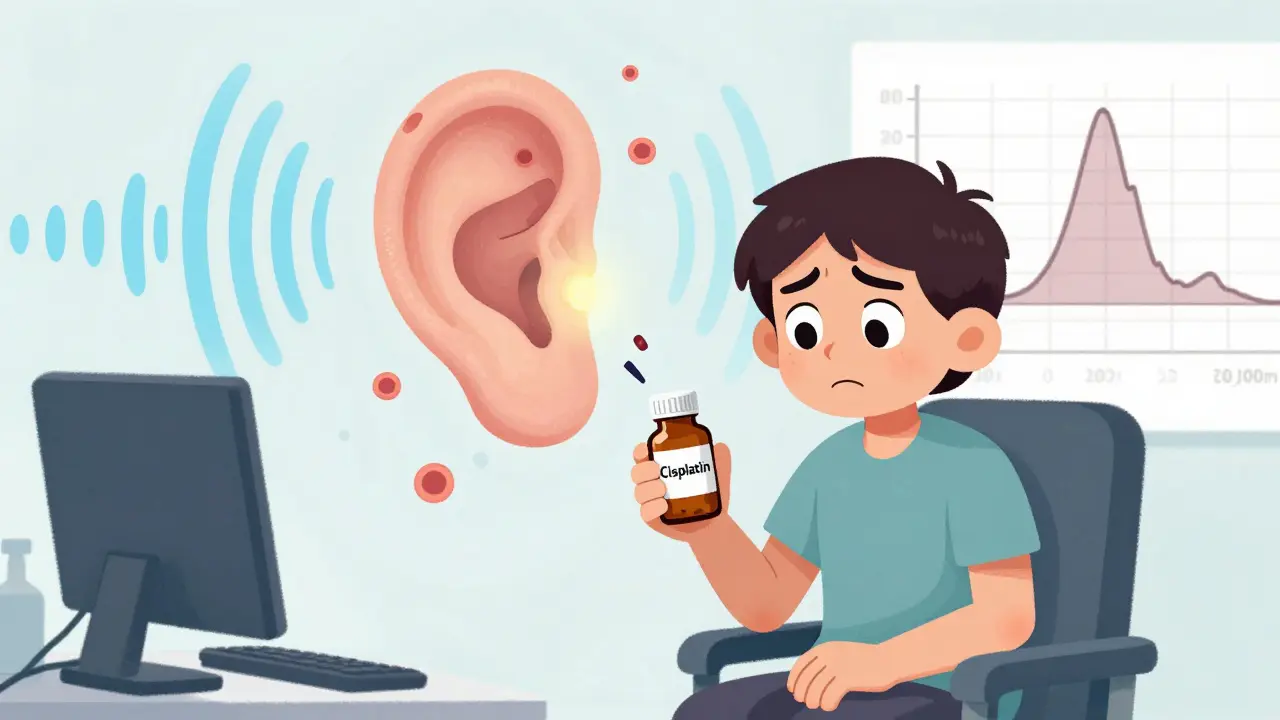
Every year, millions of people take medications that can silently damage their hearing. These aren’t rare side effects or theoretical risks-they’re well-documented, predictable, and often preventable. If you or someone you know is on long-term antibiotics, chemotherapy, or even certain antidepressants, you’re at risk. The worst part? Many doctors don’t check for it until it’s too late.
What Exactly Are Ototoxic Medications?
Ototoxic medications are drugs that harm the inner ear. They don’t just cause temporary ringing in the ears-they kill the tiny sensory hair cells that turn sound into signals your brain understands. Once those cells die, they don’t grow back. That means the hearing loss is permanent. More than 600 prescription drugs are known to be ototoxic. The most common culprits fall into three main groups:- Aminoglycoside antibiotics like gentamicin, tobramycin, and amikacin-used for serious infections like sepsis or drug-resistant TB
- Platinum-based chemotherapy drugs, especially cisplatin, used for cancers like ovarian, lung, and head and neck tumors
- Certain antidepressants, including tricyclics like amitriptyline and SSRIs like sertraline and fluoxetine
How Do These Drugs Actually Damage Your Ears?
It’s not one single mechanism. Different drugs attack the inner ear in different ways:- Aminoglycosides flood the inner ear with reactive oxygen molecules, creating chaos in the hair cells until they die.
- Cisplatin doesn’t just cause damage during treatment-it lingers in the cochlea for months, continuing to destroy cells long after the last dose.
- Some antidepressants interfere with neurotransmitters in the auditory nerve, disrupting how sound signals are sent to the brain.
- Others cut off blood flow to the inner ear or break through the blood-labyrinth barrier, a natural shield that normally keeps toxins out.
Cisplatin vs. Aminoglycosides: Which Is More Dangerous?
Not all ototoxic drugs are created equal. Here’s how they compare:| Medication | Typical Use | Hearing Loss Risk | Permanent? | Monitoring Needed |
|---|---|---|---|---|
| Cisplatin | Cancer chemotherapy | 30-60% | Yes | Yes-before, during, and after each cycle |
| Gentamicin | Severe infections | 20-63% | Yes | Yes-after each dose |
| Carboplatin | Cancer chemotherapy | 5-15% | Yes | Yes-less frequent than cisplatin |
| Vancomycin | Antibiotic for resistant infections | 5-10% | Yes (rare) | Only if used long-term |
| Sertraline (Zoloft) | Depression, anxiety | 1-5% | Possible | Usually not routine |
Early Warning Signs You Might Be Missing
Most people assume hearing loss means you can’t hear loud sounds anymore. But ototoxicity starts quietly-literally. The first sign for most patients is tinnitus: a constant high-pitched ringing, buzzing, or hissing in the ears. It often gets worse at night or in quiet rooms. Many patients describe it as "unbearable" or "like a jet engine in my head." Other early signs include:- Difficulty understanding speech in noisy places (like restaurants or family gatherings)
- Feeling like people are mumbling
- Needing to turn up the TV louder than others find comfortable
- Feeling unsteady or dizzy (vestibular damage from aminoglycosides)
Why Standard Hearing Tests Miss the Damage
This is where things get dangerous. Most clinics and hospitals only test hearing up to 4,000 Hz. That’s the standard for routine audiograms. But ototoxic damage starts at 8,000 Hz and above. That means by the time a standard test shows a problem, you’ve already lost 20-40% of your hearing in the high frequencies-and you’ve probably been struggling with speech clarity for weeks or months. Patients on cisplatin or aminoglycosides need specialized testing that includes:- Baseline audiometry before starting treatment
- High-frequency testing up to 8,000-12,000 Hz
- Otoacoustic emissions (OAE) tests, which detect outer hair cell damage before it shows up on regular audiograms
- Monitoring after every dose cycle (for aminoglycosides) or after each chemotherapy session (for cisplatin)
Who Should Be Tested-and How Often?
If you’re on one of these medications, you need a hearing check:- Before treatment starts-This is non-negotiable. You need a baseline to compare against.
- During treatment-Weekly for high-dose aminoglycosides; after every cycle of cisplatin
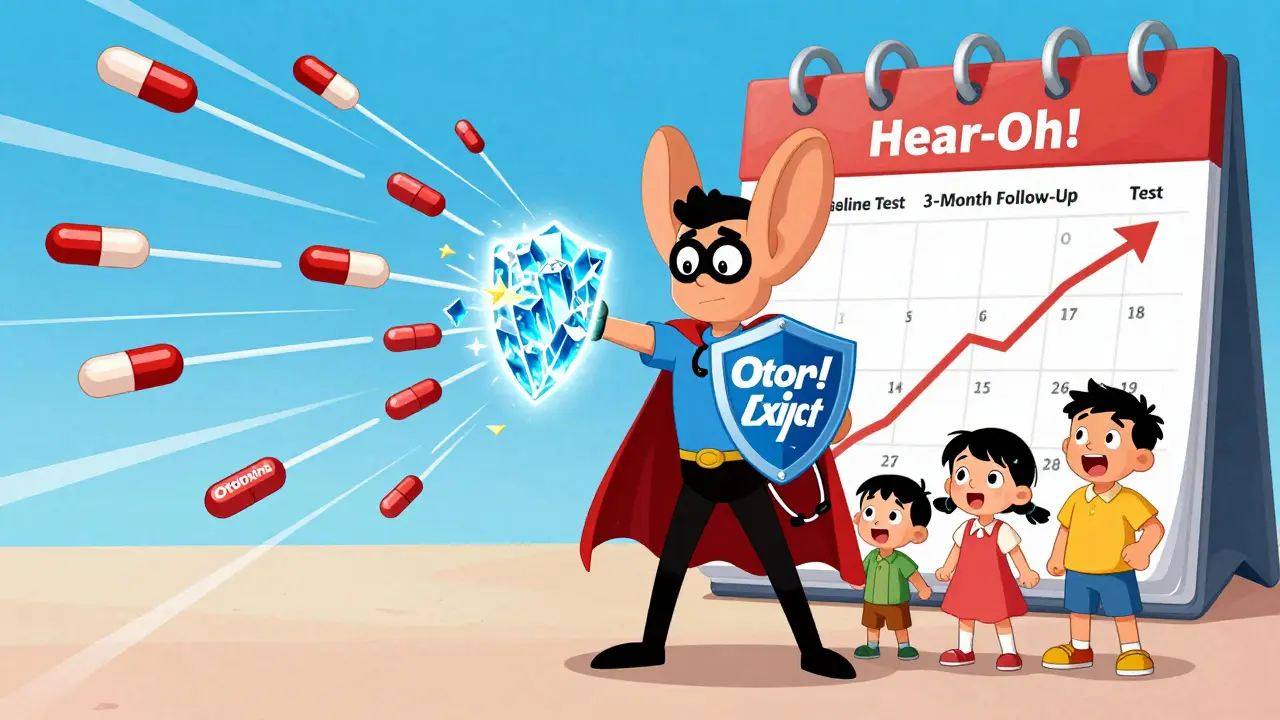
- After treatment ends-Cisplatin damage can keep worsening for months. A follow-up at 3 and 6 months is critical.
Can You Prevent the Damage?
You can’t always avoid these drugs-they’re life-saving. But you can reduce the risk.- Ask about alternatives. For some cancers, carboplatin can replace cisplatin with much lower ototoxicity. For infections, vancomycin may be safer than gentamicin.
- Ask about otoprotective agents. In November 2022, the FDA approved sodium thiosulfate (Pedmark) to reduce cisplatin-induced hearing loss in children. It cut the risk by 48% in trials.
- Consider antioxidants. N-acetylcysteine is being tested in clinical trials to protect against aminoglycoside damage. It’s not standard yet, but it’s promising.
- Genetic testing. Some people carry a mutation (m.1555A>G) that makes them 100 times more likely to go deaf from aminoglycosides. Testing isn’t routine-but if you have a family history of sudden hearing loss after antibiotics, ask about it.
The Real Cost of Ignoring Ototoxicity
Hearing loss isn’t just about not hearing the TV. It affects your relationships, your mental health, your ability to work, and your safety.- People with untreated hearing loss are twice as likely to develop depression
- Children with undetected hearing loss from cisplatin fall behind in school
- Balance issues from vestibular damage increase fall risk in older adults
- Over $1 billion is spent annually in the U.S. on hearing aids, rehab, and lost productivity from drug-induced hearing loss
What You Can Do Right Now
If you’re taking an ototoxic drug:- Ask your doctor: "Is this medication known to affect hearing?"
- Request a baseline audiogram that tests up to 8,000-12,000 Hz-don’t accept a standard test.
- Ask if your treatment plan includes regular high-frequency monitoring.
- Keep a journal: Note any ringing, muffled hearing, or dizziness as soon as you notice it.
- Find an audiologist who specializes in ototoxicity. They know the right tests and protocols.
What’s Next? New Tools on the Horizon
There’s hope. Researchers are developing smartphone apps that can detect high-frequency hearing loss using the phone’s speaker and microphone. One trial at Oregon Health & Science University showed these apps could increase monitoring access by 75%. New guidelines from the Ototoxicity Working Group are expected in mid-2024, and they’ll likely push for routine genetic screening and wider use of otoprotective drugs. The message is clear: Ototoxicity isn’t an unavoidable side effect. It’s a preventable medical oversight. With the right testing, awareness, and communication between patients and providers, thousands of cases of permanent hearing loss can be avoided.Can ototoxic hearing loss be reversed?
No, ototoxic hearing loss is permanent. The hair cells in the inner ear do not regenerate. Once they’re damaged or destroyed by drugs like cisplatin or gentamicin, the hearing loss is irreversible. The goal of monitoring is to catch damage early so you can adjust medication, reduce dosage, or use protective treatments before major loss occurs.
Do all antibiotics cause hearing loss?
No. Only certain classes are known to be ototoxic. Aminoglycosides like gentamicin, tobramycin, and amikacin carry the highest risk. Vancomycin, penicillin, and most common antibiotics like amoxicillin do not cause hearing loss. Always ask your doctor if your prescribed antibiotic is ototoxic.
Why don’t doctors always test for hearing loss before starting chemo?
Many oncologists aren’t trained in audiology and assume hearing loss is a rare or late side effect. Standard hearing tests don’t detect early damage, and clinics often lack the equipment or staff to do high-frequency testing. But guidelines from ASHA and the American Academy of Audiology clearly recommend baseline and serial audiograms for cisplatin and aminoglycoside patients. If your doctor doesn’t offer it, ask for a referral to an audiologist.
Is tinnitus always a sign of ototoxicity?
Not always, but if you develop new or worsening tinnitus while taking a known ototoxic drug, it’s a major red flag. Tinnitus is often the first symptom of inner ear damage. Don’t ignore it-schedule a hearing test right away. Many patients report tinnitus before they even notice hearing loss.
Can children be protected from cisplatin-induced hearing loss?
Yes. The FDA approved sodium thiosulfate (Pedmark) in 2022 specifically for children with localized hepatoblastoma receiving cisplatin. It reduced hearing loss by 48% in clinical trials. It’s now standard of care for eligible pediatric patients. Parents should ask their oncologist if their child is a candidate for this protective treatment.
Are there any natural supplements that protect hearing from ototoxic drugs?
N-acetylcysteine (NAC) is being studied as a potential otoprotective agent for aminoglycosides. Early trials show it may reduce oxidative damage in the inner ear. However, it’s not yet approved for this use, and you should never take supplements without talking to your doctor-they can interfere with chemotherapy or antibiotics. Don’t self-treat.


Comments (13)