
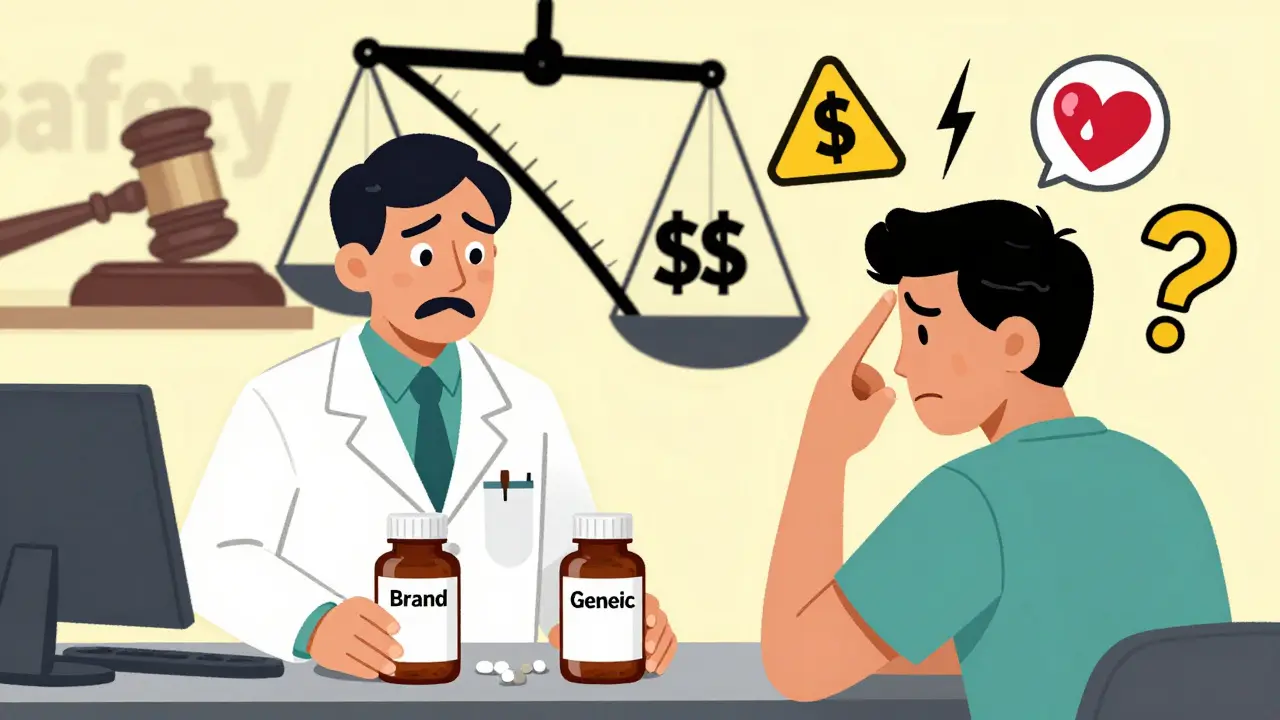
When a pharmacist fills a prescription for a generic drug instead of the brand-name version, they’re not just saving money-they’re stepping into a legal gray zone. In 2026, with over 90% of U.S. prescriptions filled as generics, this practice is routine. But behind every substitution is a hidden risk: professional liability. If a patient has an adverse reaction after switching from a brand-name drug to a generic, who’s responsible? The pharmacist? The manufacturer? The prescribing doctor? The answer depends on where you live.
Why Generic Substitution Isn’t as Simple as It Looks
Generic drugs are supposed to be identical to their brand-name counterparts. The FDA requires them to have the same active ingredient, strength, dosage form, and route of administration. They must also meet bioequivalence standards-meaning their absorption rate in the body falls within 80% to 125% of the brand-name drug. Sounds solid, right? But here’s the catch: bioequivalence doesn’t guarantee therapeutic equivalence. For drugs with a narrow therapeutic index-like warfarin, levothyroxine, and antiepileptics-even a small difference in absorption can lead to serious consequences. A 2017 study in Epilepsy & Behavior found that 18.3% of patients experienced therapeutic failure after switching generic antiepileptic drugs. Some had breakthrough seizures. Others developed dangerous side effects. And in many cases, neither the patient nor the pharmacist knew substitution had occurred.The Legal Trap: Federal Preemption and State Laws
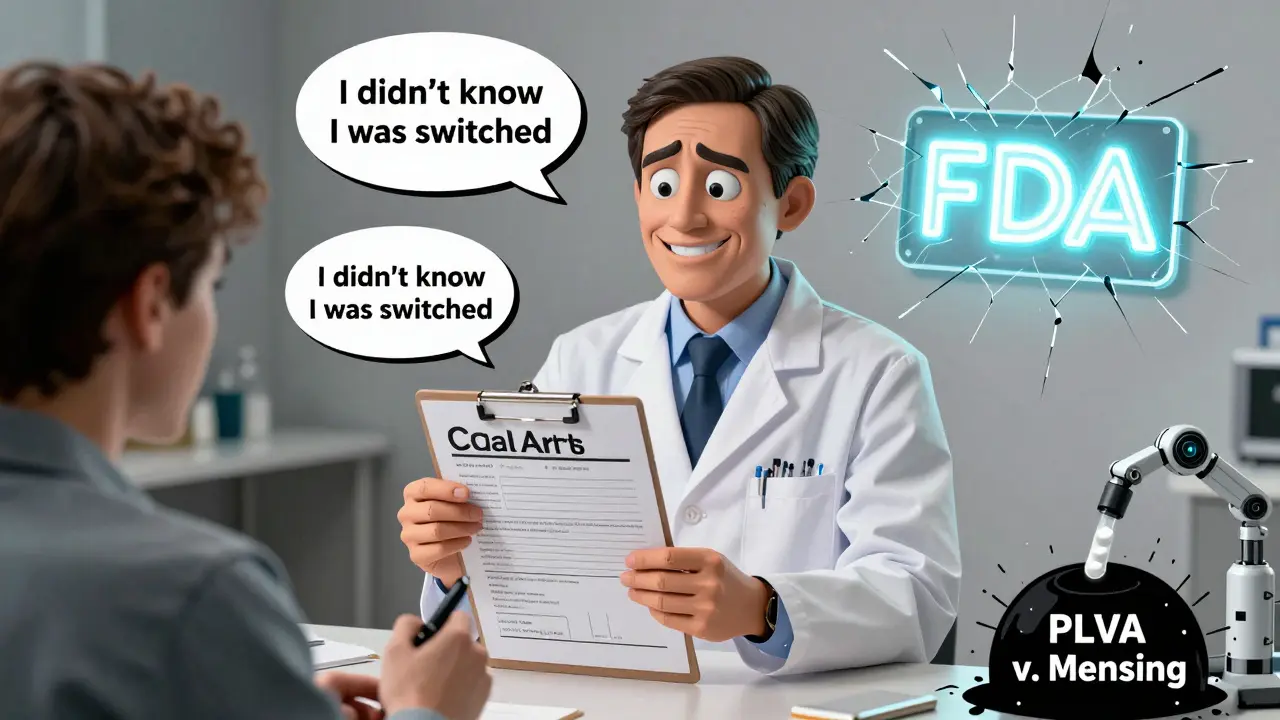
In 2011, the U.S. Supreme Court ruled in PLIVA v. Mensing that generic drug manufacturers can’t be sued under state law for failing to update warning labels. Why? Because federal law forces them to use the exact same label as the brand-name drug. They can’t change it on their own. This decision created a legal black hole: if a drug becomes unsafe, no one can be held accountable under state tort law. That leaves pharmacists caught in the middle. State laws vary wildly. In 27 states, pharmacists are required to substitute generics unless the prescriber says otherwise. In 23 others, substitution is optional. Eighteen states require pharmacists to notify patients directly-beyond just the label. Thirty-two states let patients refuse substitution. But in states like Connecticut and Massachusetts, there are no clear liability protections for pharmacists. If something goes wrong, they could be on the hook. A 2019 study by the National Community Pharmacists Association found that states with strong liability protections saw 32% fewer malpractice claims related to substitution. States without them? 27% higher claim rates. That’s not coincidence-it’s risk.Who Pays When Things Go Wrong?
The system was built for cost savings, not patient safety. Between 2009 and 2018, generic drugs saved the U.S. healthcare system $1.67 trillion. That’s huge. But when a patient suffers harm, the legal system often says: “Too bad.” Take the case documented in the Journal of Patient Safety in 2019. A patient suffered permanent neurological damage after a generic antiepileptic drug was substituted. The court dismissed the lawsuit-not because the drug was safe, but because federal law blocked liability claims against the generic manufacturer. The pharmacist followed state law. The prescriber didn’t object. No one broke a rule. Yet someone was permanently injured. Patients don’t always know they’ve been switched. A 2021 survey by the Patient Advocacy Foundation found that 41% of patients weren’t aware their prescription had been changed until they started feeling worse. In states where notification isn’t required, pharmacists aren’t obligated to say anything. That’s not negligence-it’s the law.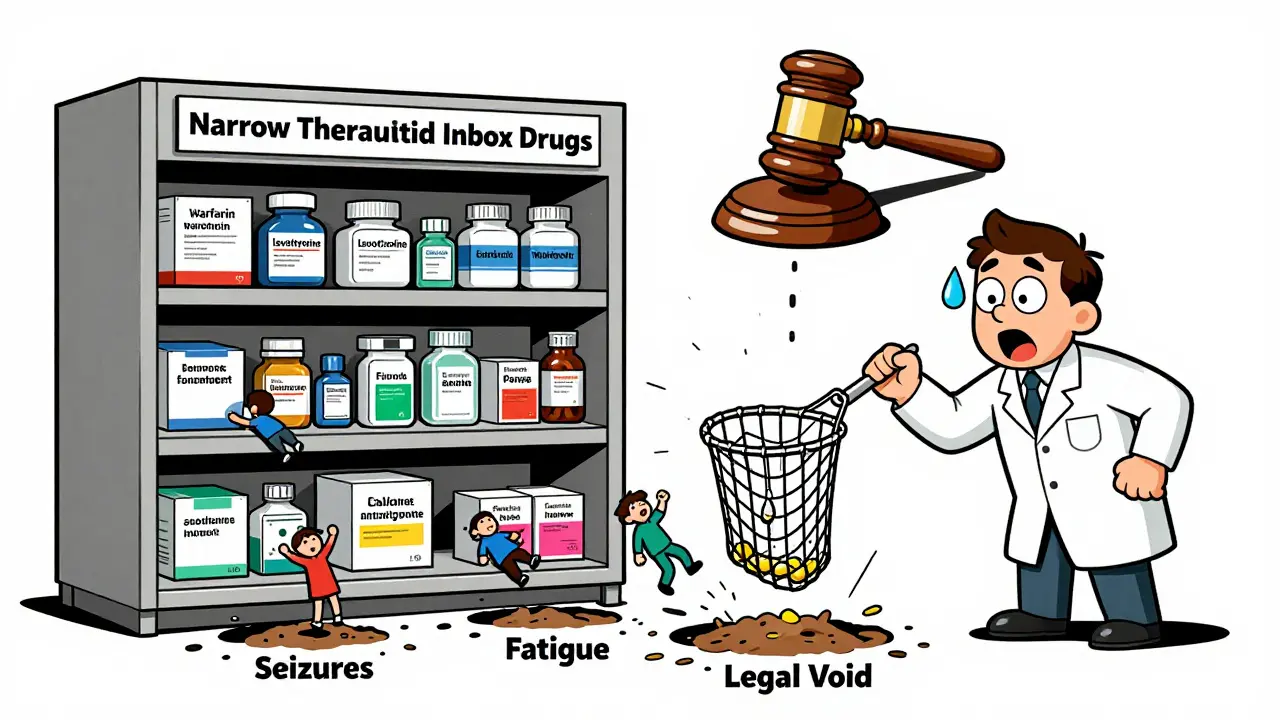
Where the Risk Is Highest: Narrow Therapeutic Index Drugs
Not all generics are equal. For drugs like warfarin (a blood thinner), levothyroxine (for thyroid conditions), and certain seizure medications, even minor differences in how the body absorbs the drug can be dangerous. The American Epilepsy Society reported a 7.9% increase in seizure risk when switching generic antiepileptic drugs. A Reddit thread from 2022 with over 4,000 upvotes detailed patients who went from feeling fine on brand-name levothyroxine to debilitating fatigue, weight gain, and depression after switching to generic. Sixty-eight percent of commenters said they’d had similar experiences. Yet pharmacists are still expected to substitute these drugs routinely. Why? Because state laws don’t make exceptions. And because insurance plans push for the cheapest option. The result? A system that works well for statins and blood pressure meds-but falls apart for drugs where precision matters.How Pharmacists Can Reduce Risk
You can’t eliminate risk, but you can manage it. Here’s what works:- Know your state’s law. Substitution rules change every year. Use the National Association of Boards of Pharmacy’s annual compendium. Don’t guess.
- Use EHR alerts. If your electronic health record system flags drugs with narrow therapeutic indices, pay attention. Set up automatic prompts before dispensing.
- Get written consent. Even if your state doesn’t require it, document patient agreement. Use a simple form: “I understand this generic has been substituted. I’ve been informed of potential risks.”
- Log every substitution. Record the brand name, generic name, lot number, and date. If a problem arises later, you’ll have proof you followed protocol.
- Communicate with prescribers. If you’re uncomfortable substituting a drug like warfarin or levothyroxine, call the doctor. They may not know the risks either.
- Get extra insurance. Standard malpractice policies often exclude substitution-related claims. Ask your insurer for coverage that includes generic liability.
The Bigger Picture: What’s Changing?
In 2023, 11 states introduced the Generic Drug Safety Act. It would require brand-name manufacturers to update labels within 30 days of new safety data-and force generic makers to adopt those changes within 60 days. That’s a big shift. It could finally close the liability gap. The FDA is also testing a pilot program that lets manufacturers request label updates. So far, 68% of requests have been approved. But here’s the kicker: only 12% came from generic manufacturers. The rest came from brand-name companies or the FDA itself. Meanwhile, biosimilars are entering the scene. These are complex biologic drugs-like insulin or rheumatoid arthritis treatments-that are being substituted in 45 states. The rules? Even messier. No one knows how liability will shake out when a biosimilar fails.What You Need to Do Today
You’re not just a dispenser. You’re a gatekeeper. Your actions today shape patient outcomes tomorrow. Here’s what to do right now:- Check your state’s current substitution law. Don’t rely on memory.
- Review your pharmacy’s substitution policy. Is it written? Is it followed?
- Train your staff. Every tech and pharmacist needs to know the risks.
- Start using consent forms-even if your state doesn’t require them.
- Call your malpractice insurer. Ask: “Do I have coverage for generic substitution claims?”
Can a pharmacist be sued for substituting a generic drug?
Yes, but only in certain states and under specific conditions. In states without liability protections, pharmacists may face malpractice claims if a patient is harmed after substitution-especially if they failed to notify the patient, ignored state rules, or substituted a narrow therapeutic index drug without consent. In states with clear protections, pharmacists are shielded from greater liability than if they dispensed the brand-name drug.
Are all generic drugs safe to substitute?
No. Generic drugs are considered bioequivalent, but not always therapeutically equivalent. For drugs with a narrow therapeutic index-such as warfarin, levothyroxine, phenytoin, and carbamazepine-even small differences in absorption can lead to treatment failure or toxicity. Clinical evidence shows increased risks for seizures, thyroid dysfunction, and bleeding events after substitution of these drugs.
Do patients have the right to refuse a generic substitution?
Yes, in 32 states and Washington, D.C., patients can refuse substitution. Pharmacists must honor that request. Even in states where substitution is mandatory, patients can opt out if they express clear opposition. Best practice is to ask patients directly and document their decision.
Why don’t generic manufacturers update their labels?
Federal law requires generic manufacturers to use the same label as the brand-name drug. They cannot independently change warnings, even if new safety data emerges. This legal constraint, upheld by the Supreme Court in PLIVA v. Mensing, prevents them from being held liable for outdated labels-but also leaves patients without updated safety information.
What’s the difference between bioequivalence and therapeutic equivalence?
Bioequivalence means the generic drug is absorbed into the bloodstream at a rate and extent similar to the brand-name drug (within 80-125%). Therapeutic equivalence means the drug produces the same clinical effect and safety profile. A drug can be bioequivalent but not therapeutically equivalent-especially for drugs with narrow therapeutic windows, where small differences in absorption lead to major clinical consequences.


Comments (15)