
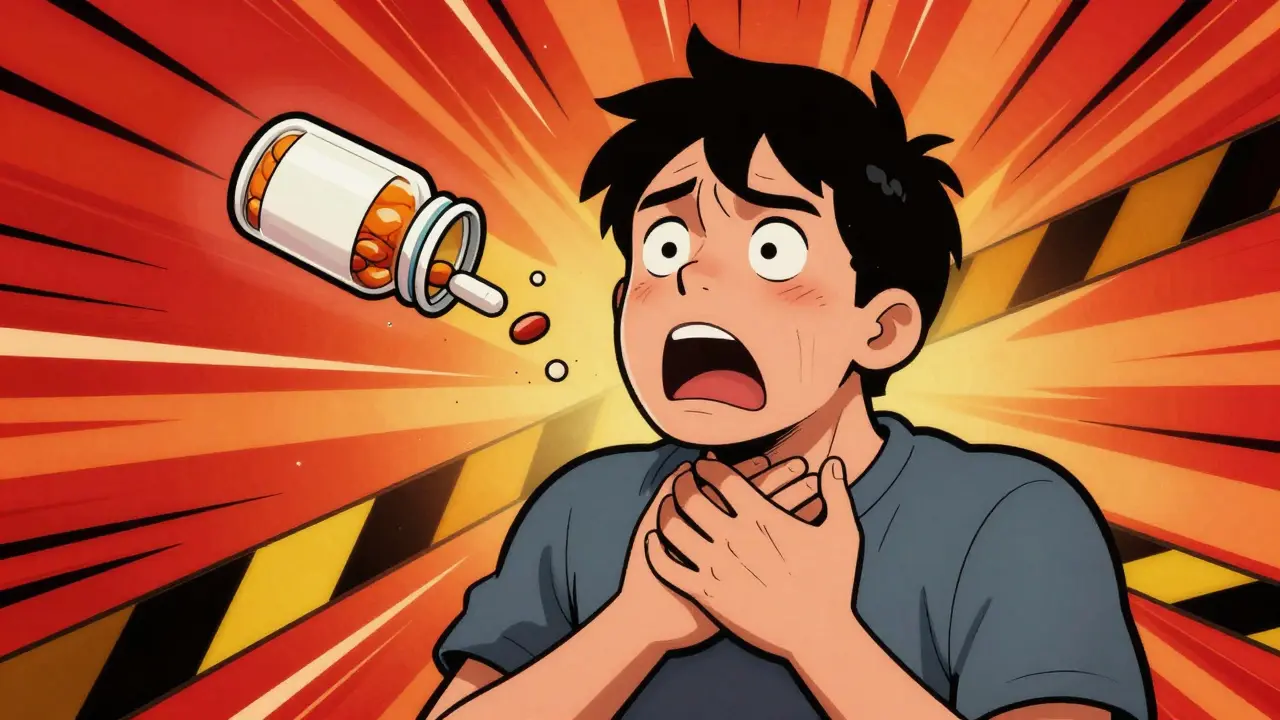
Medications save lives - but sometimes, they can turn dangerous in minutes. A severe adverse drug reaction doesn’t wait for a doctor’s appointment. It strikes fast, and if you don’t act, it can kill. You might be taking a common painkiller, an antibiotic, or even a daily blood pressure pill - and suddenly, your body reacts in a way no one warned you about. This isn’t a mild rash or a stomach upset. This is life-or-death. Knowing the signs and acting immediately can make all the difference.
What Counts as a Severe Drug Reaction?
A severe adverse drug reaction (ADR) isn’t just a side effect. It’s an unexpected, dangerous response that can lead to death, permanent damage, or hospitalization. The U.S. Food and Drug Administration defines it as any reaction that causes death, is life-threatening, requires hospitalization, or leads to disability. The most common culprits? Anticoagulants like warfarin (which can cause uncontrolled bleeding), diabetes medications like insulin (leading to dangerously low blood sugar), and opioids (slowing breathing to a stop).
But not all reactions are the same. Some hit fast. Others creep in over days. And each needs a different response. The key is recognizing which one you’re dealing with - and knowing when to call 911 or head straight to the ER.
Signs You Need Emergency Help Right Now
If you or someone you’re with starts showing these symptoms after taking a new medication - even one you’ve taken before - don’t wait. Don’t hope it gets better. Get help immediately.
- Difficulty breathing - wheezing, gasping, or feeling like your throat is closing
- Swelling of the face, lips, tongue, or throat - this can block your airway within minutes
- Sudden drop in blood pressure - dizziness, fainting, cold or clammy skin, rapid weak pulse
- Widespread hives or rash - especially if it spreads fast or is accompanied by swelling or breathing trouble
- High fever with blistering skin or peeling - this could be Stevens-Johnson Syndrome or Toxic Epidermal Necrolysis
- Confusion, seizures, or loss of consciousness - signs your brain or organs are under attack
These aren’t "maybe it’s nothing" symptoms. They’re red flags. And they need emergency care - not a call to your pharmacist or a wait until morning.
Anaphylaxis: The Silent Killer That Strikes Fast
One of the most dangerous reactions is anaphylaxis - a Type I allergic response triggered by drugs like penicillin, NSAIDs, or even contrast dye used in imaging scans. It happens within minutes to a couple of hours after taking the drug. The body releases massive amounts of histamine, causing blood vessels to leak, airways to swell, and blood pressure to crash.
Here’s the hard truth: if you have anaphylaxis and don’t get epinephrine within minutes, your chance of dying goes up. The Resuscitation Council UK says the death rate for untreated anaphylaxis is between 0.3% and 1%. That might sound low - until it’s you.
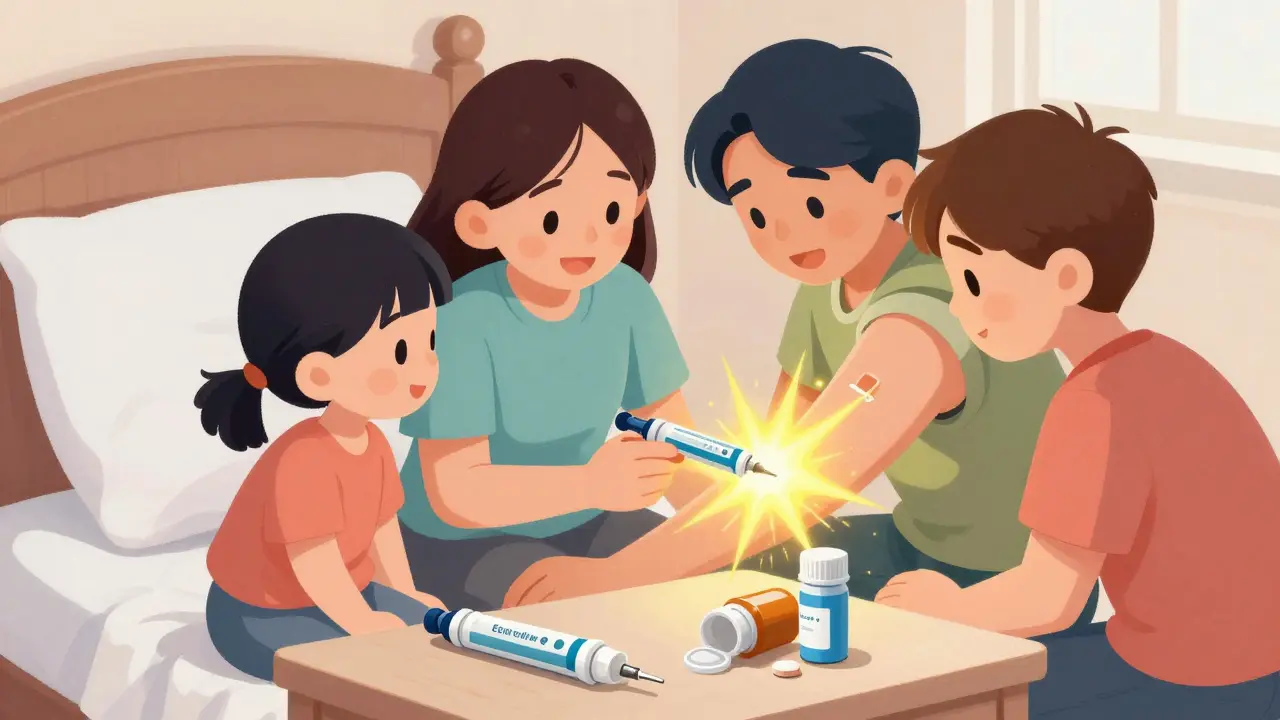
Epinephrine is the only thing that stops this. It tightens blood vessels, opens airways, and buys you time. The dose? 0.01 mg per kg, injected into the outer thigh. Most people use an auto-injector like an EpiPen. If symptoms don’t improve in 5 minutes, give a second dose. Don’t wait for an ambulance to arrive. Don’t wait to see if it gets worse. Give epinephrine now.
And here’s what most people don’t know: you can have anaphylaxis without a rash. Swelling, trouble breathing, or dizziness alone are enough to warrant epinephrine. If you’ve ever had a severe reaction before, your doctor should have given you an auto-injector. If you haven’t - ask for one. Keep it with you. Know how to use it. Teach your family how to use it too.

Stevens-Johnson Syndrome and Toxic Epidermal Necrolysis: When Your Skin Starts Dying
Then there are the reactions that don’t kill you fast - but leave you broken. Stevens-Johnson Syndrome (SJS) and Toxic Epidermal Necrolysis (TEN) are rare but deadly skin reactions. They often start like the flu - fever, sore throat, burning eyes - then turn into a painful rash that blisters and peels. In TEN, more than 30% of your skin can detach, like a severe burn.
These reactions are usually caused by antibiotics like sulfonamides, anticonvulsants like carbamazepine, or painkillers like celecoxib. They show up 1 to 3 weeks after starting the drug. The mortality rate? 10% for SJS. Up to 50% for TEN.
Epinephrine won’t help here. What you need is immediate hospitalization - often in a burn unit. Doctors stop the drug, give IV fluids, manage infections, and sometimes use immunosuppressants like cyclosporine. But the key is catching it early. If you notice your skin starting to blister or peel after a fever and rash - go to the ER. Don’t wait for it to get worse.
What to Do in the Moment
When a severe reaction hits, time is everything. Here’s what to do:
- Stop the drug immediately. Don’t wait to talk to your doctor. Take it away from the person.
- Call emergency services. In Australia, dial 000. Say: "I think this is a severe drug reaction. They’re having trouble breathing/swelling/peeling skin." Be specific.
- Use epinephrine if you have it. Inject into the outer thigh. Even if you’re unsure, it’s safer to use it than to hold off.
- Keep the person lying down. If they’re having trouble breathing, let them sit up slightly. Don’t let them stand or walk.
- Don’t give antihistamines or steroids instead. They don’t stop anaphylaxis. Epinephrine does.
- Bring the drug bottle. When you get to the hospital, bring the medication, the packaging, and any other drugs taken recently.
Emergency responders are trained for this. But if you act before they arrive, you might save a life.
Who’s at Risk - and What to Do About It
Anyone can have a severe reaction. But some people are more at risk:
- Those with a history of drug allergies
- People taking multiple medications (polypharmacy)
- Older adults - their bodies process drugs slower
- People with autoimmune diseases or HIV
- Those with specific genetic markers (like HLA-B*15:02 for carbamazepine)
If you’ve had a reaction before, you’re at higher risk for another. Keep a written list of every drug you’ve reacted to - and share it with every doctor you see. Ask for a medical alert bracelet. Store your epinephrine in a place you can reach instantly - your purse, your coat pocket, your bedside table.
And if you’re prescribed a new drug, ask: "What are the warning signs of a bad reaction? What should I do if I notice them?" Don’t assume your doctor will tell you. Most don’t.
What Happens After the Emergency
Surviving a severe reaction doesn’t mean you’re safe. You’ll need follow-up care. A specialist - usually an allergist or immunologist - will help you figure out what caused it. They might do skin tests or blood tests to confirm the trigger. You’ll get an emergency action plan. And you’ll learn how to avoid the drug - and similar ones - for life.
Some drugs are cross-reactive. If you reacted to penicillin, you might also react to amoxicillin. If you had SJS from sulfamethoxazole, you might react to other sulfa drugs. Your doctor will give you a list of what to avoid.
And yes - you’ll need to report the reaction. In Australia, the Therapeutic Goods Administration (TGA) collects reports of serious drug reactions. Reporting helps protect others. Your doctor can file it. Or you can report it yourself at tga.gov.au.
Final Thought: Don’t Wait for Permission
Too many people die because they hesitate. "Maybe it’s just a rash." "I’ll wait and see." "I don’t want to bother anyone."
Severe drug reactions don’t care about your hesitation. They move fast. They don’t ask if you’re ready. They don’t wait for a doctor’s office to open.
If you see the signs - swelling, trouble breathing, skin peeling, sudden collapse - act. Use epinephrine. Call 000. Don’t wait. Don’t second-guess. Your life - or someone else’s - could depend on it.


Comments (13)