
For decades, bioequivalence (BE) studies-the clinical tests that prove a generic drug works just like the brand-name version-were done almost exclusively on young, healthy men. It wasn’t because women or older adults didn’t need these drugs. It was because it was easier. Easier to control variables. Easier to recruit. Easier to get regulatory approval. But that approach is changing. Fast.
Why Bioequivalence Studies Used to Exclude Women and Older Adults
The old logic was simple: if a drug works in a 25-year-old man, it should work in everyone else. That idea came from a time when clinical trials in general were dominated by male subjects. In bioequivalence, the focus was on detecting differences between two formulations-not on how the drug behaves in different people. So researchers picked a group that was predictable: young men with no chronic conditions, no hormonal fluctuations, no other medications. They were seen as the "cleanest" population to measure absorption rates. But that assumption had a flaw. It ignored biology. Women and older adults metabolize drugs differently. Their stomachs empty slower. Their liver enzymes work at different speeds. Their body fat and water content vary. For example, studies show that for 37% of commonly tested drugs, clearance rates are 15-22% higher in men than in women. That’s not a small difference. It can mean the difference between a drug working well and causing side effects-or not working at all.What Regulatory Agencies Now Require
The U.S. Food and Drug Administration (FDA) changed the rules in 2023. In its updated draft guidance, the agency now says: if a drug is meant for both men and women, your bioequivalence study must include both. Roughly half should be male, half female. No exceptions unless you have solid scientific proof that one sex doesn’t respond differently. The same applies to older adults. If the drug is meant for people over 65, your study must include them-or explain why you didn’t. The European Medicines Agency (EMA) is less strict. Their 2010 guideline says subjects "could belong to either sex," but doesn’t require balance. Still, they’ve signaled they’re reviewing this. Brazil’s ANVISA is even clearer: studies must have equal numbers of men and women, ages 18 to 50, non-smokers, with BMI between 18.5 and 30. Canada allows 18 to 55. But the trend is clear: regulators are moving toward real-world representation.Why Balance Matters: Real Examples
In 2017, a small BE study on a blood pressure drug showed a problem. In men, the generic version delivered only 79% of the brand’s exposure. That looked like bioinequivalence. But in women, it delivered 95%. The same formulation. Different results. Later, a larger study with 36 participants found the initial result was a statistical fluke-too few women in the group skewed the data. But that’s the danger. Small studies with unbalanced groups can falsely flag safe generics as unsafe-or worse, approve ones that won’t work for half the population. Take levothyroxine, a thyroid hormone used by millions. Nearly two-thirds of users are women. Yet BE studies for this drug often enroll only 20-25% women. That’s not just misleading. It’s risky. Women may need different dosing due to weight, hormone levels, or how their bodies absorb the drug. If a generic is tested only in men, it might be too weak for women. Or too strong. And no one would know until someone got sick.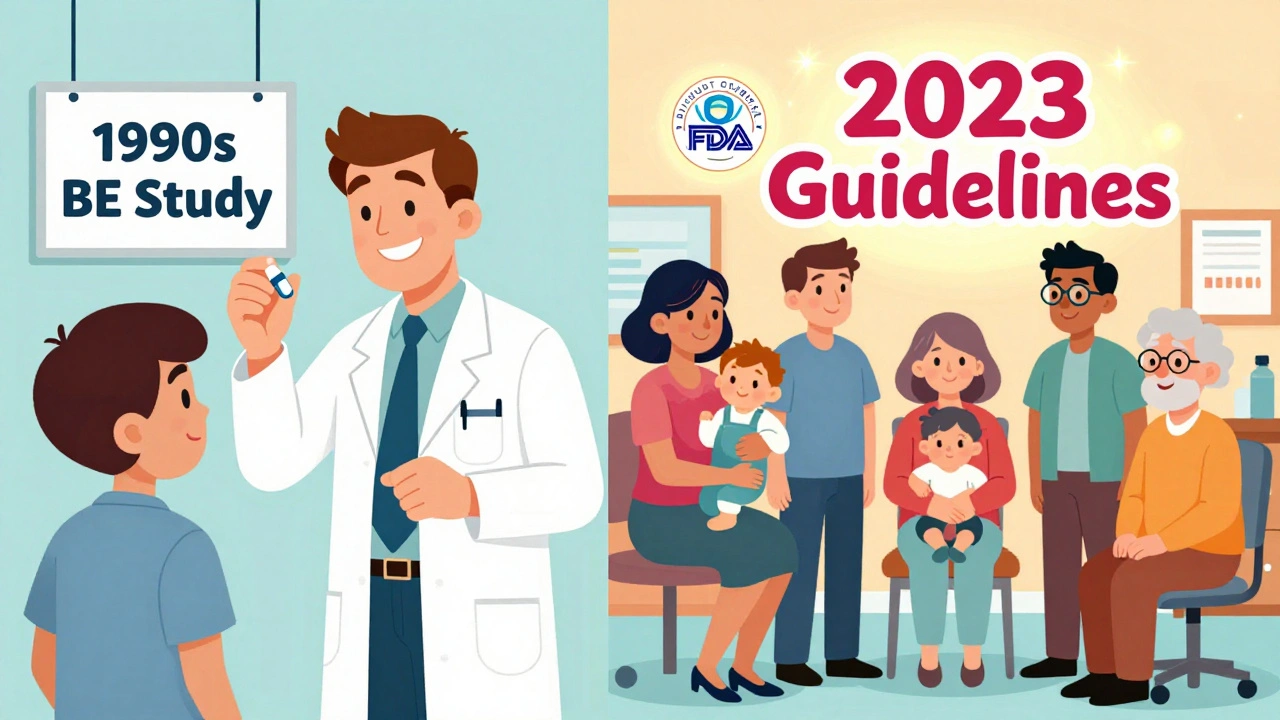
Practical Challenges for Drug Companies
It’s not easy to recruit women for BE studies. Many women juggle work, childcare, or elder care. Clinical trials often require multiple visits over several days-hard to fit in. Sites report recruitment takes 40% longer when aiming for gender balance. And there’s another hurdle: women are less likely to volunteer for drug studies because of pregnancy fears. Even if they’re using contraception, sponsors are nervous. The FDA requires female participants to use two forms of birth control or abstain. That’s a big barrier. Costs go up too. Gender-balanced studies can cost 20-30% more. But the bigger cost is in risk. If a generic is approved based on unbalanced data and later causes harm in women, the company faces lawsuits, recalls, and loss of trust. That’s why 68% of contract research organizations (CROs) now actively recruit women-targeted ads, flexible hours, childcare support. Still, only 29% track sex-specific pharmacokinetic data routinely. That’s a gap.What Happens If You Don’t Follow the Rules?
Regulators aren’t just asking for balance-they’re checking for it. The FDA now requires sponsors to submit a justification if they enroll only one sex. If you skip older adults for a drug meant for seniors, your application gets rejected. In 2021, the FDA’s Office of Generic Drugs reviewed 1,200 applications. Only 38% had female participation between 40-60%. The median? Just 32%. That’s not just inadequate-it’s unacceptable under the new guidance. One company tried to save time and money by testing a new generic antidepressant only in men. The FDA flagged it. The sponsor argued that since the drug was metabolized by the liver, and liver function was similar across sexes, sex didn’t matter. The FDA responded: "We have data showing sex differences in absorption for this class of drugs. Your data doesn’t prove otherwise." The application was delayed for eight months while the company ran a new study with 40 women.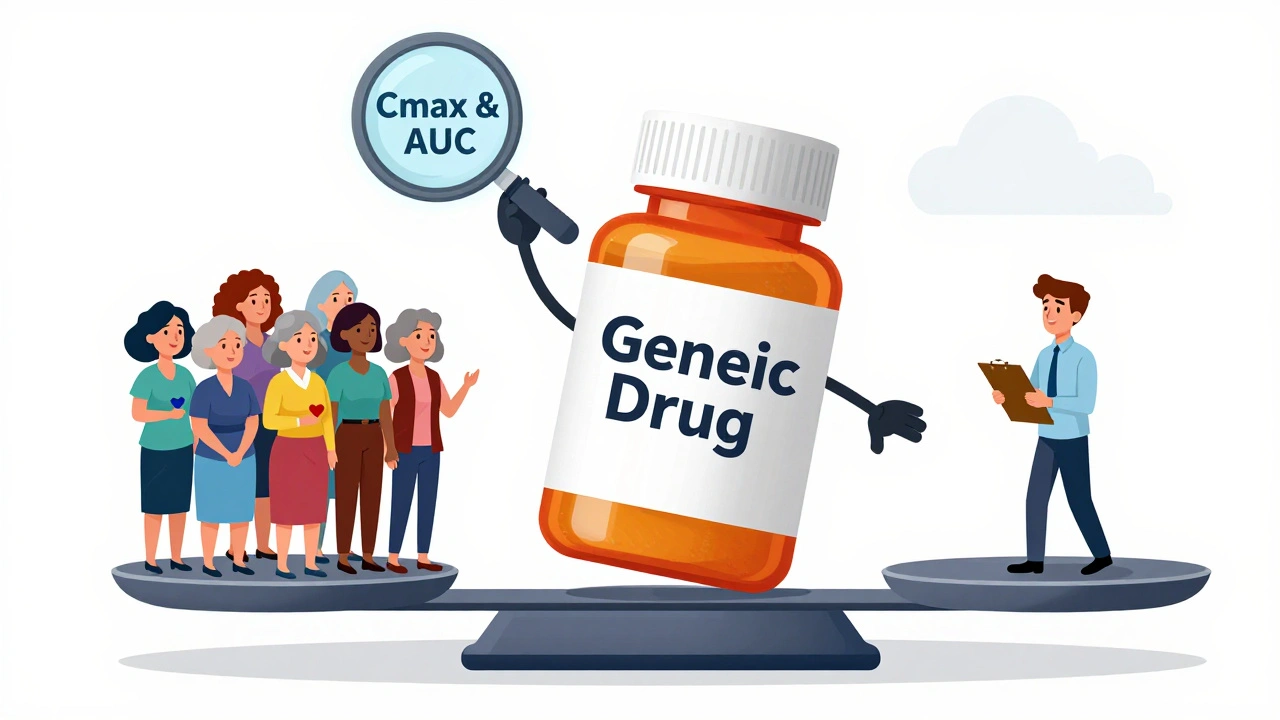
What Should You Do If You’re Designing a BE Study?
If you’re planning a bioequivalence study, here’s what you need to do:- Match your population to the target. If the drug is for older adults, include people 60+. If it’s for women, enroll women. No exceptions.
- Stratify by sex. Randomize participants so that each treatment sequence has equal numbers of men and women. Don’t just hope it balances out.
- Plan for subgroup analysis. Don’t just look at the overall result. Analyze men and women separately. Look for differences in Cmax (peak concentration) and AUC (total exposure).
- Document everything. Your Clinical Study Report must list age, sex, BMI, smoking status, and any medications participants are taking. ANVISA and the FDA both require this.
- Use enough people. Don’t go below 24 participants. Studies with fewer than 36 can miss sex-by-formulation interactions. Chen et al. proved that in 2018: small groups create false signals.
The Future of Bioequivalence: More Inclusion, Better Science
The science is catching up. A 2023 University of Toronto study found that sex differences in drug clearance aren’t rare-they’re common. For nearly 4 in 10 drugs, men and women process them differently. That’s not noise. That’s biology. And ignoring it isn’t just outdated. It’s dangerous. Regulators know this. The FDA’s 2023-2027 strategic plan lists "enhancing representation of diverse populations in generic drug development" as a top priority. The EMA is expected to update its guidelines in 2024. Other agencies will follow. The bottom line? Bioequivalence isn’t about proving two pills are the same in a lab. It’s about proving they work the same in real people. And real people aren’t just 25-year-old men. They’re women, seniors, people with different body types, different lifestyles. If your study doesn’t reflect that, it’s not just incomplete. It’s flawed.Why were bioequivalence studies historically done only on young men?
Early BE studies used young, healthy men because they were seen as the most predictable group-fewer hormonal changes, no chronic conditions, lower variability in drug metabolism. This made it easier to detect small differences between drug formulations. But this approach ignored biological differences in women and older adults, leading to gaps in safety and effectiveness data for those populations.
Does the FDA require equal numbers of men and women in BE studies?
Yes. The FDA’s 2023 draft guidance requires that if a drug is intended for both sexes, the study population should include similar proportions of males and females-ideally close to 50:50. Deviations require strong scientific justification. This is a shift from earlier guidelines, which didn’t mandate balance.
What if my drug is only used by women?
If the drug is indicated only for women-for example, certain hormonal therapies or osteoporosis treatments-then the BE study should include only female participants. The FDA and other regulators expect the study population to match the intended patient population. Including men in such cases would be scientifically irrelevant and could confuse results.
How many participants should a bioequivalence study have?
While the EMA minimum is 12 evaluable subjects, most studies enroll 24-36 to account for dropouts and ensure statistical power. Studies with fewer than 24 participants risk missing sex-by-formulation interactions. Chen et al. (2018) showed that small studies (n=12-14) produced false signals of bioinequivalence, while larger studies (n≥36) gave reliable results.
Are older adults required in BE studies?
Only if the drug is intended for use in older adults. The FDA requires inclusion of subjects aged 60+ for drugs targeting that population, or a detailed justification for exclusion. The EMA and ANVISA don’t mandate it unless the drug’s use is age-specific. But with aging populations and increased polypharmacy in seniors, including older adults is becoming standard practice.
What happens if a BE study doesn’t include enough women?
Regulators may delay or reject the application. The FDA has flagged submissions with low female participation, especially for drugs used predominantly by women. If a drug like levothyroxine-used by 63% women-is tested in a study with only 25% women, the data may not reflect real-world effectiveness. This increases the risk of underdosing or adverse effects in female patients after approval.
Is there a difference in how men and women metabolize drugs?
Yes. Studies show sex differences in drug absorption, distribution, metabolism, and excretion. Women often have higher body fat, lower body weight, slower gastric emptying, and different enzyme activity (like CYP3A4). For 37% of commonly tested drugs, clearance rates are 15-22% higher in men. These differences can affect how well a generic drug works compared to the brand.
How can sponsors improve female recruitment in BE studies?
Sponsors are improving recruitment by offering flexible scheduling, on-site childcare, transportation support, and targeted outreach to women’s health clinics. Some CROs now use social media campaigns and partnerships with women’s organizations. Tracking participation rates and adjusting strategies based on data has also helped. Still, recruitment remains slower and more expensive than for male-only studies.


Comments (8)