
Steroid Insulin Adjuster
How Steroids Affect Your Blood Sugar
Steroids cause insulin resistance and increase liver glucose production. Your insulin needs increase by 30-50% with moderate steroid doses (20-60mg prednisone equivalent).
Insulin Adjustment Calculator
Recommended Insulin Adjustments
Important Tips
Check post-meal glucose: Monitor 2 hours after breakfast and lunch when on steroids. Fasting glucose alone can miss up to 20% of spikes.
Adjust during tapering: Reduce insulin by 10-20% for every 10mg drop in prednisone equivalent. Never stop insulin abruptly.
CGM recommendation: Continuous glucose monitors show real-time trends and reduce hypoglycemia risk by 33% during steroid therapy.
When you start taking steroids - whether it's prednisone for an autoimmune flare, hydrocortisone after surgery, or dexamethasone for inflammation - your blood sugar can go off the rails. Even if you’ve never had diabetes before, your glucose levels might spike. For people already managing diabetes, steroids can turn a stable routine into chaos. This isn’t just a minor inconvenience. It’s a medical event that needs a targeted plan. Steroid hyperglycemia is real, common, and often misunderstood. And if you’re not adjusting your insulin or oral meds correctly, you risk serious complications - from dehydration and infections to diabetic ketoacidosis or dangerous lows when the steroids taper off.
Why Steroids Raise Blood Sugar
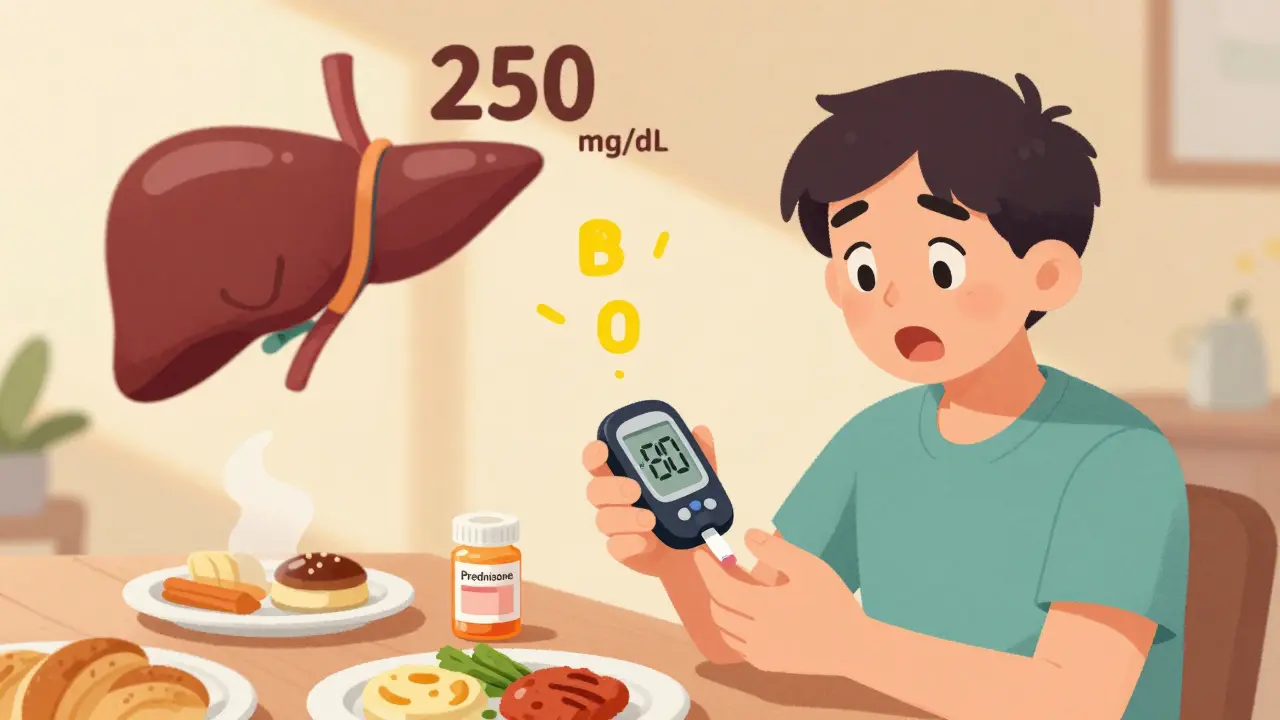
Steroids don’t just reduce swelling or calm your immune system. They mess with how your body handles sugar. Glucocorticoids - the type used in pills, shots, or IVs - block insulin from doing its job. Your muscles and fat cells stop absorbing glucose like they should. At the same time, your liver starts pumping out more sugar. Your pancreas also gets confused - it doesn’t release enough insulin to match the flood of glucose. It’s a triple whammy: more sugar in, less insulin out, and your body can’t use what’s there.
This isn’t random. The timing matters. If you take a steroid pill in the morning, your blood sugar will usually peak 4 to 8 hours later - right after breakfast and lunch. That’s why fasting glucose readings can be misleading. You might think you’re fine because your morning number looks okay, but your post-lunch glucose could be 250 mg/dL or higher. Studies show this pattern happens in over 80% of people on moderate to high steroid doses. And if you’re on a long-acting steroid like dexamethasone, the effect lasts days. Shorter ones like hydrocortisone cause sharper spikes that come and go faster.
Who’s at Highest Risk
Not everyone on steroids develops high blood sugar - but some people are far more likely to. If you already have type 2 diabetes, your risk jumps to over 60%. Even if you’ve never been diagnosed, you might be heading toward steroid-induced diabetes if you have:
- Body mass index (BMI) over 30
- Age 65 or older
- Family history of diabetes
- History of prediabetes or gestational diabetes
- Chronic hepatitis C
- Low magnesium levels
And it gets worse if you’re on other immunosuppressants. Tacrolimus, often used after transplants, cuts insulin production by 35-45%. Mycophenolate can stress your pancreas further. The combination of steroids and these drugs is like pouring gasoline on a fire. In transplant patients, up to 50% develop new-onset diabetes within the first year.
How Much Insulin Do You Need?
There’s no one-size-fits-all answer, but the numbers tell a clear story. For every 20 mg of prednisone (or its equivalent), insulin needs go up. In people with existing diabetes, most need 30-50% more total insulin when starting moderate steroid doses. For high doses - say, 100 mg of hydrocortisone daily - insulin requirements can double or even triple.
Here’s what works in practice:
- Basal insulin: Increase by 10-20% for every 50 mg hydrocortisone equivalent. If you were on 30 units of long-acting insulin before, you might need 36-40 units now.
- Mealtime insulin: This is where the biggest changes happen. Since steroids spike sugar after meals, you’ll need 50-100% more rapid-acting insulin at breakfast and lunch. Dinner doses often stay the same unless you’re on a long-acting steroid.
For example, a patient on 40 mg prednisone daily might need to increase their morning rapid-acting insulin from 8 units to 15 units. Their lunch dose might jump from 6 to 12 units. Their bedtime long-acting insulin might only go up by 2-4 units. The key is matching insulin to the steroid’s peak, not to your usual routine.
Monitoring: More Than Just Fasting Glucose
Checking your blood sugar only in the morning is like only looking at your car’s fuel gauge once a week. You’ll run out of gas without knowing why.
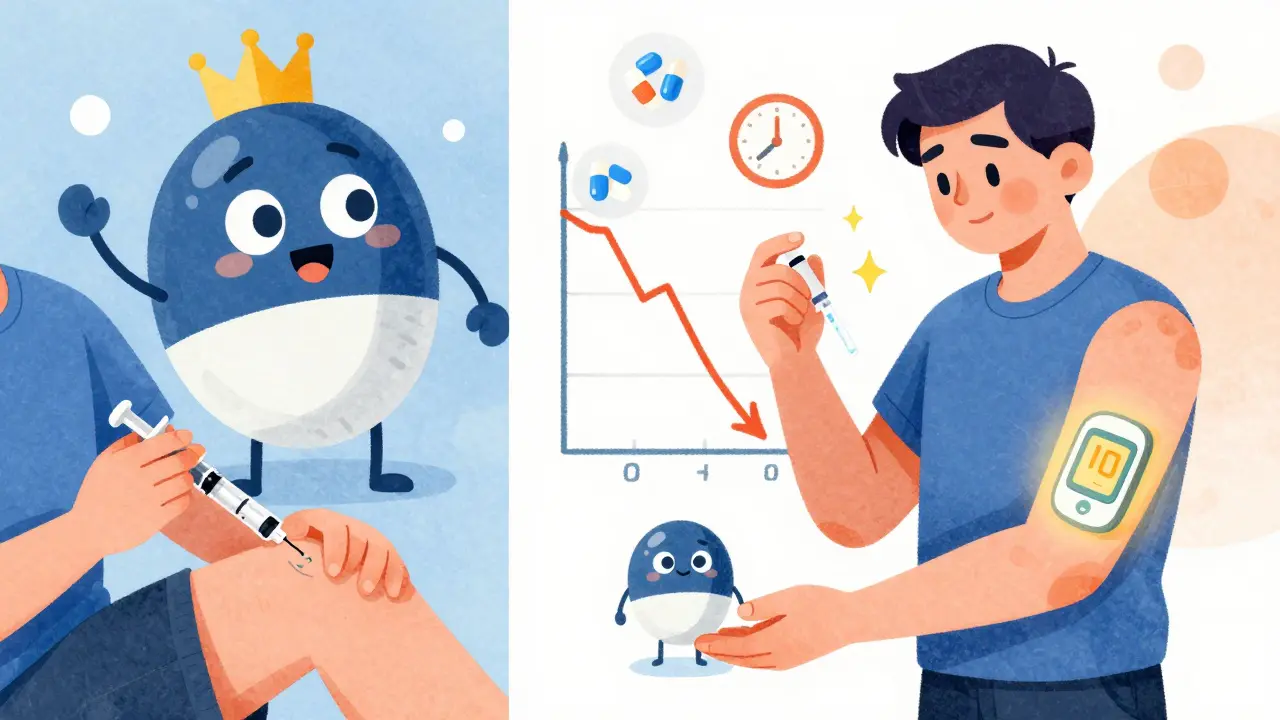
Start monitoring at least four times a day: fasting, 2 hours after breakfast, 2 hours after lunch, and before dinner. If your glucose is above 180 mg/dL on two checks, add a fourth post-meal check - say, after dinner. For high-dose steroid users, six to eight checks a day isn’t excessive. Continuous glucose monitors (CGMs) are game-changers. A 2021 study showed CGM users adjusted insulin doses 37% more accurately than those relying on fingersticks. You’ll see exactly when your sugar spikes, how long it lasts, and whether your insulin timing is off.
Don’t rely on HbA1c during steroid therapy. It’s meaningless for the next 2-4 weeks. Your numbers are changing too fast for that long-term average to reflect reality.
Adjusting When Steroids Come Down
This is where most people get hurt. When your steroid dose drops, your insulin needs don’t drop with it - not immediately. If you keep your high doses, you’re setting yourself up for hypoglycemia. Studies show 22% of patients who don’t reduce insulin during tapering end up in the ER with low blood sugar.
Here’s how to do it safely:
- Reduce total daily insulin by 10-20% for every 10 mg drop in prednisone equivalent.
- Start cutting mealtime insulin first - especially for breakfast and lunch.
- Hold off on reducing long-acting insulin until the steroid dose is below 10 mg daily.
- Check glucose more often during tapering. Even small reductions can trigger lows.
At Great Ormond Street Hospital, pediatric teams use a simple rule: for every 25% reduction in steroid dose, reduce rapid-acting insulin by 20%. That’s a good starting point for adults too. And if you’re on dexamethasone - which lasts 3-4 days - don’t rush. Wait 48 hours after each dose reduction before adjusting insulin.
What About Oral Diabetes Medications?
Most oral drugs don’t cut it during steroid therapy. Metformin? It helps a little with insulin resistance, but it won’t stop a 300 mg/dL spike. SGLT2 inhibitors? Risky - they can cause dehydration and ketoacidosis when combined with steroids. DPP-4 inhibitors? Too weak. GLP-1 agonists? May help, but they’re expensive and slow to work.
Insulin is the gold standard during steroid use. It’s fast, flexible, and you can adjust it daily. Oral meds are fine for maintenance after steroids are done - but not during. If you’re on pills and start steroids, switch to insulin right away. Don’t wait for your sugar to hit 300. By then, it’s too late.
Technology and Tools That Help
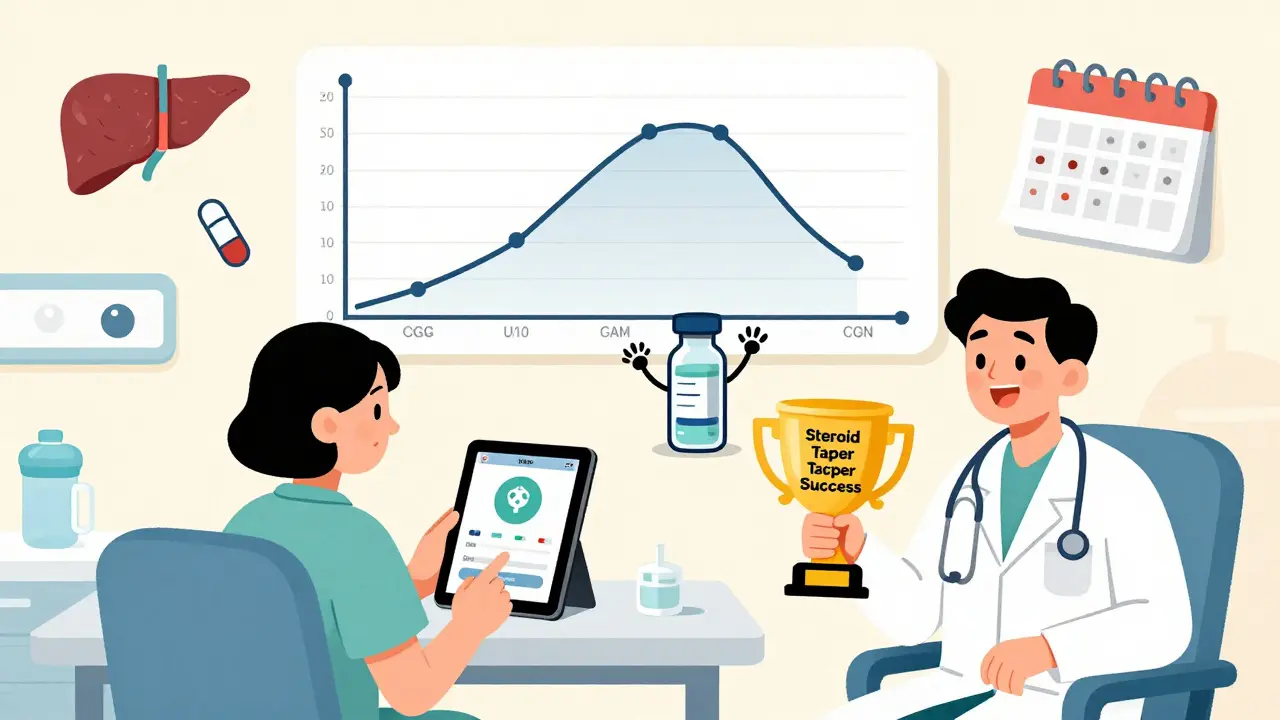
Hospitals are catching on. Over 68% of major U.S. medical centers now have formal steroid hyperglycemia protocols. Tools like Glytec’s eGlucose system and EndoTool use algorithms to recommend insulin doses based on steroid type, dose, and current glucose levels. In one trial, these systems cut hypoglycemia during tapering by 33%.
Even outside the hospital, apps that sync with CGMs can help. Some let you log steroid doses and automatically suggest insulin adjustments based on your past patterns. If you’re on chronic steroids - say, for lupus or rheumatoid arthritis - these tools can be lifesavers.
Common Mistakes and How to Avoid Them
Here’s what goes wrong - and how to fix it:
- Mistake: Only checking fasting glucose. Solution: Always check 2 hours after meals, especially breakfast and lunch.
- Mistake: Keeping insulin doses the same during tapering. Solution: Reduce insulin as steroids go down - not after, but during.
- Mistake: Using oral meds instead of insulin. Solution: Switch to insulin from day one if you’re on ≥20 mg prednisone.
- Mistake: Ignoring magnesium. Solution: Ask your doctor to check your serum magnesium. If it’s low, supplementation can improve insulin sensitivity.
And don’t assume your primary care provider knows how to handle this. A 2022 CMS report found 22% of steroid-related hyperglycemia complications were preventable - mostly because providers didn’t know the right adjustments. If you’re on steroids and diabetes meds, take charge. Bring this info to your appointment. Ask for a diabetes educator. Ask for a CGM if you don’t have one.
What’s Next?
By 2027, nearly three-quarters of U.S. hospitals will have mandatory protocols for steroid hyperglycemia. Machine learning models are already predicting insulin needs with 85% accuracy based on steroid dose, BMI, and baseline HbA1c. Soon, your CGM might auto-adjust your insulin pump based on when you take your steroid pill.
But until then, you need to be your own advocate. Steroid hyperglycemia isn’t a glitch - it’s a predictable, manageable condition. With the right monitoring, the right insulin adjustments, and the right timing, you can stay safe while getting the treatment you need. Don’t let fear of high sugar stop you from taking steroids. Just make sure you’re prepared for what comes with them.
Can steroids cause diabetes in people who never had it before?
Yes. Steroid-induced diabetes (SIDM) is a well-documented condition. Up to 40% of patients on high-dose glucocorticoids develop new-onset hyperglycemia, even without prior diabetes. This happens because steroids cause insulin resistance and reduce insulin secretion. It’s often temporary - blood sugar normalizes after steroids are stopped - but in some cases, it can lead to permanent type 2 diabetes, especially if risk factors like obesity or prediabetes are present.
Should I stop my diabetes meds when I start steroids?
No - but you’ll likely need to switch. Oral diabetes medications like metformin or sulfonylureas usually aren’t strong enough to control steroid-induced spikes. Insulin is the preferred treatment during steroid therapy because it can be adjusted quickly and precisely. Keep your oral meds if your doctor says it’s safe, but add insulin to manage the higher glucose levels. Never stop insulin or other diabetes meds without medical advice.
Why is my blood sugar high after lunch but fine in the morning?
Most steroids are taken once daily in the morning. Their peak effect occurs 4-8 hours later - right when you’re digesting lunch. This causes a sharp rise in blood sugar, while fasting glucose (before breakfast) may still look normal. That’s why checking post-meal glucose is critical. Fasting numbers alone can miss up to 20% of steroid-induced hyperglycemia cases.
How do I know when to reduce my insulin as my steroid dose goes down?
Start reducing insulin when your steroid dose drops below 20 mg prednisone equivalent. For every 10 mg reduction in prednisone, lower your total daily insulin by 10-20%. Cut mealtime insulin first - especially for breakfast and lunch - since that’s when the steroid effect is strongest. Hold off on reducing long-acting insulin until the steroid dose is under 10 mg daily. Always check glucose more often during tapering to catch lows early.
Are continuous glucose monitors (CGMs) worth it for steroid users?
Absolutely. CGMs show real-time trends and alert you to spikes and drops you’d miss with fingersticks. Studies show CGM users adjust insulin doses 37% more accurately during steroid therapy. They’re especially helpful during tapering, when blood sugar can drop quickly. If you’re on steroids for more than 5-7 days, a CGM is one of the best tools to avoid both high and low blood sugar complications.


Comments (9)