
Sugar Impact Calculator
Input Your Details
How This Works
Based on clinical data from the article: When sugar intake exceeds 25g daily, your medication's effectiveness decreases. Higher sugar intake may require more medication or cause dangerous blood sugar fluctuations.
Important: Never adjust your medication without consulting your doctor. This tool shows trends only.
Your Results
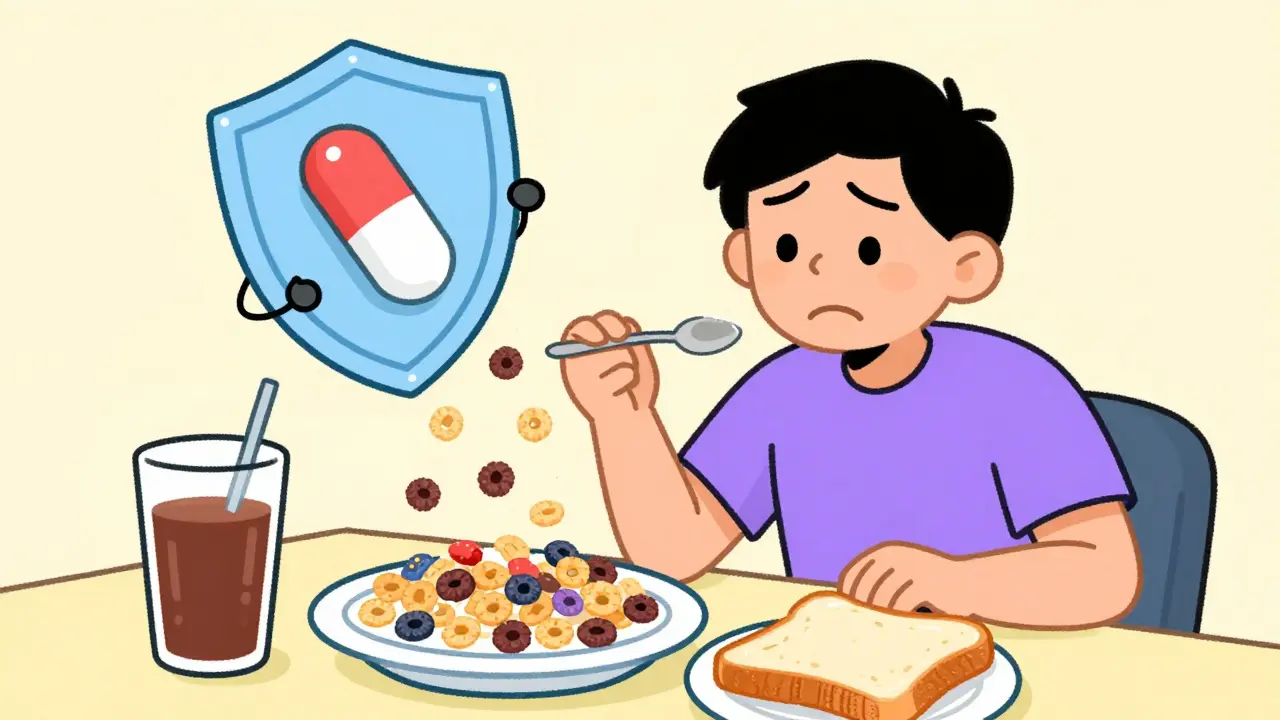
When you’re taking diabetes medication, what you eat isn’t just background noise-it’s part of the treatment. If you’re on metformin, sulfonylureas, or insulin, your blood sugar doesn’t just respond to the pill in your hand. It reacts to the sugar in your coffee, the juice in your breakfast, the snack you grab between meals. Many people think meds do all the work. They don’t. Not even close.
Why Sugar Undermines Your Medication
Metformin, the most common first-line drug for Type 2 diabetes, works by cutting down how much sugar your liver releases and helping your muscles use insulin better. But if you’re eating 100 grams or more of added sugar a day-roughly the amount in three cans of soda-your body is flooded with glucose. That overwhelms metformin’s ability to keep up. A 2022 GoodRx analysis found people consuming that much sugar needed nearly 30% more metformin just to get the same results as someone limiting sugar to under 25 grams daily. Sulfonylureas like glipizide and glyburide force your pancreas to pump out more insulin. Sounds good, right? But if you skip a meal or eat a huge sugary snack, your insulin levels go haywire. One high-sugar meal can trigger a dangerous drop in blood sugar 3 to 5 hours later. Cleveland Clinic data shows 68% of patients on glyburide had hypoglycemia after eating over 75 grams of carbs in one sitting. Even newer drugs like SGLT2 inhibitors (canagliflozin, dapagliflozin) and GLP-1 agonists (semaglutide, dulaglutide) aren’t magic. They work differently-SGLT2s flush sugar out through urine, GLP-1s slow digestion and reduce appetite. But even these lose 15-20% of their effectiveness if you’re consistently eating over 100 grams of added sugar. The bottom line? No medication cancels out a bad diet.What Foods to Avoid (and Why)
Not all sugar is the same. But when you’re on diabetes meds, the source matters less than the amount and timing. Here are the seven biggest troublemakers:- Sugary drinks-soda, sweetened teas, fruit juices with more than 20g sugar per serving. These spike blood sugar fast because they’re absorbed immediately. The NHS warns you need to check your glucose every 2 hours for 6 hours after drinking them.
- High-sugar fruits-mangoes, grapes, cherries. They’re natural, but they pack 20g+ sugar per cup. Eat them with protein or fat to slow absorption.
- Processed foods-granola bars, flavored yogurts, packaged snacks. Many have 15g+ added sugar per serving. Read labels. If sugar is listed in the first three ingredients, skip it.
- Refined carbs-white bread, pastries, pasta. They break down into sugar just like candy. A single slice of white bread can raise blood sugar as much as a tablespoon of sugar.
- High-fat meals-fried chicken, cheeseburgers, creamy sauces. Fat slows digestion, which delays how fast sugar hits your bloodstream. This makes it harder to match your medication dose to your meal, leading to unpredictable highs and lows.
- Sweetened alcohol-cocktails with syrup, liqueurs, sweet wine. Alcohol lowers blood sugar on its own. Add sugar, and you’re playing Russian roulette with your glucose.
- Dairy with added sugar-flavored yogurts, sweetened almond milk. Plain Greek yogurt has about 6g natural sugar. The flavored kind? 15g or more. That’s half your daily limit in one cup.
What Works Better: Low-Glycemic Foods
Foods with a low glycemic index (GI under 55) don’t spike your blood sugar fast. Think: beans, lentils, oats, non-starchy vegetables, berries, nuts, and whole grains. A 2025 review in the International Journal of Molecular Sciences found switching to low-GI foods improved insulin sensitivity by 25-40%. That means your meds work better-no extra dose needed. Real-world data from the DIAMOND study shows people on metformin who ate low-GI meals had 35-50 mg/dL lower post-meal spikes than those eating high-GI foods. That’s the difference between a manageable 160 and a dangerous 210. Continuous glucose monitors (CGMs) reveal something else: people who stick to low-GI eating spend 47% less time in high blood sugar zones. That’s not just about feeling better-it’s about avoiding nerve damage, kidney problems, and vision loss down the road.Consistency Is Key
Your body doesn’t like surprises. If you eat 30 grams of carbs at breakfast one day and 80 the next, your insulin secretagogues (like glipizide) can’t adjust fast enough. That’s why the Cleveland Clinic recommends keeping your carb intake within 15 grams of your usual amount at each meal. Even if you’re on metformin, which doesn’t cause low blood sugar on its own, erratic eating makes your levels harder to predict. That leads to more doctor visits, more stress, and more guesswork. The T1D Exchange registry found that insulin pump users who logged every carb they ate had HbA1c levels 0.8% lower than those who didn’t. Same principle applies to Type 2. Track your meals. Not for perfection. For pattern recognition.
Medications That Make Sugar Worse
Some drugs you’re taking for other conditions can sabotage your diabetes control. Prednisolone (a steroid) can raise your blood sugar by 50-100 mg/dL within a day. Furosemide (a water pill) can mess with how metformin is cleared by your kidneys. Hormonal birth control changes glucose metabolism in nearly 1 in 4 women. If you’re on any of these, talk to your doctor. Your diabetes meds might need adjusting. Don’t assume it’s just your diet.The Missing Link: Dietitian Support
You wouldn’t start a new workout routine without a trainer. But most people start diabetes meds without a nutrition plan. A 2023 NIDDK survey found only 39% of doctors refer newly diagnosed patients to a registered dietitian. That’s a problem. A 2024 American Association of Clinical Endocrinologists study showed patients who got diet counseling along with their meds hit their HbA1c target (under 7.0%) in 6.2 months-almost five months faster than those who didn’t. They also needed fewer medication changes and had 63% fewer ER visits for blood sugar emergencies. The American Diabetes Association says everyone starting diabetes meds should see a dietitian within 30 days. Yet only 42% of healthcare systems actually do it.It’s Not About Perfection
You don’t need to cut out sugar forever. You need to understand how it interacts with your meds. A small piece of cake at a birthday party? Fine-if you’ve been consistent the rest of the week. A daily soda? That’s a problem. Start small. Swap one sugary drink for water or sparkling water with lemon. Replace white toast with whole grain. Choose plain yogurt and add your own berries. These aren’t drastic changes. But they add up. Your medication isn’t broken. Your diet is just working against it. Fix the diet, and your meds will finally do what they’re supposed to do.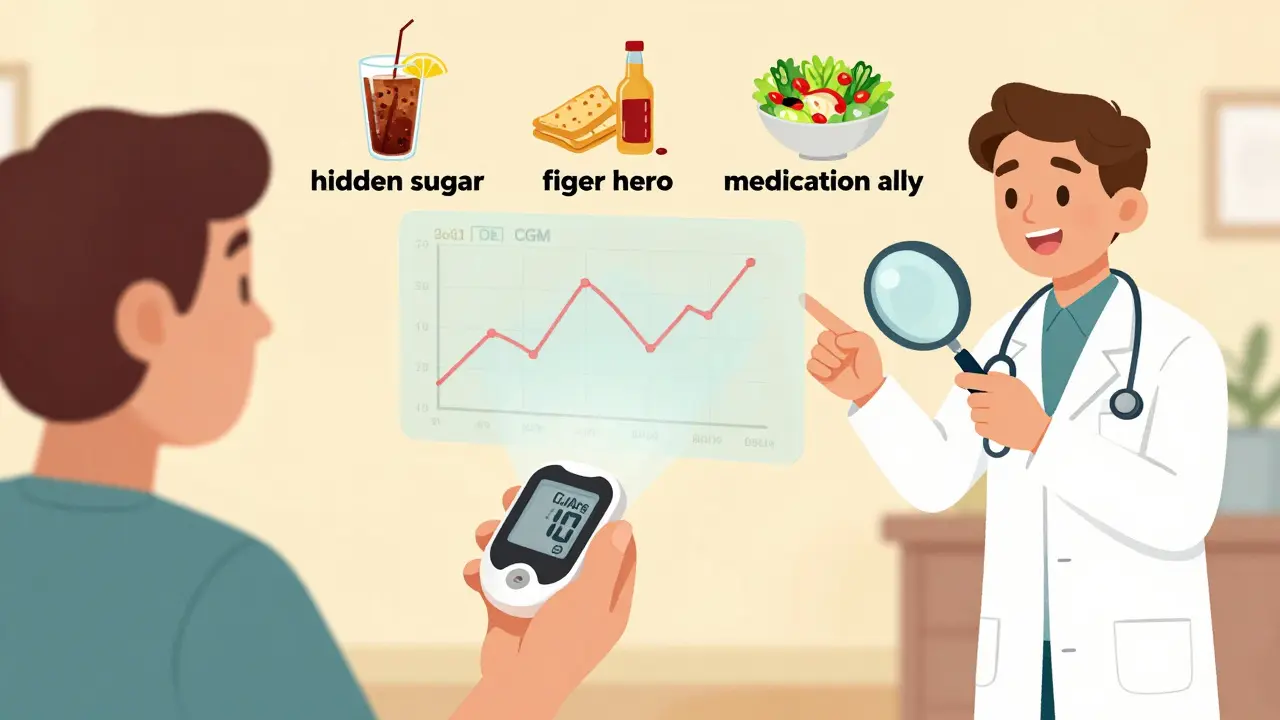
What About Natural Sweeteners?
Stevia, monk fruit, erythritol-these don’t raise blood sugar. So they’re safer than sugar. But they’re not magic. Some studies suggest they can still trigger cravings or insulin responses in sensitive people. And many packaged foods with these sweeteners are still loaded with fat and refined carbs. Better to reduce sweetness overall. Train your taste buds to enjoy food without added sugar. It takes 2-4 weeks. But once you do, you’ll notice how overly sweet most processed foods are.Monitoring Is Your Best Tool
If you’re not using a CGM, consider asking your doctor about it. Real-time data shows you exactly how your meals affect your levels. You’ll see how that muffin spikes you, how walking after dinner brings it down, how your morning coffee with cream and sugar is worse than you thought. Even without a CGM, fingerstick checks before and 2 hours after meals give you the same insight. Do it for a week. You’ll learn more than any pamphlet ever could.Final Thought: You’re Not Failing
If your blood sugar is still high despite taking your meds, it’s not because you’re lazy or weak. It’s because you haven’t been given the right tools. Sugar isn’t the enemy. Unmanaged sugar, combined with meds that can’t keep up, is the problem. You don’t need to be perfect. You need to be consistent. You need to know how your food talks to your medicine. And you need support-not guilt.Can I still eat fruit if I have diabetes and take metformin?
Yes, but choose wisely. Berries, apples, pears, and citrus fruits have less sugar and more fiber than mangoes, grapes, or bananas. Stick to one small serving (about 1 cup) per meal, and pair it with protein or healthy fat-like a handful of nuts or a spoon of Greek yogurt-to slow sugar absorption. Avoid fruit juice entirely-it’s sugar without the fiber.
Does metformin cause low blood sugar?
Metformin alone rarely causes low blood sugar. But if you’re also taking sulfonylureas, insulin, or other drugs that boost insulin, skipping meals or eating too little sugar can lead to hypoglycemia. Always carry a fast-acting sugar source like glucose tablets or juice in case.
How much sugar is too much when on diabetes meds?
The American Diabetes Association recommends limiting added sugar to less than 10% of your daily calories-that’s about 50 grams for a 2,000-calorie diet. But for better control, aim for under 25 grams daily. Many people on metformin see big improvements when they cut sugar this low. Check labels: one soda can contain 39 grams.
Can I drink alcohol while taking diabetes medication?
Yes, but with caution. Alcohol lowers blood sugar, especially on an empty stomach. Avoid sweet cocktails, liqueurs, or mixed drinks with soda or syrup. Stick to dry wine, light beer, or spirits with soda water and lime. Limit to one drink per day for women, two for men. Always eat something with it.
Why does my blood sugar spike after eating salad with dressing?
Many bottled dressings are loaded with sugar-even the ones labeled "light" or "low-fat." A single tablespoon can have 3-5 grams of added sugar. Opt for olive oil and vinegar instead. Or check the label: if sugar, high-fructose corn syrup, or honey is listed early, skip it.
Should I take my metformin before or after meals?
Take metformin with meals to reduce stomach upset. It doesn’t matter whether it’s before or after, as long as it’s with food. The key is consistency-take it the same way each day. If you eat a high-sugar meal, don’t skip your dose. Your body still needs the drug’s effect, even if the meal isn’t ideal.
Can I stop my diabetes meds if I eat clean?
Never stop your meds without talking to your doctor. Some people do reduce or even stop medication after significant weight loss and dietary changes-but only under medical supervision. Your doctor will monitor your HbA1c and blood sugar patterns before making any changes. Self-adjusting can be dangerous.
What’s the best way to track my sugar intake?
Use a free app like MyFitnessPal or Cronometer. Enter everything you eat for a week. Look for patterns: Do you spike after lunch? After snacks? Most apps show added sugar separately. You’ll be shocked how quickly it adds up. After a week, you’ll start recognizing hidden sugar in foods you thought were healthy.


Comments (9)