
When you have allergies, allergen avoidance, the practice of reducing contact with substances that trigger allergic reactions. Also known as allergy trigger control, it’s not just about popping a pill—it’s about changing your daily habits to keep symptoms under control before they start. Think of it like wearing a seatbelt: you don’t wait for a crash to start using it. The same goes for allergens. Whether it’s pollen in spring, dust mites in your bed, or pet dander on your couch, avoiding these triggers can cut down on sneezing, itchy eyes, and even asthma flare-ups—without needing stronger meds.
Many people don’t realize that environmental allergens, substances in your home or outdoor space that cause allergic reactions. Common examples include mold spores, cockroach droppings, and pollen from trees and grasses. are often worse indoors than outside. Your bedroom might be the biggest problem zone—dust mites thrive in pillows, mattresses, and blankets. Washing sheets weekly in hot water, using allergen-proof covers, and keeping humidity low can make a bigger difference than any over-the-counter spray. And if pets are part of your life, bathing them regularly and keeping them out of bedrooms helps more than you’d think. These aren’t just tips—they’re proven steps backed by real-world results from people who’ve cut their allergy meds in half just by cleaning up their space.
Then there’s second-generation antihistamines, non-drowsy allergy medications like loratadine, cetirizine, and fexofenadine that block histamine without making you sleepy. These are great when avoidance isn’t enough, but they work best when paired with real exposure control. Taking cetirizine while still sleeping in a dusty room? You’re fighting a losing battle. But take it after you’ve sealed your mattress, cleaned your vents, and kept windows shut during high pollen days? That’s when you start feeling the difference. It’s not about choosing between avoidance and meds—it’s about using both together, smartly. You’ll find posts here that explain how to handle drug shortages if your go-to allergy pill disappears, how to report bad reactions if a new product makes things worse, and how to spot hidden allergens in foods or skincare. This isn’t a list of random articles—it’s a toolkit for people who are tired of guessing what’s making them feel awful. Below, you’ll see real stories, practical fixes, and clear guidance on what actually works when your body says no to the world around you.
Written by Mark O'Neill
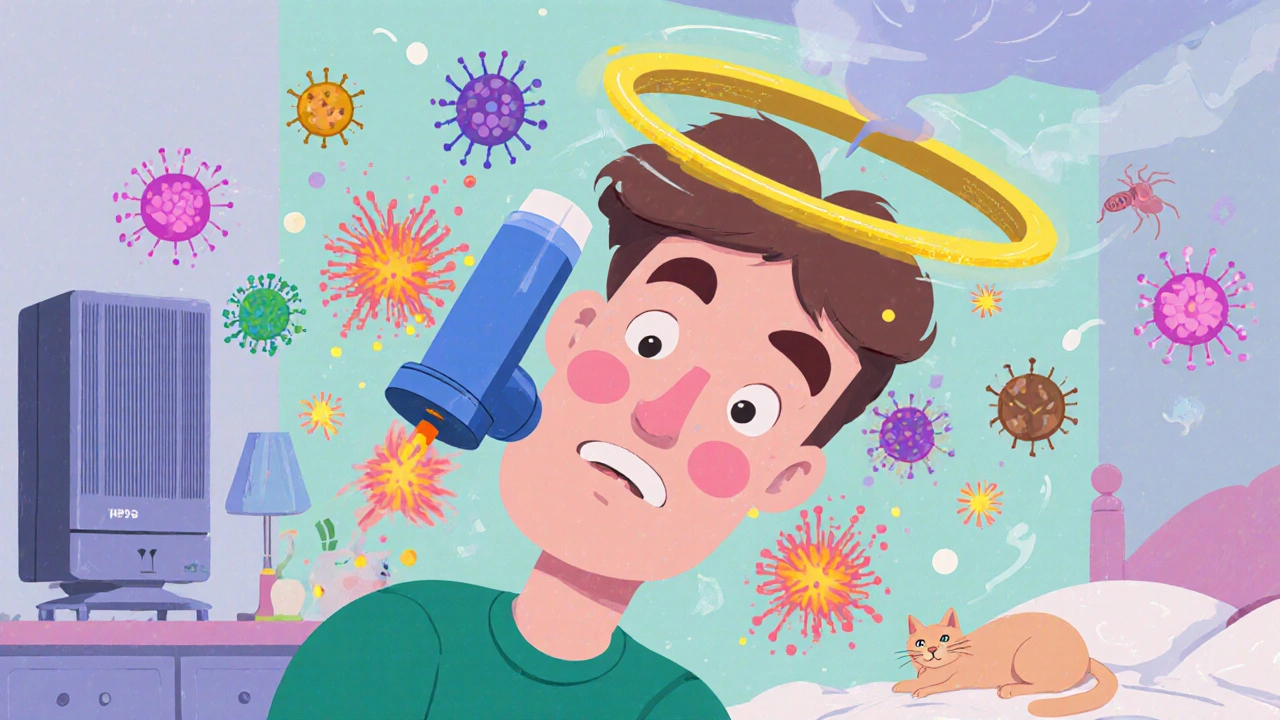
Allergic asthma affects 60% of adults with asthma, where allergens like pollen and dust mites trigger airway inflammation. Learn how to identify triggers, use effective treatments like immunotherapy and biologics, and reduce flare-ups by managing the allergy component.