
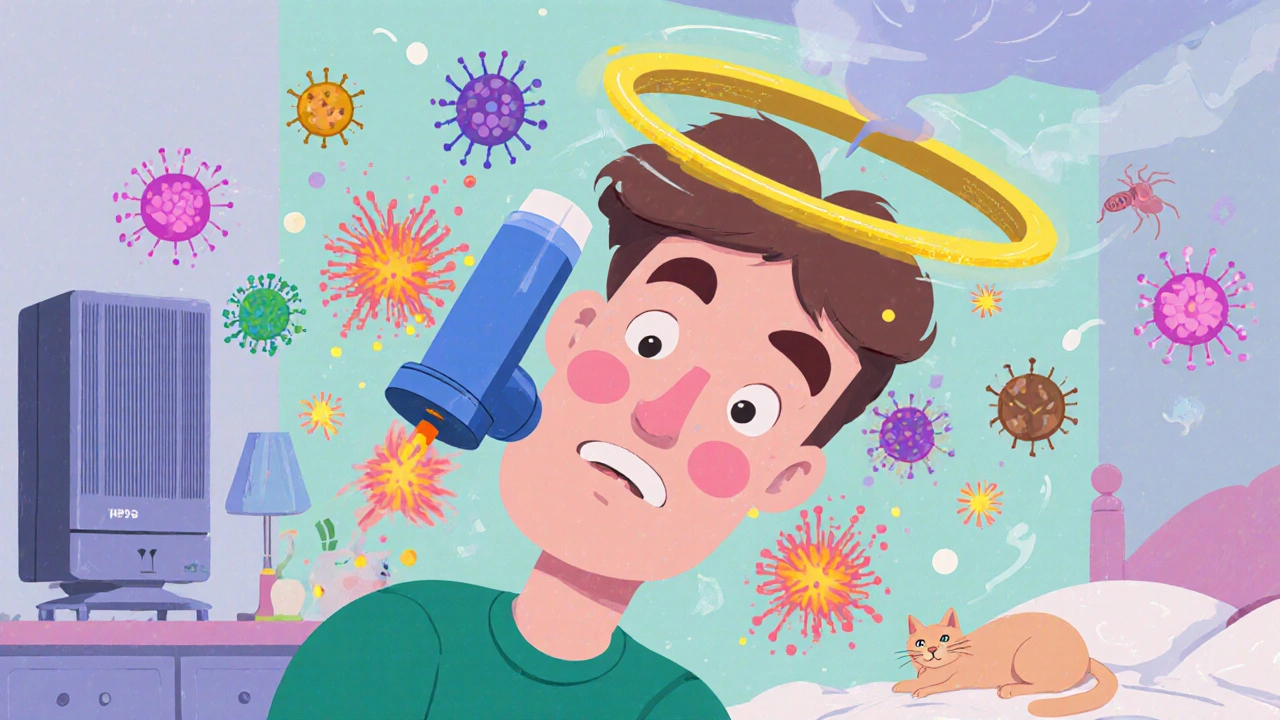
When you breathe in pollen, pet dander, or mold and suddenly can’t catch your breath, you’re likely dealing with allergic asthma, a type of asthma triggered by allergens that cause airway inflammation and tightening. Also known as atopic asthma, it’s the most common form of asthma in both kids and adults, and it’s not just about sneezing—it’s about struggling to get air in and out. Unlike asthma caused by exercise or cold air, allergic asthma has a clear link to your immune system overreacting to harmless substances. That reaction doesn’t just give you a runny nose—it tightens the muscles around your airways, swells the lining, and floods your lungs with mucus.
That’s where second-generation antihistamines, non-drowsy medications like loratadine, cetirizine, and fexofenadine that block histamine without making you sleepy come in. They won’t stop an asthma attack on their own, but they’re a frontline defense against the allergens that start the whole chain reaction. Pair them with inhaled corticosteroids—your main asthma controller—and you’re tackling the problem from both sides: reducing the trigger and calming the inflammation. Many people don’t realize that treating allergies isn’t optional with allergic asthma—it’s essential. Skip the antihistamines, and you’re just managing symptoms, not stopping the cause.
Other asthma medications, including long-acting beta-agonists, leukotriene modifiers, and biologics like omalizumab, are used when standard treatments aren’t enough. Biologics, for example, target specific immune system proteins involved in allergic reactions, offering relief for people with severe allergic asthma who haven’t responded to other drugs. And while rescue inhalers like albuterol give quick relief during flare-ups, they’re not meant for daily use. The real win? Consistent control. That means knowing your triggers, using your controller meds every day—even when you feel fine—and tracking symptoms before they turn into emergencies.
What you won’t find in this collection are vague tips like "avoid allergens" without specifics. Instead, you’ll see real-world guidance: how to tell if your meds are working, why some antihistamines work better than others for asthma-related allergies, what to do when your inhaler runs out, and how to talk to your doctor about switching treatments. You’ll also learn how allergic asthma connects to other conditions like eczema and sinusitis, and why treating one can help the others. This isn’t theory—it’s what people actually use to breathe easier every day.
Written by Mark O'Neill
Allergic asthma affects 60% of adults with asthma, where allergens like pollen and dust mites trigger airway inflammation. Learn how to identify triggers, use effective treatments like immunotherapy and biologics, and reduce flare-ups by managing the allergy component.