
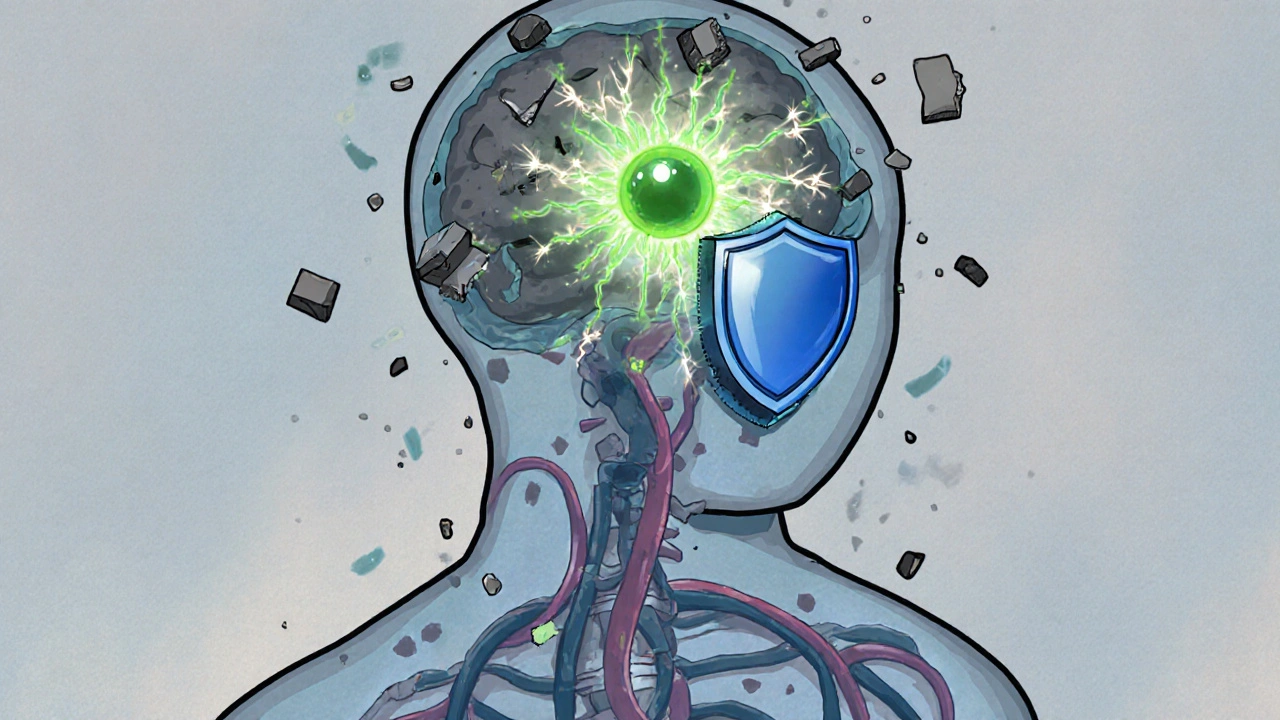
When someone is diagnosed with ALS, a progressive neurodegenerative disease that attacks nerve cells controlling voluntary muscle movement. Also known as Lou Gehrig's disease, it slowly steals the ability to walk, talk, eat, and breathe—while leaving the mind sharp. There’s no cure yet, but understanding how it works helps people live better with it.
Motor neuron disease, the broader category ALS belongs to, includes conditions where nerve cells that send signals from the brain to muscles break down. In ALS, both upper and lower motor neurons die, leading to muscle twitching, stiffness, and eventual paralysis. Unlike some other brain diseases, ALS doesn’t typically affect memory or senses. People with ALS often stay mentally alert, which makes the physical decline even harder to accept.
Neurodegenerative disease, a group of disorders where nerve cells gradually lose function, includes Alzheimer’s, Parkinson’s, and ALS. What sets ALS apart is how fast it progresses—most people live 3 to 5 years after diagnosis, though some live longer. There’s no single test for it. Doctors rule out other conditions like multiple sclerosis or spinal tumors before confirming ALS through nerve conduction studies and muscle biopsies.
People with ALS rely on a mix of tools and support. Medications like riluzole and edaravone can slow progression slightly. Breathing machines, feeding tubes, and voice synthesizers become part of daily life. Physical therapy helps keep joints flexible. Speech therapists help with communication tools. And caregivers—family, nurses, or home aides—play a huge role in keeping things manageable.
The posts here cover real-world struggles and solutions. You’ll find guides on managing muscle weakness without opioids, how to use non-invasive ventilation at home, what supplements might help with energy levels, and how to navigate insurance for mobility equipment. There’s advice on avoiding falls, dealing with speech loss, and even how some people use eye-tracking tech to write emails or talk to loved ones. You won’t find miracle cures here—just honest, practical tips from people living with ALS and the doctors who treat them.
If you or someone you care about is facing ALS, know this: you’re not alone. The tools, knowledge, and support systems exist—not to reverse the disease, but to give you back control over your days, one small win at a time.
Written by Mark O'Neill
Riluzole is the first and still one of the only drugs proven to slow ALS progression. Though it only extends life by a few months, it remains the cornerstone of treatment for most patients worldwide.