
When you think of a giant hardwood tree that once shaded entire forests, you might picture the American Chestnut, a once-dominant tree species in eastern North American forests that provided food, timber, and habitat for wildlife. Also known as Castanea dentata, it was so common that one in every four trees in some areas was an American Chestnut. By the early 1900s, that changed overnight. A fungus from Asia, called chestnut blight, a deadly fungal pathogen that kills chestnut trees by girdling their bark, arrived on imported trees and spread like wildfire. Within 40 years, it killed an estimated 4 billion trees. No other tree in North American history has vanished so completely so fast.
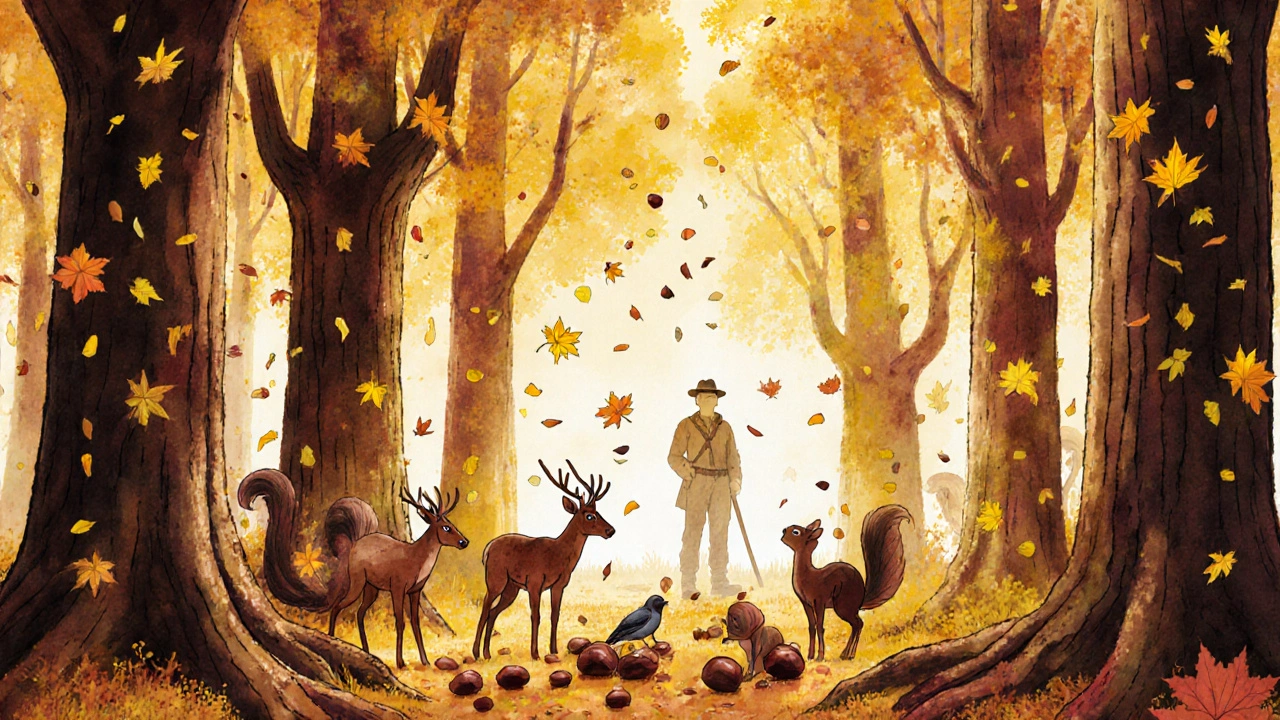
The loss wasn’t just about trees. People relied on chestnuts for food, especially in rural areas where they were a winter staple. Farmers used the rot-resistant wood for fence posts, barns, and furniture. Wildlife—from bears to birds to squirrels—lost a major food source. Even the forest structure changed. Without chestnuts, other trees like oaks and maples filled the space, but they didn’t produce the same kind of nuts or support the same animal populations. Today, you might still see small chestnut sprouts growing from old stumps, but they rarely live past a few years before the blight kills them again. That’s why scientists aren’t giving up. Teams at universities and conservation groups are breeding blight-resistant trees, hybrid chestnuts developed by crossing American Chestnuts with Asian species that naturally fight the fungus. Some use gene editing. Others use traditional crossbreeding. The goal? To restore a tree that’s genetically 95% American Chestnut but can survive the blight.
It’s not just science—it’s a community effort. Volunteers plant test trees in parks and forests. Schools grow saplings in classrooms. Farmers are testing them on small plots. The American Chestnut isn’t just a tree anymore. It’s a symbol of what we can fix when we work together. And if it comes back, it won’t just be a win for forests. It’ll be a win for people who remember eating chestnuts roasted on open fires, for wildlife that needs that food, and for the land that remembers what it used to look like.
Below, you’ll find real-world stories and science-backed updates on how this tree is being brought back—from lab experiments to forest plantings, and what it means for the future of our woodlands.
Written by Mark O'Neill
Discover how American chestnut, a once-decimated native tree, is now a powerful dietary supplement for gut health, blood sugar balance, and natural energy-backed by science and sustainable sourcing.