
When you feel anal pain, a sharp, burning, or throbbing sensation near the anus that can make sitting, bowel movements, or even walking uncomfortable. Also known as rectal discomfort, it’s not just a minor irritation—it’s your body’s signal that something needs attention. It’s more common than people admit, and often tied to simple, treatable issues like hemorrhoids, swollen veins in the rectum or anus that can itch, bleed, or ache, especially after straining or anal fissure, a small tear in the lining of the anus that causes sharp pain during bowel movements.
Many people delay talking about it because it’s embarrassing, but ignoring anal pain doesn’t make it go away. It can worsen. A fissure might turn chronic. Hemorrhoids can prolapse. In rare cases, persistent pain could signal something more serious, like an abscess or even early signs of colorectal issues. The good news? Most cases respond well to simple changes: more fiber, better hydration, warm sitz baths, and avoiding prolonged sitting. You don’t need surgery right away—unless your doctor says so. Over-the-counter creams can help, but they’re temporary fixes. The real solution is understanding what’s triggering the pain in the first place.
What you’ll find in the posts below isn’t a list of miracle cures. It’s real, practical advice from people who’ve been there. You’ll see how anal pain connects to bowel health, how diet affects recovery, and why some treatments work better than others. You’ll learn what to avoid—like harsh wipes or overuse of laxatives—and what actually helps, like pelvic floor relaxation or proper toilet posture. There’s no one-size-fits-all fix, but with the right info, you can take control without shame or guesswork.
Written by Mark O'Neill
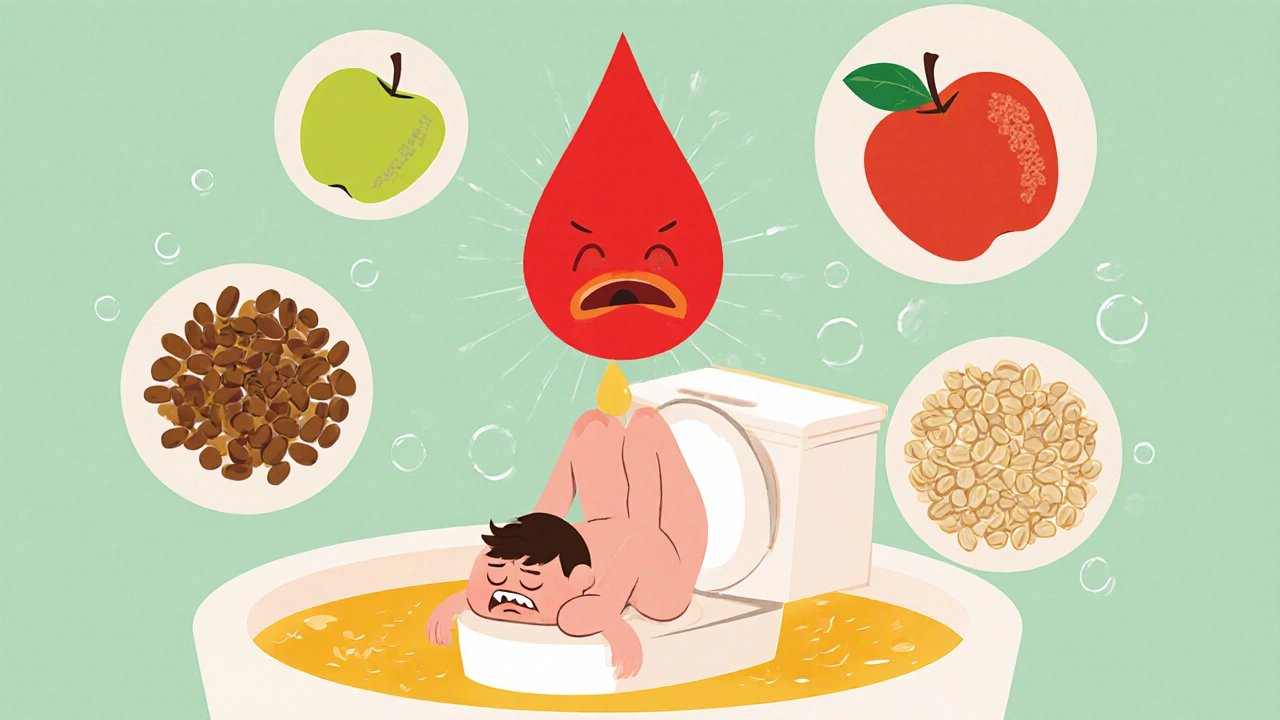
Anal fissures cause sharp pain during bowel movements but often heal with diet and simple home care. Learn what triggers them, how to treat them with proven methods, and when to see a doctor.