
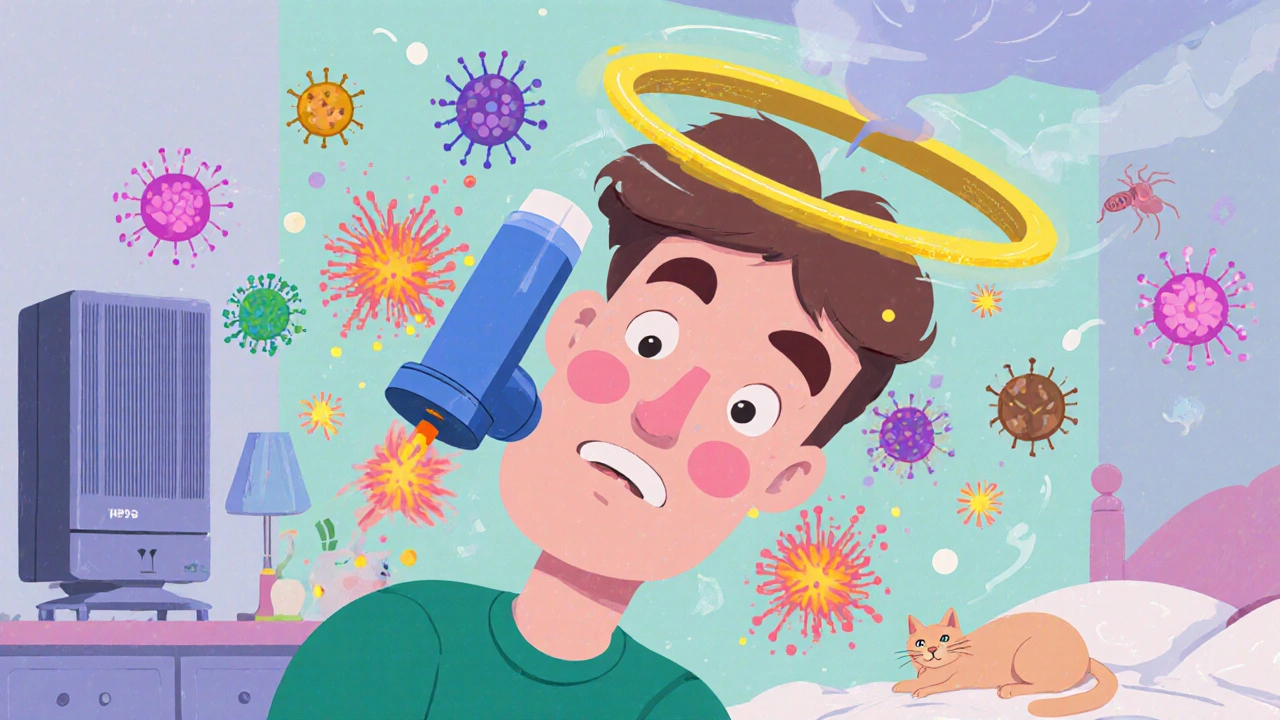
When you have asthma and allergies, a pair of linked conditions where the immune system overreacts to harmless substances, often triggering breathing problems. Also known as allergic asthma, it affects millions who wake up wheezing, sneezing, or struggling to catch their breath after being around pollen, dust, or pet dander. This isn’t just a seasonal nuisance—it’s a daily battle for many, and the right approach makes all the difference.
Most people reach for old-school antihistamines like diphenhydramine, but those make you crash. The real game-changer is second-generation antihistamines, a newer class of allergy meds that block histamine without crossing into the brain. Also known as non-drowsy allergy meds, drugs like loratadine, cetirizine, and fexofenadine work just as well as the old ones—but you can drive, work, or pick up your kids without nodding off. These aren’t magic bullets, though. They help with runny noses and itchy eyes, but they don’t touch the tight chest or wheezing that comes with asthma triggers, environmental factors that cause airway narrowing in people with sensitive lungs. Common ones include smoke, cold air, exercise, and even strong perfumes. Knowing your personal triggers is half the battle.
Managing this combo means more than popping pills. It’s about linking what you breathe to how you feel. Allergies can make asthma worse—sometimes worse enough to send someone to the ER. That’s why many doctors treat them together. A nasal spray for your allergies might reduce lung flare-ups. A daily inhaler for asthma might stop sneezing fits from turning into full-blown attacks. It’s not always obvious, but your body connects the dots. If you’re sneezing every spring and wheezing when the weather changes, you’re not imagining it. You’re experiencing the overlap.
What you won’t find in most quick fixes? The truth about long-term control. Many people think they just need to wait out allergy season or use an inhaler only when they feel bad. But consistent management—tracking symptoms, avoiding known triggers, and sticking to prescribed meds—is what keeps life normal. And when drug shortages hit, knowing your alternatives matters. You don’t want to run out of your go-to antihistamine and end up with something that knocks you out or doesn’t work at all.
Below, you’ll find clear, no-fluff guides on what actually works for asthma and allergies—no hype, no jargon. From the best non-drowsy options to how to spot hidden triggers and what to do when your meds aren’t enough. This isn’t theory. It’s what people are using right now to breathe easier, every day.
Written by Mark O'Neill
Allergic asthma affects 60% of adults with asthma, where allergens like pollen and dust mites trigger airway inflammation. Learn how to identify triggers, use effective treatments like immunotherapy and biologics, and reduce flare-ups by managing the allergy component.