
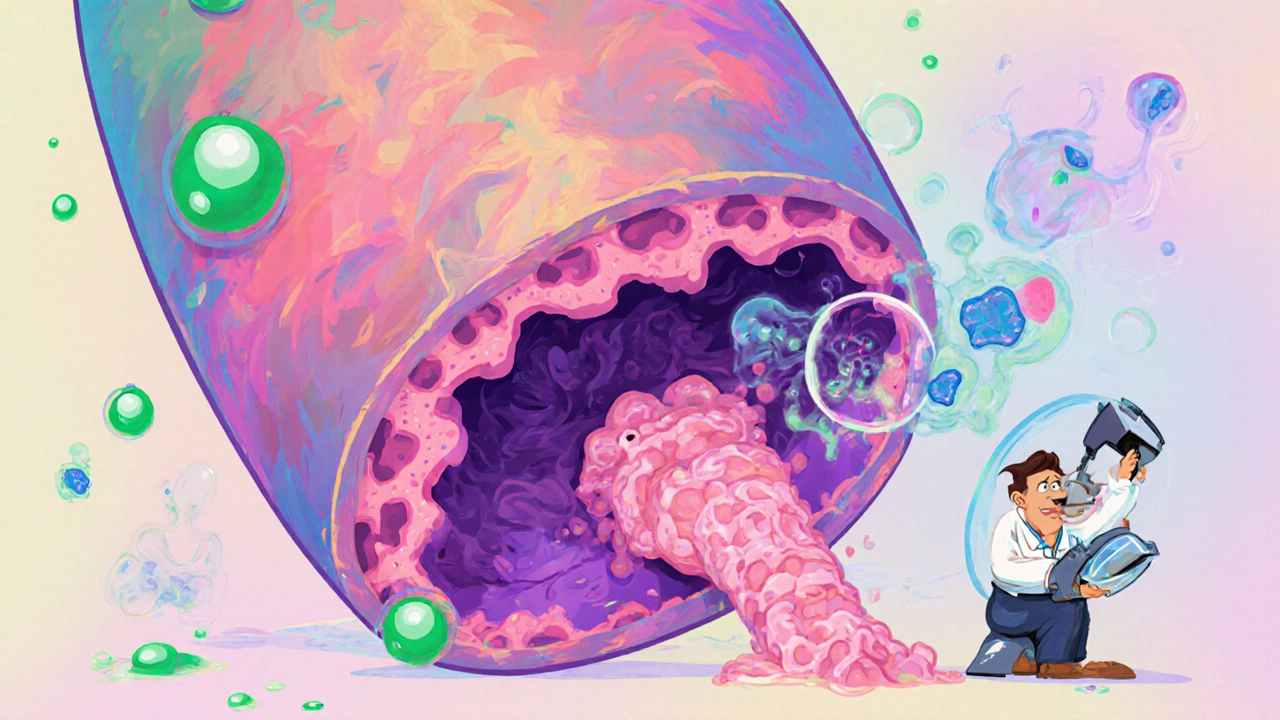
When stomach acid keeps backing up into your esophagus for years, something inside can change — that’s Barrett's esophagus, a condition where the tissue lining the esophagus transforms due to chronic acid exposure. It’s not cancer, but it’s the only known precursor to esophageal adenocarcinoma, a type of cancer that’s rising in numbers. This isn’t something that happens overnight. It develops slowly, often without warning, in people who’ve had GERD, gastroesophageal reflux disease, a chronic form of acid reflux for more than five years. About 1 in 10 people with long-term GERD develop Barrett’s, and men over 50 are at higher risk — especially if they smoke, are overweight, or have a family history.
What makes Barrett’s tricky is that you might not feel any new symptoms. The burning feeling from acid reflux may even fade over time, which can be misleading. That doesn’t mean it’s getting better — it means the lining has changed. Doctors find it during an endoscopy, usually done because of persistent heartburn or trouble swallowing. A biopsy confirms it by showing the presence of intestinal-type cells where they shouldn’t be. The goal isn’t to reverse the change — it’s to stop it from getting worse. That’s where PPIs, proton pump inhibitors like omeprazole and esomeprazole, which strongly reduce stomach acid production come in. They don’t cure Barrett’s, but they lower the risk of progression by keeping acid levels low.
Monitoring matters. If you’ve been diagnosed, you’ll need regular endoscopies to check for early signs of dysplasia — abnormal cell growth that could turn into cancer. Not everyone needs it often, but skipping checkups is risky. Lifestyle changes help too: losing weight, avoiding late meals, cutting out alcohol and spicy foods, and quitting smoking all reduce pressure on the lower esophageal sphincter. Some people even consider minimally invasive procedures like radiofrequency ablation if dysplasia shows up — it removes the damaged tissue before it turns dangerous.
The posts here cover real-world ways people manage this condition — from how acid-reducing meds like Prilosec work, to what diet changes actually help, and how to stay alert to warning signs. You won’t find fluff here. Just clear, practical info from people who’ve been there — and the science behind what works.
Written by Mark O'Neill
Barrett’s esophagus increases cancer risk, but modern ablation techniques like RFA and cryoablation can prevent progression. Learn who’s at risk, how dysplasia is diagnosed, and which treatments work best.