
When clozapine, a second-generation antipsychotic drug used primarily for treatment-resistant schizophrenia. Also known as Clozaril, it is one of the most effective medications for people who haven’t responded to other antipsychotics. But it’s not a first-choice drug. It’s the last resort—and that’s because it works differently, and it comes with serious risks that demand close monitoring.
Clozapine doesn’t just block dopamine like older antipsychotics. It targets multiple brain receptors, which is why it helps people who still hear voices or hold false beliefs despite trying other meds. It’s the only antipsychotic proven to reduce suicide risk in people with schizophrenia. But that power comes with a price: it can drop your white blood cell count to dangerous levels. That’s why anyone taking clozapine needs regular blood tests—sometimes weekly—to catch problems early. It’s not just a pill. It’s a commitment.
People who take clozapine often deal with side effects like weight gain, dry mouth, drowsiness, or constipation. Some experience seizures or heart issues. That’s why doctors don’t start you on it lightly. You’ll need to be under the care of a specialist who knows how to manage these risks. But for many, the trade-off is worth it. If other drugs failed, clozapine might be the one that finally brings calm.
It’s also used off-label for severe bipolar disorder, treatment-resistant depression, and even some cases of Parkinson’s psychosis. But none of that matters if you’re not monitored properly. The FDA requires a special registry for clozapine users—because safety isn’t optional here. If you’re on this med, you need to know the signs of infection (fever, sore throat, fatigue) and act fast.
What you’ll find in these posts isn’t just theory. It’s real stories from people managing clozapine, guides on how to talk to your doctor about side effects, and comparisons with other antipsychotics. You’ll see how clozapine fits into broader treatment plans, what to do if you miss a dose, and how to handle the emotional toll of long-term psychiatric care. This isn’t a one-size-fits-all drug. It’s a lifeline for some—and understanding it fully could mean the difference between staying stable and falling apart.
Written by Mark O'Neill
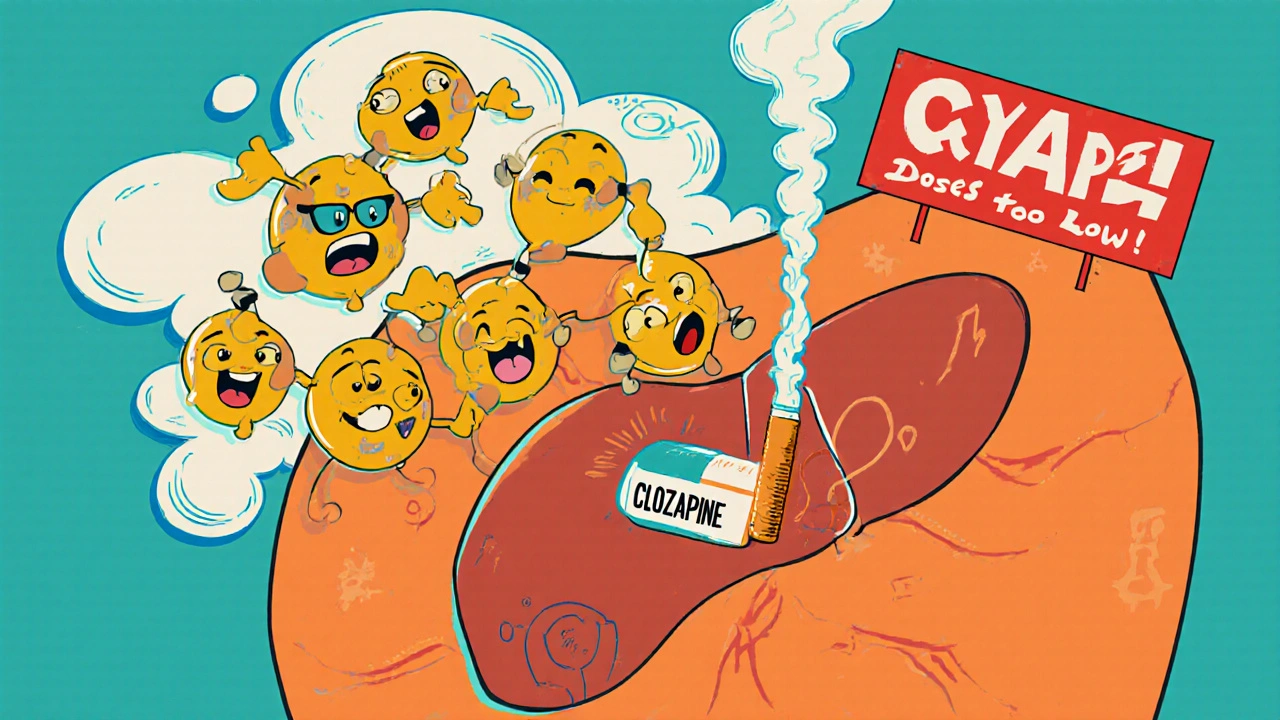
Clozapine levels drop sharply in smokers due to CYP1A2 enzyme induction, requiring higher doses. Quitting smoking can cause dangerous toxicity if doses aren't reduced. Blood monitoring and careful adjustments are essential.