
When you hear cryoablation, a medical procedure that uses extreme cold to destroy unhealthy tissue. Also known as cold ablation, it’s not science fiction—it’s a real, minimally invasive tool doctors use daily to treat tumors, nerve pain, and other conditions without major surgery. Think of it like freezing a weed at the root instead of cutting the top off. The cold shuts down cells, stops signals, and kills the problem where it lives.
Cryoablation isn’t just for cancer. It’s used for chronic pain, especially nerve-related pain like that from trigeminal neuralgia or spinal arthritis, where heating or cutting nerves is too risky. It’s also common in kidney tumors, liver lesions, and lung nodules—especially for patients who can’t handle open surgery. The probe is guided by ultrasound or CT, inserted through a tiny skin nick, and freezes the target in minutes. Recovery? Often just a day or two. No big scars. No long hospital stays.
It’s not magic, though. It doesn’t work for every tumor or every pain type. Size matters—larger masses usually need other treatments. And it’s not always covered the same way by insurance. But for people who’ve run out of options, or who want to avoid cutting into their body, cryoablation offers a real alternative. You’ll find posts here that break down how it compares to radiofrequency ablation, what it’s like to go through the procedure, which conditions respond best, and how it fits into broader treatment plans for cancer, back pain, or heart rhythm issues. These aren’t generic overviews. They’re practical, real-world takes from people who’ve lived it or studied it closely.
Written by Mark O'Neill
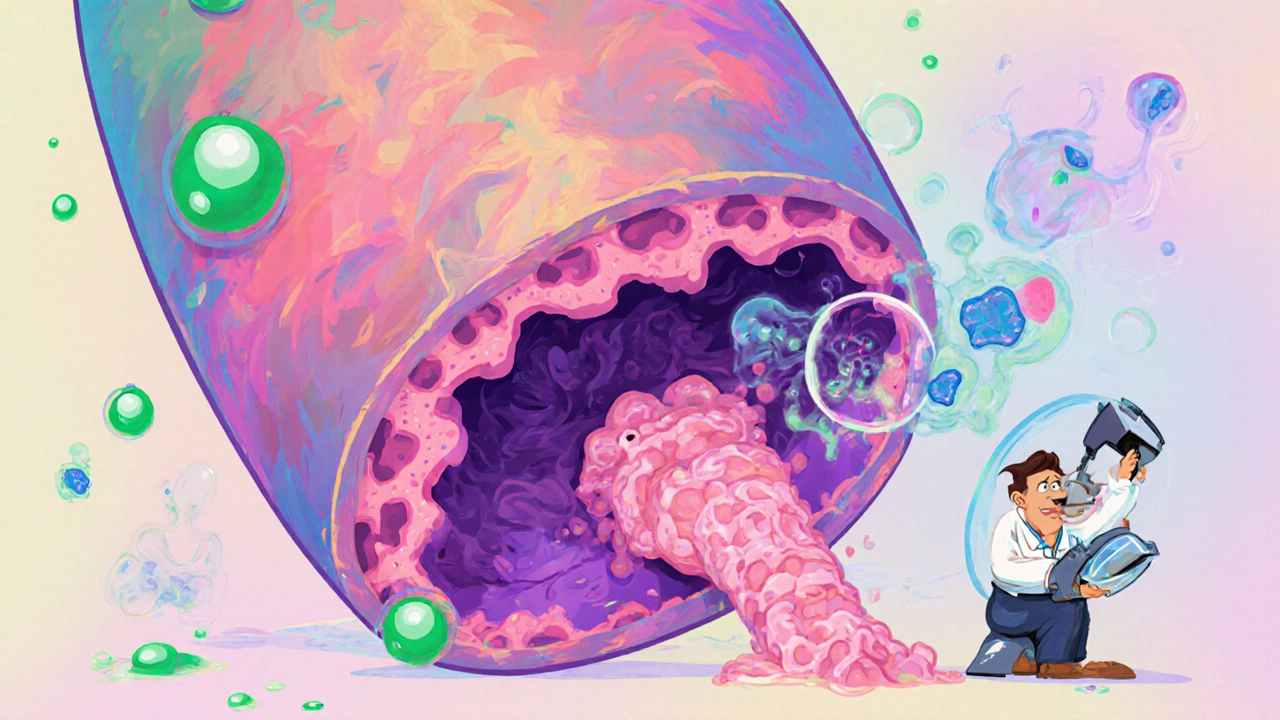
Barrett’s esophagus increases cancer risk, but modern ablation techniques like RFA and cryoablation can prevent progression. Learn who’s at risk, how dysplasia is diagnosed, and which treatments work best.