
When you take a pill, your body doesn’t just absorb it and call it a day. It has to break it down—mostly in the liver—and that’s where CYP1A2, a liver enzyme responsible for metabolizing over 100 common drugs. Also known as cytochrome P450 1A2, it’s one of the most important players in how your body handles medications. If CYP1A2 is working too fast, your drug might not stick around long enough to help. If it’s too slow, the drug can build up and cause side effects. This isn’t theoretical—it affects real people every day, from those on antidepressants to coffee drinkers taking blood thinners.
CYP1A2 doesn’t work in a vacuum. It’s influenced by things you do every day. Smoking, for example, can crank up its activity, making some drugs less effective. Drinking grapefruit juice? That doesn’t touch CYP1A2—but it messes with other enzymes, which is why drug interactions are so tricky. Certain foods like charred meat and cruciferous veggies can also tweak its behavior. And then there’s genetics: some people are born with a version of CYP1A2 that works faster or slower than average. This is why two people on the same dose of the same drug can have totally different results.
This enzyme touches everything from clozapine, an antipsychotic drug metabolized almost entirely by CYP1A2, to caffeine, the most common substance processed by this enzyme, and even theophylline, a breathing medication used for asthma and COPD. If you’re on any of these, or on antidepressants like fluvoxamine or antipsychotics like olanzapine, your CYP1A2 activity could be the hidden reason your meds aren’t working—or are causing weird side effects. Even over-the-counter painkillers and herbal supplements like St. John’s wort can interfere with it.
That’s why the posts here matter. You’ll find real-world guidance on how CYP1A2 links to drug safety, why some people need different doses, and how everyday habits can quietly change how your medications work. Whether you’re managing chronic pain, dealing with mental health meds, or just trying to avoid dangerous interactions, understanding CYP1A2 gives you power—power to ask the right questions, spot red flags, and work smarter with your doctor. This isn’t biochemistry for scientists. It’s medicine for people who want to take control.
Written by Mark O'Neill
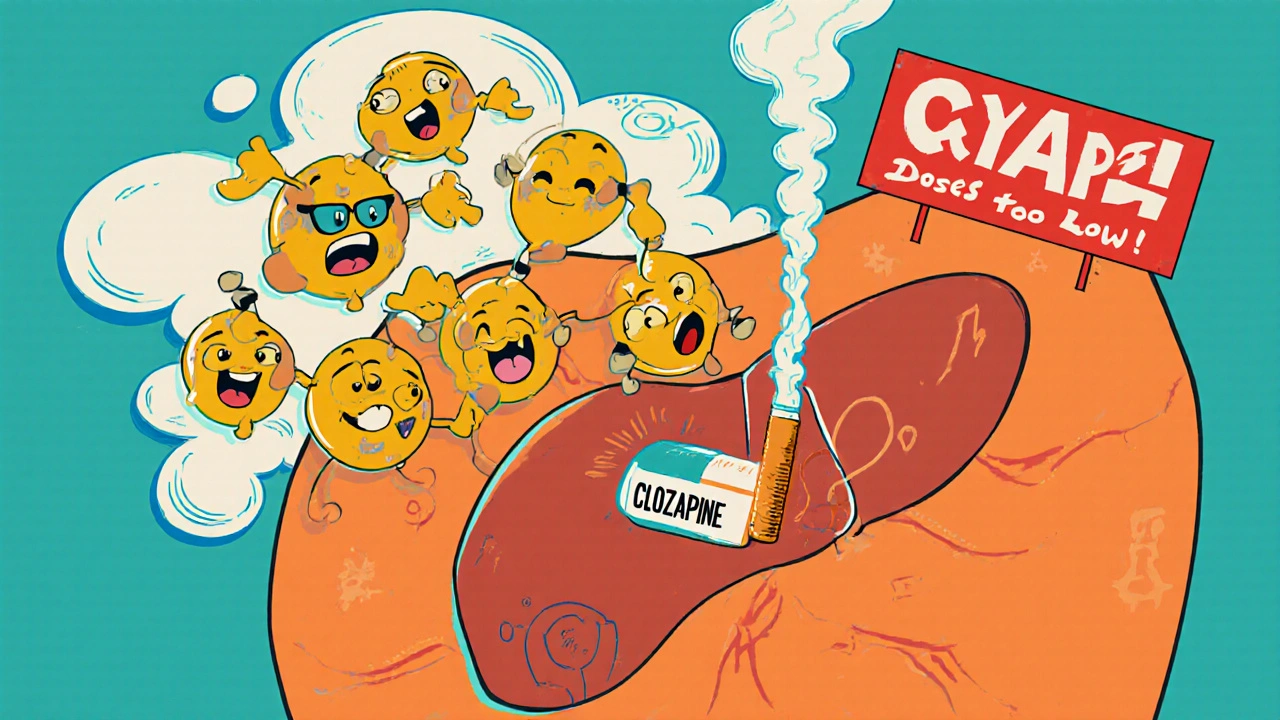
Clozapine levels drop sharply in smokers due to CYP1A2 enzyme induction, requiring higher doses. Quitting smoking can cause dangerous toxicity if doses aren't reduced. Blood monitoring and careful adjustments are essential.